











The Internet of Things (IoT) landscape witnessed a series of significant developments this week, ranging from strategic venture capital injections in sustainable building technology to corporate acquisitions aimed at advancing edge-based artificial intelligence. As the industry moves further into a “maintenance era,” manufacturers and service providers are increasingly prioritizing long-term reliability and data-driven efficiency, signaling a maturing market that is shifting focus from rapid feature deployment to operational stability.
Strategic Capital and Sustainable Infrastructure
Verdigris, a pioneer in applying artificial intelligence to commercial building energy management, has successfully closed a $10 million funding round. The investment, led by DCVC and Solea Energy, underscores a continued investor appetite for “greentech” solutions that utilize IoT sensors to optimize HVAC systems and reduce the carbon footprint of large-scale infrastructure.
The company’s technology, which provides granular, real-time energy insights, aligns with global ESG (Environmental, Social, and Governance) mandates. By utilizing AI to identify inefficient patterns in building operations, Verdigris offers a solution to the rising cost of energy in commercial real estate. This funding round is particularly notable given the current cautious climate for venture capital; it suggests that solutions providing measurable cost savings and regulatory compliance remain highly attractive to institutional investors.
Advancements in Edge Computing and Silicon
Nordic Semiconductor, a leader in low-power wireless technology, has taken a decisive step toward enhancing its edge-processing capabilities by acquiring the intellectual property of San Diego-based Atlazo. The acquisition is framed as a strategic “bolt-on” move, specifically targeting the integration of machine learning into ultra-low-power microcontrollers (MCUs).
The demand for on-device machine learning—often referred to as TinyML—is accelerating as businesses seek to process data locally to improve latency, security, and power efficiency. By embedding AI capabilities directly into its wireless chips, Nordic intends to shorten the development cycle for IoT product manufacturers. Industry analysts expect the benefits of this integration to manifest within the next 12 to 18 months, as the company rolls out new hardware platforms that can handle complex neural network workloads without the power draw typically associated with external cloud-based processing.
The Maintenance Era: Reliability in EV Charging
ChargePoint has formally established a Network Operations Center (NOC) to monitor the status of its vast infrastructure, which includes over 243,000 charging ports across the United States and Europe. This development follows increasing pressure from federal regulators, who have introduced stricter uptime requirements for public EV charging stations as part of broader national infrastructure bills.
For years, the EV charging sector has faced criticism regarding reliability, with many drivers reporting "broken" chargers at critical locations. The adoption of a NOC, a standard practice in the telecommunications and enterprise networking sectors, indicates a transition in the industry. ChargePoint’s move reflects a broader realization that the viability of the electric vehicle market depends entirely on the availability and reliability of the charging network. Moving forward, the implementation of predictive maintenance—using data to identify failing hardware before it goes offline—will likely become a competitive necessity for all major charging networks.
Smart Home Ecosystems and Subscription Models
The smart home sector is currently grappling with the tension between hardware-only sales and the push for recurring revenue models. Shelly, a notable player in the smart device market, has introduced a premium subscription service designed to assist users with energy management. At a monthly price point of approximately €3.99, the service provides advanced analytics and notification features that the company claims can reduce household energy consumption by up to 18%.
This trend highlights a shift in business strategy. As the market for basic smart lighting and switches becomes saturated, manufacturers are attempting to extract long-term value from their existing user base by providing software-as-a-service (SaaS) features. While some consumers remain resistant to subscription fatigue, the value proposition of direct, measurable monetary savings through lower electricity bills may provide the necessary incentive for widespread adoption.
Interoperability and the Matter Standard
The launch of the Aqara LED Strip Lights T1 highlights the current friction points in the adoption of the Matter interoperability standard. While the T1 strip supports Matter—allowing it to function across various platforms like Apple Home, Amazon Alexa, and Google Home—it faces technical limitations. Advanced features such as "Adaptive Lighting," which adjusts color temperature based on the time of day, are currently not supported under the current iteration of the Matter specification.
Consequently, users are forced to choose between the universal connectivity of Matter or the proprietary feature set offered by the manufacturer’s native Zigbee hub. This "either-or" scenario is emblematic of the current state of smart home interoperability; while the industry has made significant strides in unifying standards, the maturity of these standards in handling advanced, device-specific features remains a work in progress.
Corporate Realignment and Speculation
Market observers are closely monitoring potential restructuring within Alphabet, specifically concerning its "Other Bets" division. Recent reports suggest that Verily, a life sciences company under the Alphabet umbrella, is preparing for an eventual spin-off, a move that could signal a broader strategy to divest from non-core operations to improve financial efficiency.
This development has fueled speculation regarding the future of the Google Nest division. As Alphabet leadership, including CFO Ruth Porat, continues to emphasize fiscal discipline and the culling of underperforming or non-essential services, the smart home market is looking for signs of stability. A potential spin-off of Nest would represent a fundamental shift in the smart home ecosystem, potentially altering how these devices are integrated into the wider Google service suite. While purely speculative at this stage, the possibility remains a primary concern for developers and partners who rely on the stability of the Google ecosystem.
DIY Trends and Hardware Evolution
In the DIY segment of the IoT, there is a growing interest in privacy-centric, non-cloud solutions. A notable project using the ESP32 microcontroller and open-source firmware has emerged, allowing users to build a video doorbell that functions entirely locally via Home Assistant. This trend caters to a niche but growing demographic of users who are increasingly wary of the privacy implications of cloud-based video surveillance.
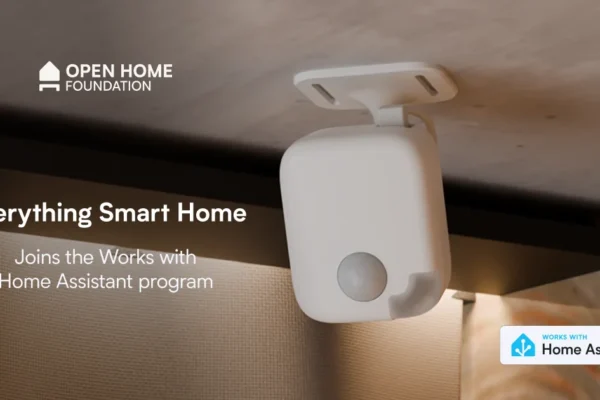
Simultaneously, the commercial market is seeing the next generation of hardware emerge. Leaked information regarding an upcoming second-generation EveCam suggests a focus on form factor and connectivity, with reports indicating a compact design and support for both 2.4GHz and 5GHz Wi-Fi networks. Despite the arrival of Matter, security cameras have yet to be fully integrated into the standard, meaning products like the new EveCam will likely continue to rely on platform-specific ecosystems such as Apple HomeKit for the immediate future.
Conclusion and Future Implications
The events of the past week underscore a pivotal moment for the Internet of Things. The industry is moving away from the "wild west" phase of rapid, often fragmented, innovation and toward a period defined by reliability, standardization, and sustainable business models.
The $10 million infusion into Verdigris highlights the intersection of sustainability and smart building technology, while the acquisition of Atlazo by Nordic Semiconductor emphasizes the critical importance of localized AI. Meanwhile, the operational investments made by ChargePoint and the strategic pivots by companies like Shelly and Alphabet demonstrate that both large-scale infrastructure and home consumer markets are focusing on long-term viability. As Matter continues to evolve and the industry faces pressure to provide more robust, privacy-focused, and reliable services, the coming months will likely see a continued consolidation of both technology and business strategy. Stakeholders must remain agile, balancing the demand for new features with the growing necessity of maintaining the vast, interconnected systems that now underpin both commercial and residential environments.