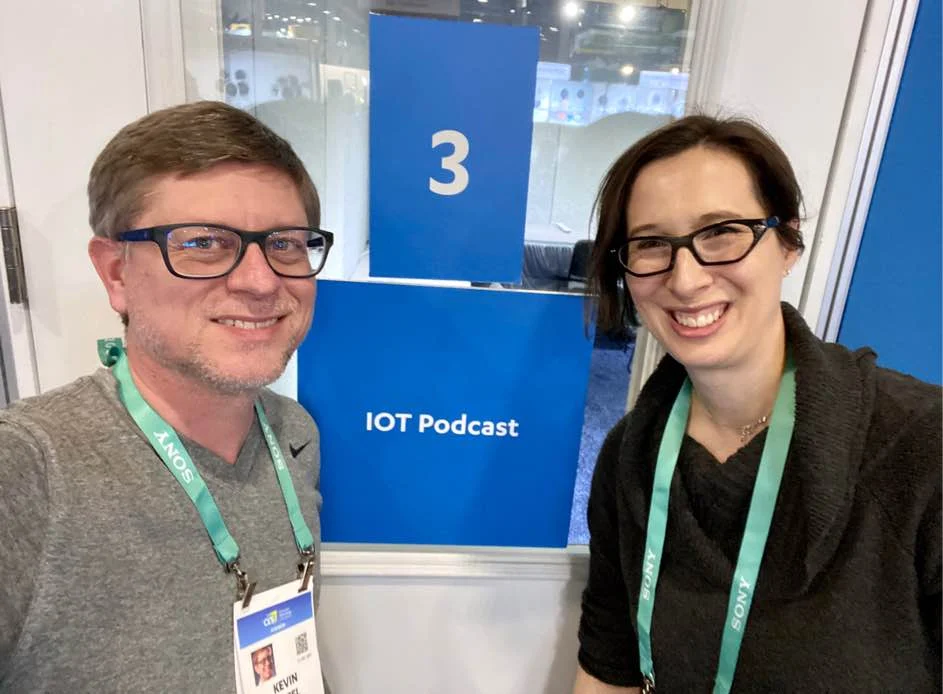
Stacey Higginbotham, a leading figure in technology journalism and a prominent analyst of the Internet of Things (IoT) sector, has officially concluded her long-running newsletter and podcast, "Stacey on IoT." The announcement, made in late August 2023, marks the end of a significant independent media venture that has tracked the evolution of connected devices for nearly a decade. Higginbotham, who transitioned from a senior editorial role at Fortune to launch her own platform in 2016, cited a need for a professional hiatus and a desire to address the broader societal implications of technology as the primary drivers for her decision. While the weekly publication has ceased, Higginbotham will continue to contribute to the field through a consulting role at the Consumer Reports Innovation Lab, focusing on cybersecurity and privacy issues.
The Evolution of Stacey on IoT and the Independent Media Shift
The trajectory of "Stacey on IoT" mirrors a broader shift in the media landscape where specialized journalists leave established legacy publications to build niche, high-value independent platforms. In 2016, when Higginbotham departed Fortune, the IoT industry was in a state of rapid, often disorganized expansion. At the time, the concept of "computing everywhere" was transitioning from a theoretical future to a commercial reality. Her decision to focus exclusively on this niche was initially met with skepticism by industry peers who questioned whether a single technological vertical could sustain a full-time independent business.
However, the subsequent seven years proved the relevance of the subject matter. As billions of devices—ranging from smart thermostats to industrial sensors—connected to the internet, the need for critical, technical, and social analysis became paramount. Higginbotham’s platform provided a bridge between deep-tech engineering and consumer-facing policy, attracting thousands of subscribers and a steady roster of corporate sponsors. The success of the "Internet of Things Podcast," co-hosted with Kevin Tofel, further solidified her influence, as the duo interviewed CEOs, engineers, and privacy advocates to dissect the complexities of a hyper-connected world.
A Decade of IoT Development: A Chronological Perspective
To understand the context of Higginbotham’s departure, it is necessary to examine the timeline of the IoT industry during her tenure.
In 2012, when Higginbotham began covering the smart home in earnest, the market was dominated by early adopters and fragmented protocols. The industry was characterized by a "Wild West" mentality, where security was often an afterthought and interoperability was virtually non-existent. By 2014, major acquisitions—such as Google’s $3.2 billion purchase of Nest Labs—signaled that the world’s largest technology companies viewed the home as the next great data frontier.
When Higginbotham launched her independent venture in 2016, the industry faced its first major reckoning with the Mirai botnet attack, which exploited poorly secured IoT devices to launch massive Distributed Denial of Service (DDoS) attacks. This event validated her early warnings regarding the systemic risks of adding connectivity to mundane household objects.
Between 2018 and 2022, the industry moved toward standardization, culminating in the development and launch of "Matter," a royalty-free connectivity standard designed to ensure that devices from different manufacturers could work together seamlessly. Throughout this period, Higginbotham’s reporting shifted from mere product reviews to sophisticated critiques of business models, specifically focusing on the transition from one-time hardware sales to recurring subscription services and data-monetization strategies.
Shifting Business Models and the Rise of Data Surveillance
A central theme in Higginbotham’s body of work, and a stated reason for her professional burnout, is the contentious evolution of the IoT business model. As hardware margins tightened, manufacturers increasingly turned to "data grabs" or mandatory subscriptions to maintain profitability. This shift created a precarious environment for consumers, who found that the functionality of their purchased devices was often contingent on the continued existence of a cloud service or a monthly fee.
Furthermore, the integration of microphones, cameras, and motion sensors into the domestic environment introduced unprecedented risks of corporate and government surveillance. Higginbotham’s reporting frequently highlighted the "surveillance capitalism" inherent in the modern smart home. Data suggests that by 2023, the average American household owned approximately 22 connected devices. The cumulative data generated by these devices provides a granular view of human behavior, which, as Higginbotham noted, often adds more complexity and risk to a user’s life than actual utility.
In the industrial and corporate sectors, the implications were equally profound. The use of IoT to monitor employees—often framed as "optimization" or "productivity enhancement"—has raised significant ethical concerns regarding the limits of workplace surveillance. While corporations have touted these technologies as essential for Environmental, Social, and Governance (ESG) goals, Higginbotham’s analysis often pointed toward "greenwashing," where technology is used to mask fundamentally unsustainable business practices rather than rectifying them.
The Impact of Journalistic Burnout in the Tech Sector
The departure of a high-profile independent journalist highlights a growing trend of burnout within the tech-reporting community. The 24/7 news cycle, combined with the relentless pace of product launches and the pressure to maintain constant engagement on social media platforms, has taken a toll on veteran reporters. Higginbotham’s career spans over two decades, a period that saw the transition from print-dominant media to the digital-first, algorithm-driven landscape of today.
In her farewell address, she expressed a sense of cynicism regarding the influx of new startups and research. This sentiment is echoed by many in the industry who feel that the "innovation" currently being marketed often fails to solve genuine human problems, focusing instead on marginal gains or further data extraction. For a journalist whose career was built on genuine excitement for technological potential, this loss of optimism represents a significant professional hurdle.
Future Endeavors and the Consumer Reports Collaboration
Despite stepping back from her primary newsletter and podcast, Higginbotham is not exiting the technology sphere entirely. Her move to the Consumer Reports Innovation Lab as a consultant marks a transition from reporting on problems to actively working on solutions. Consumer Reports, a non-profit organization dedicated to unbiased product testing and consumer advocacy, has increasingly focused on the digital safety of modern products.
Higginbotham’s role will specifically target cybersecurity and privacy issues associated with connected devices. This aligns with recent regulatory trends, such as the U.S. government’s "U.S. Cyber Trust Mark," a proposed labeling program to help consumers identify secure IoT devices. Her expertise will likely contribute to the development of rigorous testing standards that hold manufacturers accountable for the security of their software and the transparency of their data practices.
Broader Implications for the IoT Industry
The closure of "Stacey on IoT" leaves a void in the specialized tech media landscape. As the industry moves into its next phase—dominated by the integration of Generative AI into physical devices and the expansion of the "Ambient Internet"—the loss of a critical, independent voice is noteworthy.
Market analysts suggest that the IoT sector is entering a period of consolidation. The initial "hype" phase has passed, and companies are now faced with the reality of maintaining long-term software support for millions of aging devices. The "abandonware" problem—where smart devices become useless bricks after a company shuts down its servers—remains a major hurdle for consumer trust.
Furthermore, the technical challenges of the industry are being replaced by policy challenges. Issues such as the "Right to Repair," data sovereignty, and the ethical use of AI in monitoring are becoming the new battlegrounds. Higginbotham’s career trajectory suggests that the most important work in technology may no longer be in the reporting of "what" is being built, but in the rigorous questioning of "how" and "why" it is being deployed.
Conclusion
Stacey Higginbotham’s departure from the weekly IoT beat signifies a moment of reflection for both the media and the technology industry. Over seven years, her platform documented the rise of a trillion-dollar industry while simultaneously sounding the alarm on its most significant failures. As she moves into a role focused on consumer protection and digital safety, the legacy of her reporting remains a foundational resource for understanding the complexities of a world where everything is connected. Her exit serves as a reminder that while technological progress is inevitable, the human capacity to critically evaluate that progress requires a level of sustained energy and optimism that the current news cycle often fails to support. For now, the "Stacey on IoT" community will look to her future contributions at Consumer Reports to continue the essential work of making the connected world safer and more equitable for all users.