











Engineering teams scaling artificial intelligence applications are increasingly discovering that prototyping an autonomous agent over a weekend is vastly different from maintaining its financial viability by month three. While initial deployments often mask operational inefficiencies, production-level scaling reveals that naive architectural patterns can cause API bills to spiral uncontrollably. At the core of this financial drain lies a fundamental engineering misconception: treating the dynamic context window as a static system of record rather than an ephemeral wire payload.
Industry data from enterprise AI deployments indicates that up to forty percent of production inference expenditure is wasted on redundant data transmission, uncompressed payloads, and unmanaged reasoning loops. As organizations transition from stateless text-generation wrappers to multi-step agentic workflows, understanding the distinction between ephemeral context and durable state has become paramount to software sustainability.
The Divergence of Context and State in Enterprise AI
For decades, software architecture has relied on clear boundaries between memory, storage, and communication protocols. However, the rapid adoption of large language models has led many development teams to bypass these conventional paradigms. The primary architectural flaw in modern agent design is the append-only trap, wherein every user message, tool observation, intermediate reasoning step, and assistant response is concatenated into an endlessly growing array.
By turn twenty of a complex interaction, an agent is forced to re-read its entire operational history on every subsequent application programming interface call. Because transformer attention mechanisms scale quadratically relative to input length, this practice not only inflates linear token costs but also exponentially increases inference latency. Engineers frequently conflate context—the transient token payload transmitted per request—with state, which represents the durable, serialized progression of an agent’s objectives. When these two concepts are merged, systems wind up repeatedly paying database-read costs on every single inference cycle.
Key Architectural Failures and Their Systemic Fixes
Industry analyses of production failures highlight seven pervasive patterns that accelerate token burn, alongside the structural modifications required to mitigate them.
1. Unchecked Context Window Accumulation
The default behavior of appending every conversational turn into a monolithic prompt array degrades system performance over time.
- The Architectural Fix: Implement a sliding context window coupled with semantic rolling summarization. Retain only the last few turns verbatim while compressing older exchanges into a concise background summary. Offload structural data to external deterministic stores like Redis or SQLite rather than injecting them back into the prompt.
- The Trade-off: Summarization is inherently lossy. Exact cryptographic hashes, unique identifiers, or specific code snippets from early sessions can be lost, requiring secondary key-value lookup tools to maintain precision.
2. Unfiltered Third-Party Tool Ingestion
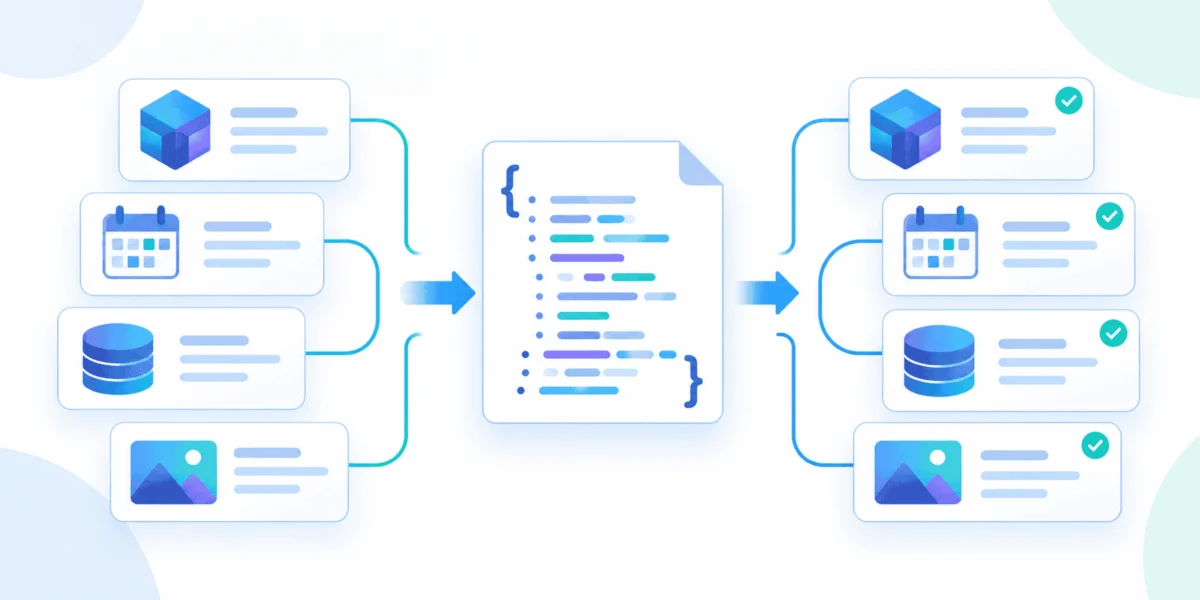
When agents interface with external systems such as customer relationship management software, payment gateways, or cloud infrastructure APIs, they frequently ingest deeply nested JSON payloads. A standard webhook response can easily consume thousands of tokens containing metadata the model will never utilize.
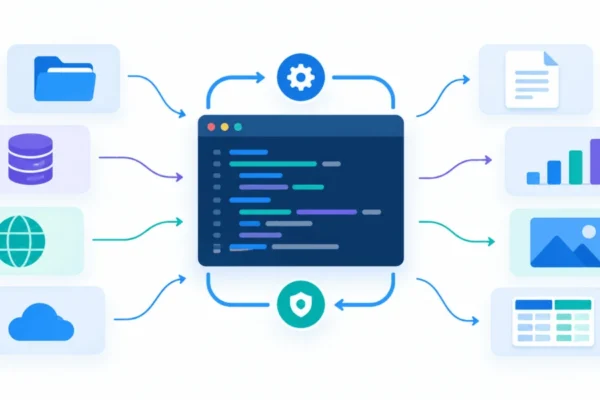
- The Architectural Fix: Deploy a dedicated middleware transformation layer between tool execution and context injection. This layer strips null values, discards non-essential keys, and formats deep hierarchies into dense Markdown or YAML.
- The Trade-off: Overly aggressive filtering can inadvertently strip critical operational metadata, such as pagination cursors, which can silently break multi-step retrieval loops.
3. Retrieval Thrash and Naive Text Matching
In code generation and retrieval-augmented generation systems, standard text-matching utilities often prompt orchestrators to dump entire multi-thousand-line files into the context window to answer a localized query.
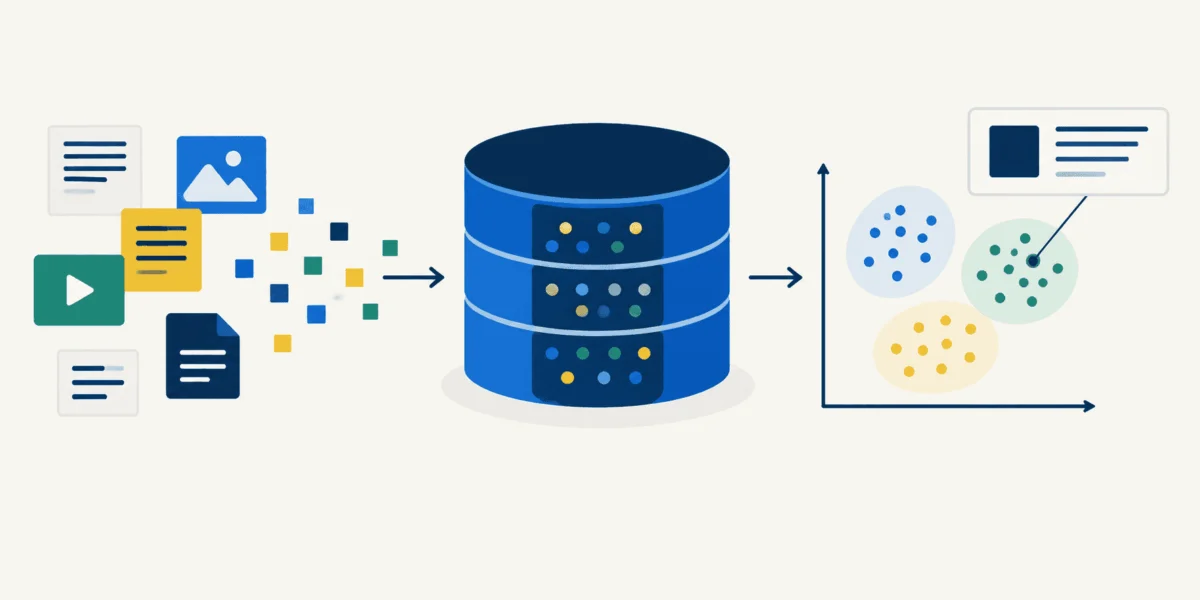
- The Architectural Fix: Transition to chunked, abstract syntax tree-aware retrieval. Parsing code into live call graphs during indexing allows systems to return exact function signatures, docstrings, and immediate structural dependencies—reducing a 4,000-token file dump down to roughly 300 targeted tokens.
- The Trade-off: Graph-aware retrieval requires continuous, resource-intensive asynchronous indexing pipelines to prevent the agent from reasoning over stale repository states.
4. Static Tool Schema Bloat
Frameworks frequently define all available tools upfront, injecting dozens of schema definitions into every single model call, regardless of whether those tools are relevant to the current task phase.
- The Architectural Fix: Integrate context-aware tool pruning governed by a finite state machine. Dynamically adjust tool availability based on the agent’s current operational state—restricting discovery phases to read tools and execution phases to write tools.
- The Trade-off: Dynamically altering the tool array invalidates prompt key-value caches managed by LLM providers, increasing latency and reducing cache-hit cost discounts.
5. Unbounded Chain-of-Thought Loops
Autonomous loops can easily become trapped when an API call fails repeatedly, causing the agent to generate endless reasoning and retry sequences that rapidly consume expensive output tokens.
- The Architectural Fix: Enforce orchestrator-level circuit breakers with strict maximum retry counts and hard output token caps per action, triggering human escalation or deterministic fallbacks when thresholds are breached.
- The Trade-off: Aggressive circuit breakers can produce false positives on genuinely complex, multi-step planning tasks that require extended exploratory sequences.
6. Disregarding Key-Value Cache and Prompt Prefixing
Large language model providers utilize server-side caching of prompt prefixes to reduce latency and lower costs for repeated static content. However, dynamic variables like timestamps or user sessions injected at the top of a prompt invalidate these caches entirely.
- The Architectural Fix: Structure requests with a strict static-to-dynamic gradient, placing massive system prompts, organizational guidelines, and persistent schemas at the very top of the prompt payload.
- The Trade-off: Time-to-live restrictions on provider caches mean that low-traffic systems or slow agent thinking cycles may still experience cache expirations, rendering the structural optimization ineffective.
7. Monolithic Routing and Model Over-Provisioning
Deploying frontier-class models to handle trivial tasks such as basic intent classification, JSON parsing, or log summarization creates an unsustainable cost-to-output ratio at scale.
- The Architectural Fix: Establish a cascaded LLM router that directs basic structural sub-tasks to fast, lightweight models while reserving expensive frontier models strictly for complex, multi-step reasoning.
- The Trade-off: Smaller models exhibit higher error rates with complex tool schemas, meaning a misrouted classification can lead to cascading downstream failures and doubled token expenditures.
Economic and Operational Implications
By the one-hundredth day of a production AI deployment, token optimization transitions from a simple accounting concern to a critical data quality challenge. Unmanaged context accumulation leads to the proliferation of stale facts in vector stores, outdated API documentation in episodic memory, and erratic agent behavior driven by hallucinated states.
Industry analysts project that enterprise spending on generative AI inference will face stringent budget rationalization as organizations move past initial proof-of-concept phases. Engineering leaders are discovering that enforcing strict context constraints not only curtails runaway API expenditures but also forces more deterministic behavior, diminishes orchestrator timeouts, and significantly narrows the system’s overall failure domain. Balancing cache efficiency, tool pruning, and model cascading requires continuous telemetry monitoring and rigorous analysis of real production traces to ensure long-term architectural viability.