








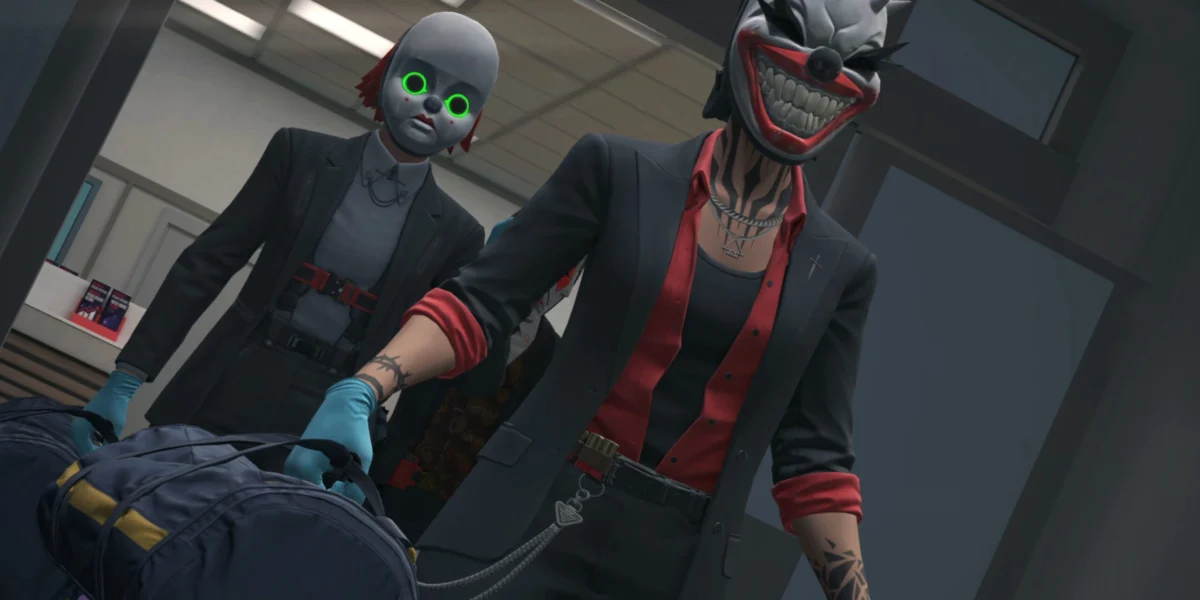
Payday Aces High has officially launched across Meta Quest, SteamVR, and Steam Frame, marking a significant expansion of the long-standing Payday franchise into the immersive domain of virtual reality. Developed by Fast Travel Games, a studio recognized for its pedigree in VR development, the title tasks players with forming four-person crews to execute complex robberies and seek retribution against Warren Jupiter, a fictional billionaire antagonist responsible for framing the player characters. The release represents a strategic shift for the franchise, leveraging VR-native mechanics to redefine the cooperative shooter experience that has defined the series for over a decade.
The Evolution of the Payday Franchise
The Payday series, originally conceptualized by Overkill Software, became a cultural touchstone in the tactical cooperative shooter genre following the massive success of Payday 2 in 2013. The franchise built its reputation on high-intensity, objective-based missions that required coordination, strategic loadout management, and rapid decision-making. However, the subsequent release of Payday 3 faced significant criticism upon launch due to server stability issues and a departure from the established gameplay loops that fans of the series had come to expect.
Payday Aces High attempts to bridge this gap by returning to the foundational elements of the original series while integrating modern VR technologies. The game focuses on four distinct archetypes—the Ace of Hearts, Clubs, Diamonds, and Spades—which serve as the narrative anchors for the experience. While these characters offer visual distinction, the progression system is rooted in a robust, player-defined statistical model that allows for deep customization of skills, perks, and weaponry as players accumulate wealth through successful heists.

Chronology and Launch Roadmap
The development cycle for Payday Aces High was characterized by a period of alpha and beta testing, during which the developers solicited feedback from a core community of VR enthusiasts to refine the title’s physical interaction models. Following the completion of these testing phases, the title entered its final review stage in November 2026.
The launch schedule is structured around a tiered content release strategy. Upon its debut, the game features six primary missions ranging from bank robberies to high-security museum infiltrations and complex extractions, such as the recovery of a quantum computer from an arctic facility. According to the development roadmap provided by Fast Travel Games, the content cycle is set to expand rapidly. A seventh mission, titled "Coup de Grace," is scheduled for release on December 14, 2026, as a free update for all existing owners. Furthermore, the studio has committed to a series of seasonal DLC drops that will introduce new equipment, aesthetic masks, and expanded narrative chapters throughout the first half of 2027.
Technical Implementation and VR Mechanics
The transition to VR has necessitated a departure from traditional "flat" control schemes. Fast Travel Games has implemented a suite of VR-native mechanics designed to heighten player immersion. Key features include an on-body inventory system, which requires players to physically reach for equipment, and physics-based gunplay that demands manual reloading and handling.
One of the standout technical achievements in Payday Aces High is the integration of skill-check minigames. These tasks, such as digital hacking or lock manipulation, are designed to be performed under pressure, often while the player must remain aware of their physical surroundings. The ability to multitask—for instance, maintaining a line of sight on enemy combatants while simultaneously engaging with a terminal—serves as a primary differentiator between this title and its non-VR predecessors.

The game supports full cross-platform play, ensuring that users on Meta Quest hardware can collaborate seamlessly with those utilizing high-end PC VR setups through SteamVR. This cross-play functionality is critical for the game’s longevity, as it maintains a unified player pool for matchmaking, which is essential for a game that relies entirely on cooperative four-player dynamics.
Analysis of Gameplay and Design Constraints
While the reception to the game’s core loop has been positive, technical analysis reveals a clear distinction between the game’s strengths and its limitations. The primary strength lies in the successful translation of the "heist" fantasy into a physical space. The challenge of the game scales appropriately with player skill, and the iterative nature of the missions encourages multiple playthroughs to achieve optimal efficiency.
However, the game exhibits certain design constraints inherent to the current limitations of consumer VR hardware and software development. The absence of specific mechanics, such as the ability to take hostages—a staple of the original Payday games—suggests a simplified approach to crowd control. Furthermore, the limited interactability of environmental assets, such as the inability to shatter glass with melee attacks or utilize debris for tactical distractions, limits the scope of "emergent" gameplay. These omissions suggest that the developers prioritized performance and stability across standalone hardware like the Meta Quest 3 over the inclusion of exhaustive, high-fidelity physical interactions.
Market Implications and Future Outlook
The launch of Payday Aces High arrives at a pivotal moment for the VR gaming industry. As major publishers seek to port successful non-VR intellectual properties (IP) into the virtual reality space, the performance of this title will likely serve as a case study for future development. By focusing on a "cooperative first" design philosophy, Fast Travel Games is positioning the title not just as an experimental VR tech demo, but as a long-term service platform.

The implications for the broader Payday brand are significant. By diversifying into VR, the franchise is attempting to recapture the audience that felt alienated by the technical missteps of Payday 3, while simultaneously tapping into the growing market of standalone VR headset owners. If the "Coup de Grace" update and subsequent DLC drops meet community expectations, Payday Aces High could potentially become the definitive multiplayer experience for the VR ecosystem in 2027.
From an economic perspective, the game utilizes a traditional premium pricing model augmented by a roadmap of post-launch content. This structure is intended to sustain the game’s server costs and fund ongoing development. The inclusion of community-driven challenges, which reward players with exclusive in-game loot, is a tactic designed to maintain daily active user (DAU) counts—a key metric for any cooperative online game.
Conclusion
Payday Aces High stands as a technically proficient and highly engaging addition to the VR library. While it may lack some of the granular environmental interactions found in simulation-heavy titles, its core gameplay loop—centered on the strategic coordination of a four-person crew—is effectively executed. As the game moves into its first phase of post-launch support, the collaboration between the development team and the community will be the primary driver of its long-term success. For those interested in the tactical, cooperative, and high-stakes nature of the heist genre, the transition to virtual reality offers a new, immersive perspective on a formula that has remained compelling for over a decade. Whether it can sustain its momentum will depend on the frequency and quality of the promised content updates, but for now, it represents a successful pivot for the storied franchise.