The concept of Everyday Carry (EDC) has transcended its origins as a niche hobbyist subculture, evolving into a sophisticated discipline of personal organization, emergency preparedness, and professional efficiency. As global work environments become increasingly digitized yet reliant on high-performance manual tools, professionals like Ruben, an aeronautical automation operator based in Portugal, serve as case studies for the modern integration of tactical utility and minimalist aesthetics. This analysis examines the shifting landscape of EDC gear, focusing on the intersection of industrial reliability and personal expression in contemporary professional life.
The Anatomy of a Modern Professional Loadout
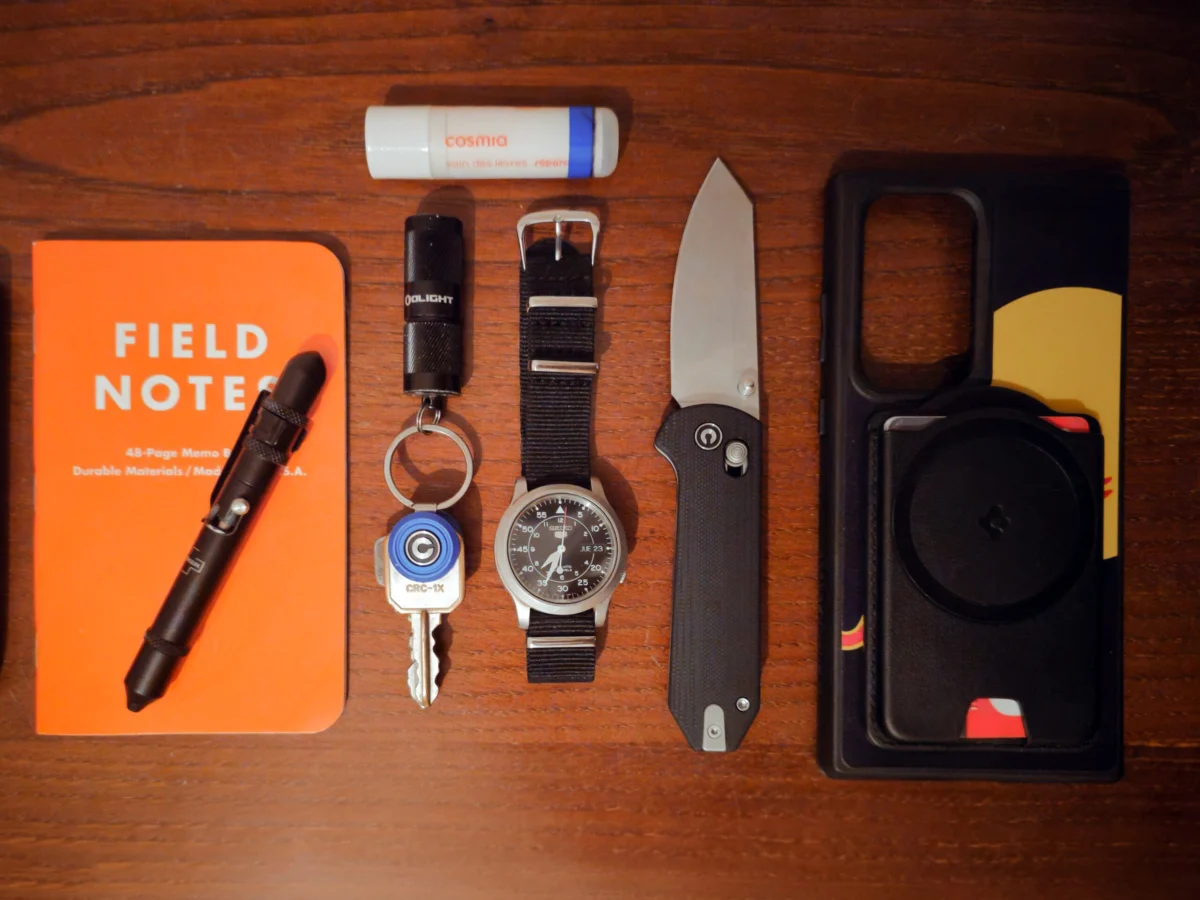
For individuals operating within high-stakes environments such as aeronautical automation, the equipment carried on one’s person is not merely a collection of accessories, but a set of essential instruments. The recent disclosure of Ruben’s kit underscores a strategic transition toward compact, multifunctional components. His current configuration includes a focus on hardware that prioritizes ergonomics and weight-to-performance ratios.
Central to this shift is the recent adoption of the CIVIVI Yonder, a pocket knife designed by Zac Whitmore. The Yonder, which earned the "Best Buy of the Year" designation at the 2024 Blade Show, represents a broader trend in the knife industry: the democratization of high-end materials and locking mechanisms. The implementation of a crossbar-lock system—a mechanism previously reserved for premium, high-cost folders—indicates that professional users are increasingly demanding industrial-grade safety features in their daily tools. The Yonder’s ambidextrous functionality and ergonomic geometry reflect a design philosophy that values efficiency in high-pressure scenarios where manual dexterity is paramount.
A Chronology of EDC Evolution
The EDC movement has undergone three distinct phases over the last decade. From 2014 to 2017, the focus was primarily on "tactical" gear, heavily influenced by military and law enforcement trends. This period favored heavy-duty, over-engineered materials, such as titanium and thick G10 composites, often sacrificing pocket space for perceived durability.
Between 2018 and 2021, the trend shifted toward "minimalist utility." The rise of magnetic wallet systems, ultra-compact key organizers, and integrated smartphone accessories defined this era. The objective was to reduce physical bulk while increasing the versatility of the individual items. The transition away from traditional leather wallets toward tech-integrated magnetic solutions mirrors the broader digitization of payment and identification systems.
Since 2022, the movement has entered a phase of "curated professional refinement." Current practitioners, including those in technical fields like aeronautical engineering and automation, are shifting toward gear that balances aesthetic appeal with technical specifications. The inclusion of notebooks like Field Notes in professional rotations suggests a resurgence of analog data capture. Even in highly automated industries, the ability to rapidly record manual observations in a durable, physical format remains a critical workflow for many operators.
Data-Driven Utility: The Shift Toward Compactness
Market analysis of the EDC sector indicates a 15% year-over-year increase in consumer interest toward "compact" and "lightweight" gear categories. This data suggests that the modern professional is optimizing their loadout for mobility. The preference for smaller, bolt-action pens and keychain-integrated flashlights—items frequently observed in modern loadouts—demonstrates a commitment to the "always ready" philosophy without compromising on comfort.
In Ruben’s specific case, the intent to rotate between the CIVIVI Yonder and the Kizer Feist, or the Casio Edifice watch, highlights the concept of "contextual EDC." Professionals are increasingly curating "day-on" and "day-off" configurations. The Kizer Feist, a front-flipper knife known for its clean lines and refined profile, is often favored for its "gentleman’s folder" aesthetic, whereas the Yonder is utilized for its more robust, work-oriented locking mechanism.
The Role of Industrial Design in Daily Tools
The integration of professional-grade gear into civilian life is not without its challenges. Manufacturers are currently grappling with the balance between strict material quality and cost-effectiveness. The Blade Show 2024 awards, where the Yonder received significant accolades, serve as a barometer for industry trends. Judges at these events prioritize:
- Deployment Speed: The efficiency of the opening mechanism under varying conditions.
- Locking Security: The structural integrity of the blade lock, ensuring it remains deployed during rigorous use.
- Weight-to-Length Ratio: The ability to carry a full-sized cutting edge in a profile that does not impede movement.
These criteria align with the requirements of professionals in automation, where the ability to quickly cut, score, or manipulate materials—often while wearing gloves—is a routine requirement. The shift toward ambidextrous tools is also a response to ergonomic inclusivity, ensuring that tools perform consistently regardless of the user’s dominant hand or the specific environment of the workspace.
Implications for the Future of Personal Gear
The implications of this trend extend beyond individual preferences. As the lines between work-related tools and personal items blur, organizations are increasingly seeing the benefit of encouraging staff to carry reliable, high-quality gear. The psychological benefit of "preparedness"—the knowledge that one is equipped to handle minor emergencies or logistical hurdles—has been cited in human-factors research as a contributor to increased situational awareness and reduced stress in high-demand roles.
Furthermore, the secondary market for these items—watches, knives, and writing instruments—is becoming a robust ecosystem. The mention of the Casio Edifice, particularly the Tiffany dial variant, points toward a growing interest in horology as part of the EDC narrative. Casio’s Edifice series, which offers sapphire crystal and 100-meter water resistance, serves as an entry point for professionals who require a timepiece that can withstand industrial hazards while maintaining a professional appearance in client-facing settings.
Synthesis of Professional Feedback
While the primary source for this review highlights the personal choices of a specific operator, the collective sentiment across professional forums indicates a move toward a "modular" lifestyle. The ability to swap out components—such as transitioning from a utility-focused knife to a more discreet, aesthetically pleasing option for non-work hours—allows the modern professional to maintain a consistent baseline of readiness while adapting to social or environmental norms.
The editorial perspective on this trend is clear: minimalism is not the absence of tools, but the presence of the correct tools. By consolidating high-frequency items into smaller, more efficient formats, individuals can reclaim their physical space. The integration of magnetic wallets and compact organizers represents a logistical victory for the modern commuter and worker alike.
Conclusion: The Modern Standard
As we look toward the future of everyday carry, the convergence of aesthetic design and technical performance will likely continue to dominate. The success of products like the CIVIVI Yonder, combined with the timeless appeal of analog recording tools and reliable, quartz-driven timepieces, suggests that the future of EDC is not found in high-tech gadgets alone. Instead, it is found in the thoughtful selection of durable, multi-purpose items that enhance the operator’s ability to function effectively in an increasingly complex world.
For professionals like Ruben, the process of refining one’s EDC is an ongoing project. It is a commitment to precision, a respect for the tools of the trade, and a recognition that even in an age of total automation, the individual remains the most critical component in any operational system. As this community continues to grow, the focus will undoubtedly shift toward even more specialized, high-performance gear that satisfies the rigorous demands of the modern workforce. Through the careful curation of these essential items, professionals are ensuring that they are not just prepared for the challenges of today, but ready for the unexpected requirements of tomorrow.