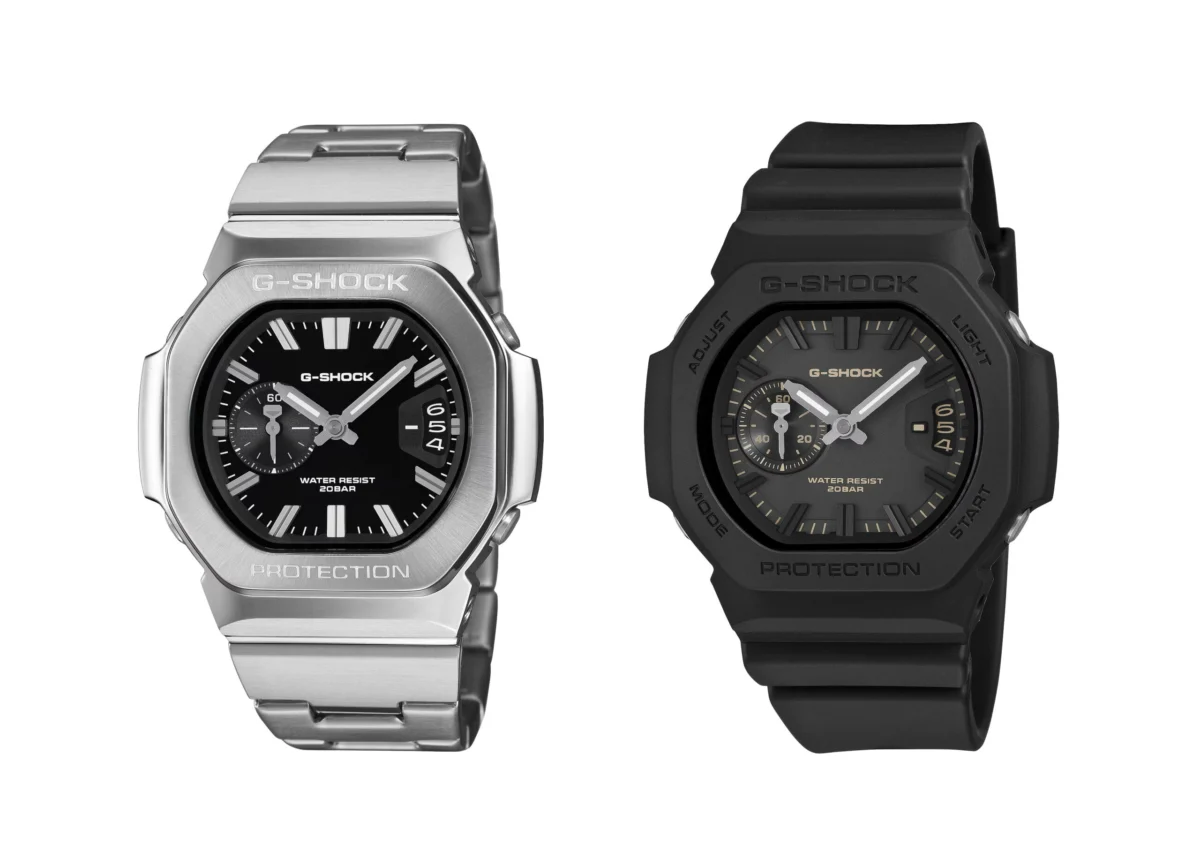
Building upon the monumental commercial and cultural success of the GA-2100 series—affectionately and universally nicknamed the CasiOak by horology enthusiasts—Casio is once again blurring the lines between accessible utilitarian durability and high-end luxury aesthetics. The Japanese multinational electronics manufacturing corporation has officially announced the upcoming release of the G-Shock GMC2500D, a timepiece that has already ignited fervent discussions across online watch forums, social media communities, and traditional horological publications. Drawing distinct design inspiration from legendary integrated-bracelet luxury sports watches, specifically the iconic Patek Philippe Nautilus, the new model has rapidly earned the moniker the CasioNaut.
Set to officially hit the market this November with an approachable price tier ranging from $145 to $350, the GMC2500D represents a calculated strategic move by Casio. The brand aims to capture both the budget-conscious consumer and the seasoned watch collector who appreciates high-end design silhouettes without the prohibitive secondary market valuations associated with Swiss Haute Horlogerie.
Main Facts and Core Architecture of the GMC2500D
At its technical core, the new G-Shock GMC2500D is an analog-focused timepiece engineered to bridge the gap between sophisticated aesthetics and the brand’s foundational commitment to rugged resilience. Unlike traditional fully digital G-Shock models, the GMC2500D showcases a refined, multi-layered analog dial layout that immediately draws the eye toward its geometry.
One of the most significant engineering breakthroughs integrated into this model is the introduction of a novel magnetic holding structure. In conventional analog watches, sudden impacts, heavy vibrations, or drop shocks can occasionally cause the delicate gear trains and hands to slip or misalign. To combat this vulnerability, Casio’s engineering team has utilized a magnetic holding structure that actively employs controlled magnetic force to lock the watch hands firmly in place upon impact. This clever application of physics ensures that the watch maintains accurate timekeeping even under rigorous physical duress, preserving the legendary toughness that has defined the G-Shock lineage since its inception in 1983.
Furthermore, power management has received a notable upgrade. The GMC2500D features an integrated sleep function tailored specifically for the small seconds sub-dial. When the watch detects prolonged periods of darkness or stationary placement—such as being stored in a watch box overnight—it automatically pauses non-essential secondary functions to drastically conserve battery life, thereby extending the operational longevity of the internal power cell.
The Innovation of the Multi-Mission Date
Beyond its robust mechanical architecture and luxury-inspired exterior, the GMC2500D introduces a proprietary complication that Casio has designated the Multi-Mission Date. Departing from standard, single-purpose date apertures, this feature utilizes a distinctive, fan-shaped three-cell window strategically positioned at the 3 o’clock marker on the dial.
This dynamic visual display is engineered to serve multiple functions simultaneously, optimizing the dial’s real estate without cluttering its minimalist symmetry. In its default state, the three-cell window clearly exhibits the calendar date. However, upon engaging the chronograph or navigating the watch’s internal settings menu, the same aperture dynamically shifts to display elapsed stopwatch times or configuration data. This multifunctional approach allows the analog display to retain a clean, uncluttered profile reminiscent of high-end dress and sports watches, while simultaneously offering the robust utility expected from a modern digital-analog hybrid instrument.
The Chronology of Affordable Luxury: From CasiOak to CasioNaut
To fully understand the market significance of the GMC2500D, it is essential to examine the historical trajectory that paved the way for its release. For decades, G-Shock was primarily understood as a specialized tool watch category—dominating the wrists of military personnel, law enforcement officers, athletes, and outdoor adventurers. While models like the DW-5600 and the Frogman achieved iconic status, they were seldom styled for formal or business-casual attire.
That paradigm shifted dramatically in 2019 with the release of the GA-2100 series. Featuring an octagonal bezel and a streamlined, slim profile, the watch bore an unmistakable structural resemblance to the legendary Audemars Piguet Royal Oak, a luxury timepiece designed by Gérald Genta in 1972. The watch community quickly dubbed it the CasiOak. What followed was an unprecedented global phenomenon. The CasiOak became an instant unicorn in the watch collecting community, suffering from chronic supply shortages, secondary market markups, and inspiring a thriving aftermarket modding industry where enthusiasts would install custom metal cases and bracelets onto resin-bodied base models.

Recognizing the immense appetite for luxury-adjacent designs within an accessible price bracket, Casio subsequently released metal-covered variations, such as the GM-2100, and fully metallic iterations like the GM-B2100. These releases proved that consumers were not only willing to pay a premium for metal finishes on G-Shock platforms, but were actively seeking out watches that combined G-Shock durability with the refined geometry of integrated-bracelet sports watches.
Building directly upon this accumulated consumer data and design evolution, the conceptualization of the GMC2500D began in earnest. By shifting focus from the octagonal Royal Oak motif to the sweeping, porthole-inspired curves and integrated bracelet lines reminiscent of the Patek Philippe Nautilus (first introduced in 1976), Casio has effectively opened a second front in the affordable luxury design wars.
Design Variations: Metal and Resin Configurations
Versatility remains a cornerstone of Casio’s product strategy, and the GMC2500D will launch with structural options catering to diverse aesthetic preferences. Consumers will be able to choose between full-metal configurations and durable resin builds.
The metal variants, expected to occupy the higher end of the $145 to $350 pricing spectrum, feature meticulously brushed and polished finishes that catch the light in a manner previously unseen in standard resin-dominant G-Shock models. The transition from the case to the integrated metal bracelet has been engineered to offer seamless continuity, mirroring the fluid ergonomics of high-end Swiss horology. Meanwhile, the resin iterations provide a lightweight, highly flexible, and rugged alternative suitable for active daily wear, maintaining a stealthy, understated profile while retaining all the mechanical and functional upgrades of the series.
Industry Analysis and Market Implications
The impending launch of the GMC2500D arrives at a fascinating juncture in the global watch industry. In recent years, the secondary market valuations for luxury integrated-bracelet steel sports watches—such as the Patek Philippe Nautilus, Audemars Piguet Royal Oak, and Vacheron Constantin Overseas—have skyrocketed to levels entirely detached from retail pricing. Consequently, an enormous population of aspiring collectors and fashion-conscious consumers have been priced out of owning authentic luxury pieces featuring these iconic silhouettes.
Brands that successfully democratize high-end design language while offering legitimate utility are positioned to capture substantial market share. By pricing the GMC2500D between $145 and $350, Casio bridges the gap between fast-fashion timepieces and elite horology. Market analysts suggest this strategy not only protects Casio’s profit margins in a fluctuating global economy but also insulates the brand by appealing to younger demographics who prioritize versatile styling, heritage-adjacent design, and indestructible build quality.
Furthermore, the introduction of the CasioNaut is expected to stimulate a fresh wave of third-party modification culture. Given the enthusiastic reception of the CasiOak modding scene, component manufacturers are already preparing aftermarket bezels, custom dials, and specialized straps tailored to the GMC2500D platform, ensuring that the watch will maintain sustained cultural relevance long after its initial November launch.
Availability and Launch Details
As anticipation builds across the horological community, Casio has confirmed that the G-Shock 2500 series will officially debut in stores and via online channels this coming November. With a retail price point spanning from $145 to $350 depending on the selected materials and finish, the GMC2500D is widely anticipated to experience high initial demand, echoing the supply constraints that characterized the early days of its predecessor.
Horology enthusiasts, casual wearers, and design aficionados alike will have their eyes fixed on Casio’s official distribution channels this autumn. Whether the CasioNaut will completely replicate the wildfire success of the CasiOak remains to be seen, but early indicators suggest that Casio has struck gold once again, proving that exceptional design, innovative engineering, and radical affordability can coexist on a single wrist.