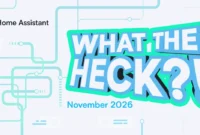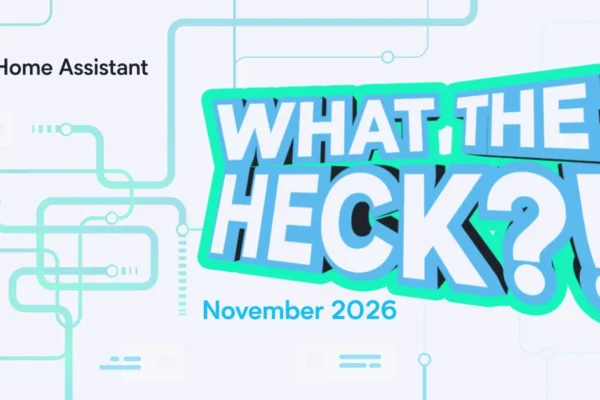






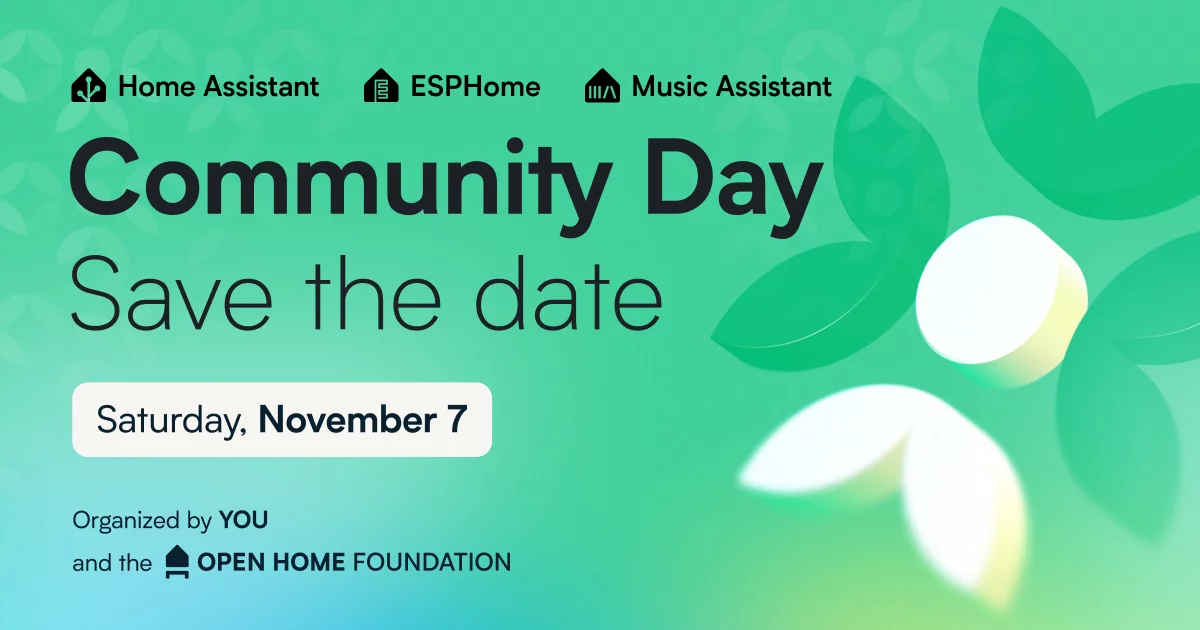
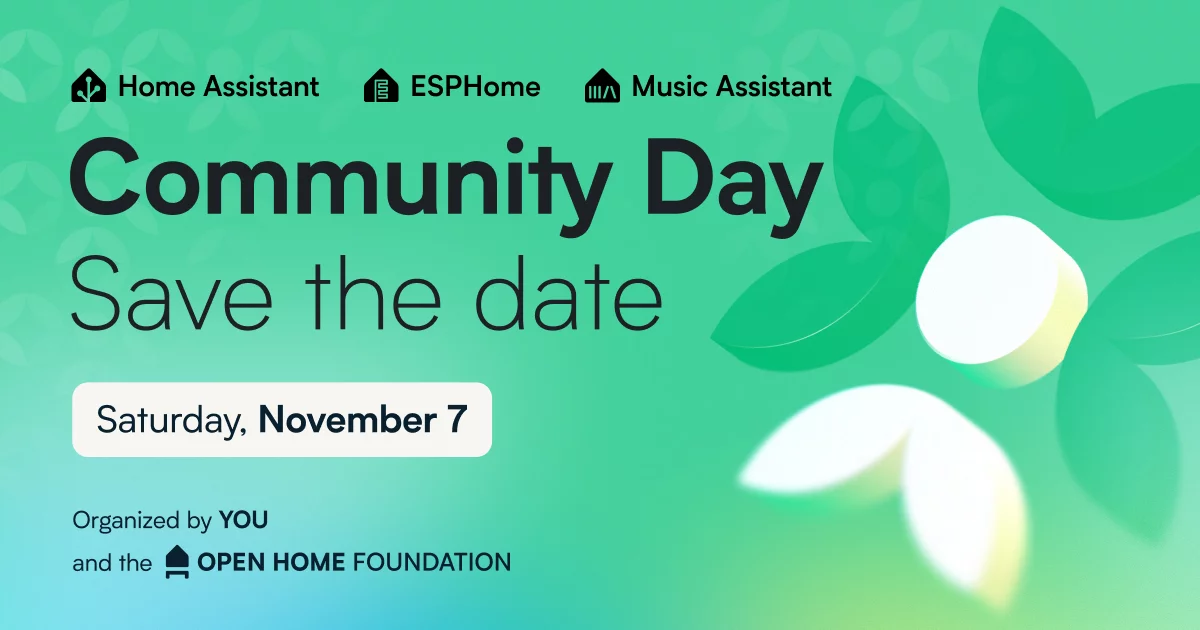
The Open Home Foundation has officially announced that Community Day 2026 will take place on Saturday, November 7. Following the success of the inaugural global gathering in May 2025, organizers have implemented an extended planning timeline and broadened the scope of the event. Rather than focusing exclusively on Home Assistant, the 2026 iteration will encompass the entire ecosystem of the Open Home Foundation, extending official support and recognition to communities surrounding major open-source projects such as ESPHome and Music Assistant.
This strategic expansion reflects the rapid growth of the open-source smart home sector and aims to provide a unified platform for diverse developer and user bases worldwide. By setting the date nearly a year in advance, the foundation seeks to address logistical challenges identified during post-event evaluations of the 2025 gatherings, thereby empowering local organizers to secure venues, coordinate schedules, and execute promotional campaigns with unprecedented efficiency.
Background and Evolution of the Global Meetup
The concept of a centralized, globally synchronized community event originated from the burgeoning demand for localized peer-to-peer engagement among smart home enthusiasts, developers, and privacy advocates. In May 2025, the first Home Assistant Community Day established a benchmark for decentralized tech gatherings, featuring packed venues across multiple continents. A retrospective analysis published in June 2025 detailed the triumphs and operational hurdles of coordinating a simultaneous worldwide event.
While attendance figures and user engagement exceeded initial projections, the post-action review highlighted a critical area for improvement: lead time. Local organizers emphasized that compressed planning windows limited their ability to maximize venue capacity and secure institutional partnerships. In response, foundation leadership committed to an earlier announcement cycle for subsequent iterations, culminating in the formalization of the November 7, 2026 date.
Furthermore, the integration of the Open Home Foundation’s broader project portfolio marks a maturation of the event’s governance. Established to safeguard and promote open, independent smart home technologies, the foundation oversees multiple critical infrastructure projects. Incorporating initiatives like ESPHome and Music Assistant acknowledges that modern open-source home automation relies on an interconnected ecosystem of complementary protocols and tools, rather than any single platform.
Organizational Framework and Resource Deployment
To support the expanded scope of Community Day 2026, the Open Home Foundation has rolled out a comprehensive suite of resources designed to streamline operations for local hosts. Recognizing that volunteer organizers require institutional backing to execute successful meetups, the foundation is introducing several key administrative upgrades.
Foremost among these is the development of a dedicated, dynamic website slated to launch alongside official calendar submissions in September 2026. This portal will feature real-time updates as local chapters register their events on the Luma calendar platform. In addition, organizers will gain access to updated financial reimbursement guidelines, streamlined merchandise request forms, and a standardized Host Playbook. This document will distill best practices gathered from the 2025 events into actionable strategies for venue management, content curation, and community outreach.
Communication infrastructure has also been overhauled. Due to data privacy regulations and platform contact preferences, automated outreach to past hosts via third-party event platforms remains restricted. Consequently, the foundation has initiated direct communication channels, establishing dedicated roles and discussion categories within its official Discord server to coordinate with returning and prospective regional leaders.
Visual Identity and Strategic Branding
In tandem with the structural changes, the visual identity of Community Day 2026 has been redesigned to reflect the overarching ethos of the Open Home Foundation. Graphic design teams have updated the event’s color palette, moving away from project-specific branding toward a cohesive aesthetic aligned with the foundation’s core operational pillars.
The chosen color scheme mirrors the visual standards applied across foundation properties to represent sustainability—a deliberate choice intended to symbolize the reciprocal relationship between the organization and its user base. Foundation representatives noted that the community actively sustains the ecosystem through code contributions, documentation, translation, and peer support, making the sustainability motif an apt representation of the event’s purpose.
Chronology and Upcoming Milestones
The roadmap leading up to November 7, 2026, is structured to provide organizers with maximum preparation stability while accommodating the foundation’s broader international commitments.
- Early 2026: Initial feasibility studies and date selection processes concluded, prioritizing a Saturday with minimal interference from major global holidays.
- Mid-2026: Outreach to prior organizers via direct communication channels and Discord role assignments.
- Early September 2026: Official launch of the dedicated Community Day website, release of graphic asset packs, opening of Luma calendar submissions, and publication of the updated Host Playbook. This phase directly follows the foundation’s scheduled presence at IFA Berlin.
- September through October 2026: Localized promotion, venue finalization, and logistical coordination by regional chapter leads.
- November 7, 2026: Execution of Community Day 2026 worldwide.
Broader Industry Implications and Analysis
The institutionalization of a multi-project community day underscores the growing maturity of the open-source Internet of Things (IoT) landscape. As commercial smart home ecosystems increasingly move toward closed subscription models and platform fragmentation, projects anchored by the Open Home Foundation represent a viable counter-movement emphasizing local control, data privacy, and interoperability.
Industry observers note that decentralized communities play a vital role in sustaining complex software ecosystems without the backing of traditional venture capital or corporate marketing budgets. By investing in face-to-face engagement and providing robust administrative frameworks for grassroots organizers, the foundation strengthens developer retention and accelerates user adoption.
The inclusion of peripheral projects like ESPHome—which facilitates firmware replacement for ESP-based devices—and Music Assistant—which unifies multi-room audio streaming—acknowledges that modern users operate heterogeneous smart home environments. By fostering collaboration across these communities under a single banner, the Open Home Foundation encourages cross-pollination of ideas and technical expertise.
As preparations continue toward the September portal launch, the success of Community Day 2026 will likely serve as a barometer for the scalability of decentralized, community-driven technology governance in an increasingly corporate technological landscape.