












The Open Home Foundation has officially announced a transition to Plausible Analytics across its ecosystem of web properties, marking a significant shift in how non-profit advocacy organizations handle digital telemetry. Grounded in a core mission of digital privacy, user choice, and long-term technological sustainability, the Foundation’s newly outlined data policy rejects traditional, surveillance-heavy web monitoring tools in favor of fully aggregated, anonymized metrics hosted entirely on in-house infrastructure.
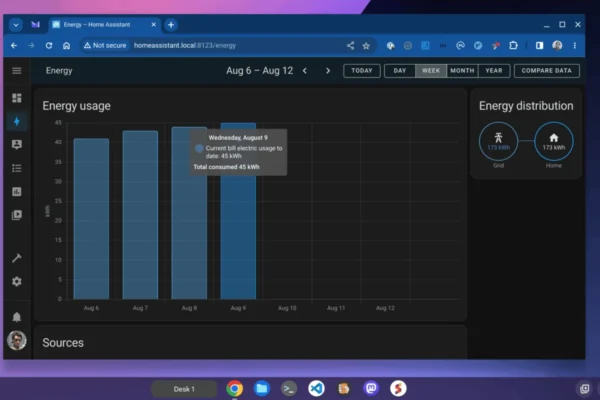
This implementation applies exclusively to the public-facing websites managed by the Open Home Foundation. It does not affect local Home Assistant instances, smart home automation data, or private user installations, addressing a frequent point of confusion among privacy-conscious consumers who utilize open-source automation platforms.
Background Context and the Modern Analytics Dilemma
For years, digital analytics have relied on cross-site tracking, persistent cookies, device fingerprinting, and behavioral profiling. While these invasive techniques allow corporate entities to monetize user data and construct hyper-targeted advertising profiles, they have simultaneously polluted the internet with intrusive cookie consent banners and systemic privacy violations. Regulatory frameworks such as the European Union’s General Data Protection Regulation (GDPR) were enacted precisely to curb these overreaches, forcing organizations to secure explicit consent and establish strict data retention and deletion schedules, typically capping storage at one to two years.
For non-profit entities like the Open Home Foundation, which champion user autonomy and resistance against Big Tech monopolies, utilizing conventional third-party analytics presented an ethical paradox. Basic server-side logging, the primary alternative utilized historically by the Foundation, offered aggregate page view counts but lacked transparency. Crucially, server logs provided no mechanism for visitors to inspect the collected data or opt out without completely abandoning the site. As the Foundation’s web presence expanded to support diverse projects, educational advocacy, and funding partnerships, operating entirely blind to fundamental website performance metrics became an untenable operational hurdle. Without insight into how users navigate resources, the organization faced genuine risks of misallocating finite philanthropic and community-driven resources.
The Technical Framework: How Plausible Analytics Operates
To resolve the tension between operational efficiency and uncompromising user privacy, the Open Home Foundation selected Plausible, an open-source analytics suite designed specifically to operate without compromising individual identity.
The technical architecture of the deployment completely eliminates persistent user identifiers. Plausible utilizes a rolling 24-hour session hash to count unique visitors without leaving permanent cookies or tracking tokens across multiple days or browsing sessions. Consequently, the platform does not gather cross-site visit histories, session replays, visual heat maps, or intricate browser fingerprinting signals such as custom fonts, precise screen resolutions, or system time zones.
Furthermore, while IP addresses are temporarily processed to determine rough geographical metrics at the country and regional level, these addresses are immediately discarded and never written to permanent storage. Basic engagement metrics—such as time spent on a specific page, scroll depth, browser category, operating system versions, and custom-configured event goals like document downloads or newsletter sign-ups—are logged purely in the aggregate.
Because the data is completely anonymized at the point of collection and contains zero personally identifiable information, the Foundation is not bound by the standard regulatory clock that mandates the deletion of user logs. Instead, the organization plans to retain these aggregated insights indefinitely, allowing developers, researchers, and community members to evaluate multi-year digital trends, assess the efficacy of onboarding guides, and measure long-term project growth.
Public Accountability and Granular User Control
A defining hallmark of the Open Home Foundation’s new analytics strategy is radical transparency. Unlike traditional corporate web analytics where dashboards remain locked behind proprietary accounts, the Foundation is making its Plausible metrics publicly accessible. A direct link to a public dashboard will be embedded at the footer of every participating Open Home Foundation website, allowing any visitor to audit the exact data points the organization views. In tandem with this rollout, the Foundation is systematically purging affiliate marketing links and superfluous tracking elements from its web properties.
Because the infrastructure avoids cookies and persistent tracking tokens, traditional cookie consent banners are entirely absent from the user experience. However, this architectural design introduces a unique nuance regarding user opt-out mechanisms. Because the platform does not recognize individual users across repeat visits, a standard opt-out preference toggle cannot be stored locally via a cookie.
Instead, individuals who prefer to be excluded from even anonymized aggregate metrics can block the telemetry script directly through standard browser ad blockers and content filtering extensions. The Foundation has publicly provided the precise filter rules for automated blocking:
||plausible.openhomefoundation.org/js/pa-*
Conversely, users who utilize aggressive default blocking lists but wish to support the Foundation’s transparency efforts by contributing to its privacy-respecting metrics can explicitly whitelist the domain using an exception rule:
@@||plausible.openhomefoundation.org/js/pa-*
Strategic Implications and Operational Objectives
The integration of Plausible analytics serves a critical function in preparing the Foundation for its stated goals heading into 2026. As the organization scales its advocacy for smart home privacy and open-source alternatives, understanding audience composition is vital for resource stewardship.
A primary objective for the upcoming fiscal cycle is lowering the barrier to entry for smart home automation, ensuring that non-technical users and seasoned developers alike can successfully navigate introductory guides and documentation repositories. Without basic engagement data, technical teams cannot reliably determine whether introductory onboarding materials are effectively reaching beginners or if users are inadvertently abandoning tutorials in advanced technical documentation.
By moving away from opaque server logs and rejecting commercial data-brokers, the Open Home Foundation sets a practical precedent for mission-driven organizations. The initiative demonstrates that rigorous digital telemetry and uncompromising data privacy are not mutually exclusive goals, proving that organizations can maintain operational competence while respecting the fundamental digital rights of their communities.
The phased rollout of Plausible analytics across Open Home Foundation web properties will take place over the coming months. As individual sites adopt the software, the corresponding public audit dashboards will simultaneously go live, reinforcing the organization’s broader institutional commitment to openness, accountability, and user choice.