




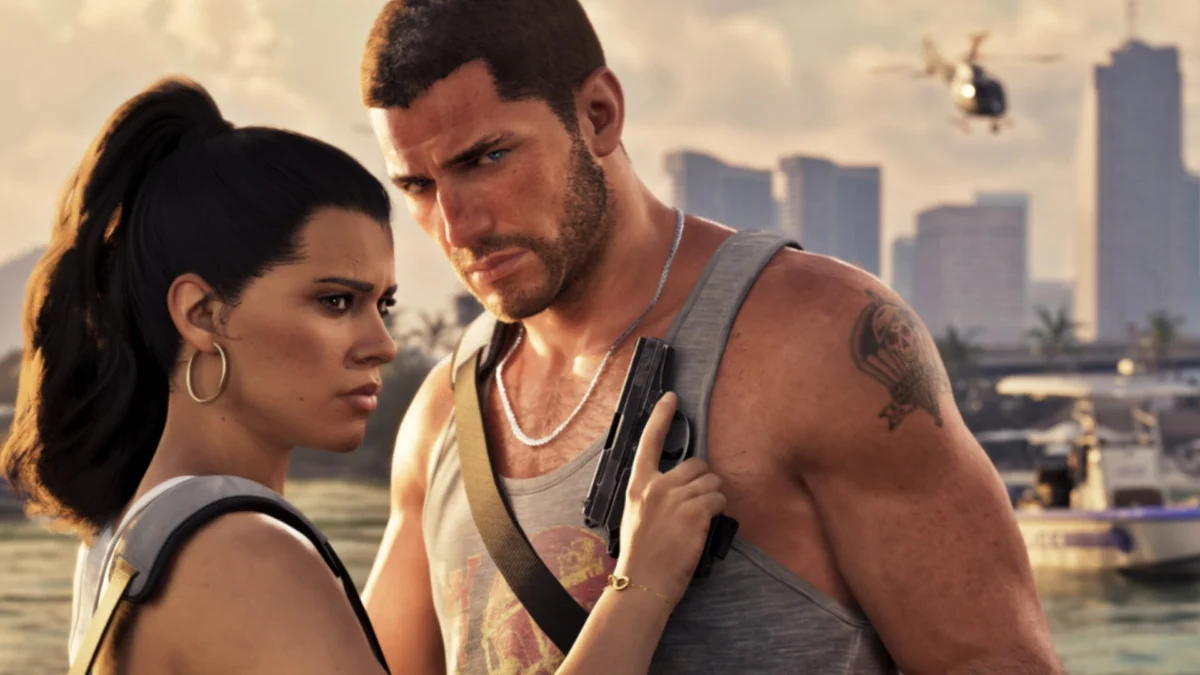
Grand Theft Auto 6 has officially begun its global rollout, bringing the highly anticipated crime epic to players in select territories including South Korea, New Zealand, and Japan. As the title reaches the hands of consumers in the Japanese market, players have begun documenting a series of localized content adjustments that differentiate the Japanese version from the international release. Most notably, investigations into the game’s assets have confirmed that Rockstar Games has implemented mandatory censorship regarding male nudity, opting to obscure character models with a thin black thong in instances where other global versions depict full frontal or posterior nudity.
This discovery confirms long-standing speculation that emerged during the pre-launch window. Prior to the game’s release, eagle-eyed observers noted that the Japanese age-rating board, the Computer Entertainment Rating Organization (CERO), omitted specific descriptors of sexual content that were present in ratings provided by Western counterparts like the ESRB and PEGI. Furthermore, reports indicated that the Japanese digital installation size was notably smaller than versions distributed elsewhere, leading many to conclude that assets had been modified or removed to comply with local regulatory standards.
A Chronology of Regulatory Adjustments
The process of bringing a Rockstar Games title to the Japanese market has historically been a complex negotiation between creative intent and local compliance. The current situation with Grand Theft Auto 6 is the latest in a decades-long trend of regional modification for the franchise.
In the weeks leading up to the November 2026 launch, the primary point of contention was the lack of transparency regarding the game’s "sexual content" classification. In Japan, CERO ratings are strictly enforced, and developers must often navigate narrow criteria to avoid an "Adults Only" rating, which effectively bans a game from being stocked in the majority of Japanese retail outlets. By masking the nudity—specifically during scenes involving character hygiene or incidental NPC behavior—Rockstar appears to have secured the necessary approval for a wider release.
This follows a established timeline of censorship for the series. When Grand Theft Auto 5 was released, it faced similar scrutiny, most famously resulting in the complete removal of an interactive torture sequence to satisfy regional guidelines. Similarly, other major open-world titles, such as The Witcher 3: Wild Hunt and Baldur’s Gate 3, have undergone comparable localized edits, where intimate scenes were either obscured or entirely cut to ensure availability within the Japanese market.
Analyzing the Impact of Regional Censorship
The censorship of male nudity in the Japanese version of Grand Theft Auto 6 raises broader questions about the standardization of global releases. While many publishers have moved toward a "global build" strategy—where the same version of the game is shipped to every country—the Japanese market remains a distinct outlier.
From a technical standpoint, the reduction in file size in the Japanese version suggests that these changes are not merely a texture overlay, but potentially a systemic modification to character model assets. Social media reports from users in Japan have highlighted that when players navigate their main protagonist, Jason, through hygiene-related animations, the game applies a consistent black garment that is absent in Western builds. Similar modifications have been observed on various NPCs, suggesting that the "thong" asset is a global override applied specifically to the Japanese distribution package.
This practice, while standard for the industry, presents a friction point for players who value the intended artistic vision of the developers. However, for Rockstar Games, the priority remains maximizing the game’s reach. By adhering to CERO’s mandates, the developer avoids the catastrophic financial risk of being barred from the world’s third-largest gaming market.
Industry Context and Historical Precedent
The phenomenon of regional content filtering is not unique to Grand Theft Auto. The Japanese gaming landscape is governed by a cultural expectation of modesty that often clashes with the hyper-realistic and provocative themes prevalent in Western "AAA" development.
In 2023, the release of high-profile Western titles frequently required "Japan-only" patches. In many cases, these patches serve to remove depictions of excessive violence, sexual acts, or specific drug-related references. The case of Grand Theft Auto 6 is particularly significant, however, due to the sheer scale of the project. As the most expensive entertainment product in history, the decision to bifurcate the build signifies the massive logistical investment Rockstar is willing to make to maintain its footprint in East Asia.
Furthermore, industry analysts have noted that the "censorship" is often a collaborative effort between the publisher and the rating board. It is rarely a surprise; rather, it is the result of months of dialogue where the publisher agrees to specific alterations in exchange for a rating that allows for mainstream commercial distribution.

Broader Implications for Global Gaming
The discourse surrounding these edits has sparked debate regarding the future of global gaming parity. As platforms like Steam and the PlayStation Store move toward more unified distribution, the existence of a "censored" regional version highlights the persistent boundaries created by localized morality laws.
While the current discourse centers on the presence of a black thong, the implications are wider. If the game requires modifications to character models to be sold in Japan, it suggests that the localization process for a game of this magnitude is significantly more intensive than it appears on the surface. Developers must maintain two separate branches of the game’s code—the global version and the Japanese version—and ensure that both remain stable throughout the title’s multi-year update cycle.
For the average player, these differences are a reminder of the complex regulatory web that global media must navigate. While some may view the change as a minor aesthetic adjustment, for the developers at Rockstar, it is a necessary tactical maneuver. The goal of providing a seamless experience across all platforms is constantly challenged by the realities of international law, cultural sensitivity, and the rigid requirements of organizations like CERO.
Conclusion and Future Outlook
As Grand Theft Auto 6 continues to roll out, the community will likely uncover further discrepancies. Whether these changes extend to other elements of the game, such as dialogue, mission structures, or secondary character interactions, remains to be seen. Rockstar Games has yet to issue an official statement regarding the specific nature of the Japanese modifications, keeping in line with their typically reserved approach to public relations.
What is clear, however, is that the release of this title represents a milestone in the history of interactive entertainment. Despite the localized censorship, the game has already shattered viewership records on Twitch and YouTube, and is poised to dominate the industry’s financial charts for years to come. The "thong" modification, while a subject of amusement and frustration for some, serves as a footnote in the larger, more successful narrative of a game that has managed to captivate a global audience despite the diverse—and often contradictory—regulatory landscapes it must traverse.
Ultimately, the Japanese release of Grand Theft Auto 6 confirms that even the most ambitious, boundary-pushing projects must eventually bow to local standards. As the game enters its post-launch lifecycle, the focus will likely shift from these regional oddities to the core gameplay experience, which, by all accounts, remains an unparalleled achievement in open-world design. Whether players are in London, New York, or Tokyo, the core mission of Rockstar remains the same: to push the horizons of what is possible in digital media, even if those horizons look slightly different depending on which side of the ocean you are standing on.