








The global electric vehicle landscape is undergoing a profound transformation, characterized by rapid technological advancements and aggressive pricing strategies that continually challenge established industry paradigms. In this fiercely competitive environment, Chinese automotive giant BYD has once again captured the attention of the international market with the official launch of the second-generation Seal 07. While dimensional comparisons might place the vehicle in a familiar category—roughly matching the footprint of a Toyota Camry—the engineering, powertrain efficiency, and dynamic control systems integrated into the Seal 07 position it in an entirely different technological tier.
Unveiled during a high-profile corporate presentation last week, the second-generation Seal 07 is marketed by BYD as a definitive new choice for consumers seeking a class-leading luxury experience at a remarkably accessible price point. Available in both Battery Electric Vehicle (BEV) and Plug-in Hybrid Electric Vehicle (PHEV) configurations, the sedan aims to bridge the gap between premium executive motoring and mass-market affordability. With a starting price equivalent to roughly $21,000 for the plug-in hybrid variant and $22,500 for the fully electric model, BYD is continuing its aggressive push to democratize high-end automotive features.
Main Facts and Vehicle Specifications
A closer examination of the Seal 07 reveals a vehicle engineered for presence and interior comfort. Both the BEV and PHEV iterations share identical physical dimensions, measuring 5,080 millimeters in length, 1,960 millimeters in width, and 1,495 millimeters in height. The substantial wheelbase of 2,960 millimeters provides a stable foundation that surpasses the interior volume of traditional mid-size sedans in its class, offering generous legroom for both front and rear occupants.
Beneath the sleek exterior lies BYD’s latest proprietary engineering triumphs. The fully electric Seal 07 is powered by a 76.7 kWh second-generation Blade LFP (Lithium Iron Phosphate) battery pack. This chemistry-optimized power source delivers an impressive CLTC-rated driving range of up to 481 miles (775 kilometers) on a single charge, addressing long-standing range anxiety concerns among consumers.
Perhaps more remarkable than the range is the vehicle’s charging capability. Utilizing BYD’s next-generation Blade Batteries in tandem with the company’s proprietary Flash Charging technology, the Seal 07 redefines charging infrastructure expectations. The battery system is capable of replenishing energy from 10% to 70% in a mere five minutes. Furthermore, extending that charge from 10% to 97% takes an astonishing nine minutes, significantly reducing downtime on long-distance journeys and setting a new benchmark for high-voltage architecture efficiency in the mid-size segment.
The Disus-M Intelligent Magnetorheological Body Control System

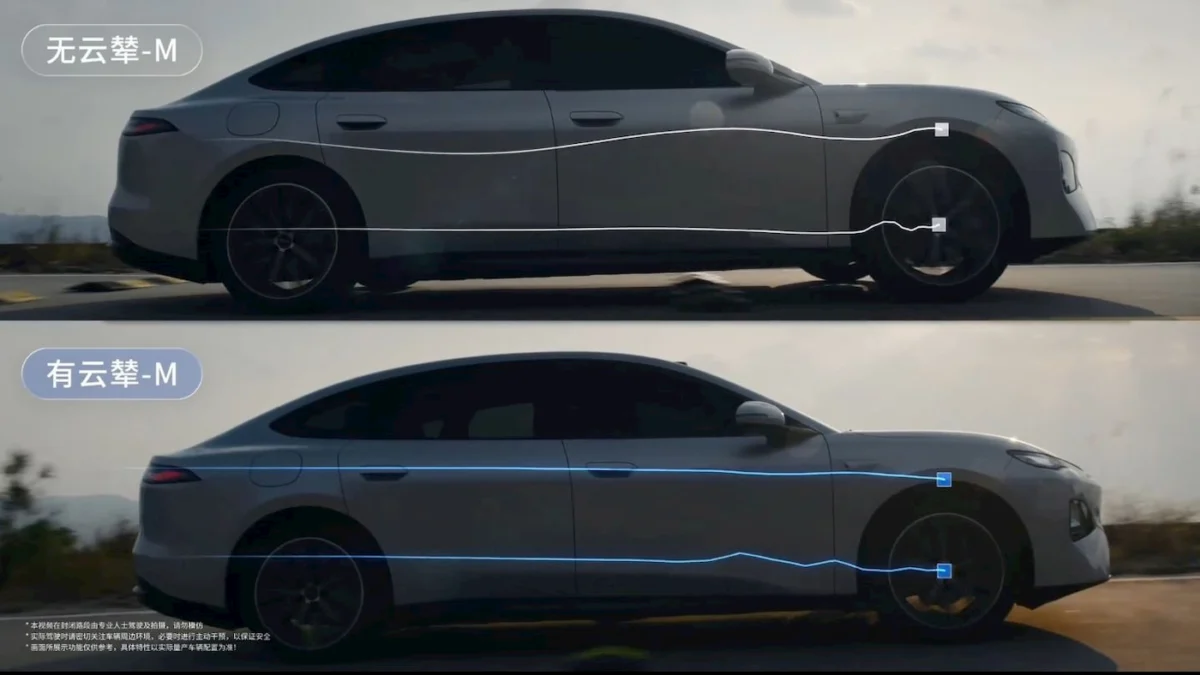
Beyond powertrain advancements, the most groundbreaking aspect of the second-generation Seal 07 is its suspension and body control architecture. The vehicle marks the global debut of BYD’s Disus-M Intelligent Magnetorheological Body Control System, a sophisticated setup traditionally reserved for ultra-luxury or high-performance sports cars.
The hardware configuration features a sophisticated front double-wishbone suspension paired with an enhanced rear five-link suspension setup. This mechanical foundation is overseen by an advanced suite of electronic sensors, including roof-mounted LiDAR units dedicated to scanning road surfaces ahead, and BYD’s proprietary iTAC 2.0 (Intelligent Torque Adaptation System).
Zhang Zhuo, general manager of BYD’s Ocean sales division, demonstrated the real-time capabilities of the Disus-M system during the vehicle’s debut, highlighting its lightning-fast response times measured in milliseconds. The system actively adjusts damping force across a vast dynamic range spanning from 100 to 10,000 Nm. This allows the vehicle to instantly adapt to varying road conditions, mitigating body roll during aggressive cornering, smoothing out severe pavement imperfections, and maintaining optimal tire contact patches for enhanced safety and ride comfort.
The Disus-M system comes standard on the top-tier, all-electric Flagship Seal 07 variant, which commands a starting price of 172,900 yuan (approximately $26,000). Meanwhile, lower-tier configurations of the vehicle are equipped with BYD’s highly capable Disus-C intelligent body control system, ensuring that even budget-conscious buyers benefit from advanced ride-quality management.
Chronology of Development and Market Introduction
The journey of the Seal lineage reflects BYD’s rapid product iteration cycle. The original Seal sedan was introduced as a direct competitor to established electric models globally, showcasing the structural integrity and thermal safety of the first-generation Blade battery. Recognizing the fast-paced nature of the Chinese domestic market—where consumer preferences shift toward higher intelligence and faster charging within months—BYD accelerated the development of its second-generation platform.
By late 2024 and throughout 2025, rumors of advanced magnetorheological damping integration circulated within automotive engineering circles. The official unveiling last week marked the culmination of these efforts, translating advanced laboratory chassis control technology into a commercialized consumer product within a remarkably tight timeframe. Initial reservation metrics released by BYD indicate robust consumer interest, with tens of thousands of orders placed within the first 48 hours following the announcement.
Interior Design, Smart Ecosystem, and Autonomous Driving

Inside the cabin, the Seal 07 embraces a minimalist yet ultra-modern aesthetic designed to rival luxury European marques. The centerpiece of the dashboard is a rotating 15.6-inch floating center infotainment display, complemented by a 10.25-inch digital instrument cluster for the driver. To enhance passenger comfort on long journeys, BYD has integrated dual rear-passenger entertainment screens.
Luxury amenities abound within the cabin architecture. Passengers benefit from zero-gravity seats designed to reduce fatigue on extended trips, a built-in 6.8-liter smart refrigerator, and dedicated driver headrest audio speakers for personalized acoustic immersion and hands-free calling clarity.
Technological integration extends to the digital realm with the debut of BYD’s Smart Ecosystem 2.0. A standout feature of this ecosystem is "Diva," a dedicated smartwatch provided to owners that allows seamless, remote interaction with the vehicle. Drivers can manage climate controls, check vehicle status, and execute parking maneuvers directly from their wrist.
For driver assistance and safety, higher-priced trims of the Seal 07 feature BYD’s advanced "God’s Eye B" intelligent driving system. Leveraging the aforementioned roof-mounted LiDAR sensors and a comprehensive suite of cameras and ultrasonic radars, the system supports complex automated driving scenarios. These include Navigation on Autopilot (NOA) for both urban environments and high-speed highways, as well as full-scenario intelligent parking capabilities that handle tight spaces without human steering inputs.
Pricing, Promotions, and Market Implications
To stimulate immediate market adoption, BYD has rolled out limited-time promotional pricing structures. Through a specialized "Super trade-in price" campaign, the entry cost for the second-generation Seal 07 EV is lowered to 145,900 yuan ($22,000), while the plug-in hybrid variant starts at an accessible 135,900 yuan ($20,500).
The introduction of the second-generation Seal 07 carries profound implications for the global automotive industry. By packing ultra-fast 5-minute charging capabilities, high-end magnetorheological suspension, and advanced autonomous driving hardware into a vehicle priced well below $30,000, BYD is exerting immense pressure on legacy automakers. Traditional manufacturers operating in North America, Europe, Japan, and South Korea face a formidable challenge in matching the cost efficiency and vertical integration demonstrated by the Chinese manufacturing ecosystem.
As BYD continues to expand its footprint across international markets in Asia, Latin America, Europe, and potentially other regions, vehicles like the Seal 07 serve as a clear indicator of the future trajectory of personal mobility. The blending of accessible pricing with advanced chassis dynamics and rapid-energy replenishment technologies ensures that the competitive baseline for global electric and hybrid vehicles has permanently shifted.