





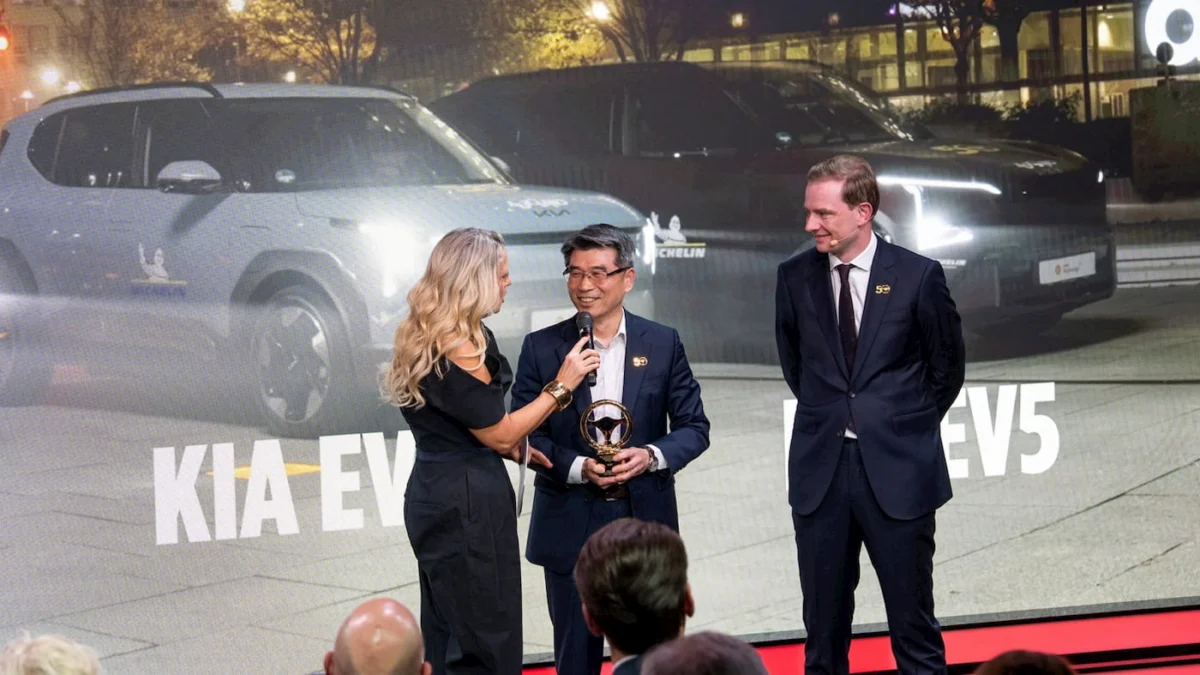
In a monumental achievement for the global automotive industry, South Korean manufacturer Kia has rewritten the history books at the 2026 Golden Steering Wheel Awards in Germany. Claiming first place across three distinct categories with the EV2, EV5, and K4 Sportswagon, Kia has officially become the first non-European brand to secure a triple crown in the 50-year history of the continent’s most prestigious automotive accolades.
This unprecedented sweep not only underscores the rapid transformation of Kia from a budget-conscious alternative into a dominant force in vehicle design and engineering, but it also signals a seismic shift in European automotive preferences. Held annually and jointly organized by major German automotive publications AUTO BILD and BILD am SONNTAG, the Golden Steering Wheel awards are considered the ultimate benchmark for engineering excellence, consumer value, and market relevance in the European Union.
The Road to Victory: Rigorous Testing at the Lausitzring
The path to capturing a Golden Steering Wheel is notoriously demanding. For the 2026 competition, an initial field of 90 brand-new vehicle models was nominated across various segments. Through a rigorous preliminary voting phase, readers narrowed down the selection to 27 finalists, leaving three top contenders in each of the nine distinct classes.
Once the finalists were locked in, the vehicles moved to the rigorous testing phase at the DEKRA-Lausitzring racetrack. Here, a diverse and discerning panel consisting of automotive journalists, industry experts, and high-profile celebrities put the nominees through exhaustive evaluations. Vehicles were not merely judged on raw speed or track performance; instead, testers scrutinized real-world handling, long-distance comfort, ergonomics, user-friendly cabin technology, build quality, everyday practicality, sustainability metrics, and overall financial value.
When the dust settled at the Lausitzring, Kia had triumphed in three vastly different segments, proving the remarkable versatility of its engineering teams. The victorious trio included the fully electric subcompact EV2, the spacious and capable EV5 compact SUV, and the highly versatile, gas-powered K4 Sportswagon.
Breaking Down the Winning Lineup: EV2, EV5, and K4 Sportswagon

Leading the charge for Kia’s electric dominance was the EV2, which clinched the highly competitive "Best Car Under €30,000" category. Tailored specifically for the European market, the entry-level electric SUV is designed to maximize urban mobility without sacrificing utility. Measuring just 4.06 meters in length, the EV2 defies its compact footprint by offering an impressive 403 liters of dedicated cargo space. Furthermore, it addresses traditional EV anxiety by delivering a WLTP-certified driving range of up to 453 kilometers (approximately 281 miles), positioning it at the very top of its class for efficiency and range per euro spent.
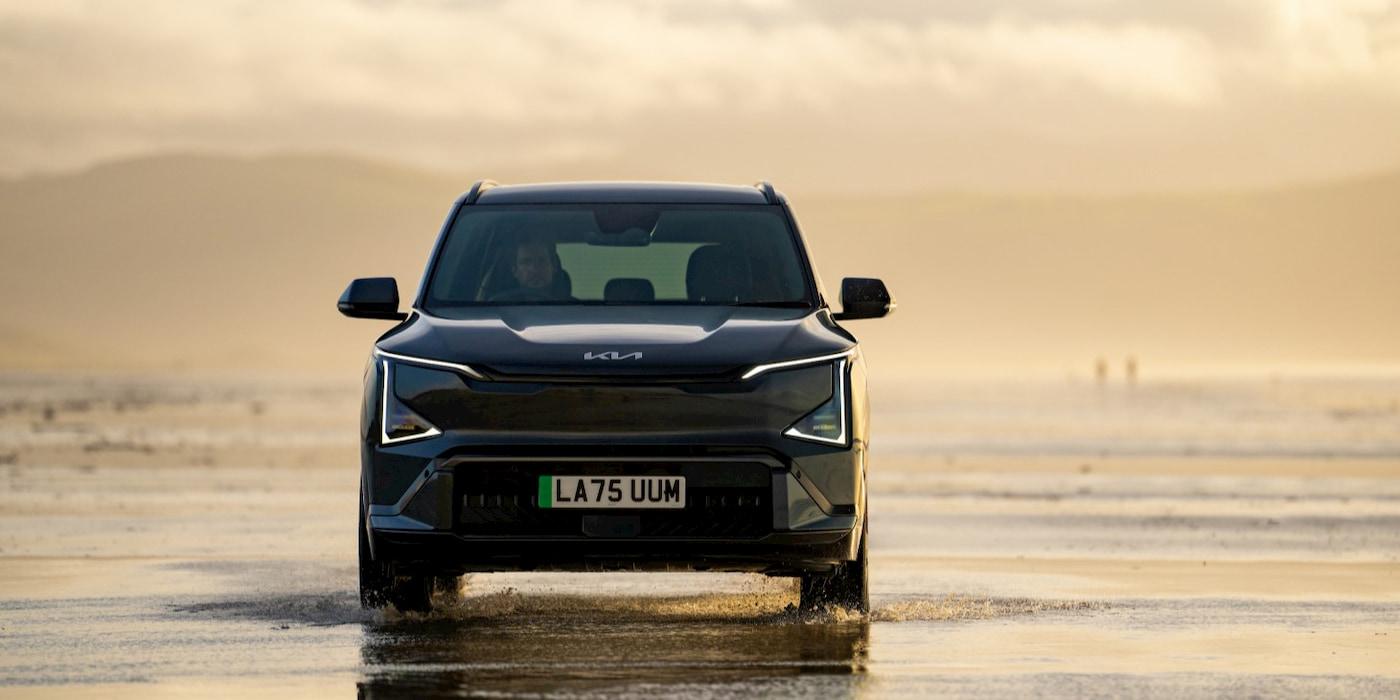
Stepping up in size, Kia’s EV5 captured the top spot in the compact SUV category, outperforming legacy European heavyweights such as the Audi Q3 and the Cupra Formentor VZ5. Roughly comparable in physical footprint to the widely popular Kia Sportage, the EV5 brings rugged versatility to the electric era. Available in both front-wheel-drive and dual-motor all-wheel-drive configurations, the EV5 boasts a driving range exceeding 550 kilometers (341 miles) on a single charge. For consumers needing utility beyond simple commuting, the vehicle offers a substantial towing capacity of up to 1,800 kilograms (roughly 4,000 pounds), proving that battery-electric vehicles can match the heavy-duty demands of traditional internal combustion engine crossovers.
Rounding out Kia’s historic hat trick was the K4 Sportswagon, launched earlier in May. Competing in the traditional compact class, the gas-powered wagon surpassed formidable rivals like the Volkswagen ID.3 Neo and the Cupra Born. By demonstrating that traditional and plug-in powertrains can still compete at the highest levels of design and functionality, the K4 Sportswagon proved that Kia’s manufacturing prowess extends far beyond its expanding electric vehicle portfolio.
Leadership Reactions and Corporate Milestones

Accepting the awards in front of a packed audience of automotive leaders and international media, Ho Sung Song, President and CEO of Kia Corporation, emphasized the profound significance of the victory. Standing alongside prominent German television presenter Barbara Schöneberger and BILD Group CEO Christoph Eck-Schmidt, Song noted that the triple win is a testament to the dedication of Kia’s global workforce and its unwavering commitment to sustainable, consumer-focused mobility.
Industry analysts point out that this achievement builds upon Kia’s recent momentum in the Golden Steering Wheel program. In 2024, the Kia EV3 similarly captured the coveted title of "Best Car Under €40,000," establishing a clear pattern of continuous dominance for the brand in Europe’s most critical pricing and sizing segments. Today, Kia offers a comprehensive and multifaceted EV lineup in Europe, spanning from the entry-level EV2 up through the EV3, EV4, EV5, EV6, the flagship three-row EV9, and the commercial-focused PV5 van.
Regional Disparities: The Global Availability Landscape
While European consumers reap the benefits of Kia’s rapidly expanding and award-winning EV portfolio, the availability of these specific models remains geographically fragmented. Current corporate strategies indicate that neither the award-winning EV2 nor the compact EV5 are slated for a commercial release in the United States market.

Instead, American consumers gain access to other pillars of Kia’s electrification strategy, most notably the highly anticipated Kia EV3. Fresh off its European accolades, the EV3 has made landfall in North America with an aggressively competitive starting price of $29,890 for the 2027 model year, instantly positioning it among the most affordable and accessible long-range electric vehicles available to American buyers.
The US-spec EV3 is structured across five distinct trim levels and offers consumers a choice between two battery capacities to suit varied driving habits. The entry-level EV3 Light houses a 58.3 kWh battery pack, delivering a respectable EPA-estimated range of 221 miles. Meanwhile, higher-tier trims—including the Wind, Land, GT-Line, and GT variants—upgrade to an 81.4 kWh battery pack, extending the driving range to an impressive 321 miles per charge.
Broader Market Implications and Future Outlook
Kia’s historic clean sweep at the 2026 Golden Steering Wheel Awards carries profound implications for the global automotive landscape. For decades, the upper echelons of European automotive awards were heavily dominated by domestic manufacturers from Germany, France, and Italy. By systematically out-engineering and out-designing local favorites on their home turf, Kia has firmly cemented its status as a global tier-one automaker.

The victory also highlights a structural shift in how automotive excellence is perceived. By winning across diverse powertrains—spanning ultra-efficient budget EVs, long-range compact SUVs, and practical internal combustion wagons—Kia has demonstrated that its design philosophy, user interface integration, and platform flexibility are resonating deeply with both everyday consumers and expert critics alike.
As legacy automakers continue to grapple with the complexities of transitioning to electric mobility, supply chain pressures, and shifting consumer demands, Kia’s agile product development and aggressive electrification roadmap provide a masterclass in market adaptation. Whether this European milestone will accelerate the introduction of models like the EV2 and EV5 to North American and Asian markets remains to be seen. However, one reality is indisputable: Kia has set a remarkably high bar for the rest of the automotive world, proving that innovation, affordability, and top-tier quality can successfully coexist in the modern vehicle market.