






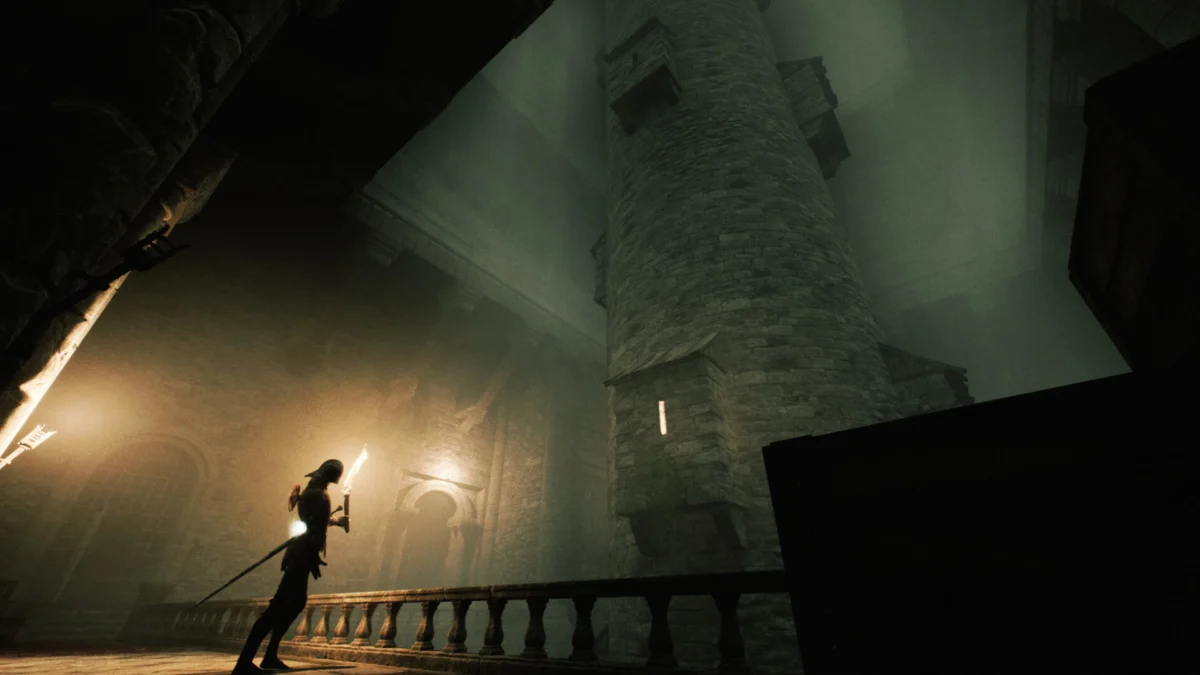
The Citadel Project, a dark fantasy immersive sim developed by Reliquary Software, is poised to enter early access on November 11, marking a significant milestone for the solo-developer project. The title merges stealth-based mechanics with survival-horror elements, set within the confines of a sprawling, parasite-infested medieval megastructure. As the gaming industry continues to see a surge in high-quality, singular-developer projects that challenge the scope of traditional AAA titles, The Citadel Project enters the market with a promise of systemic depth and atmospheric storytelling.
The Genesis of a Megastructure
The game’s premise revolves around the Citadel, a monumental fortification originally commissioned by the Ancient Kings as the final bulwark for humanity against an encroaching cataclysm known as the Great Storm. Players assume the role of an unnamed prisoner who escapes from the subterranean depths of the fortress. Unlike traditional hero-centric narratives, the protagonist is intentionally designed as an ordinary individual, emphasizing vulnerability over power.
The architectural design of the Citadel serves as the game’s primary antagonist. By utilizing verticality and complex internal layouts, the developer has crafted an environment that necessitates careful navigation, vertical movement, and environmental awareness. This design philosophy draws clear inspiration from foundational immersive sims such as Thief and the early works of Looking Glass Studios, where the architecture itself informs the player’s tactical decisions.
Chronology and Development Roadmap
The development of The Citadel Project has been characterized by a quiet, steady build-up toward its impending public release. While the project initially began with smaller prototypes focusing on movement and systemic interaction, the scope expanded as the developer integrated survival-horror mechanics to heighten the stakes of exploration.
Key milestones in the game’s timeline include:
- Initial Concept Phase: Focus on core stealth mechanics and the foundational "Ancient King" lore.
- Vertical Slice Development: Refinement of the crossbow weapon system and the parasite-infected enemy AI.
- Demo Release: A public demonstration was made available on the Steam storefront, allowing for community feedback and technical validation.
- November 11, 2024: Official launch into Early Access, prioritizing player feedback to iterate on balance and content expansion.
Systemic Depth: The Crossbow and Tactical Agency
A defining feature of The Citadel Project is its reliance on the crossbow, a tool that functions as both a weapon and an environmental utility device. The weapon’s versatility is intended to provide players with multiple solutions to a single problem—a core tenet of the immersive sim genre.
The current arsenal of bolts includes:
- Fire Bolts: Primarily used for environmental manipulation, such as igniting flammable obstacles or dealing sustained damage to biological threats.
- Rope Bolts: Essential for traversing the Citadel’s vertical architecture, providing access to rafters and upper levels that would otherwise be unreachable.
- Decoy Bolts: Designed to manipulate the audio-based AI, forcing guards away from patrol routes or into traps.
- Moss Bolts: A tactical utility bolt that muffles footfalls, allowing for stealthy navigation across loud, stone surfaces.
This system encourages players to engage with the environment as a resource. The integration of parasite-based enemies adds a layer of complexity to combat; rather than simple hit-point management, players must account for the biological state of their foes, often needing to surgically disable specific appendages or parasites to neutralize threats efficiently.
Contextualizing the Immersive Sim Revival
The resurgence of the immersive sim genre is a notable trend in modern gaming. Over the past five years, titles such as Gloomwood, Cruelty Squad, and Weird West have demonstrated that there is a robust, dedicated audience for games that prioritize player agency and systemic complexity over scripted sequences.
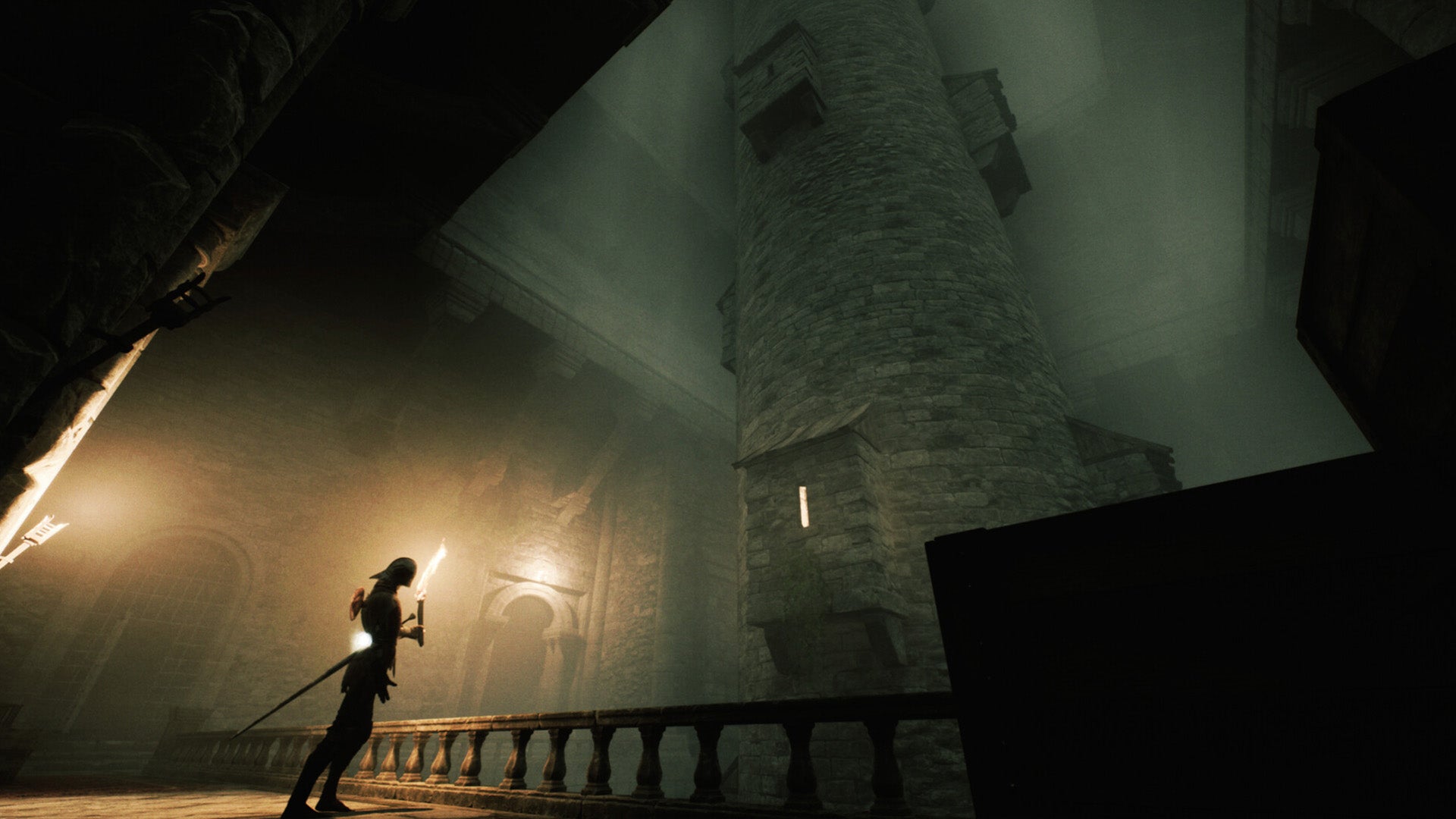
The Citadel Project contributes to this trend by bridging the gap between the "pure" stealth of the 90s and modern horror sensibilities. Industry analysts have noted that solo-developed titles in this genre often succeed by stripping away the "bloat" found in large-budget projects, focusing instead on a few core mechanics that work in harmony. By limiting the scope of the narrative to a single, claustrophobic location—the Citadel—the developer can ensure a higher level of environmental density and polish.
Broader Implications for Solo Developers
The success or failure of projects like The Citadel Project serves as a bellwether for the viability of solo-led development teams in the current economic climate. With the cost of production rising in the AAA sector, the agility of a single developer allows for rapid prototyping and pivot-based development.
However, this independence brings unique challenges. Scaling the development of a dense 3D space requires significant optimization, especially when implementing complex lighting and sound systems—the two pillars of effective stealth-horror. The early access model, which the developer has opted for, is a critical risk-management tool. It allows the creator to outsource the quality assurance process to the player base, ensuring that the game’s systemic interactions remain balanced before a full 1.0 release.
Analysis of Gameplay Mechanics
From a design perspective, The Citadel Project appears to rely on a "reactive environment." The shadows, often described by early players as a primary tool, function as an opaque layer between the player and the AI. Unlike games where stealth is binary (hidden or seen), the developer has suggested a more nuanced light-value system, where the degree of darkness dictates the probability of detection.
Furthermore, the horror elements are not merely aesthetic. The parasite-infected inhabitants of the Citadel introduce a "threat level" that changes based on the player’s noise output and light exposure. This creates a feedback loop: the player must use the crossbow to navigate, but the act of using the crossbow—especially noisy bolts—risks attracting unwanted attention. This mechanical tension is what distinguishes the title from standard action-adventure games.
Market Outlook and Community Reception
As of early November 2024, community interest in The Citadel Project has been largely positive, fueled by the availability of the demo. Discussions on community forums have focused heavily on the game’s "old-school" sensibilities, with many comparisons drawn to the Thief series.
The decision to launch on November 11th places the game in a competitive window, yet the title’s niche focus—immersive stealth-horror—provides it with a distinct identity. While larger studios chase trends in live-service or open-world design, The Citadel Project offers a "closed-system" experience that appeals to players seeking depth and atmosphere.
Final Assessment and Future Outlook
The Citadel Project represents a focused effort to revitalize the systemic, physics-driven gameplay that characterized the late 1990s and early 2000s. By placing the player in a confined, dangerous, and atmospheric setting, and providing them with tools that reward creativity rather than reflex, Reliquary Software has positioned the game as a title to watch in the indie space.
The shift into Early Access will be the ultimate test of the project’s sustainability. The developer’s ability to respond to player feedback regarding the "feel" of the movement, the utility of the crossbow, and the pacing of the horror elements will determine the long-term success of the title. For now, The Citadel Project stands as a testament to the enduring appeal of the immersive sim, proving that even a single developer, with a clear vision and a focus on systemic design, can capture the imagination of a genre-starved audience.
Prospective players are encouraged to engage with the existing demo to understand the core loop, while the broader community will continue to monitor the game’s transition into active development on November 11. As the industry moves toward increasingly automated and homogenized experiences, projects like this serve as a necessary reminder of the power of individual creative vision.