









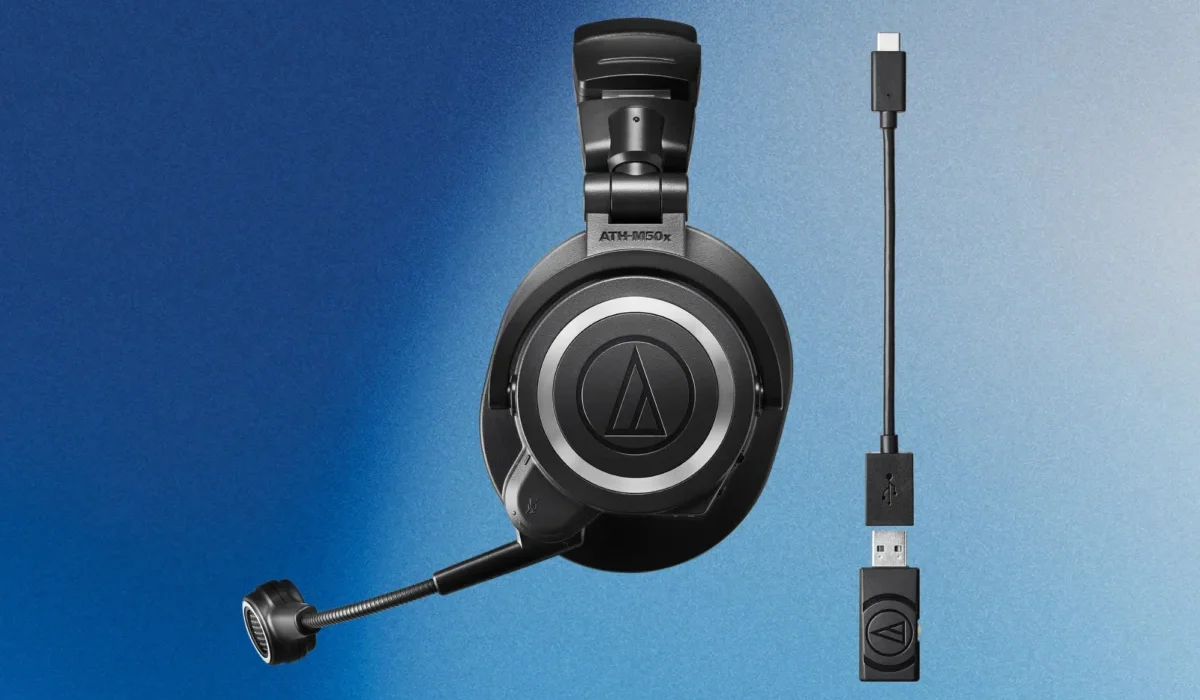
The release of the StreamSet ATH-M50xSTS-WL represents a strategic evolution for the Japanese audio manufacturer. By integrating the acoustic architecture of its iconic ATH-M50x professional monitor headphones with the specialized microphone technology found in its 20 Series studio condenser mics, Audio-Technica aims to capture a demographic that demands broadcast-quality audio without the traditional tether of an XLR cable.
Technical Architecture and Connectivity
The core of the ATH-M50xSTS-WL’s performance lies in its proprietary 2.4 GHz wireless radio link. Unlike standard Bluetooth protocols, which often introduce latency—an unacceptable defect for real-time streaming, gaming, or voice-over work—the 2.4 GHz USB dongle ensures a low-latency connection. This wireless protocol is specifically optimized to maintain signal integrity within a 33-foot radius, minimizing the potential for interference from common household electronics.

The headset utilizes the same 45 mm large-aperture drivers that established the ATH-M50x as a global industry standard in music production and live sound monitoring. These drivers are engineered to deliver an exceptionally flat frequency response, providing clarity across a wide spectrum of sound. By porting this internal hardware into a wireless chassis, Audio-Technica is effectively bringing studio-grade monitoring capabilities into the streaming ecosystem.
Advanced Microphone Integration
Perhaps the most significant technical challenge addressed by this new headset is the persistent issue of microphone fidelity in wireless devices. Traditionally, wireless headsets utilize bandwidth-limited compression that results in "tinny" or artificial voice reproduction. The StreamSet bypasses these limitations by employing a cardioid condenser microphone, a design derived directly from the company’s 20 Series microphones.
This directional microphone is engineered to isolate the user’s voice while rejecting ambient background noise—a crucial feature for streamers working in home environments. Furthermore, the inclusion of adaptive noise reduction, which features two selectable levels of sensitivity, allows users to suppress constant environmental sounds such as mechanical keyboard clicks, HVAC systems, or computer fan noise.

The hardware also incorporates a "sidetone" feature. Sidetone allows the user to hear their own voice through the headset in real-time, providing an essential feedback loop that helps the speaker naturally modulate their volume, preventing the common tendency to shout while wearing closed-back headphones. The boom arm is designed for tactical ergonomics, featuring a flip-to-mute function that offers an immediate, hardware-level privacy control.
Comfort, Battery Life, and Ergonomics
Recognizing that the target audience—professional streamers and dedicated gamers—often spends upwards of six to eight hours in front of a monitor, Audio-Technica has placed a heavy emphasis on long-term comfort. The headset is shipped with two distinct sets of interchangeable earpads. The first set is constructed from high-quality, durable materials designed to maximize sound isolation and acoustic accuracy. The second set utilizes a breathable mesh fabric, intended for extended sessions where heat management and airflow are paramount.
The internal power management system provides up to 24 hours of continuous playback on a single charge. Recognizing the potential for emergency scenarios, the device supports "charge-and-play" functionality via an integrated USB cable. If the battery is completely depleted, the headset remains operational as a wired device, ensuring that production flow is never interrupted by a loss of power.

Market Context and Industry Implications
The release of the ATH-M50xSTS-WL on October 28, 2026, for a retail price of $299, places it firmly in the premium category of consumer audio gear. While this price point is significantly higher than entry-level gaming headsets, it reflects a shift in the market where "content creators" are increasingly investing in gear that approaches professional broadcast standards.
Historically, professional streamers were forced to purchase a dedicated XLR microphone, an audio interface, and a separate pair of monitor headphones. This multi-device setup often cost upwards of $600 and required a significant amount of desk space. By consolidating these functions into a single wireless unit, Audio-Technica is addressing the "minimalist setup" trend currently dominating the streaming industry.
Industry analysts observe that this product represents a broader convergence between professional audio manufacturers and the consumer electronics market. As platforms like Twitch, YouTube, and Discord continue to grow, the standard for "acceptable audio" has risen significantly. Audiences are no longer satisfied with the compressed, low-bitrate audio characteristic of traditional Bluetooth gaming headsets. By leveraging its brand reputation—built over decades in the recording studio—Audio-Technica is positioning itself as the bridge between professional production and enthusiast-level streaming.

Comparative Landscape
The market for high-fidelity wireless headsets has seen increased activity in late 2026. While competitors have focused on features like RGB lighting, spatial sound simulation, and multi-platform cloud integration, Audio-Technica has opted for a "fidelity-first" approach.
The inclusion of the 20 Series mic technology is a direct response to the criticism often leveled at wireless headsets, which are frequently described as sounding "processed." By maintaining the acoustic signature of the ATH-M50x, the company is catering to a user base that likely already owns or is familiar with the wired M50x, effectively lowering the barrier to entry for users who want to transition to a wireless workflow without losing the sound profile they trust.
Broader Impact of the 2026 Audio Landscape
The release of the StreamSet line is part of a larger trend in consumer tech where professional-grade equipment is being "democratized." Similarly, other manufacturers have recently introduced specialized hardware, such as Samsung’s new ergonomic clip-on earbuds and Amazon’s integration of computer vision into smart speakers, indicating that the tech industry is moving toward highly specialized hardware designed for specific, niche user experiences.

The implications for the gaming and broadcasting sector are clear: the era of the "gaming-branded" headset—often characterized by aggressive design and mediocre drivers—is being challenged by heritage audio brands. If the ATH-M50xSTS-WL performs as technical specifications suggest, it could set a new benchmark for what professional creators expect from their hardware.
Future Outlook
As of late 2026, the ATH-M50xSTS-WL is available through major retail channels and Audio-Technica’s direct-to-consumer platform. The success of this product will likely determine whether other professional audio manufacturers follow suit, potentially leading to a market shift where high-fidelity wireless audio becomes the default for high-end content creation.
For the professional streamer, the priority has shifted from mere connectivity to audio clarity. With the introduction of this headset, the conversation around streaming gear is no longer about whether a headset is "good enough for gaming," but whether it is "accurate enough for production." In this regard, Audio-Technica’s latest offering is not just a piece of hardware; it is a statement on the maturation of the digital creator industry. The integration of 2.4 GHz stability with proven studio-grade components provides a compelling argument for those looking to upgrade their home studio setup without the clutter of traditional cable management. As the lines between professional broadcast environments and home-based content creation continue to blur, the demand for this level of engineering is only expected to increase.