





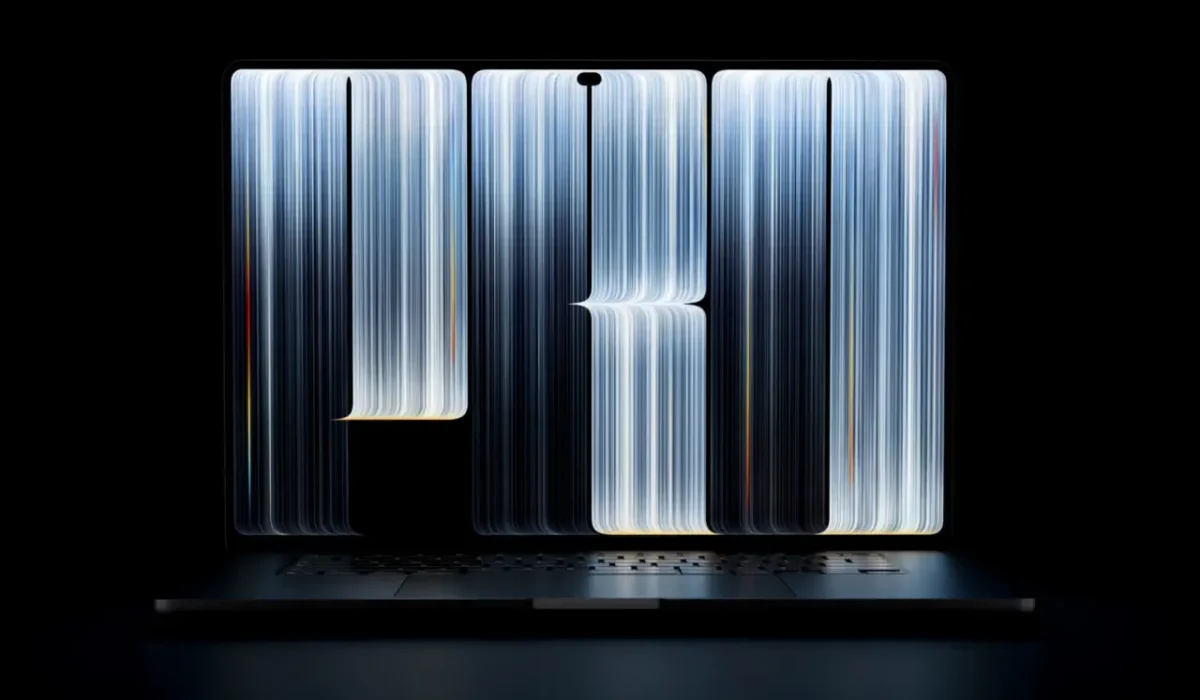
Apple Inc. has once again redefined the landscape of professional mobile computing with its latest announcement regarding the MacBook Pro lineup. Available in 14-inch and 16-inch form factors, the new generation of laptops introduces a paradigm shift in display technology, processing power, and user interface integration. By transitioning to advanced tandem OLED architecture—marketed as the PROLED XDR Display—and incorporating the next-generation M5 Pro and M5 Max processors, Apple aims to solidify its dominance in the high-performance creator and enterprise markets.
The introduction of these machines marks a significant milestone in Apple’s hardware roadmap, building upon years of incremental upgrades to deliver a device tailored for the most demanding computational and visual workflows. Alongside these core updates, the integration of the Dynamic Island to macOS, substantial battery efficiency gains, and cutting-edge connectivity protocols signal a comprehensive redesign from the silicon up.
Background Context and Evolution of Apple Silicon
The journey toward the M5 Pro and M5 Max chips represents the continuation of Apple’s strategic transition away from Intel processors, a multi-year migration that began in 2020 with the introduction of the M1 architecture. Each subsequent generation of Apple Silicon has focused heavily on maximizing performance-per-watt metrics, integrating specialized neural processing hardware, and unifying system memory architecture.
Earlier iterations of the MacBook Pro established high benchmarks for power efficiency and thermal management. However, professionals in fields such as 3D rendering, machine learning development, and 8K video production consistently demanded even higher throughput, faster memory bandwidth, and superior display fidelity. The M5 generation directly addresses these demands by scaling up neural accelerator capabilities and expanding unified memory ceilings, positioning the MacBook Pro not merely as a portable workstation, but as a primary development hub for modern artificial intelligence workflows.
The PROLED XDR Display: A Visual Breakthrough

One of the most anticipated updates in the new MacBook Pro lineup is the integration of the PROLED XDR Display, utilizing tandem OLED technology. Unlike traditional single-layer OLED panels, tandem OLED stacks two emitting layers together. This engineering approach yields significantly higher brightness levels, improved color accuracy, and substantially extended panel longevity, mitigating the risk of burn-in historically associated with organic light-emitting diodes in professional environments.
Technical specifications for the new displays highlight their formidable capabilities. The panels achieve a sustained brightness of 1,000 nits, with peak HDR brightness scaling up to 2,000 nits. This performance is mirrored in SDR content consumption, ensuring consistent visual output regardless of lighting conditions. Contrast ratios reach an astronomical 10,000,000:1, delivering absolute blacks and pristine shadow details.
Color accuracy has also been expanded to cater to professional colorists and graphic designers. The displays support a wide color gamut covering P3 and Adobe RGB, alongside 80 percent coverage of the Rec. 2020 color space. For users operating in specialized lighting environments, Apple continues to offer an optional nano-texture glass finish, which scatters ambient light to minimize glare while preserving image sharpness and contrast. ProMotion technology is standard across all models, offering an adaptive refresh rate scaling smoothly from 10Hz to 120Hz depending on the active workload.
Performance Architecture: M5 Pro and M5 Max Silicon
Beneath the chassis, the new MacBook Pro models are powered by the M5 Pro and M5 Max system-on-chips (SoCs). The M5 Pro configurations offer up to 18 CPU cores and up to 40 GPU cores, providing massive parallel processing power for graphic-intensive applications. Meanwhile, the M5 Max pushes performance boundaries further with configurations designed to handle extreme multitasking and heavy computational modeling.
A primary architectural enhancement in the M5 generation is the integration of an upgraded Neural Accelerator. This specialized hardware block accelerates on-device artificial intelligence tasks, significantly improving the performance of machine learning models, local AI inference through tools like Siri, and advanced search operations within Spotlight.
Unified memory options have also seen a dramatic increase. M5 Pro models support up to 64GB of unified memory with memory bandwidth reaching up to 614GB/s, while M5 Max configurations scale up to 128GB of unified memory. Storage options are equally expansive, with SSD configurations starting at 1TB and scaling up to an unprecedented 16TB for users handling massive media libraries and large-scale datasets.

Integration of the Dynamic Island and macOS Refinements
For the first time in a Mac lineup, Apple has integrated the Dynamic Island into the display housing of the MacBook Pro. Originally popularized on the iPhone lineup, the Dynamic Island replaces the traditional notch, serving as an interactive, software-driven hub for real-time notifications, system controls, and contextual activities. It integrates seamlessly with macOS, offering quick access to media playback controls, system status updates, and third-party application integrations without cluttering the primary desktop workspace.
Audio and Video Capabilities
The audio and visual communication suites on the new MacBook Pro have received comprehensive overgrades. The webcam has been upgraded to a 12MP Center Stage camera supporting 1080p video output and Desk View functionality, which utilizes computational photography to simultaneously display the user’s face and an overhead view of their desk surface—ideal for presentations and remote tutorials.
Audio reproduction is driven by a high-fidelity six-speaker sound system featuring force-cancelling woofers, which eliminate unwanted cabinet vibrations and deliver cleaner bass reproduction. The system supports Spatial Audio playback with dynamic head tracking when paired with compatible AirPods, alongside Dolby Atmos support for an immersive listening environment. Studio-quality three-mic arrays with a high signal-to-noise ratio ensure crystal-clear voice capture for calls and recordings.
Connectivity, Battery Life, and Power Delivery
Connectivity options on the new MacBook Pro lineup represent the bleeding edge of modern hardware standards. The machines include multiple Thunderbolt 5 ports capable of staggering data transfer rates, an HDMI port, an SDXC card slot, a MagSafe 3 charging port, and a 3.5mm headphone jack. Wireless connectivity has been upgraded to support Wi-Fi 7 and Bluetooth 6, ensuring robust, low-latency network performance in congested environments.

Battery efficiency remains a hallmark of Apple Silicon. The 14-inch model features a 72.6Wh battery delivering up to 22 hours of video playback, while the 16-inch model houses a 100Wh battery capable of up to 24 hours of video playback. Fast-charging capabilities allow both models to reach a 50 percent charge in approximately 30 minutes when paired with high-wattage power adapters (96W for the 14-inch and 140W for the 16-inch configurations).
Comparative Specifications: MacBook Pro 14 vs. MacBook Pro 16
| Feature | MacBook Pro 14 | MacBook Pro 16 |
|---|---|---|
| Display | 14.2-inch tandem OLED (PROLED XDR) | 16.3-inch tandem OLED (PROLED XDR) |
| Resolution | 3024×1986 (254 pixels per inch) | 3472×2266 (254 pixels per inch) |
| Refresh Rate | 10Hz-120Hz ProMotion (Adaptive) | 10Hz-120Hz ProMotion (Adaptive) |
| Brightness | 1000 nits sustained, up to 2000 nits peak (HDR/SDR) | 1000 nits sustained, up to 2000 nits peak (HDR/SDR) |
| Contrast Ratio | 10,000,000:1 | 10,000,000:1 |
| Interface | Multi-Touch, Dynamic Island | Multi-Touch, Dynamic Island |
| Processors | M5 Pro (up to 18 cores), M5 Max (up to 18 cores) | M5 Pro (up to 18 cores), M5 Max (up to 18 cores) |
| GPU Cores | 16 to 20 (M5 Pro), 32 to 40 (M5 Max) | 20 (M5 Pro), 32 to 40 (M5 Max) |
| Unified Memory | Up to 64GB (M5 Pro), Up to 128GB (M5 Max) | Up to 64GB (M5 Pro), Up to 128GB (M5 Max) |
| Storage Capacity | 1TB to 4TB (M5 Pro), 2TB to 16TB (M5 Max) | 1TB to 4TB (M5 Pro), 2TB to 16TB (M5 Max) |
| Battery Life | Up to 22 hours video playback (M5 Pro) | Up to 24 hours video playback (M5 Pro) |
| Power Adapter | 70W or 96W USB-C | 140W USB-C |
| Fast Charging | ~50% in 30 minutes (with 96W adapter) | ~50% in 30 minutes (with 140W adapter) |
| Thunderbolt Ports | Up to 3 (M5 Pro), Up to 4 (M5 Max) | Up to 3 (M5 Pro), Up to 4 (M5 Max) |
| Camera | 12MP Center Stage with 1080p and Desk View | 12MP Center Stage with 1080p and Desk View |
| Audio | Six-speaker sound system, Dolby Atmos, Spatial Audio | Six-speaker sound system, Dolby Atmos, Spatial Audio |
| Connectivity | Wi-Fi 7, Bluetooth 6, Thunderbolt 5, HDMI, SDXC, MagSafe 3 | Wi-Fi 7, Bluetooth 6, Thunderbolt 5, HDMI, SDXC, MagSafe 3 |
| Finishes | Space Black, Silver | Space Black, Silver |
| Operating System | macOS | macOS |
Industry Implications and Market Outlook
The launch of the M5-powered MacBook Pro lineup with tandem OLED displays sets a rigorous new standard for the premium laptop market. By addressing historical limitations of OLED technology—such as peak brightness constraints and longevity concerns—Apple has created a display system that appeals directly to professional color-critical workflows while retaining the deep blacks and infinite contrast ratios coveted by media consumers.
Furthermore, the emphasis on local AI acceleration through enhanced Neural Accelerators reflects the tech industry’s broader pivot toward integrated artificial intelligence processing. As software ecosystems increasingly leverage machine learning for predictive text, automated video editing, generative audio tools, and local security processing, hardware architectures that prioritize on-device neural compute will likely become the benchmark for professional productivity.
Market analysts anticipate strong demand among enterprise users, software developers, and creative professionals seeking a generational leap in both visual fidelity and computational throughput. With pre-orders opening immediately following the announcement, Apple continues to reinforce its premium positioning within the global personal computer market.