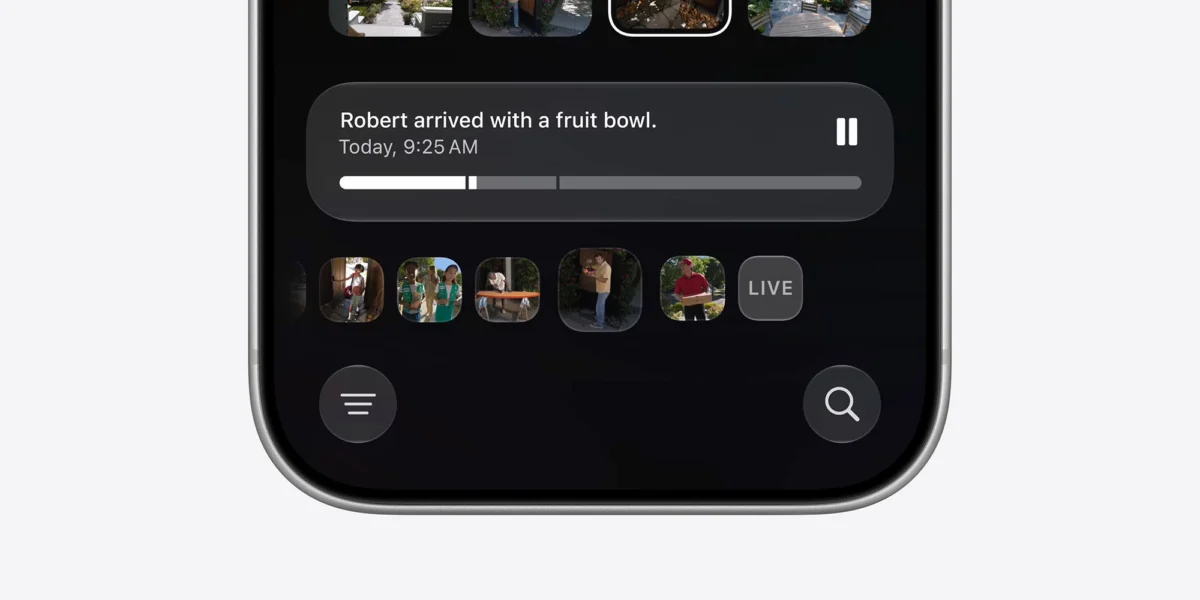
Apple has recently updated its developer documentation and release notes for the third beta of macOS 27 and iOS 27, revealing a significant prerequisite for its upcoming smart home enhancements. Users wishing to utilize the newly announced Apple Intelligence features within the Home app—specifically those designed for security camera management—will be required to maintain a 2TB iCloud+ subscription. This development marks a shift in how Apple tiers its service offerings, effectively moving advanced artificial intelligence capabilities behind its highest standard storage paywall.
The discovery, first noted in the fine print of the latest developer builds, clarifies the hardware and software ecosystem requirements for features first teased during this year’s Worldwide Developers Conference (WWDC). While Apple has long integrated security camera support through its HomeKit Secure Video (HKSV) protocol, the introduction of Apple Intelligence represents a fundamental overhaul of how video data is processed, summarized, and searched within the Apple ecosystem.
The Evolution of Apple Home and HomeKit Secure Video
Since the introduction of HomeKit Secure Video in 2019, Apple has positioned itself as a privacy-first alternative to third-party security camera ecosystems like Amazon’s Ring or Google’s Nest. The core value proposition was simple: video footage would be encrypted end-to-end and stored in a user’s iCloud account, with the processing for person, pet, and vehicle detection happening locally on a HomePod or Apple TV acting as a home hub.
Until now, the requirements for HKSV were tiered based on the number of cameras. A 50GB iCloud+ plan allowed for a single camera, a 200GB plan supported up to five cameras, and the 2TB plan offered support for an unlimited number of cameras. However, the upcoming software updates introduce a qualitative shift. Rather than tiering based on the quantity of hardware, Apple is now tiering based on the complexity of the software features. Regardless of whether a user has one camera or ten, the advanced AI features will remain locked unless the 2TB threshold is met.

Key AI Features Under the 2TB Requirement
The features restricted to the $9.99-per-month 2TB tier are central to Apple’s "Apple Intelligence" branding. These tools aim to reduce notification fatigue and improve the utility of archived footage through machine learning and natural language processing.
Intelligent Notification Summaries
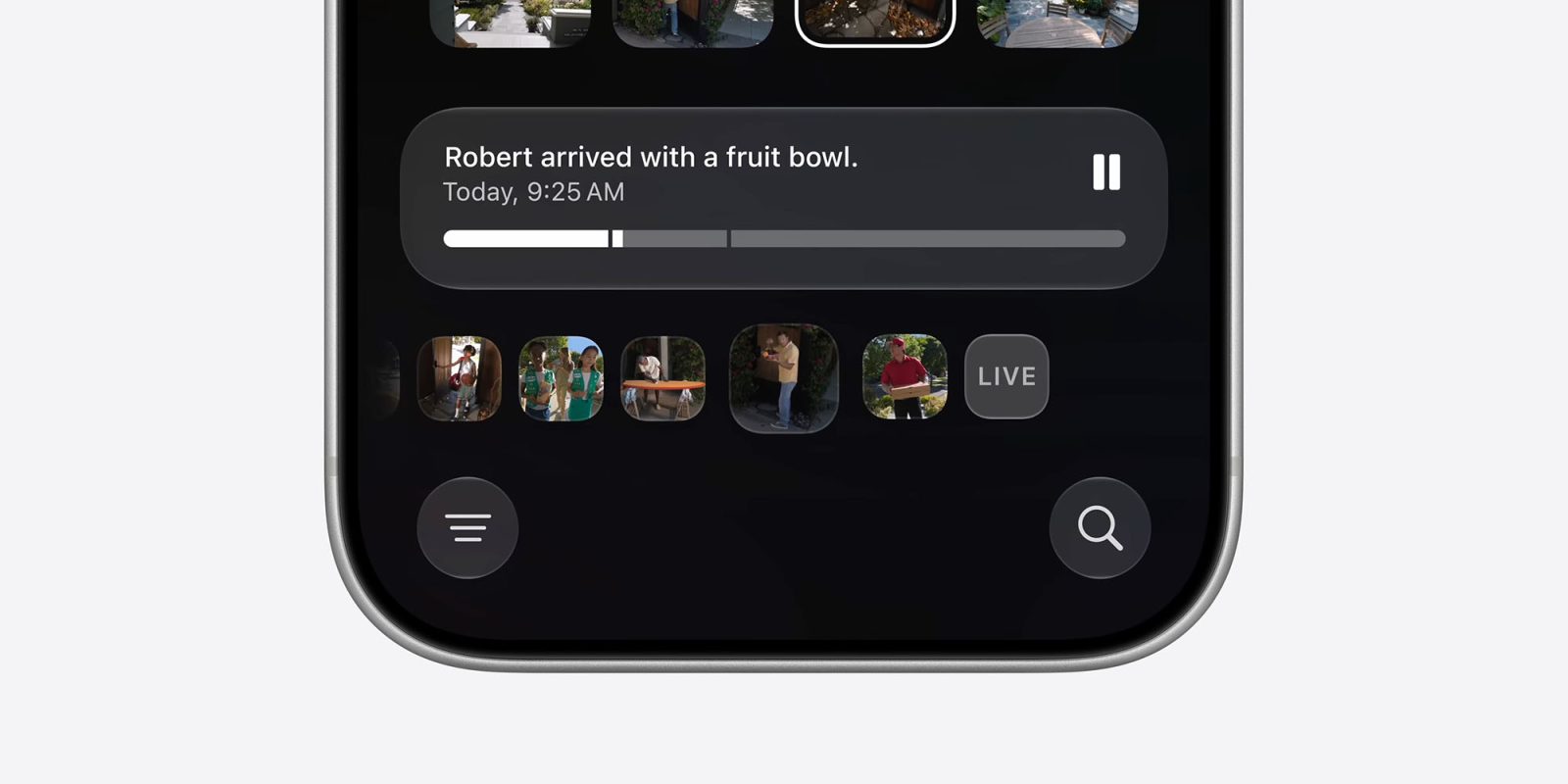
One of the most practical applications of AI in the Home app is the implementation of notification summaries. Currently, a single event—such as a resident returning home—can trigger a cascade of individual alerts: motion detected in the driveway, garage door opened, person detected at the side door, and front door unlocked. Under the new system, Apple Intelligence analyzes these sequential events in real-time to provide a single, cohesive notification. Instead of six separate pings, a user receives one alert stating that a specific family member has arrived home.
4K Video Support and Enhanced Resolution
For the first time, Apple is upgrading the HomeKit Secure Video standard from 1080p High Definition to 4K Ultra High Definition. This move brings the Home app in line with modern hardware capabilities, as many third-party cameras now ship with 4K sensors. However, the increased data overhead of 4K footage necessitates larger storage buffers, which Apple is citing as a primary reason for the 2TB requirement.
Generative Video Descriptions and Search
Perhaps the most technologically advanced addition is the ability for the Home app to generate text-based descriptions of video clips. Using large language models (LLMs) processed through Apple’s Private Cloud Compute, the system can describe actions within a clip, such as "a delivery driver left a package on the porch and waved at the camera." This allows for a powerful search function, where users can type queries like "find the clip of the kids playing with the dog" or "show me when the UPS truck arrived," and receive immediate results without manually scrubbing through hours of footage.
Timeline of Developments
The path to this subscription requirement has been paved over several months of software announcements and developer releases:
- June 2024 (WWDC): Apple announces the integration of Apple Intelligence across iOS, iPadOS, and macOS, including specific upgrades for the Home app and HomeKit Secure Video.
- July 2024: Initial developer betas for iOS 27 and macOS 27 are released. Early testers note the presence of 4K toggles but find them inactive for most users.
- August 2024: Release of Beta 3. Developers discover the explicit requirement for a 2TB iCloud+ plan within the Home app settings and accompanying documentation.
- Expected Late 2024: Public release of the new operating systems, at which point the 2TB requirement will become a reality for the general consumer base.
Comparative Market Analysis: The "Subscriptionization" of Security
Apple’s decision to mandate a high-tier subscription for AI features reflects a broader trend in the smart home industry. Competitors have long utilized subscription models to monetize hardware:
- Ring (Amazon): Requires a Ring Protect plan for nearly all cloud storage and advanced detection features.
- Nest (Google): Utilizes the Nest Aware subscription to unlock "familiar face" detection and extended video history.
- Arlo: Restricts 4K cloud recording and AI object detection to its Arlo Secure plans.
The distinction for Apple has traditionally been that its storage plans were seen as a "utility" for the entire device (backups, photos, files) rather than a "tax" on a specific piece of hardware. By requiring the 2TB plan—which costs $9.99 per month or roughly $120 per year—Apple is effectively pricing its smart home AI as a premium service. For users who only have one or two cameras and do not otherwise need 2TB of cloud storage for photos or device backups, the jump from the $2.99 (200GB) tier to the $9.99 tier represents a 234% increase in monthly cost to access these software improvements.
Technical and Financial Implications
Industry analysts suggest that Apple’s decision may be driven by the significant computational costs associated with Apple Intelligence. Unlike basic motion detection, which can be handled by low-power chips on the camera or a home hub, generating text descriptions and performing natural language searches across video archives requires substantial server-side processing.
Apple’s "Private Cloud Compute" (PCC) ensures that this data is processed with the same privacy guarantees as on-device tasks, but the infrastructure required to run these models at scale is expensive. By tethering these features to the 2TB plan, Apple ensures a higher Average Revenue Per User (ARPU) to offset the capital expenditure of its AI data centers.
Furthermore, 4K video storage is significantly more demanding. A 4K stream typically requires four times the storage capacity of a 1080p stream for the same duration of footage. For a household with multiple cameras, the 200GB tier would likely be exhausted within days if used for 4K HKSV archiving, making the 2TB tier a technical necessity for a functional user experience.

Industry and Consumer Reactions
While Apple has not issued a formal press statement regarding the disappointment expressed by some early adopters, the reaction within the tech community has been polarized.
Privacy advocates have largely praised Apple for maintaining end-to-end encryption and Private Cloud Compute for these AI tasks, noting that no other major provider offers this level of security for generative AI video analysis. However, consumer hardware enthusiasts have pointed out that this move complicates the "Apple ecosystem" advantage.
"One of the primary reasons to choose HomeKit Secure Video was to escape the nickel-and-diming of individual camera manufacturers," says technology analyst Sarah Jenkins. "By forcing a 2TB subscription, Apple is essentially implementing its own version of the very subscriptions users were trying to avoid. While the features are impressive, the barrier to entry has suddenly become much higher for the average household."
Looking Ahead
As Apple moves toward the final release of macOS 27 and iOS 27, the 2TB requirement serves as a clear indicator of the company’s strategy: AI is a premium service. For the power user already entrenched in the Apple ecosystem with multiple devices and large photo libraries, this change adds significant value to an existing subscription. For the casual user, however, the "Intelligent Home" may remain an expensive luxury.
The success of this strategy will likely depend on whether the utility of AI summaries and 4K video is perceived as valuable enough to justify the monthly cost. As smart home adoption continues to grow, Apple’s ability to balance high-end feature sets with accessible pricing will be a critical factor in maintaining its lead in the premium consumer technology market. For now, the message from Cupertino is clear: the future of the smart home is intelligent, high-definition, and resides behind a 2TB paywall.