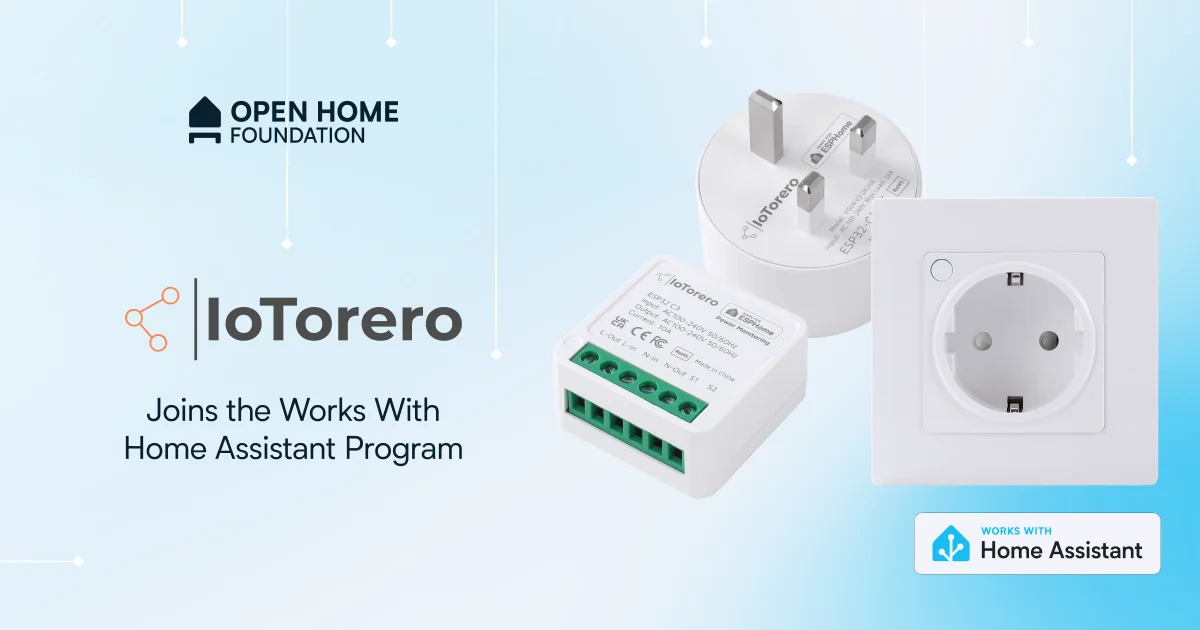
The smart home landscape is undergoing a significant shift toward local control, data privacy, and open-source integration. Marking a major milestone in this evolution, IoTorero—formerly known as Athom Technology—has officially joined the Works with Home Assistant program. This partnership introduces the very first ESPHome-ready smart plugs and power-monitoring relays to the official certification ecosystem, bridging the gap between out-of-the-box convenience and the deep customizability demanded by advanced automation enthusiasts.
The integration not only validates years of community-driven hardware development but also establishes a new benchmark for manufacturers looking to align with open-source automation standards. By eliminating cloud dependencies and relying entirely on local processing architectures, the collaboration addresses growing consumer demands for robust security, reliability, and long-term device maintainability.
Background and Evolution: From Athom Technology to IoTorero
Founded in 2020, IoTorero entered the smart home sector with a distinct philosophy: hardware should remain fully functional even in the absence of an internet connection or corporate server infrastructure. Operating initially under the moniker Athom Technology, the enterprise recognized the explosive potential of ESPHome early in its lifecycle. ESPHome is an open-source system that enables users to control ESP8266 and ESP32 boards using simple yet powerful configuration files, allowing seamless integration with automation hubs like Home Assistant without relying on third-party cloud architectures.
The recent rebranding to IoTorero—a stylistic nod to the Internet of Things—coincides with a maturation of their product catalog and a formalization of their relationship with the Open Home Foundation. Unlike traditional consumer electronics manufacturers that lock their devices behind proprietary applications and cloud servers, IoTorero has consistently championed open-source firmware. Every device shipped by the company arrives pre-flashed with ESPHome, circumventing the technical hurdles of manual flashing while preserving the user’s ultimate right to modify, inspect, and reprogram the underlying code.
This commitment to openness was underscored during the previous year’s Home Assistant Community Day, where IoTorero distributed hardware samples to attendees to encourage hands-on experimentation. Furthermore, the company maintains a publicly accessible GitHub repository containing configuration files for its entire hardware ecosystem, allowing developers and hobbyists to study, build upon, and adapt the software stack freely.
Chronology of the Integration and Certification Process
The formalization of the partnership represents the culmination of rigorous testing and software maturation. The Works with Home Assistant certification process is famously stringent, requiring products to satisfy core criteria regarding local execution, robust data privacy, and long-term hardware and software support.
- 2020: Athom Technology is established, focusing on the research, development, and manufacturing of open-source smart home hardware pre-flashed with ESPHome firmware.
- 2023–2025: The company expands its hardware lineup, introducing regional variants of ESP32-C3 smart plugs and compact power-monitoring mini relays, cultivating a loyal user base within the global Home Assistant community.
- Mid-2025: IoTorero participates heavily in community outreach, notably donating developer hardware at Community Day events to foster collaborative innovation.
- Early 2026: The ESPHome development team launches a major software upgrade, introducing a revamped visual User Interface and Device Builder to streamline configuration management.
- July 2026: IoTorero officially enters the Works with Home Assistant program, securing the Made for ESPHome badging and certifying seven core hardware products for seamless, zero-setup integration.
Technical Architecture and Device Capabilities
At the heart of IoTorero’s certified hardware lineup is the ESP32-C3 microcontroller, a modern, highly efficient chip designed for secure Internet of Things applications. The integration process leverages standard testing methodologies, utilizing a baseline Home Assistant Green hub running the native ESPHome integration. This ensures that certified products function reliably across standard deployments without demanding specialized network configurations.
The current certified portfolio primarily focuses on two categories of hardware: smart power plugs and compact power-monitoring relays.
- Smart Power Plugs: Available in multiple regional variants, these plugs transform ordinary household appliances into intelligent, measurable nodes. Crucially, they incorporate hardware-level power monitoring capable of tracking voltage, current, active power, and cumulative energy consumption in real time. This granular data enables homeowners to identify energy waste, optimize electricity usage, and automate high-draw appliances based on tariff schedules or generation peaks from residential solar arrays.
- Power Monitoring Mini Relays: Engineered for hardwired applications, these matchbox-sized devices are compact enough to be installed behind standard wall switches or inside junction boxes. They extend local automation capabilities to lighting circuits, garage doors, and motorized window treatments, spaces where traditional plug-in smart modules cannot physically fit.
In addition to energy management and switching capabilities, all certified IoTorero devices feature built-in Bluetooth Proxy functionality. By acting as low-energy signal relays, these devices listen for broadcasts from nearby Bluetooth Low Energy (BLE) sensors—such as temperature beacons, presence detectors, and smart locks—and forward the telemetry directly to the Home Assistant hub. This decentralized approach eliminates the need for dedicated Bluetooth gateway hardware, expanding coverage organically throughout a residence while minimizing electronic waste.
Official Statements and Industry Perspective
Leadership from both organizations has emphasized the strategic importance of the partnership in setting a precedent for consumer hardware standards.
"Since inception in 2020, IoTorero has been dedicated to the research, development, and manufacturing of open-source smart home hardware products," said Aiden Tang, CTO and Co-Founder of IoTorero. "We provide Home Assistant users with high-quality devices pre-flashed with ESPHome firmware. By joining the Works with Home Assistant program, we ensure that customers can select and purchase our products with complete confidence, knowing they meet the highest standards of local performance and reliability."
From the perspective of the Open Home Foundation and the Home Assistant ecosystem, welcoming IoTorero represents a validation of the "Made for ESPHome" badging initiative. The certification program explicitly excludes any hardware relying on cloud-dependent architectures, safeguarding consumers against sudden corporate closures, unexpected subscription fees, or discontinued server support.
Broader Impact and Market Implications
The inclusion of pre-flashed, ESPHome-ready hardware in a mainstream certification program carries significant implications for the broader smart home market. For years, deploying open-source firmware required technical proficiency, specialized hardware programmers (such as USB-to-UART bridges), and familiarity with command-line compilation tools. This barrier to entry often restricted projects like ESPHome to advanced hobbyists and software developers.
By offering hardware that arrives pre-configured yet entirely open, IoTorero and Home Assistant are democratizing access to local-first automation. Users can unpack a device, plug it in, and witness it automatically appear on their Home Assistant dashboard via mDNS discovery. If desired, the newly released ESPHome Device Builder interface allows users to tweak configurations, rename entities, and adjust automation parameters through a visual workspace without ever touching raw code.
Furthermore, this model directly challenges the prevailing industry trend toward walled gardens and forced cloud integration. As regulatory bodies increasingly scrutinize corporate data collection practices and consumer right-to-repair legislation, local-first ecosystems offer a resilient alternative. Devices that operate independently of external servers protect user privacy, function reliably during internet outages, and significantly extend hardware life cycles—core tenets of environmental sustainability in consumer electronics.
As the Works with Home Assistant program continues to expand, the inclusion of established open-source hardware pioneers like IoTorero establishes a clear roadmap for future manufacturers. It demonstrates that commercial viability and a steadfast commitment to user ownership, local control, and open-source transparency are not mutually exclusive, but rather complementary pillars for the future of the connected home.