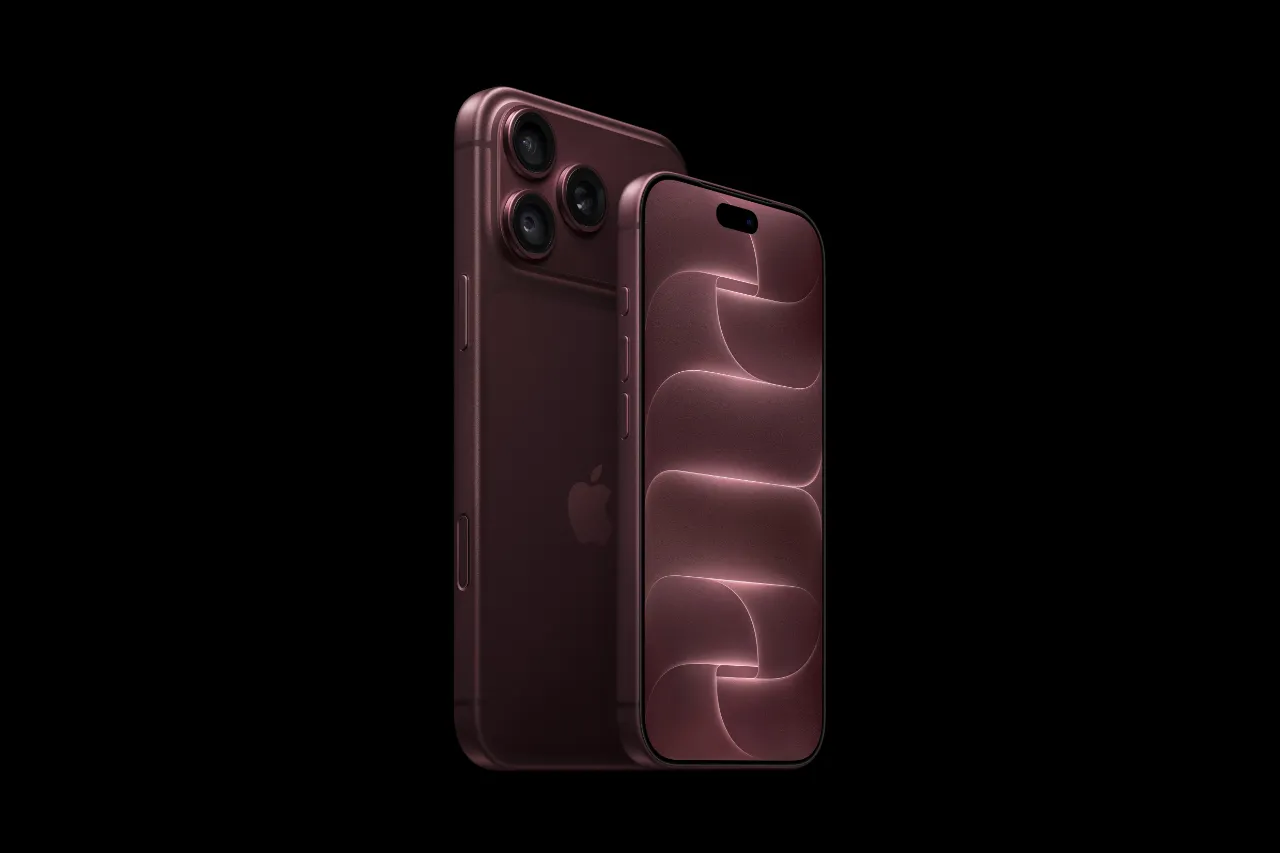
Apple has officially unveiled its next-generation flagship smartphones, the iPhone 18 Pro and iPhone 18 Pro Max, introducing a series of monumental hardware and software upgrades that redefine the upper echelon of the mobile device market. Building directly on the foundation of the preceding iPhone 17 Pro series, Apple’s latest iterative leap focuses heavily on internal architectural redesigns, enhanced thermal management, a revolutionary variable aperture camera system, and significantly faster charging capabilities. As consumer demand shifts toward devices capable of executing advanced on-device artificial intelligence workloads and maintaining robust all-day battery life under heavy operational stress, the iPhone 18 Pro lineup arrives as a comprehensive engineering response to these evolving industry standards.
Chronology of Apple’s Flagship Pro Evolution
To understand the positioning of the iPhone 18 Pro series, it is necessary to examine the trajectory of Apple’s mobile hardware development over recent cycles. Apple has systematically refined its Pro lineup since the transition to titanium chassis designs and the introduction of advanced periscope telephoto lenses. The introduction of the iPhone 17 series established larger baseline display sizes at 6.3 inches and 6.9 inches, replacing the legacy 6.1-inch and 6.7-inch form factors.
Building upon that framework, the iPhone 18 Pro and Pro Max represent a mid-cycle maturation of this larger chassis size. Industry observers note that Apple has used the extra physical volume afforded by these dimensions to accommodate larger energy cells and complex cooling apparatuses—specifically vapor chambers—which were previously constrained by thinner internal layouts. The announcement event marks the continuation of Apple’s September hardware launch cadence, setting the stage for global retail availability and localized rollouts across international markets, including Israel, in the weeks following the initial unveiling.
Hardware Architecture and Battery Capacity Improvements
One of the most pressing demands from power users has historically centered on battery longevity. Apple has addressed this by substantially increasing the physical capacity of the lithium-ion batteries housed within both Pro models, while simultaneously optimizing power-draw metrics across its custom silicon.

The iPhone 18 Pro Max features a massive 5,391mAh battery, representing a notable 568mAh increase (approximately 11.8%) over the 4,823mAh cell found in the iPhone 17 Pro Max. Meanwhile, the standard iPhone 18 Pro incorporates a 4,056mAh battery, a modest increase of 68mAh (roughly 1.7%) compared to the 3,988mAh battery of its predecessor.
These capacity gains are paired with internal connectivity shifts. Reports indicate that Apple is continuing its phased transition toward advanced eSIM configurations in select regions, allowing engineers to reclaim valuable internal real estate previously dedicated to physical SIM card trays. This recovered space is utilized for thermal dissipation sheets and expanded battery architectures.
Furthermore, the iPhone 18 Pro series integrates Apple’s proprietary C2 cellular modem, which succeeds the C1X chip introduced in previous iterations. Manufactured on a significantly more efficient node, the C2 modem dramatically reduces power consumption during data transmission, ensuring that the battery improvements translate into tangible, real-world endurance gains.
Display Technology and Ergonomic Dimensions
Apple has maintained the familiar physical footprint established with the previous generation, ensuring that cases and accessories maintain a degree of cross-compatibility, though slight weight variances exist due to internal component scaling.
| Metric | iPhone 17 Pro | iPhone 18 Pro | iPhone 17 Pro Max | iPhone 18 Pro Max |
|---|---|---|---|---|
| Battery Capacity (SIM-dependent) | 3,988mAh | 4,056mAh | 4,823mAh | 5,391mAh |
| Dimensions | 150.0 × 71.9 × 8.75 mm | 150.0 × 71.9 × 8.75 mm | 163.4 × 78.0 × 8.75 mm | 163.4 × 78.0 × 8.75 mm |
| Weight | 204 grams | 211 grams | 231 grams | 249 grams |
| Display Size | 6.3-inch, 120Hz | 6.3-inch, 120Hz | 6.9-inch, 120Hz | 6.9-inch, 120Hz |
| Processor | A19 Pro | A20 Pro | A19 Pro | A20 Pro |
| Main Camera | 48MP, f/1.78 | 48MP, Variable f/1.48–f/4.0 | 48MP, f/1.78 | 48MP, Variable f/1.48–f/4.0 |
| Fast Charging (to 50%) | 20 mins (40W) | 15 mins (60W) | 20 mins (40W) | 15 mins (60W) |
| Storage Range | 256GB to 1TB | 256GB to 2TB | 256GB to 2TB | 256GB to 2TB |
| Starting US Price | $1,099 | $1,199 | $1,199 | $1,299 |
Both devices utilize advanced Super Retina XDR OLED panels. The iPhone 18 Pro features a 6.3-inch display with a resolution of 2622×1206 pixels, while the iPhone 18 Pro Max sports a sprawling 6.9-inch screen boasting a resolution of 2868×1320 pixels. Both panels support ProMotion technology with adaptive refresh rates scaling up to 120Hz, alongside a peak outdoor brightness capability reaching an impressive 3,000 nits. The iconic Dynamic Island remains housed at the top of the display, serving as the central hub for interactive notifications and system-level alerts.
In terms of physical protection, the devices are shielded by an upgraded iteration of Apple’s Ceramic Shield material—dubbed Ceramic Shield 2—offering enhanced scratch and drop resistance compared to first-generation formulations. Despite these protective enhancements, weight has marginally increased: the iPhone 18 Pro weighs 211 grams (a 7-gram increase), while the larger Pro Max model tips the scales at 249 grams (an 18-gram increase over the 231-gram iPhone 17 Pro Max). Both models carry an IP68 certification, permitting submersion in up to 6 meters of fresh water for up to 30 minutes.

Color palettes for the lineup include refined industrial tones such as Desert Titanium, Natural Titanium, Space Black, and a striking new Glacier Blue (Burgundy alternative depending on regional marketing), emphasizing Apple’s mature aesthetic direction.
The Apple A20 Pro Processor and Thermal Management
Under the hood lies the Apple A20 Pro system-on-chip (SoC), succeeding the A19 Pro. While the A19 Pro utilized a traditional high-performance core layout paired with a 16-core Neural Engine, the A20 Pro introduces an entirely redesigned architecture utilizing advanced "supercores."
The new processing cluster delivers a performance-per-watt ratio that outperforms the A19 Pro by up to 40% in multi-threaded workloads. The upgraded Neural Engine, specifically tailored for localized generative artificial intelligence tasks, executes machine learning algorithms with significantly reduced latency.
To sustain peak performance during extended gaming sessions or heavy computational tasks, Apple has integrated a larger, custom-engineered vapor chamber cooling system. This thermal architecture addresses the historical challenge of thermal throttling in compact smartphone bodies, allowing the A20 Pro to maintain sustained peak output for periods up to 40% longer than its predecessor without compromising user comfort or hardware integrity.
Revolutionary Variable Aperture Camera System
Imaging capabilities have long been a core selling point for the iPhone Pro series, and the iPhone 18 Pro generation introduces a fundamental optical breakthrough: a true variable aperture mechanism on the primary wide camera.

While the iPhone 17 Pro featured a fixed f/1.78 aperture across its primary 48-megapixel sensor, the iPhone 18 Pro introduces a mechanical variable aperture system ranging from f/1.48 to f/4.0. This mechanical iris allows the camera to physically adjust the amount of light entering the sensor depending on environmental conditions. In low-light scenarios, the lens opens up to a wide f/1.48 to capture maximum illumination and produce natural depth-of-field separation. Conversely, in brightly lit landscapes or macro shots, the aperture can constrict down to f/4.0 to maximize sharpness across the entire frame, avoiding the artificial softening often associated with heavy digital processing.
The secondary sensors—including the ultra-wide and the periscope telephoto lenses—also retain 48-megapixel resolutions, ensuring uniform image quality across all focal lengths. The telephoto lens supports up to 4x optical zoom, backed by advanced sensor-shift optical image stabilization. Video recording capabilities have similarly expanded, supporting Cinematic mode in 4K at 30fps and 60fps, alongside ProRes video capture up to 4K at 120fps when connected to external storage media.
Advanced Charging Speeds and Power Delivery
Charging infrastructure receives a major overhaul with the iPhone 18 Pro series. While the iPhone 17 Pro maxed out at 40W wired charging—capable of reaching a 50% charge in approximately 20 minutes—the iPhone 18 Pro models accelerate this metric significantly.
Utilizing updated USB-C power delivery protocols compliant with USB PD 3.1 and Adjustable Voltage Supply (AVS), the new devices support up to 60W wired fast charging. This enables the smartphones to replenish from 0% to 50% battery capacity in just 15 minutes when paired with a compatible 60W (or higher) power adapter.
Wireless charging has also been optimized. MagSafe charging speeds now reach up to 30W to 35W, allowing a 50% charge in roughly 30 minutes using revised magnetic pucks. Standard Qi2 wireless charging is supported up to 25W, ensuring broad compatibility with third-party charging ecosystems.
Global and Local Pricing Strategy

Pricing structures reflect the inclusion of advanced manufacturing processes and upgraded base storage configurations. In the United States, the iPhone 18 Pro starts at $1,199 for the 256GB model, while the iPhone 18 Pro Max starts at $1,299 for the same base capacity. This represents a $100 price increase across the board compared to the previous generation’s entry points.
In international markets, such as Israel, local pricing reflects import duties, currency fluctuations, and localized taxation. Initial retail forecasts suggest that the iPhone 18 Pro will launch with prices ranging between 5,299 NIS and 10,699 NIS depending on storage tiers (spanning from 256GB up to a new 2TB maximum capacity). The iPhone 18 Pro Max is projected to span from 5,799 NIS to 10,999 NIS. Early market analysis indicates that while baseline models experience modest localized adjustments, higher-capacity variants—particularly the 1TB and 2TB configurations—command premiums commensurate with their expanded NAND flash memory costs.
Broader Industry Implications and Market Analysis
The launch of the iPhone 18 Pro and iPhone 18 Pro Max signals Apple’s aggressive strategy to cement its dominance in the premium smartphone segment. By pivoting toward mechanical optical innovations like variable aperture lenses, alongside substantial investments in thermal management and local AI processing via the A20 Pro chip, Apple is attempting to widen the performance gap between standard consumer devices and professional-grade mobile workstations.
Industry analysts suggest that the integration of 60W charging and larger battery capacities directly counters historical consumer criticisms regarding charging speeds relative to competing Android ecosystems. Furthermore, the inclusion of up to 2TB of internal storage caters directly to content creators who rely heavily on on-device ProRes video workflows.
As pre-orders commence globally and retail shelves prepare for the official launch window, consumer response to the higher price points will serve as a critical indicator of market resilience in the face of broader economic pressures. However, given the depth of the hardware upgrades and the tangible performance metrics of the A20 Pro architecture, the iPhone 18 Pro lineup is positioned to maintain strong demand among enterprise users, tech enthusiasts, and professional creators alike.