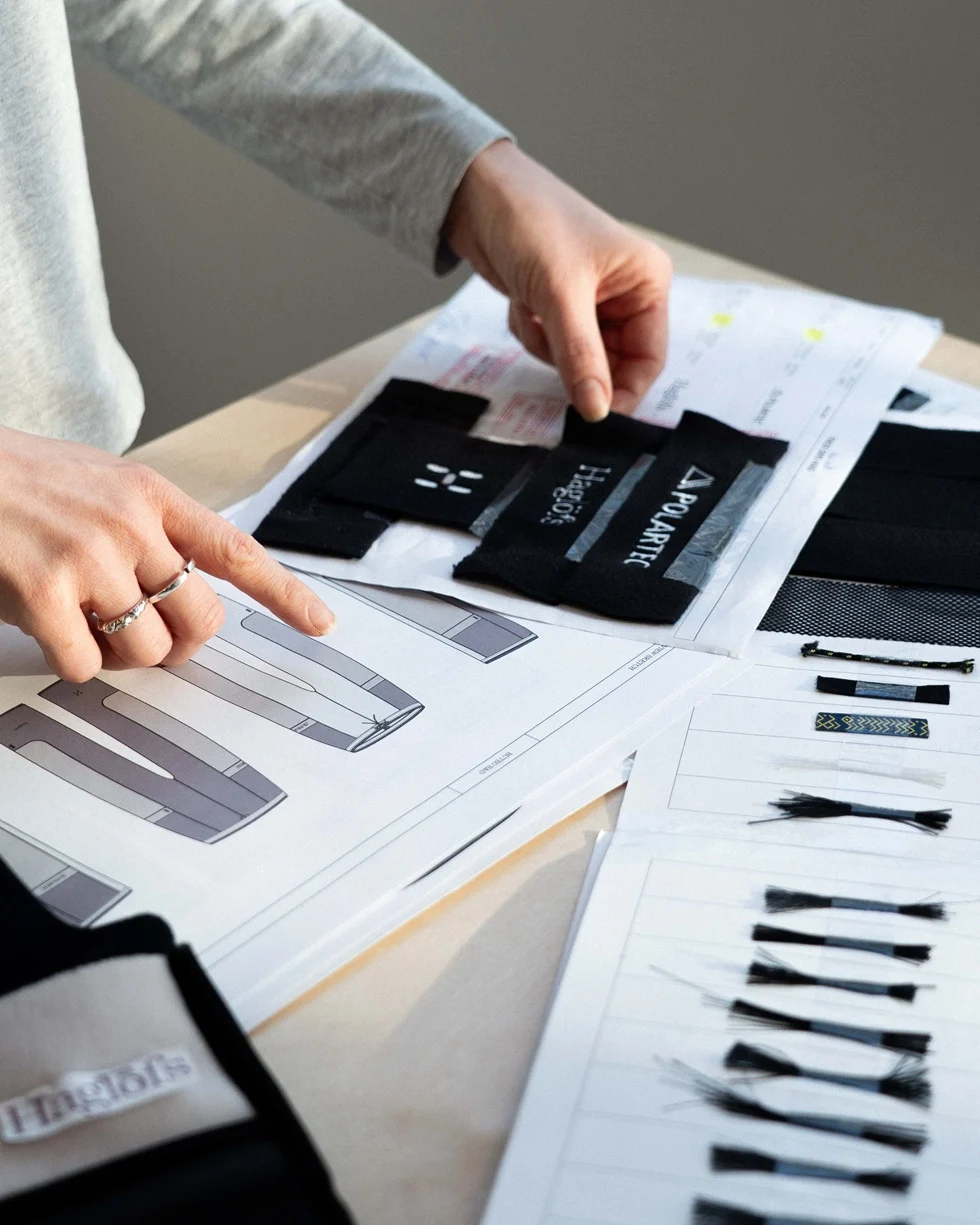
The global outdoor apparel industry is built on a paradox of uniformity and waste. Walk into any specialized outfitter during the autumn-winter buying season, and you are immediately met with an endless sea of black garments. From technical mid-layer fleeces to high-performance alpine beanies, black remains the dominant commercial colorway. Yet, to the untrained eye, every black garment on the rack looks identical, masking a heavily fragmented and environmentally demanding industrial reality.
Behind the uniform appearance of these retail racks lies a sprawling network of independent dye houses, isolated chemical formulations, and disjointed supply chains. For decades, outdoor apparel brands have independently commissioned their own proprietary shades of black, unaware—or unconcerned—that their individual choices were compounding into a massive, industry-wide environmental toll. Now, a groundbreaking joint initiative between Swedish outdoor brand Haglöfs and textile innovator Polartec aims to expose and resolve this systemic inefficiency through a collaborative concept known as Standard Issue Black.
The Hidden Anatomy of Synthetic Textile Dyeing
To fully grasp the magnitude of the problem, one must examine the complex chemistry required to color synthetic fabrics. Unlike natural fibers such as cotton and wool, which readily absorb water-based dyes at relatively low temperatures, synthetic polymers like polyester are inherently hydrophobic. They repel water, forcing textile engineers to employ an entirely different class of chemistry: disperse dyes.
The coloration of polyester fleece requires a high-temperature, high-pressure aqueous process. Typically conducted at temperatures exceeding 130 degrees Celsius within industrial pressure vessels, this method relies on thermal energy to force dye molecules deep into the core molecular structure of the synthetic fiber. Among all available colorways, black stands out as the most chemically demanding. Achieving a deep, lightfast, neutral black requires layering multiple disperse dye molecules in precise formulations, resulting in extended fixation cycles, increased water consumption, and heightened thermal energy requirements.
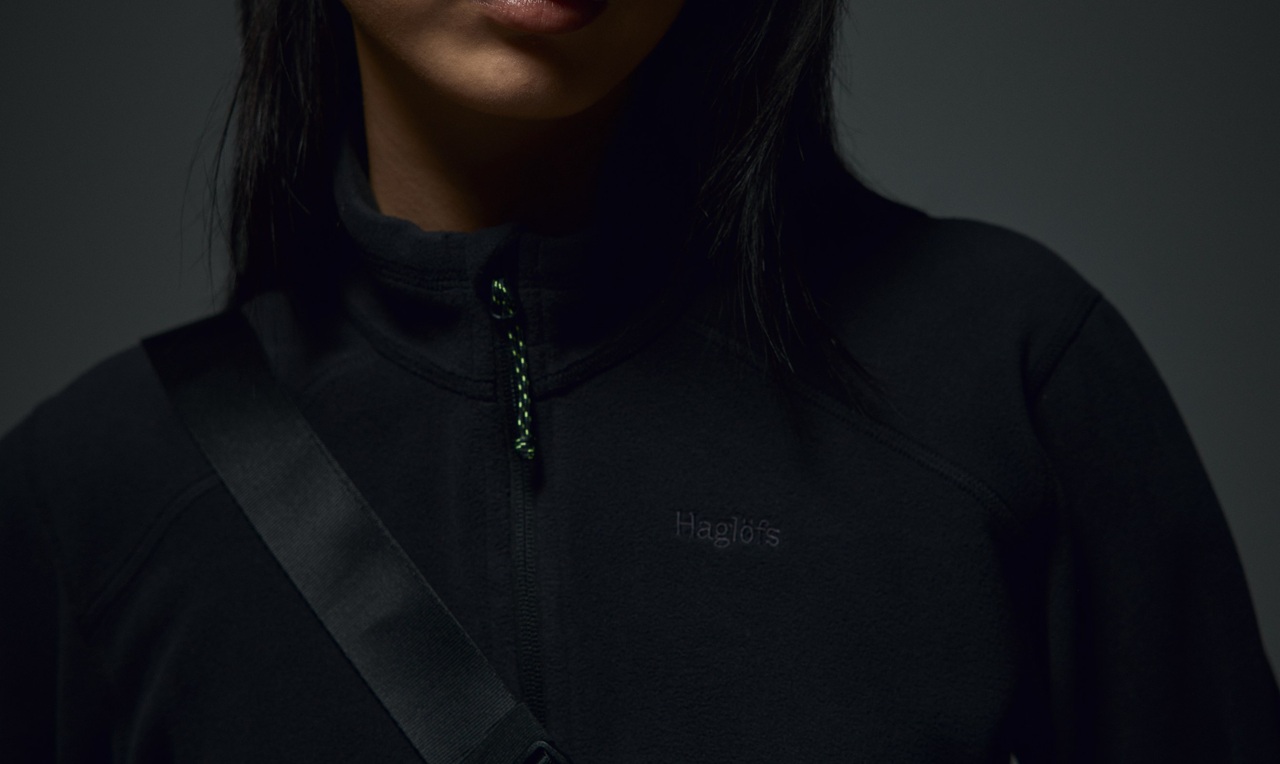
According to global textile manufacturing data, the textile sector is responsible for approximately 20 percent of worldwide industrial water pollution, with wet processing—specifically dyeing and finishing—accounting for the vast majority of that figure. Depending on facility efficiency, depth of shade, and processing methodology, a single kilogram of dyed polyester fabric can consume between 30 and 150 liters of water. Because black sits at the absolute deepest end of the color spectrum, it consistently registers at the resource-intensive ceiling of this consumption range.
The Minimum Order Quantity Dilemma
The root cause of this environmental inefficiency is not merely chemical; it is deeply embedded in the operational economics of global manufacturing. Textile dye houses operate on strict minimum order quantities (MOQs) to maintain economic viability. To run a profitable dye cycle, manufacturers require substantial volumes of raw fabric, often measured in hundreds or thousands of kilograms per batch.
When independent outdoor brands commission their seasonal collections, each company submits its own specific color standard for black. Rather than sharing a unified standard, dozens of competing brands contract separate dye houses to develop unique recipes, run independent laboratory dips, and execute small-to-medium production batches.
While each individual decision appears rational within a brand’s siloed product development schedule, the aggregate outcome is profoundly irrational. The global outdoor market routinely runs dozens of separate, simultaneous dye processes to produce shades of black that are functionally indistinguishable to the consumer. Each separate run demands its own recipe development, laboratory approvals, chemical mixes, wastewater treatment overhead, and minimum order thresholds. The resulting surplus, overproduction, and excessive resource expenditure have persisted for decades without a coordinated industry-wide correction.
The Genesis of the Black Capsule Project
The initiative to challenge this status quo began not with a boardroom presentation, but with a provocative physical demonstration. Haglöfs and Polartec conceived the Black Capsule Project as a tangible critique of the status quo.
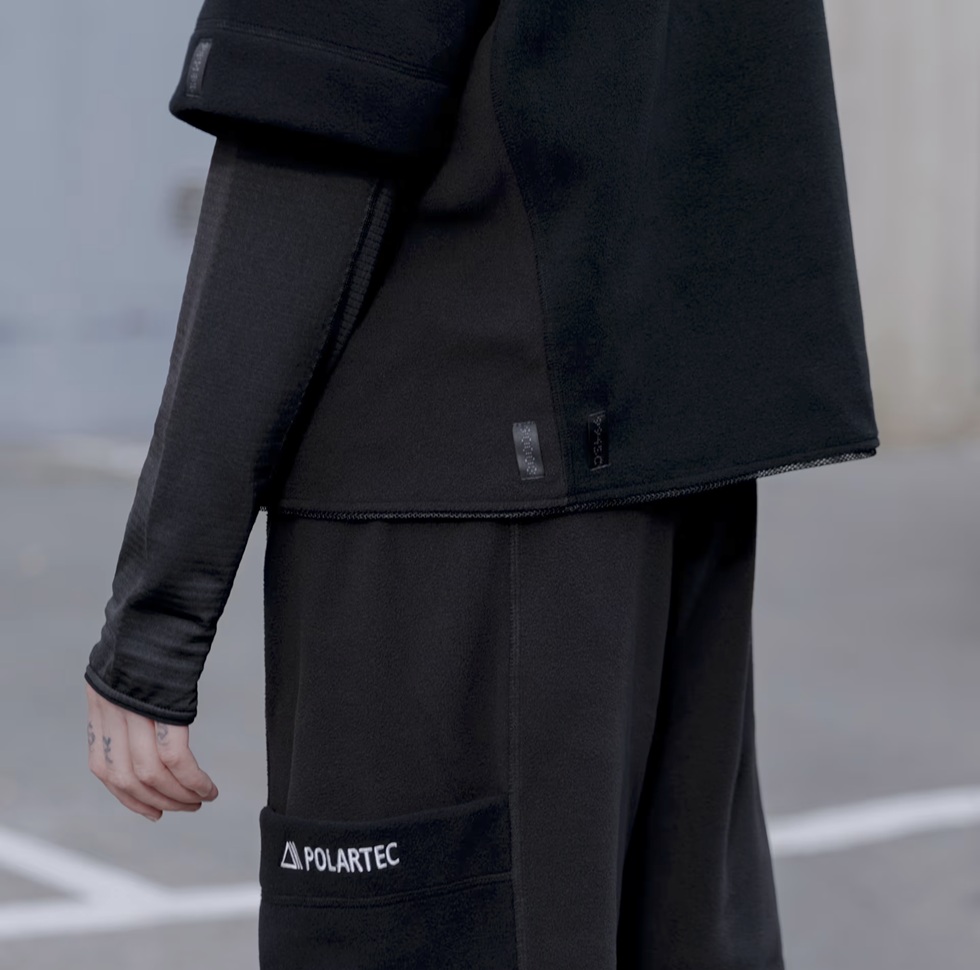
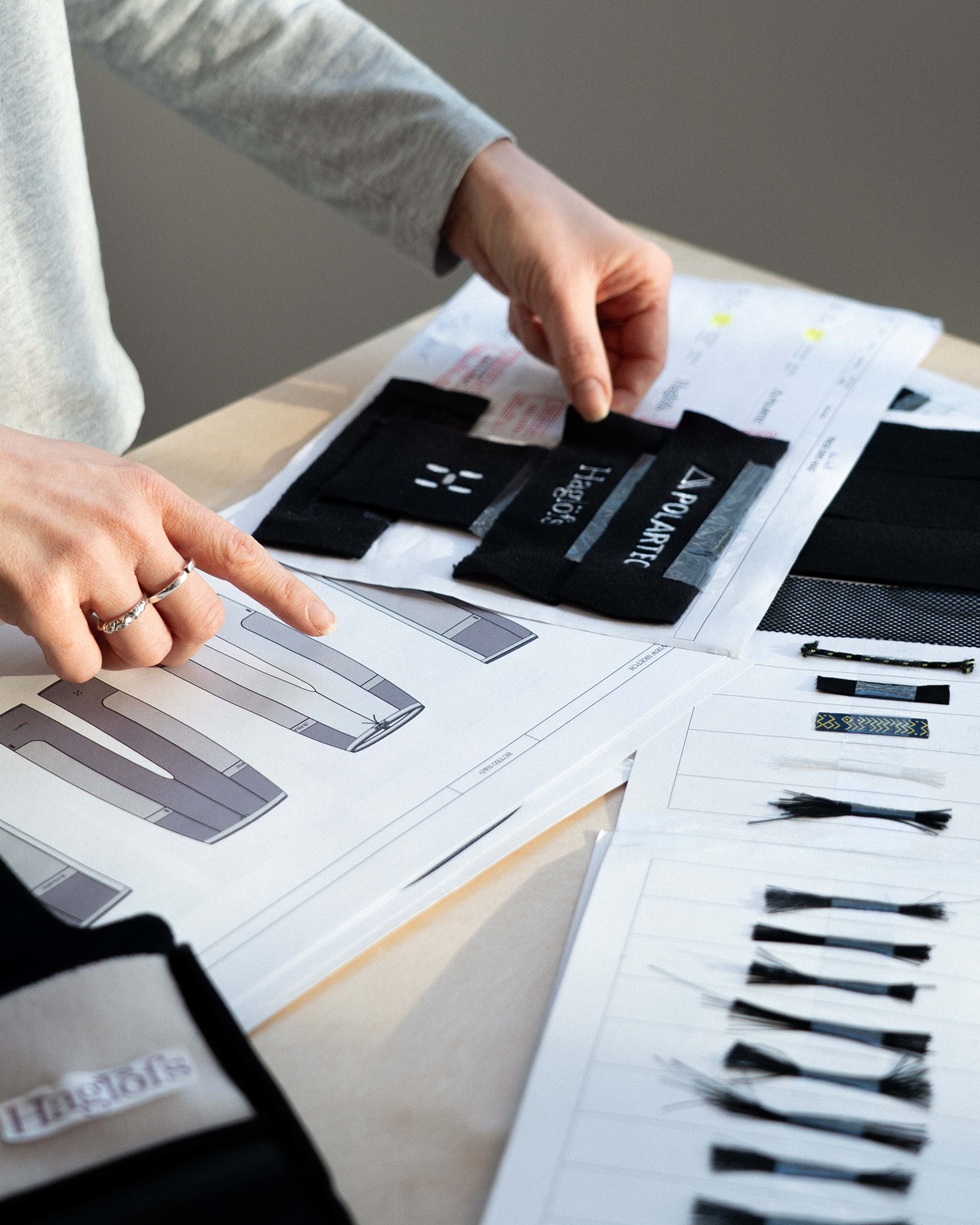
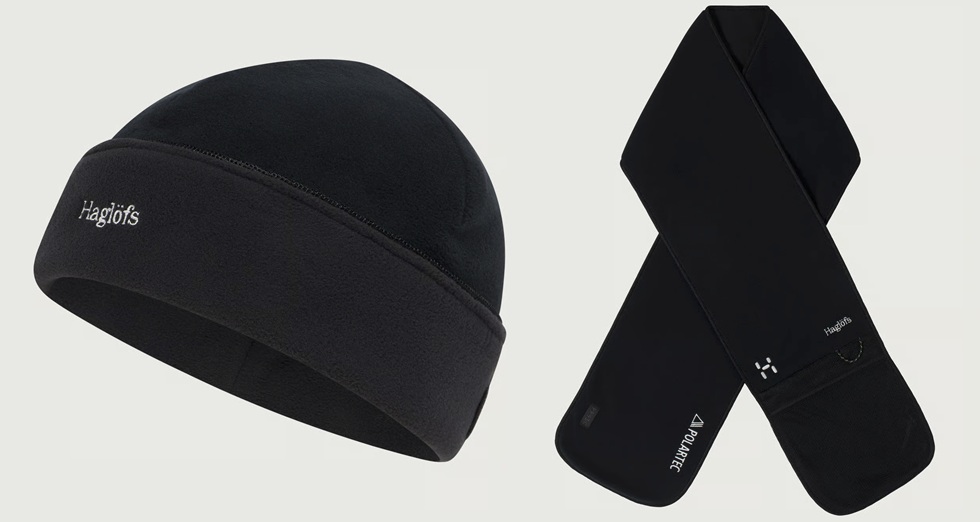
The limited-edition collection—comprising a Project Tee, a technical beanie, a scarf, and specialized trousers—was constructed entirely from leftover, mismatched remnants of black Polartec fleece sourced from multiple different manufacturing runs. When stitched together into a single garment, the subtle, otherwise invisible tonal variances between the fabric panels became starkly apparent.
To emphasize the point, Haglöfs affixed woven labels to every individual pattern piece on the garments, stamped with its corresponding original color batch number. This design choice served as a literal ledger, forcing consumers and industry observers to confront the exact number of isolated dye runs required to produce what appeared at first glance to be a single, uniform black shirt.
The Capsule collection functioned as a physical proof-of-concept, laying the groundwork for a broader operational shift. It demonstrated that while the market demands black products, the current mechanism for supplying them is plagued by redundant industrial processing.
Introducing Standard Issue Black
Following the conceptual awareness raised by the Black Capsule, Haglöfs and Polartec moved from artistic critique to industrial implementation. The solution developed by the two companies is deceptively simple: the creation of a universal, standardized shade of black made openly available to the entire outdoor apparel industry.
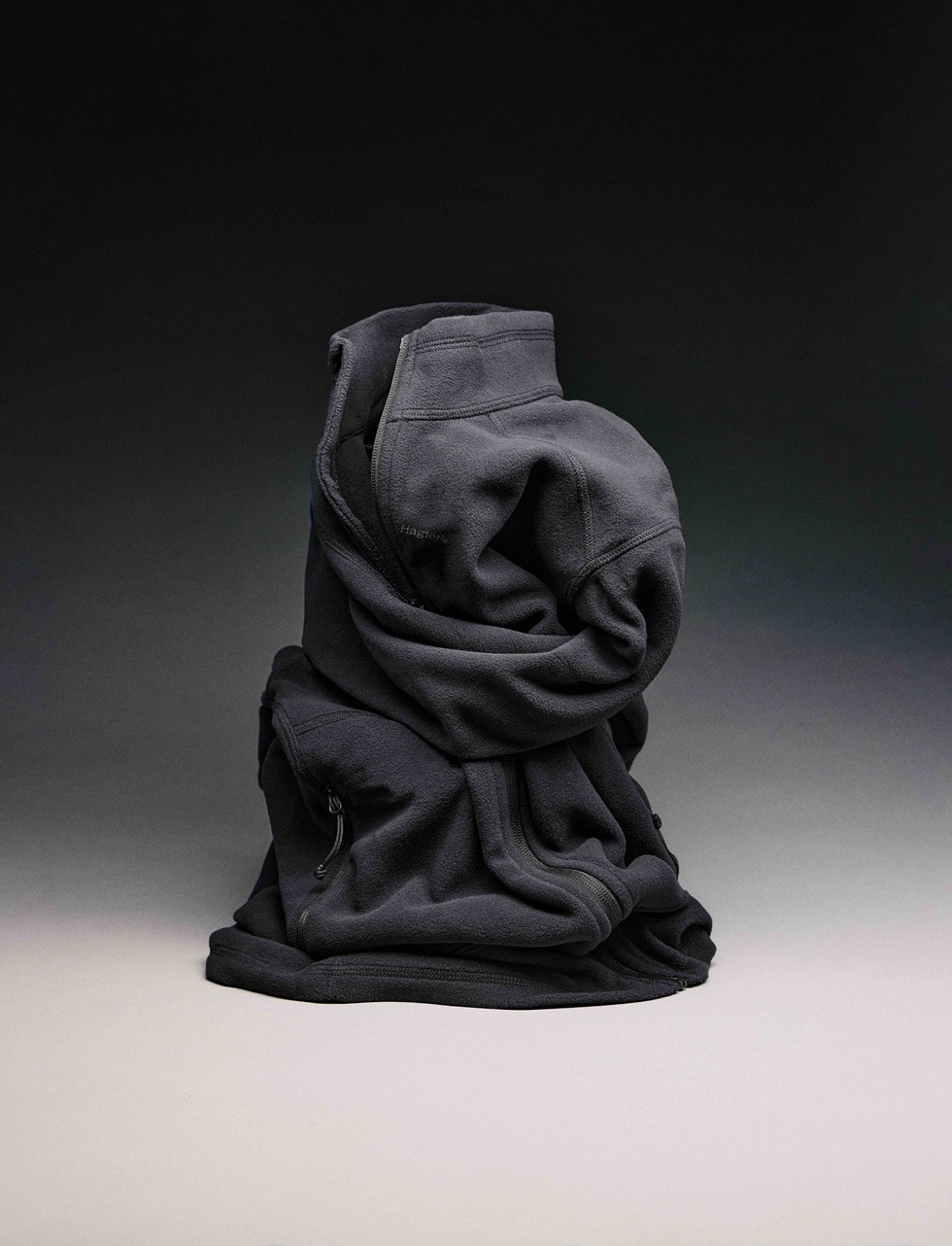
Under this framework, Polartec produces a single, highly optimized shade of black at large scale as part of its standard manufacturing inventory. Rather than locking the shade behind proprietary patents or restricting access to gain a competitive advantage, the standard is offered freely to any apparel brand wishing to adopt it. There are no licensing fees, and no exclusivity clauses attached to the material.
The environmental rationale rests squarely on the fundamental economic principles of batch consolidation. By combining what would have been dozens of fragmented, medium-volume dye runs into massive, continuous production cycles, manufacturing efficiency increases exponentially.
According to internal assessments conducted by Haglöfs, adopting Standard Issue Black yields a reduction of over 50 percent in water usage and at least a 20 percent decrease in energy consumption compared to traditional piece-dyed black fabrics. While these figures represent manufacturer-supplied calculations rather than independently audited third-party verifications, they align closely with established chemical engineering principles regarding industrial scale-up and wastewater reduction.
Commercial Realization: The Buteo Mid II Jacket
To test the viability of the initiative in a real-world market setting, Haglöfs transitioned Standard Issue Black from concept to full commercial production for its Fall/Winter 2026 collection. Crucially, the brand chose not to relegate the sustainable standard to a niche or experimental product line.
Instead, the standardized black fabric was integrated directly into one of Haglöfs’ high-volume bestsellers: the Buteo Mid II Jacket. Eva Weiss, Head of Design and R&D at Haglöfs, emphasized the strategic importance of utilizing a high-turnover commercial vehicle for the rollout.
"The environmental case for Standard Issue Black only holds true at scale," Weiss noted during the product’s market introduction. "Applying this to a limited edition is merely a demonstration. Putting it into a bestseller is how we enact structural change."
By embedding the universal standard into a high-volume mid-layer, Haglöfs aims to prove that operational sustainability can coexist with mainstream commercial viability.
Addressing the Creative Objection
The immediate pushback from traditional apparel designers often centers on concerns over creative stagnation. In an industry where aesthetic differentiation is paramount, critics argue that standardizing a core colorway like black threatens to homogenize product lines and strip brands of their unique design identity.
Industry stakeholders, however, point out that black has rarely served as a primary tool for brand differentiation. In technical outdoor apparel, visual distinction is driven by silhouette architecture, cut, construction techniques, hardware selection, technical specifications, fit, trim details, and seasonal accent colors. Black remains a foundational, neutral constant across nearly all collections.
Drawing a historical parallel, proponents of standardization often compare the initiative to the widespread adoption of standardized fastening systems decades ago. Today, components like YKK zippers dominate the global market to the extent that their presence on a garment is considered standard background infrastructure rather than a design constraint. Industry leaders argue that standardizing a functional baseline component like a dye formulation frees up valuable design resources to focus on performance innovation and structural creativity.
Broader Industry Implications and the Road Ahead
Despite the compelling environmental and economic arguments, the long-term success of Standard Issue Black remains contingent on broader market adoption. The outdoor apparel sector has a documented history of introducing well-intentioned sustainability frameworks that struggle to achieve universal cross-brand participation due to corporate siloing and institutional inertia.
Furthermore, the persistent tension between corporate sustainability pledges and the bottom-line pressures of the "green premium" has historically derailed numerous eco-friendly textile innovations. Standard Issue Black attempts to bypass this economic barrier by offering a solution that is cost-neutral or potentially cost-positive through supply chain efficiencies, removing the financial disincentive for competing brands.
As the Buteo Mid II Jacket hits retail shelves and the initiative gains visibility, the wider outdoor industry faces a critical test of collective responsibility. The question is no longer whether traditional dyeing processes are wasteful—the data on water pollution and energy consumption is well established. The central question is whether competing apparel brands are willing to set aside proprietary color standards in favor of a unified industrial baseline.
Through the lens of Standard Issue Black, Haglöfs and Polartec have demonstrated that meaningful environmental progress does not always require inventing entirely new materials. Sometimes, it simply requires the discipline to stop repeating the old ones.