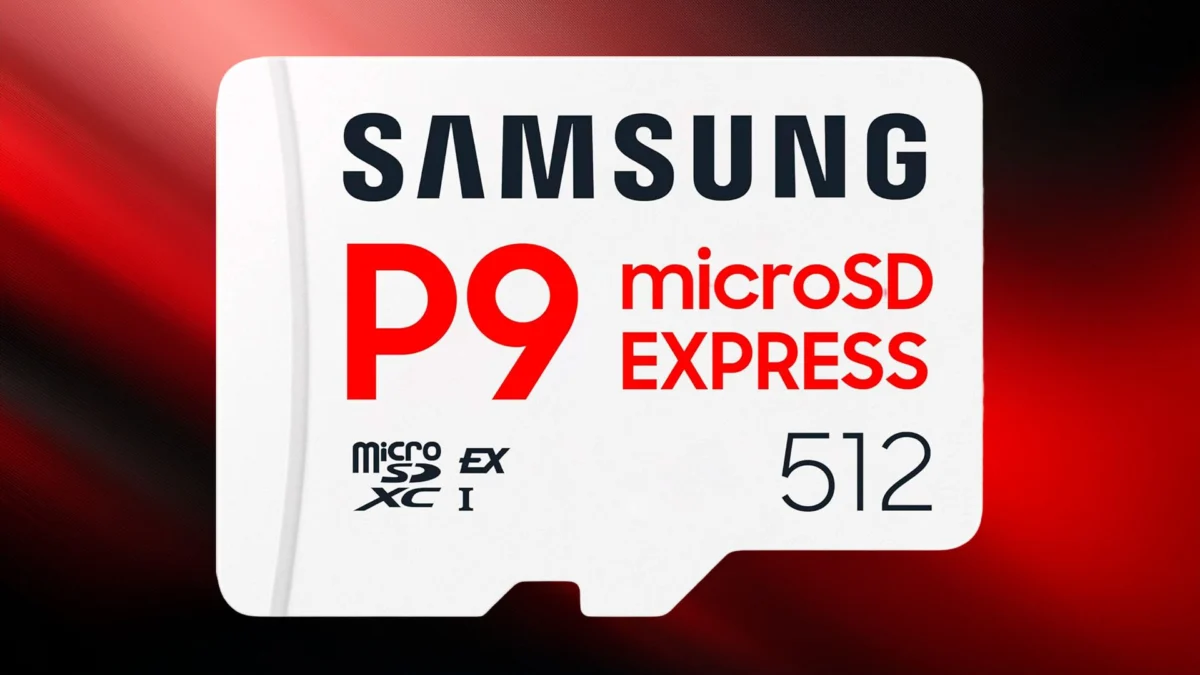
The consumer technology landscape has faced intense pressure over the past several quarters following a widespread flash memory shortage that sent prices for solid-state drives, flash memory modules, and high-performance microSD cards soaring across the global market. Amid this ongoing economic squeeze, owners of Nintendo’s upcoming and current hardware ecosystems have received a welcome reprieve. For a limited time, Amazon has slashed the price of the high-performance Samsung P9 512GB microSD Express card to just $99.99. This promotion effectively returns the advanced storage medium to its original manufacturer’s suggested retail price (MSRP) before supply chain constraints distorted the memory market.
The $50 checkout discount represents a significant value proposition for consumers who have watched storage prices steadily climb. Normally retailing at $149.99 due to heightened demand and constrained production capacities among major semiconductor fabricators, the Samsung P9 512GB card offers a vital lifeline for gamers looking to expand their digital libraries without paying the inflated premiums currently plaguing the retail sector. As portable gaming devices demand faster read and write speeds to accommodate increasingly complex assets, high-capacity and high-speed storage solutions have transitioned from luxury accessories to functional necessities.
The Genesis of the Global Flash Memory Crunch
To understand the significance of the Samsung P9 discount, one must examine the macro-level economic and industrial forces that created the current flash storage deficit. Beginning in late 2023 and extending aggressively through 2024 and 2025, the global market for NAND flash memory experienced a severe structural shift. Major semiconductor manufacturers—including Samsung, SK Hynix, Micron, and Kioxia—strategically adjusted their production output and capital expenditure allocations. Faced with a prolonged slump in traditional PC and smartphone sales, these firms deliberately reined in wafer production to stabilize plummeting memory chip prices and protect their profit margins.
Concurrently, the explosive growth of generative artificial intelligence infrastructure triggered an unprecedented corporate land grab for high-density enterprise storage, advanced DRAM, and high-bandwidth memory (HBM). Semiconductor fabrication plants redirected vast portions of their cleanroom capacity away from consumer-grade NAND modules toward enterprise-tier data center components. This pivot created an immediate supply deficit for everyday consumer electronics. As commercial demand outstripped diminished factory outputs, wholesale prices for raw NAND flash surged, forcing brands to pass rising component costs onto retail buyers. Consequently, memory cards, external solid-state drives, and internal storage upgrades saw price hikes ranging from 30% to upwards of 60% depending on density and speed class.
The Intersection of MicroSD Express Technology and Modern Gaming
The Samsung P9 512GB card stands at the forefront of a technological evolution in portable storage. Traditional microSD cards have long served as the standard expandable storage medium for handheld consoles, smartphones, and action cameras. However, legacy UHS-I and UHS-II interface standards impose strict ceiling limits on data transfer rates, often bottlenecking load times and asset streaming in modern video games.
MicroSD Express technology bridges the gap between traditional flash cards and full-sized NVMe solid-state drives. By leveraging PCIe architecture and the NVMe protocol over a microSD-sized form factor, these advanced cards can achieve data transfer speeds that dwarf older generations, often reaching speeds up to several hundred megabytes per second. This capability is paramount for next-generation portable gaming platforms like the anticipated Nintendo Switch successor, which relies on rapid asset streaming to maintain fluid framerates and expansive open-world environments without protracted loading screens.
Industry analysts note that while the adoption rate of microSD Express has been slow due to high initial manufacturing costs and limited device compatibility, hardware manufacturers are increasingly building native support for the standard into their latest architectures. For consumers, investing in a high-speed Express card is viewed as a forward-compatible decision, ensuring that their storage media will not become an operational bottleneck as software demands continue to escalate.
Chronology of the Amazon Promotion and Market Pricing
The appearance of the $99.99 price tag on Amazon marks a notable deviation from prevailing market trends. The chronology of the Samsung P9 512GB’s pricing trajectory illustrates the volatility of the contemporary hardware market:
- Q3 2023: Samsung introduces the P9 lineup of high-speed storage solutions, establishing an initial MSRP of $99.99 for the 512GB variant. Initial reviews praise its thermal management and sustained transfer speeds.
- Q1 2024: The global flash shortage takes hold. Semiconductor supply tightening forces upstream memory costs upward.
- Q3 2024: Retailers begin adjusting prices upward to reflect rising wholesale costs. The Samsung P9 512GB creeps past its baseline price, eventually stabilizing around $149.99 as supplies become increasingly scarce across major distribution channels.
- Late 2024 to Early 2025: Prolonged consumer hesitation and fluctuating inventory levels lead to intermittent promotional discounts. However, sub-hundred-dollar pricing for high-performance 512GB microSD Express cards remains virtually nonexistent.
- Current Period: Amazon introduces a direct $50 checkout discount, effectively nullifying the shortage-induced markup and bringing the card back to its foundational launch price.
Consumer Reactions and Retailer Strategies
The sudden price drop has generated considerable discussion across enthusiast forums, hardware tracking communities, and consumer advocacy spaces. With digital game sizes consistently expanding—often ranging from 30 gigabytes to upwards of 100 gigabytes per title—internal storage capacities provided by modern consoles are routinely exhausted within the first few months of ownership.
Retail analysts suggest that promotional pricing of this nature is often driven by inventory management strategies and targeted volume incentives between manufacturers and major e-commerce platforms. While memory producers continue to maintain disciplined production schedules to preserve pricing power, periodic promotional windows allow brands to capture market share among cost-conscious consumers who have delayed upgrading their systems due to high prices.
Furthermore, the timing aligns with consumer anticipation surrounding next-generation hardware launches. As gamers prepare their peripheral ecosystems for upcoming platform releases, demand for compatible high-speed accessories is expected to peak. Securing essential hardware components at baseline prices before subsequent supply chain disruptions can insulate buyers from future inflationary pressures.
Broader Economic Implications for the Semiconductor Sector
The micro-trend observed in the pricing of the Samsung P9 512GB card reflects broader stabilization signals within the global semiconductor supply chain. While enterprise demand for artificial intelligence infrastructure remains robust, consumer-facing memory sectors are beginning to find a delicate equilibrium between production volume and market absorption.
Industry economists point out that while spot prices for NAND flash have experienced periods of severe fluctuation, incremental capacity expansions scheduled by major memory foundries throughout the coming quarters may alleviate some of the acute pressures currently affecting retail markets. However, geopolitical factors, raw material costs, and energy expenditures continue to pose structural risks to long-term price stability.
For the average consumer, navigating the current hardware market requires careful timing and vigilant price monitoring. The availability of high-performance storage at pre-shortage pricing serves as an indicator that competitive market forces can still yield consumer-friendly opportunities, even amid broader inflationary cycles.
As digital distribution continues to dominate the video game industry—all but replacing physical cartridges and discs for the vast majority of software releases—reliable, high-capacity, and high-speed storage will remain a cornerstone of the modern gaming experience. Whether the current Amazon discount signals a permanent downward trend in microSD Express pricing or remains a fleeting promotional anomaly will depend heavily on the production discipline of major semiconductor suppliers in the months ahead. In the interim, consumers requiring high-end storage solutions have been handed a rare window to upgrade their hardware configurations without incurring the financial penalties currently defining the broader memory market.