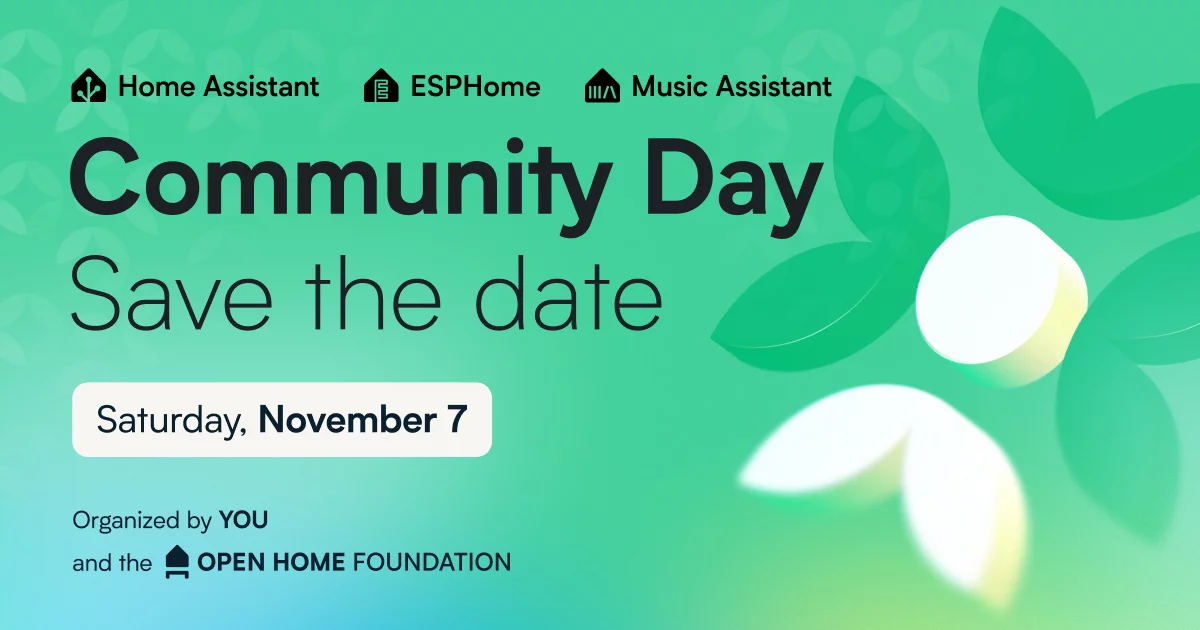
The Open Home Foundation has officially announced that Community Day 2026 will take place worldwide on Saturday, November 7, 2026. Following the inaugural event held in May 2025, the upcoming global gathering has been significantly expanded. Organizers have confirmed that the scope of the event will now encompass all major projects housed under the Open Home Foundation umbrella rather than focusing exclusively on Home Assistant. The announcement provides local organizers with an extended planning window, addressing key logistical takeaways gathered from the previous year’s wrap-up assessments.
Background Context and Evolution of the Event
The concept of a unified global meetup originated from the growth and decentralization of open-source smart home and automation ecosystems. In May 2025, the first-ever Home Assistant Community Day established a benchmark for decentralized gatherings, bringing together enthusiasts, developers, and local contributors in packed venues across multiple continents. While the inaugural event was widely regarded as a success, post-event evaluations conducted by foundation leadership highlighted several areas for operational refinement.
Chief among the logistical feedback items was the need for an extended lead time. Event coordinators and local community leaders emphasized that earlier scheduling announcements are vital for securing venues, marketing regional meetups, and accommodating international holiday calendars. By announcing the November 7 date well in advance, the Open Home Foundation aims to provide grassroots organizers with sufficient time to build robust local programs. Furthermore, the decision to host the event on a Saturday was maintained after careful review to minimize conflicts with standard work weeks and regional observances.
Broadening the Ecosystem: Inclusion of ESPHome, Music Assistant, and More
A major structural shift for Community Day 2026 is its formal transition from a single-project focus to a foundation-wide initiative. While the 2025 event was predominantly branded around Home Assistant, the 2026 program officially integrates communities dedicated to all major projects supported by the Open Home Foundation, including ESPHome and Music Assistant.
This strategic expansion reflects the maturation of the open-source smart home landscape. By removing project-specific boundaries, the foundation aims to foster cross-collaboration among diverse user bases and developers who share core values of privacy, local control, and interoperability. Organizers interested in hosting niche meetups focused solely on peripheral technologies or complementary software can now operate fully within the official event framework without administrative ambiguity.
Visual Branding and Sustainability Themes
In alignment with its broader institutional identity, Community Day 2026 introduces a revised visual identity and color palette. Graphic designers working with the Open Home Foundation have updated the event’s marketing materials to mirror the design standards utilized across official foundation websites.
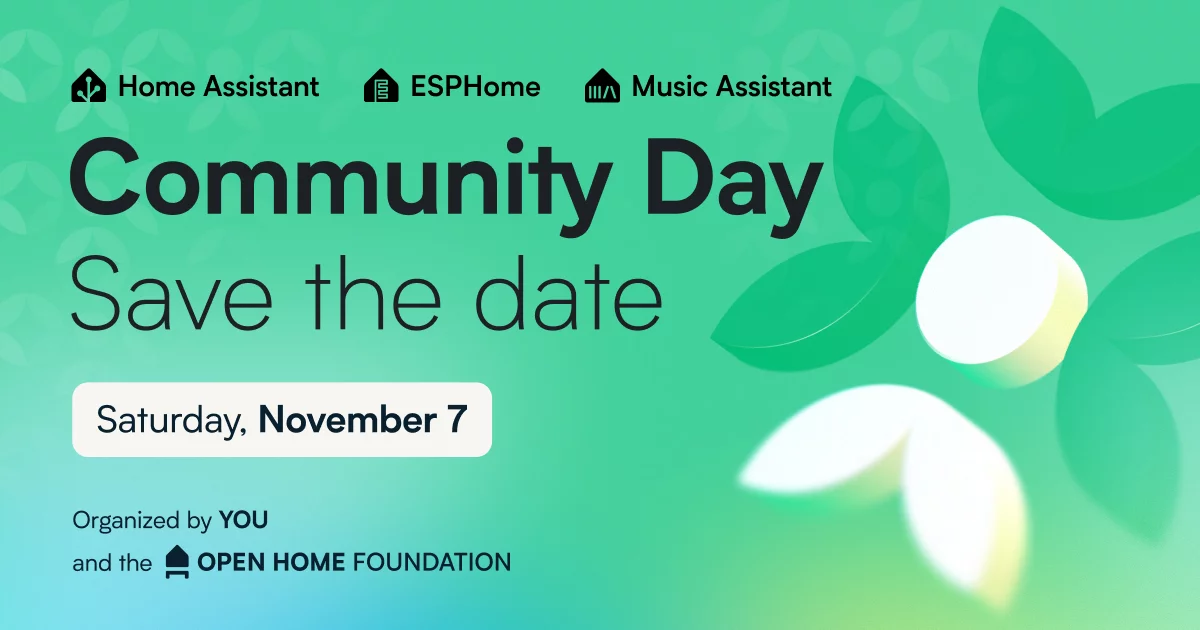
Specifically, the chosen color palette draws from the organization’s core principles regarding sustainability. Foundation representatives noted that the thematic selection serves as a conceptual nod to the open-source community itself, which provides the foundational support and continuity for the ecosystem’s ongoing development. These updated assets, alongside standardized promotional packages, will be made available to local hosts as part of the September rollout.
Support Infrastructure and Resources for Local Hosts
To streamline the organization of dozens of independent meetups globally, the Open Home Foundation is deploying a comprehensive suite of tools and administrative resources for hosts. Because privacy regulations and platform policies, such as those governing Luma contact preferences, limit direct outreach to past organizers, the foundation has initiated public calls to action via dedicated communication channels, including specialized Discord roles and direct contact pathways.
The upcoming infrastructure features several key operational upgrades:
- A centralized, dynamic website that automatically updates as new local meetups are registered on the global calendar.
- Revised and transparent reimbursement guidelines to offset minor venue or operational expenses incurred by local leaders.
- Official merchandise request forms to provide attendees and hosts with standardized commemorative items.
- A comprehensive Host Playbook designed to guide first-time and veteran organizers through venue selection, safety protocols, and community engagement strategies.
Timeline and Upcoming Milestones
The path to Community Day 2026 follows a structured timeline designed to balance large-scale international exhibitions with grassroots community preparation. Following the initial save-the-date announcement, foundation leadership is currently managing commitments at major technology conventions, including IFA Berlin.
Official event submissions, public registration calendars on Luma, and the launch of the dedicated community event website are scheduled to go live in early September 2026. This window will provide hosts with approximately two months to finalize venue bookings, promote local gatherings, and order necessary materials before the November 7 event date.
Broader Impact and Strategic Implications
The formalization and expansion of Community Day 2026 underscore the growing economic and social significance of independent, open-source automation communities. As commercial smart home ecosystems increasingly lean toward closed subscription models and cloud dependency, initiatives by organizations like the Open Home Foundation represent a vital counterweight focused on local data processing and user sovereignty.
By decentralizing the event while maintaining centralized institutional support, the foundation enables localized community-building on a global scale. Observers note that structured peer-to-peer engagement accelerates technical adoption, lowers entry barriers for new users, and strengthens the resilience of open-source software development pipelines. As preparations continue toward the November rollout, the success of Community Day 2026 will serve as a key metric for the scalability and cohesion of the open home movement.