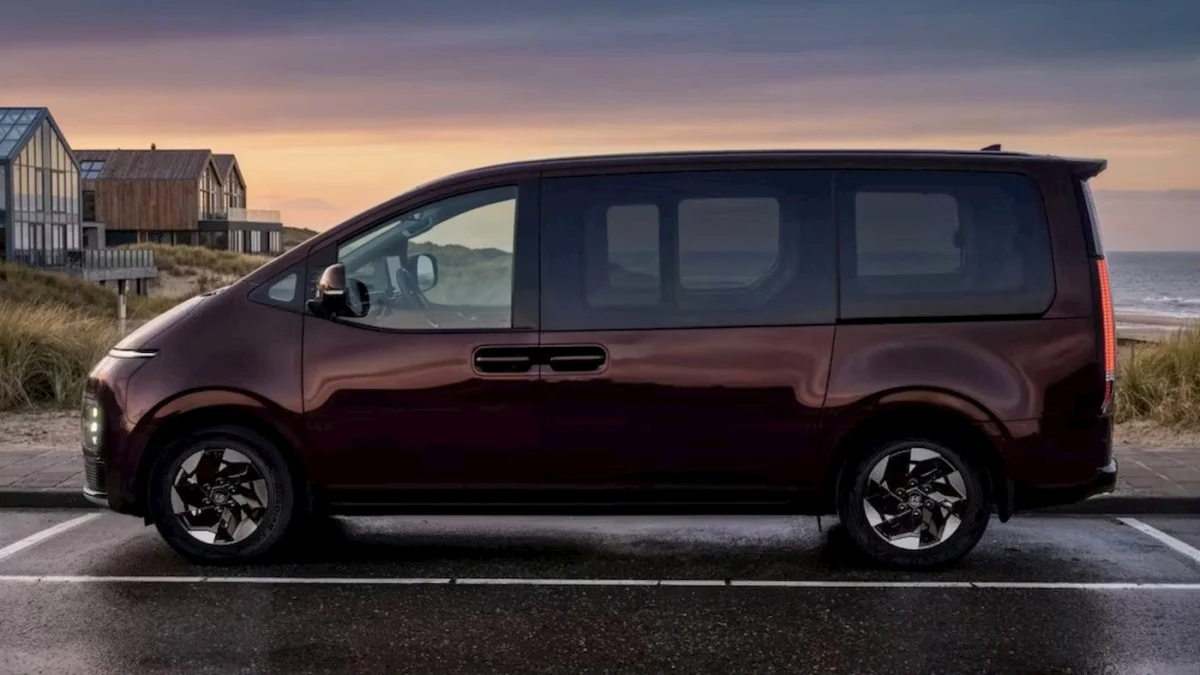
South Korean automotive giant Hyundai has officially commenced order books for its highly anticipated Staria Electric van across European and select global markets, following an initial domestic launch earlier this year. First previewed at the Brussels Motor Show in January, the zero-emission multi-purpose vehicle (MPV) bridges the gap between commercial utility and high-capacity passenger transport. Outsized compared to major segment competitors like the Kia PV5 and the Volkswagen ID. Buzz, the Staria Electric is engineered to satisfy the demands of large families, shuttle services, and commercial operators looking to transition their fleets to electric power without compromising on interior volume or flexibility.
With European pricing in Germany starting at €57,450 (approximately $66,500) for the base Trend trim, Hyundai is positioning the vehicle as a versatile and technologically advanced alternative in a rapidly growing electric van sector. Concurrently, the automaker has rolled out commercial variants in markets such as Australia with the Staria Load Electric, alongside complementary passenger additions to its European portfolio, cementing a broad multi-segment electrification strategy.
Chronology and Development of the Staria Electric Platform
The evolution of the Staria from an internal combustion engine (ICE) utility vehicle into a dedicated battery-electric vehicle (BEV) reflects Hyundai’s flexible platform strategy. The gas-powered Staria has long enjoyed success in global markets including South Korea, Australia, and parts of Europe, celebrated for its futuristic, aerodynamic silhouette and cavernous cabin.
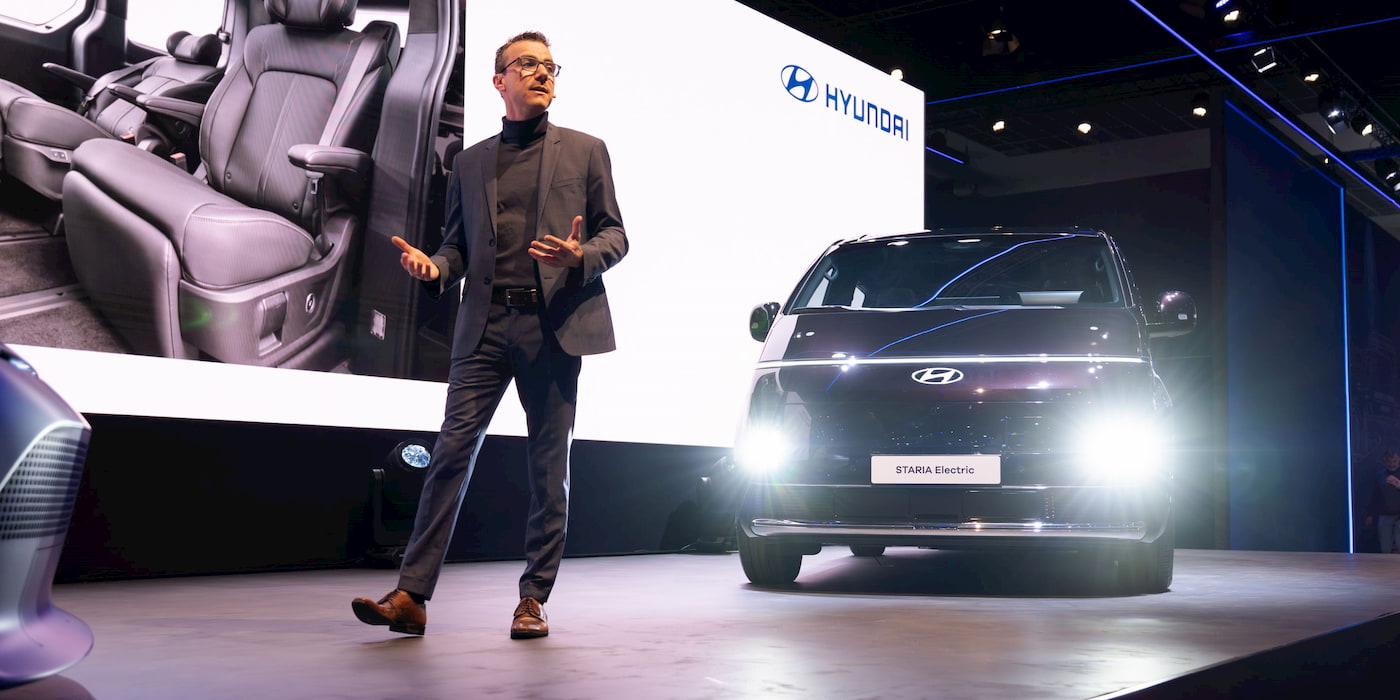
In January, Hyundai utilized the Brussels Motor Show stage to provide the public and industry analysts with their first comprehensive look at the production-ready Staria Electric. The vehicle transitioned swiftly from its initial auto show debut to a domestic commercial launch in South Korea during the first half of the year. By late summer, Hyundai broadened its geographical scope, officially opening regional order banks in Germany and neighboring European territories, while simultaneously introducing the commercial Staria Load Electric to the Australian market. This measured rollout highlights the company’s commitment to scaling its commercial and passenger EV segments in tandem.
Dimensions, Design, and Interior Packaging
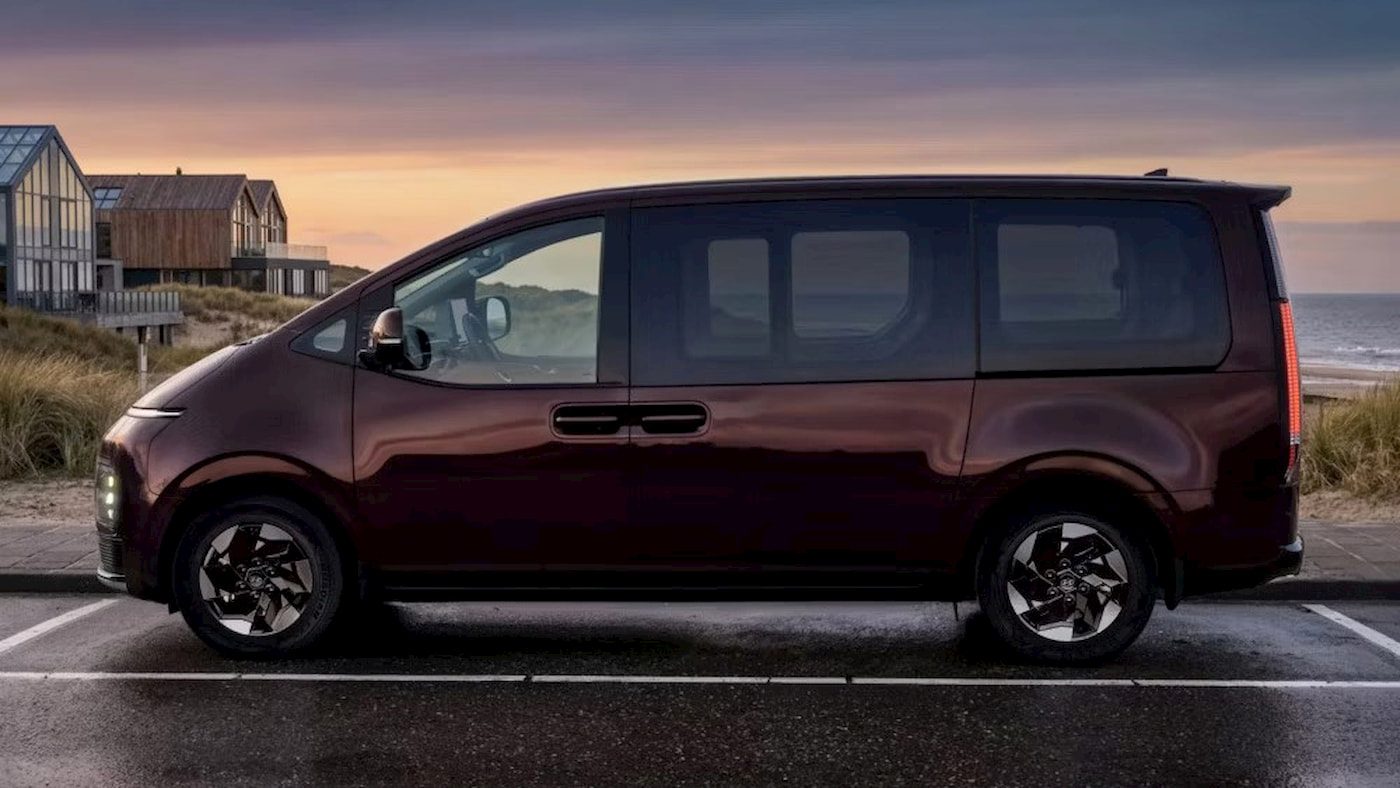
The Staria Electric boasts a commanding physical presence on the road. Measuring 5,253 mm (206.8 inches) in length, 1,997 mm (78.6 inches) in width, and 1,990 mm (78.3 inches) in height, with a substantial wheelbase of 3,273 mm (128.8 inches), the van is approximately 200 mm (7.8 inches) longer than Hyundai’s flagship three-row IONIQ 9 SUV.
Despite sharing its overarching architecture with its ICE predecessor, the electric variant incorporates distinct design cues tailored to the EV era. Most notably, the front fascia features a closed-off grille structure paired with a continuous, full-length LED light bar that emphasizes its width and futuristic aesthetic.
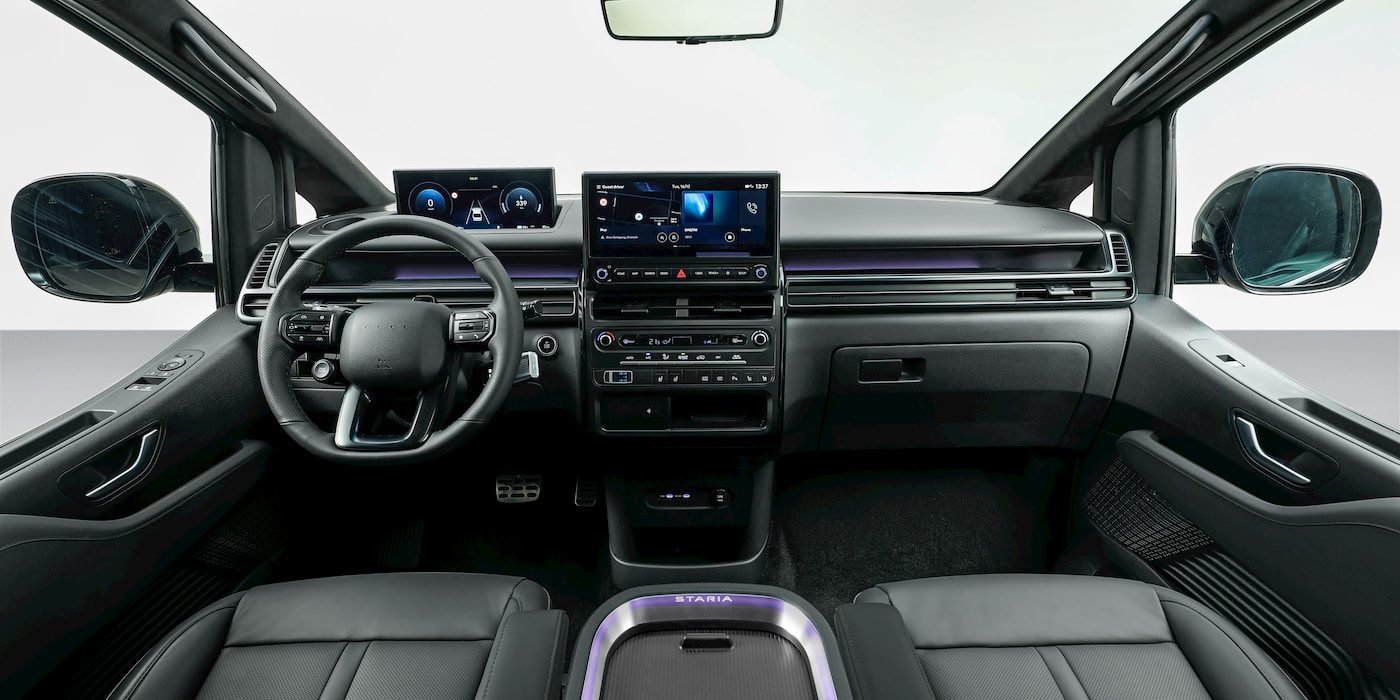
Inside, the vehicle utilizes Hyundai’s signature "Inside-Out" design methodology, which prioritizes interior space and human-centric architecture by starting the design process from the cabin outward. The completely flat floor plan enables highly configurable 7- and 9-seat layouts. In the 9-seat configuration, occupants benefit from up to 1,303 liters of dedicated luggage capacity behind the rear seats, supplemented by a convenient 24-liter front trunk (frunk) under the hood. Sliding side doors and modular, folding second- and third-row seats make the cabin adaptable for varied passenger and cargo requirements.
The digital interface inside the cabin is anchored by Hyundai’s latest connected car Navigation Cockpit (ccNC) system. This setup features dual 12.3-inch displays integrated seamlessly into a widescreen layout, handling the instrument cluster and infotainment duties while supporting wireless Apple CarPlay and Android Auto integration.
Powertrain, Battery Performance, and Charging Capabilities

Beneath its streamlined exterior, the Staria Electric is powered by an 84 kWh battery pack paired with a front-mounted electric motor generating 160 kW (218 horsepower). According to Worldwide Harmonised Light Vehicles Test Procedure (WLTP) testing standards, the van achieves a maximum driving range of up to 430 kilometers (267 miles) on a single charge, making it well-suited for both urban delivery routes and long-distance family travel.
Built upon Hyundai Motor Group’s advanced 800V electrical architecture, the Staria EV supports ultra-fast DC charging capabilities. When plugged into a 350 kW DC fast-charging station, the vehicle’s battery can replenish its state of charge from 10% to 80% in approximately 20 minutes, minimizing downtime for commercial operators and travelers alike.
Furthermore, the vehicle incorporates Vehicle-to-Load (V2L) technology. This bidirectional charging capability allows users to draw power directly from the vehicle’s high-voltage battery to operate external electronics, tools, home appliances, or recreational gear at a campsite, transforming the van into a mobile power station.
Trim Levels and Pricing Structure in Europe
Hyundai has structured the European lineup of the Staria Electric into three distinct tiers to cater to varying consumer and commercial budgets:
- Trend (Base 9-Seater): Starting at €57,450 ($66,500) in Germany, with monthly lease rates beginning at €489 ($570), this entry-level model offers robust core functionality, ample passenger space, and comprehensive safety features.
- Prime (Mid-Tier 9-Seater): Priced at €63,350 ($73,500), the Prime variant introduces enhanced convenience and safety amenities, including power-operated sliding doors on both sides, an electric tailgate, second- and third-row sliding windows with integrated sunshades, Highway Driving Assist 1.5, a blind-spot monitoring display system, and a practical 230V cabin socket.
- Calligraphy (Range-Topping 7-Seater): Positioned at €66,950 ($77,800), the Calligraphy trim delivers a luxury-oriented experience. It features exclusive exterior design details, full LED projection headlights, customizable multicolor ambient lighting, a premium BOSE surround-sound system, Passenger View and Talk Mode for enhanced cabin communication, Nappa leather upholstery, and two individual second-row comfort seats equipped with relaxation modes, heating, and ventilation functions.
Commercial Expansion and Global Market Availability

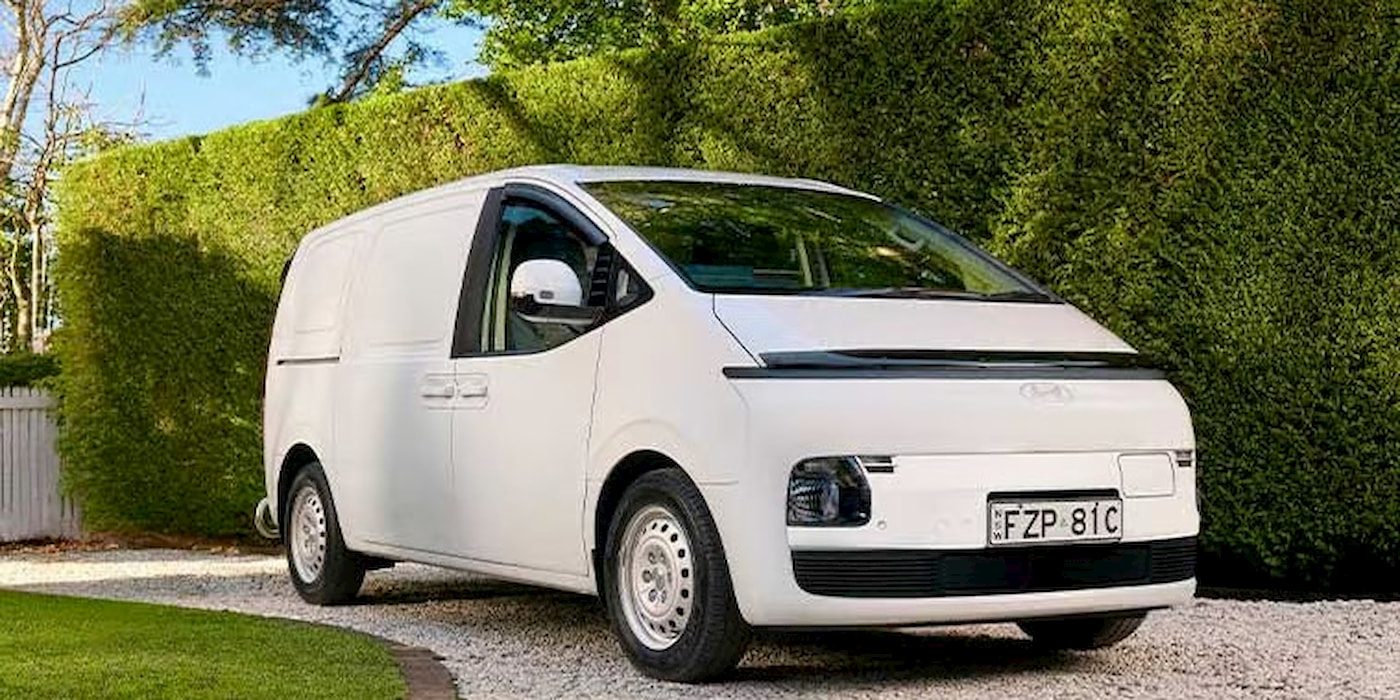
In tandem with the passenger MPV rollout, Hyundai is targeting commercial fleets globally. In Australia, order books have opened for the Staria Load Electric, a dedicated cargo variant designed to rival established commercial electric vans. Priced competitively starting at 70,990 AUD before on-road costs, the Staria Load Electric undercuts key regional competitors such as the Ford E-Transit Custom, which starts at 77,890 AUD plus local on-road expenses.
The launch of the Staria Electric coincides with broader portfolio updates across Hyundai’s EV ecosystem. Notably, the company recently opened European orders for the IONIQ 3, a compact battery-electric vehicle starting at €28,950 ($33,000) with competitive lease options from €209 ($240) per month.
Despite the aggressive global expansion of these models, North American consumers should not anticipate an imminent arrival of either the Staria Electric or the IONIQ 3 in the United States. Hyundai does not currently market the internal combustion Staria in the US market, and the IONIQ 3 has been specifically engineered and manufactured for European regulatory and sizing preferences. Instead, Hyundai’s North American electrification strategy continues to focus on established offerings such as the compact IONIQ 5 and the newly introduced three-row IONIQ 9 SUV.

Broader Market Implications and Industry Analysis
The introduction of the Hyundai Staria Electric underscores the automotive industry’s accelerating shift toward electrifying utility and high-occupancy vehicles. While much of the passenger EV market has historically concentrated on sedans and compact crossovers, the commercial van and multi-purpose vehicle segments represent critical battlegrounds for fleet operators and large households seeking zero-emission solutions without sacrificing payload or passenger capacity.
By leveraging its modular 800V charging architecture—proven successful in its passenger car lineup—Hyundai has addressed one of the primary historical barriers to commercial EV adoption: lengthy charging times. The ability to recover 70% of battery capacity in 20 minutes aligns closely with commercial operational workflows, potentially accelerating fleet electrification across Europe and the Asia-Pacific region. As legacy automakers and new market entrants alike vie for dominance in the multi-passenger EV space, the Staria Electric’s combination of competitive pricing, high-end comfort options, and substantial interior packaging positions Hyundai as a formidable contender in the global transition to sustainable mobility.