The transition of heavy machinery and utility vehicles toward sustainable energy sources has steadily gained momentum across various industrial sectors, yet the agricultural market has historically proven resistant to widespread electrification. While commercial freight, urban delivery fleets, and passenger vehicles have seen rapid adoption of battery-electric platforms, farming equipment faces unique operational challenges, including high torque requirements, remote locations, and extended working hours far from conventional electrical infrastructure. Addressing these persistent hurdles, Ohio-based clean technology firm GoSun has introduced an innovative solution tailored for small-scale agriculture and property management: the Moonrider 27 All-Electric Solar Tractor.
Co-developed in strategic partnership with established Indian tractor manufacturer Moonrider, the newly unveiled vehicle combines traditional mechanical utility with modern electric propulsion and integrated photovoltaic charging capabilities. By addressing the primary limitations of earlier agricultural electric vehicles—specifically, limited battery endurance and the logistical burden of daily recharging—GoSun’s latest offering aims to redefine how small farms, homesteads, and municipal maintenance departments handle their daily operational workloads.
Main Facts and Mechanical Specifications of the Moonrider 27
At the core of the GoSun Moonrider 27 is a robust 20-kilowatt electric motor, delivering approximately 27 horsepower. This powerplant distributes instant torque to all four wheels, ensuring optimal traction and pulling capacity across varied and difficult terrain, ranging from muddy fields to loose gravel tracks. Unlike some experimental electric utility vehicles that struggle to integrate with legacy farming hardware, the Moonrider 27 has been engineered for practical compatibility.

The rear of the tractor features a standard 540 rpm mechanical power take-off (PTO). This vital inclusion allows operators to utilize a wide array of existing farm-friendly implements, such as rotary mowers, soil tillers, and post-hole diggers, that may already be owned and stored in a barn. By maintaining compatibility with standard mechanical accessories, GoSun eliminates the costly barrier of requiring specialized, proprietary electric attachments—a significant market advantage for cost-conscious operators.
Powering the electric motor is a 24-kilowatt-hour lithium iron phosphate (LFP) battery pack. LFP chemistry was selected for its thermal stability, safety profile, and longevity, making it well-suited for the demanding environments typical of agricultural work. According to preliminary manufacturer data, a single full charge provides up to five hours of continuous operation under typical working conditions. For many hobby farms, vineyards, orchards, and municipal property management roles, five hours of active operation easily equates to a full day of routine chores, hauling, and light field preparation.
The Role of Integrated Solar Charging
What distinguishes the Moonrider 27 from previous attempts at electric agricultural tractors is its emphasis on decentralized, renewable energy replenishment. The vehicle offers an optional 1.1-kilowatt integrated solar array mounted above the operator station. This photovoltaic canopy serves a dual purpose: it provides shade for the driver while actively harvesting solar energy throughout the workday or while parked outdoors.
During peak sunlight conditions, the solar array is capable of generating roughly 1.5 hours of additional runtime equivalent per day. While this may not facilitate round-the-clock heavy plowing without supplementary power, it fundamentally alters the charging paradigm for part-time farmers and property managers. For operators who do not utilize the tractor for maximum-capacity shifts every single day, the onboard photovoltaic system allows the battery to replenish itself passively over time. Under intermittent usage scenarios, the tractor can theoretically go days, weeks, or even months without ever needing to be plugged into a standard electrical outlet.
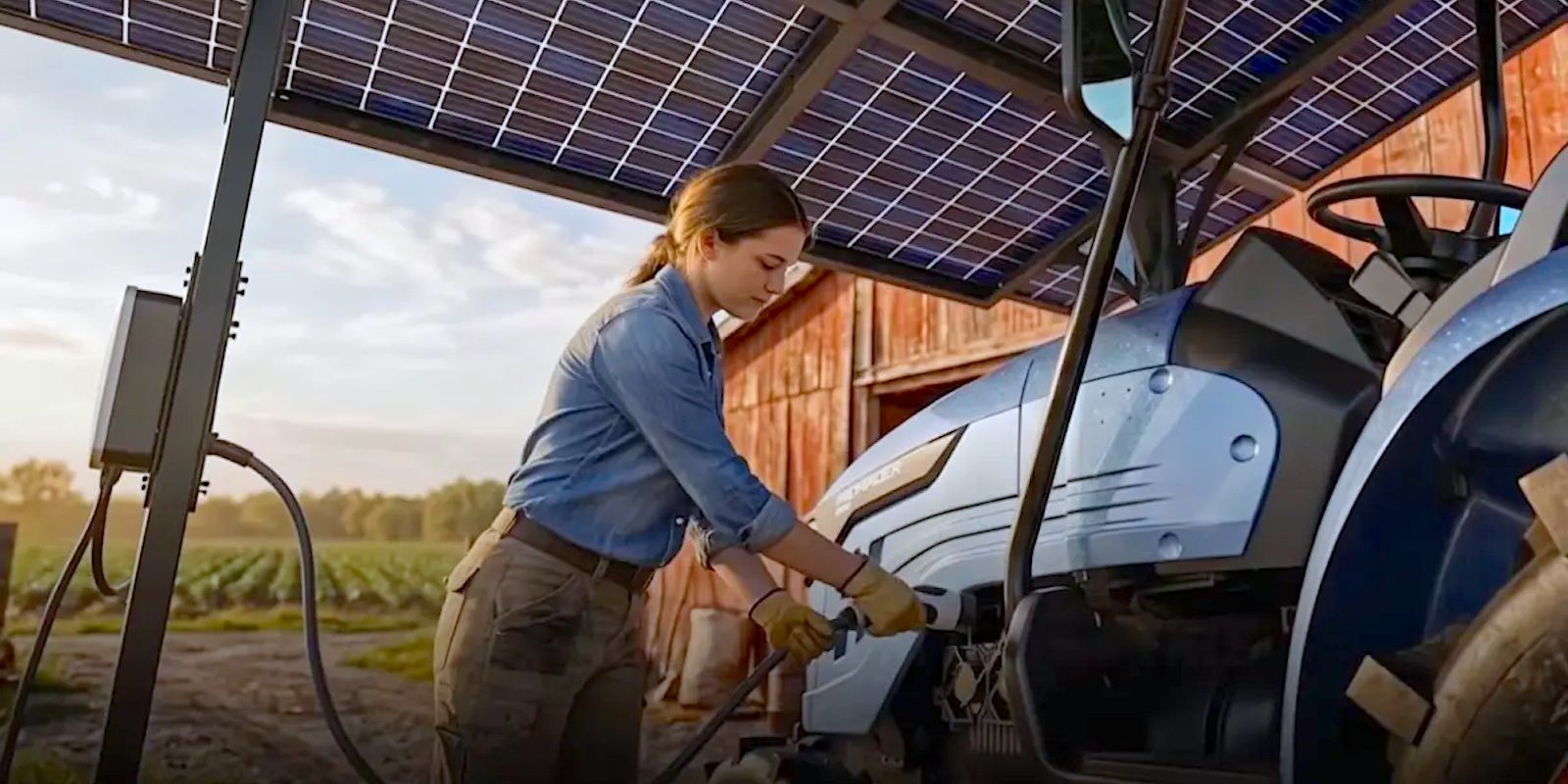
For traditional grid-based replenishment, the Moonrider 27 supports standard 220/240-volt AC Level 2 charging connectors, allowing for rapid turnaround times when overnight charging is preferred or when prolonged periods of inclement weather limit solar generation.
Background Context and Evolution of Electric Tractors
The unveiling of the Moonrider 27 arrives at a critical juncture in the evolution of agricultural machinery. For decades, diesel-powered internal combustion engines have dominated the agricultural landscape due to their high energy density, immediate availability of heavy-duty power, and rapid refueling times. However, rising fuel costs, increasingly stringent global emissions regulations, and a growing corporate emphasis on environmental sustainability have prompted both legacy agricultural giants and nimble technology startups to explore alternative powertrains.
Early iterations of electric tractors faced severe criticism for high acquisition costs, insufficient battery lifespans, and a lack of supporting charging infrastructure in rural areas. Large-scale commercial tractors requiring upwards of 100 to 300 horsepower still face immense engineering hurdles regarding battery weight and grid capacity. Recognizing these constraints, manufacturers have increasingly shifted focus toward the utility and compact tractor segments (under 50 horsepower), where operational duty cycles are shorter and power demands are more modest.
GoSun’s entry into this space represents a strategic pivot toward decentralized energy ecosystems. By integrating solar generation directly onto the vehicle, the company directly tackles the "rural grid bottleneck"—the reality that many remote farms lack the heavy electrical infrastructure required to support multiple high-capacity electric vehicle chargers simultaneously.

Official Statements and Industry Perspective
In announcing the launch of the Moonrider 27, company leadership emphasized the socio-economic and environmental benefits of transitioning away from fossil fuels in light agricultural settings.
"Small-scale farming and property management have relied on noisy, costly diesel utility vehicles for far too long," said Patrick Sherwin, founder and chief executive officer of GoSun. "With our new All-Electric Tractor, we are empowering farmers and land managers to literally work in the sunshine—reducing operational costs while protecting the soil and air."
Sherwin’s remarks highlight the dual economic and ecological pressures facing modern independent farmers. Diesel utility vehicles not only expose operators to particulate emissions and loud, disruptive engine noise, but they also subject farm operating budgets to the volatile price fluctuations of global fossil fuel markets. By harvesting energy directly from the sun, electric utility tractors insulate operators from recurring fuel expenditures, transforming an ongoing operational cost into a fixed, zero-emission asset.
Furthermore, the elimination of engine fluids, such as engine oil, transmission lubricants, and diesel exhaust fluid (DEF), significantly reduces routine maintenance requirements and the risk of accidental chemical contamination on agricultural land.

Broader Market Impact and Economic Implications
The commercial viability of the GoSun Moonrider 27 will depend heavily on its initial pricing, overall reliability, and reception within the North American and international agricultural sectors. While large agricultural conglomerates require high-horsepower machinery for massive acreage, the market for compact utility tractors—used for landscaping, equestrian management, small-scale vegetable farming, and vineyard maintenance—represents a substantial and growing commercial demographic.
The inclusion of standard PTO compatibility addresses a major economic friction point for prospective buyers. In the past, transitioning to alternative-fuel equipment often required purchasing an entirely new suite of proprietary tools and attachments. By ensuring that legacy mechanical mowers, tillers, and graders can be powered directly by the Moonrider 27, GoSun lowers the total cost of ownership for early adopters.
From an environmental standpoint, widespread adoption of solar-augmented electric utility vehicles could meaningfully reduce carbon footprints in sectors traditionally neglected by mainstream electric vehicle infrastructure initiatives. Because agricultural properties typically feature expansive open land and large barn roofs, pairing an electric tractor with an independent off-grid solar charging station creates a closed-loop energy economy. Farmers can charge their vehicles using surplus solar generation harvested directly from their own properties, achieving a high degree of energy independence.
As the agricultural sector continues to navigate economic uncertainties and environmental mandates, vehicles like the GoSun Moonrider 27 offer a compelling glimpse into the future of farming. By merging accessible electric power with passive solar generation and universal implement compatibility, GoSun has positioned its new tractor as a serious contender to bridge the gap between sustainable technology and practical, day-to-day agricultural utility. Whether this model finally succeeds in cracking the North American compact agricultural market remains to be seen, but its innovative approach to energy harvesting marks a notable step forward in the electrification of off-road machinery.