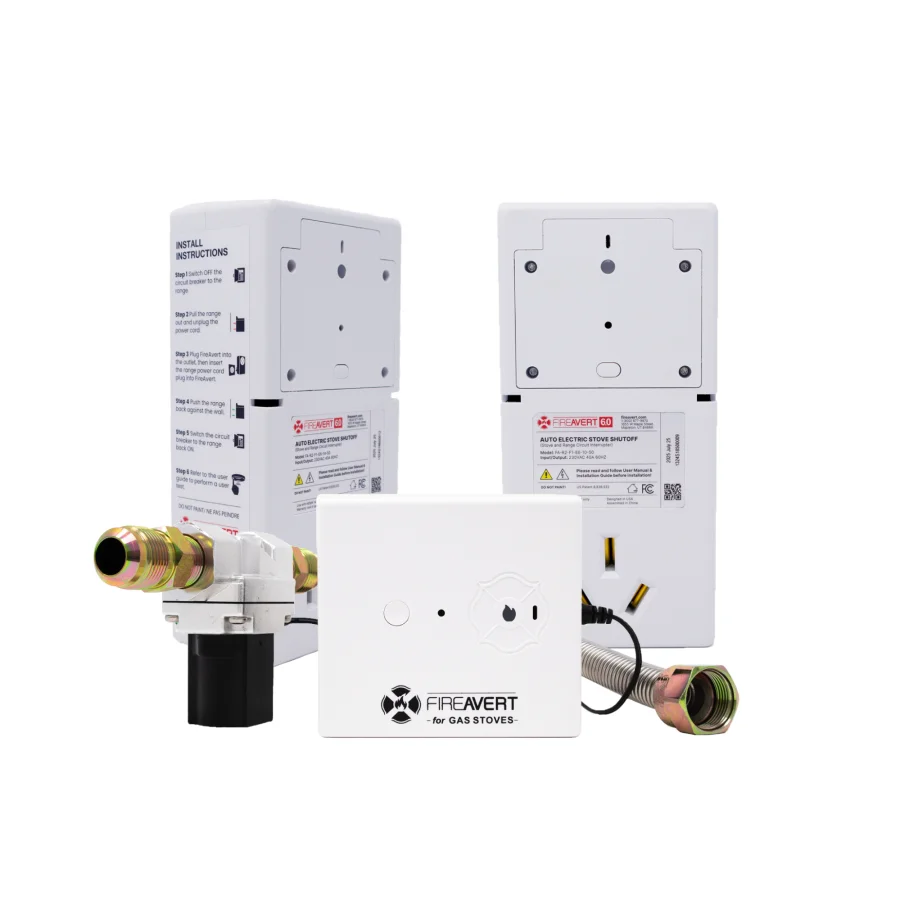
Kitchen fires remain one of the most persistent hazards in residential properties worldwide. According to fire safety statistics from national agencies, cooking equipment is consistently cited as the leading cause of home fires and civilian fire injuries. In an effort to mitigate this pervasive domestic risk, the open-source smart home ecosystem Home Assistant has officially welcomed FireAvert into its "Works with Home Assistant" certified partner program. This strategic integration introduces a brand-new category of life-safety technology to the platform, marking the first time specialized gas and electric appliance shutoff devices have achieved official certification within the ecosystem.
The Partnership and Its Significance
The integration of FireAvert into the Works with Home Assistant program represents a significant milestone for both home automation enthusiasts and fire safety advocates. The Open Home Foundation, which oversees the certification program, has long prioritized local control, data privacy, and hardware reliability. By incorporating FireAvert’s lineup of automatic shutoff devices, the ecosystem extends its capabilities beyond convenience and energy management into critical physical safety and damage prevention.
Under the terms of the certification, FireAvert’s newly integrated hardware communicates via Z-Wave, an open and interoperable wireless mesh networking standard designed specifically for smart homes. This ensures that users are not locked into a single proprietary ecosystem and that their automation hardware operates entirely locally, without depending on external cloud servers or internet connectivity to function.
Origins and Evolution of FireAvert
The journey of FireAvert began on the front lines of municipal firefighting. Peter Thorpe, a career firefighter with nearly two decades of service, witnessed firsthand the devastating psychological and structural toll of preventable kitchen fires. Time and again, emergency responders arrived at residential calls where unattended cooking had escalated into a major structural emergency—not necessarily due to malicious negligence, but frequently because of momentary lapses in attention, fatigue, or cognitive decline among vulnerable residents.
Recognizing that traditional smoke detectors merely alert occupants to an ongoing crisis rather than intervening proactively, Thorpe engineered a preemptive solution. He developed the Auto Stove Shutoff, a hardware device designed to intercept a fire hazard before open flames can ignite.
The core technological principle behind FireAvert relies on audio detection rather than thermal sensing alone. While conventional wisdom suggests that smoke and fire occur simultaneously, professional firefighting experience demonstrates that smoke accumulates significantly before a fire actually takes hold. FireAvert capitalizes on this narrow window of opportunity. The device synchronizes with existing home smoke alarms; upon detecting the distinctive acoustic frequency of an alarming smoke detector, FireAvert immediately cuts power or gas supply to the stove, neutralizing the heat source at its origin.
Following the initial success of the electric stove model, the company expanded its product catalog to encompass gas stove shutoffs and localized protectors for high-risk small kitchen appliances, including microwaves, air fryers, and hot plates. The brand’s market visibility expanded dramatically following an appearance on the popular entrepreneurial television program Shark Tank, which introduced the concept of preemptive kitchen safety to a broad national audience.
Technological Integration and Local Control
The integration of FireAvert into the Home Assistant ecosystem is facilitated through Z-Wave technology. Z-Wave operates on sub-GHz radio frequencies, which minimizes interference from congested Wi-Fi bands operating at 2.4 GHz or 5 GHz. Furthermore, because Z-Wave utilizes a mesh network topology, each mains-powered device acts as a signal repeater, strengthening and expanding the reliability of the smart home network across complex architectural layouts.
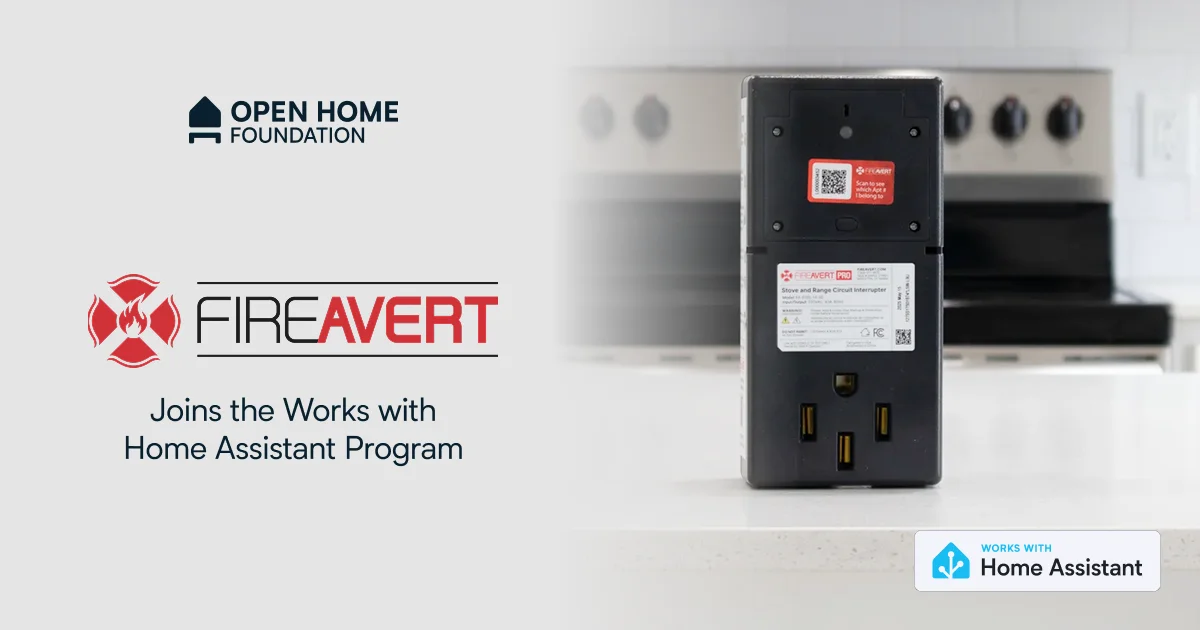
A critical design philosophy shared by both Home Assistant and FireAvert is the unwavering commitment to local autonomy. FireAvert shutoff hardware does not rely on cloud-based processing to execute its primary safety functions. If a home experiences a total internet outage or local network failure, the device remains fully operational, continuing to monitor for acoustic smoke alarm triggers and executing emergency shutoffs independently.
Additionally, the hardware eliminates reliance on internal batteries that could degrade or fail over time. The units operate via a straightforward pass-through design: the appliance plugs directly into the FireAvert unit, which is subsequently plugged into a standard wall receptacle. As long as the home’s electrical or gas infrastructure maintains supply, the safety mechanism remains actively engaged on a 24/7 basis. To underscore this reliability, FireAvert backs its certified units with a lifetime hardware warranty, and the devices undergo rigorous independent testing to comply with stringent CSA and UL electrical safety standards.
Industry and Community Implications
The introduction of automated appliance shutoffs fills a crucial gap in the consumer smart home market. While automated water shutoff valves and connected security systems have been commonplace in certified integration programs for years, kitchen-specific appliance automation has historically relied on makeshift DIY configurations or closed ecosystems prone to vendor lock-in and cloud dependencies.
Chasen Tolbert of FireAvert emphasized the alignment of values between the two organizations, noting that modern smart home technology must evolve beyond mere convenience to actively safeguard families and vulnerable household members, such as aging relatives or individuals requiring specialized care.
The Open Home Foundation has noted that partnerships of this caliber are made possible through community engagement and financial support from users via initiatives such as Home Assistant Cloud subscriptions and official hardware purchases, including the Home Assistant Connect ZWA-2 adapter. These resources enable rigorous in-house testing protocols, ensuring that every certified product meets uncompromising benchmarks for privacy, security, and long-term software maintenance.
Evaluation and Compliance Testing
To achieve certification under the Works with Home Assistant banner, FireAvert hardware underwent extensive evaluation by the platform’s internal engineering teams. Testing protocols were executed using standardized reference hardware, including the Home Assistant Green hub paired with the Home Assistant Connect ZWA-2 adapter and the native Z-Wave integration.
This rigorous testing guarantees seamless out-of-the-box functionality, predictable entity mapping, and sustained firmware support from the manufacturer. By committing to long-term integration support, FireAvert ensures that users can incorporate these life-safety devices into complex automation routines—such as turning off smart lighting, unlocking egress pathways, or sending priority push notifications to smartphones—without sacrificing system stability.
Future Outlook for Residential Safety Technology
As smart home ecosystems mature, the convergence of physical safety hardware and open-source automation platforms is expected to accelerate. The inclusion of FireAvert into the Works with Home Assistant directory establishes a precedent for how specialized, mission-critical safety appliances can be integrated into broader domestic management frameworks without compromising user data privacy or system independence.
Consumers and professional installers looking to secure residential kitchens can review the complete roster of verified hardware on the official Works with Home Assistant certified device registry. As the ecosystem continues to expand its safety-focused partnerships, homeowners are provided with increasingly robust tools to protect their properties, assets, and loved ones through transparent, locally controlled technology.