The Evolution of IoTorero and the Shift Toward Local Control
Founded in 2020 under the name Athom Technology, the company quickly carved out a niche within the enthusiast community by providing hardware that bypassed the restrictive, cloud-dependent ecosystems typical of mainstream smart home brands. While many manufacturers lock users into proprietary applications and external servers, Athom—and now IoTorero—focused on the integration of ESPHome firmware from the outset. The transition to the name "IoTorero" reflects a dual commitment to the IoT sector and the "Torero" spirit of tackling technical challenges with agility and precision.
The core philosophy of IoTorero centers on the "Local First" mandate. In an era where smart home companies frequently shutter their servers or transition to subscription-based models, rendering hardware "bricks," IoTorero’s reliance on open-source firmware ensures that devices remain functional as long as the local network is active. By joining the Works with Home Assistant program, the company provides a bridge for less technical users who desire the privacy and speed of local control without the steep learning curve of flashing custom firmware onto raw hardware.
Understanding the Works with Home Assistant Certification
The Works with Home Assistant program is not merely a marketing badge; it is a technical certification that guarantees a specific standard of interoperability and longevity. For a device to be certified, it must undergo rigorous in-house testing by the Home Assistant team. The primary requirements include guaranteed local control, a commitment to privacy, and an assurance of long-term support.
IoTorero’s entry is particularly notable because its devices also carry the "Made for ESPHome" badge. This is a prerequisite for any ESPHome-based hardware entering the Works with Home Assistant program. It signifies that the hardware design is fully compatible with the ESPHome ecosystem, allowing for seamless updates and deep configuration. During the certification process, IoTorero’s devices were tested against the Home Assistant Green—the ecosystem’s flagship hub—ensuring that the "out-of-the-box" experience is flawless for the average consumer.
Technical Analysis of the Certified Hardware Suite
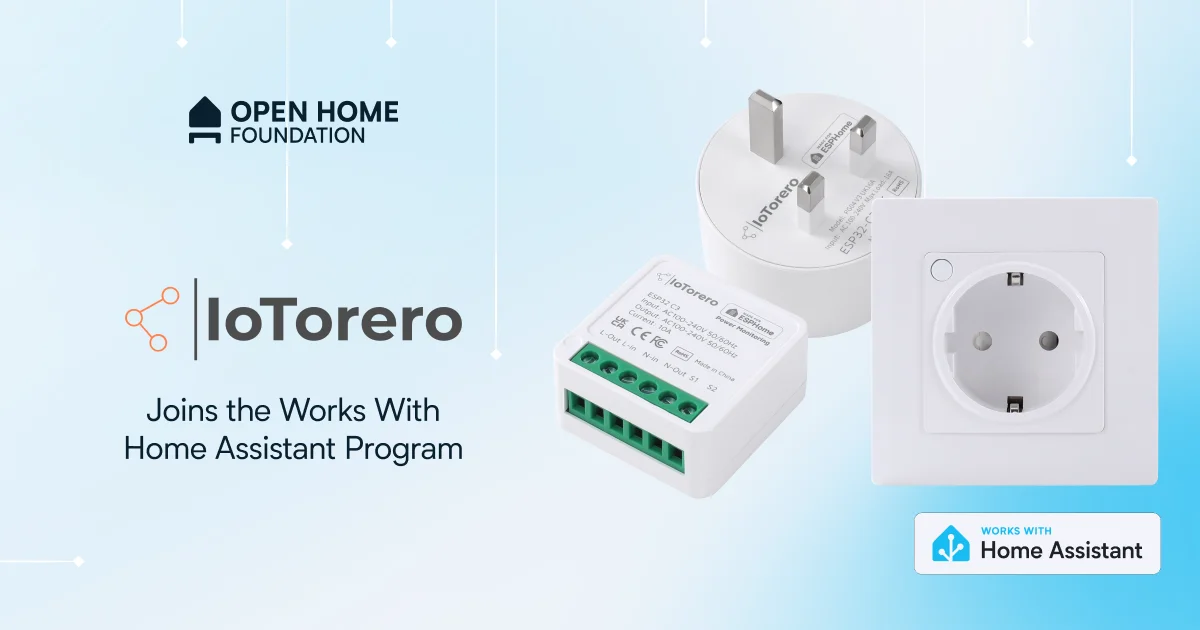
The initial wave of certification covers seven distinct devices, ranging from smart plugs to embedded relays. At the heart of these devices lies the ESP32-C3 chipset, a powerful and energy-efficient microcontroller that supports both Wi-Fi and Bluetooth Low Energy (BLE).
Smart Plugs with Precision Monitoring
The certified lineup includes four regional variants of the ESP32-C3 smart plug, tailored for various international markets. These plugs are more than simple on/off switches; they are sophisticated energy-monitoring tools. By utilizing the capabilities of ESPHome, these devices provide real-time data on voltage, current, power wattage, and total consumption. Within the Home Assistant Energy Dashboard, this data allows homeowners to identify "vampire loads"—appliances that consume significant power even when idle—thereby facilitating a reduction in both carbon footprints and utility costs.
The Power Monitoring Mini Relay
For hardwired installations, IoTorero introduced the Power Monitoring Mini Relay. Approximately the size of a matchbox, this device is designed to be installed behind traditional wall switches or inside appliance cabinets. It brings smart functionality to "dumb" fixtures without requiring the replacement of the existing aesthetic hardware. This is particularly valuable for garage door automation or heavy-duty appliance control where a standard plug-in adapter is impractical or aesthetically unpleasing.
The Role of ESPHome and the New Device Builder
The timing of this partnership coincides with a major technological leap for the ESPHome platform. Recently, the ESPHome team unveiled a new User Interface (UI) and a visual "Device Builder." Historically, configuring ESPHome required a degree of comfort with YAML code and command-line interfaces. The new visual workspace replaces the code-heavy dashboard with a drag-and-drop environment that suggests components and layouts.
Because IoTorero devices arrive pre-flashed, they are automatically discovered by Home Assistant as soon as they are powered on. However, the new Device Builder allows users to customize their hardware further. For instance, a user could easily rename internal sensors or adjust the frequency of energy reporting without ever typing a line of code. This democratization of firmware management is a key driver in the growing adoption of open-source hardware.
Strategic Implications of Bluetooth Proxying
One of the most innovative features of the IoTorero lineup is the inclusion of Bluetooth Proxy capabilities. In a typical smart home, Bluetooth devices (such as temperature sensors or smart locks) have a limited range and often struggle to communicate with a central hub located in a different room.
By functioning as Bluetooth Proxies, IoTorero’s smart plugs and relays act as "signal boosters." They capture BLE signals from nearby peripherals and relay them over the Wi-Fi network to Home Assistant. This effectively creates a mesh-like coverage for Bluetooth throughout the home without the need for dedicated, single-purpose bridges. This technical efficiency aligns with the Open Home Foundation’s sustainability goals by reducing the total number of gadgets a consumer needs to purchase, thereby mitigating the accumulation of electronic waste.
Official Responses and Community Engagement
The partnership has been met with enthusiasm from both the corporate and developer sides of the ecosystem. Aiden Tang, CTO and Co-Founder of IoTorero, emphasized the company’s long-standing dedication to the community. "Since our inception in 2020, we have been dedicated to the research, development, and manufacturing of open-source smart home hardware," Tang stated. "By joining the Works with Home Assistant program, we ensure that customers can select and purchase our products with complete confidence, knowing they are buying into a verified, high-quality ecosystem."
The commitment to the community extends beyond hardware sales. IoTorero maintains a public GitHub repository containing the configurations for all their devices. This transparency allows developers to audit the code for security vulnerabilities and enables hobbyists to learn from the company’s implementation of ESP32-C3 features. Furthermore, IoTorero’s presence at events like the Home Assistant Community Day, where they donated hardware for testing and development, has solidified their reputation as a "community-first" manufacturer.
Broader Impact on the Smart Home Market
The entry of IoTorero into the Works with Home Assistant program represents a broader shift in the consumer electronics industry. As the Matter standard continues to evolve, there remains a significant demand for "local-only" solutions that do not rely on the complexity of the Matter-over-Thread or Matter-over-Wi-Fi bridges. ESPHome offers a level of granular control and sensor-level transparency that Matter currently does not match.
For the smart home industry, this partnership proves that there is a viable commercial model in "open" hardware. By providing high-quality, pre-flashed devices, IoTorero is targeting the "prosumer" market—users who want the power of a custom-built system with the convenience of a commercial product. This move is likely to encourage other manufacturers to consider open-source firmware as a legitimate alternative to proprietary cloud stacks.
Future Outlook and Sustainability
Looking ahead, the collaboration between IoTorero and Nabu Casa is expected to expand. As new chipsets and sensors become available, the "Works with" testing pipeline will likely see more advanced devices, including multi-sensors and specialized lighting controllers.
The focus on sustainability remains a cornerstone of this alliance. By providing tools for precise energy monitoring and promoting hardware longevity through open-source software, both organizations are addressing the environmental impact of the digital home. The ability to repair, reflash, and repurpose hardware ensures that these devices have a lifecycle far exceeding that of their cloud-dependent competitors.
In conclusion, IoTorero’s certification within the Works with Home Assistant program is a win for consumer choice. It validates the technical maturity of ESPHome as a consumer-ready platform and provides a blueprint for how hardware manufacturers can successfully interact with open-source communities. For the end-user, it means a simpler path to a private, fast, and resilient smart home, backed by the rigorous standards of the Open Home Foundation and the innovative engineering of IoTorero.