The concept of "Everyday Carry," or EDC, has transitioned from a niche hobby for survivalists and outdoor enthusiasts into a mainstream lifestyle and professional philosophy centered on preparedness and utility. In the high-pressure environment of the modern culinary industry, this philosophy takes on a specialized form, where the distinction between professional tools and personal utility items becomes a matter of both efficiency and workplace safety. A recent profile of Stephen, a full-time cook based in Minnesota, offers a detailed look at how service industry professionals are curating their gear to meet the rigorous demands of their environment while strictly adhering to health and safety protocols.
The Intersection of Professionalism and Tool Management
In a commercial kitchen, the knife is the primary instrument of the trade, but the scope of a cook’s responsibilities often extends far beyond food preparation. From unboxing bulk shipments to performing minor equipment maintenance, the daily tasks of a culinary professional require a versatile set of tools. Stephen’s approach to his daily carry is defined by a rigorous separation of duties. While he carries four knives on a daily basis, none of them are used for food preparation. This distinction is rooted in a fundamental understanding of cross-contamination risks—a critical concern in the food service industry where the introduction of outside contaminants can lead to significant health code violations and safety risks.
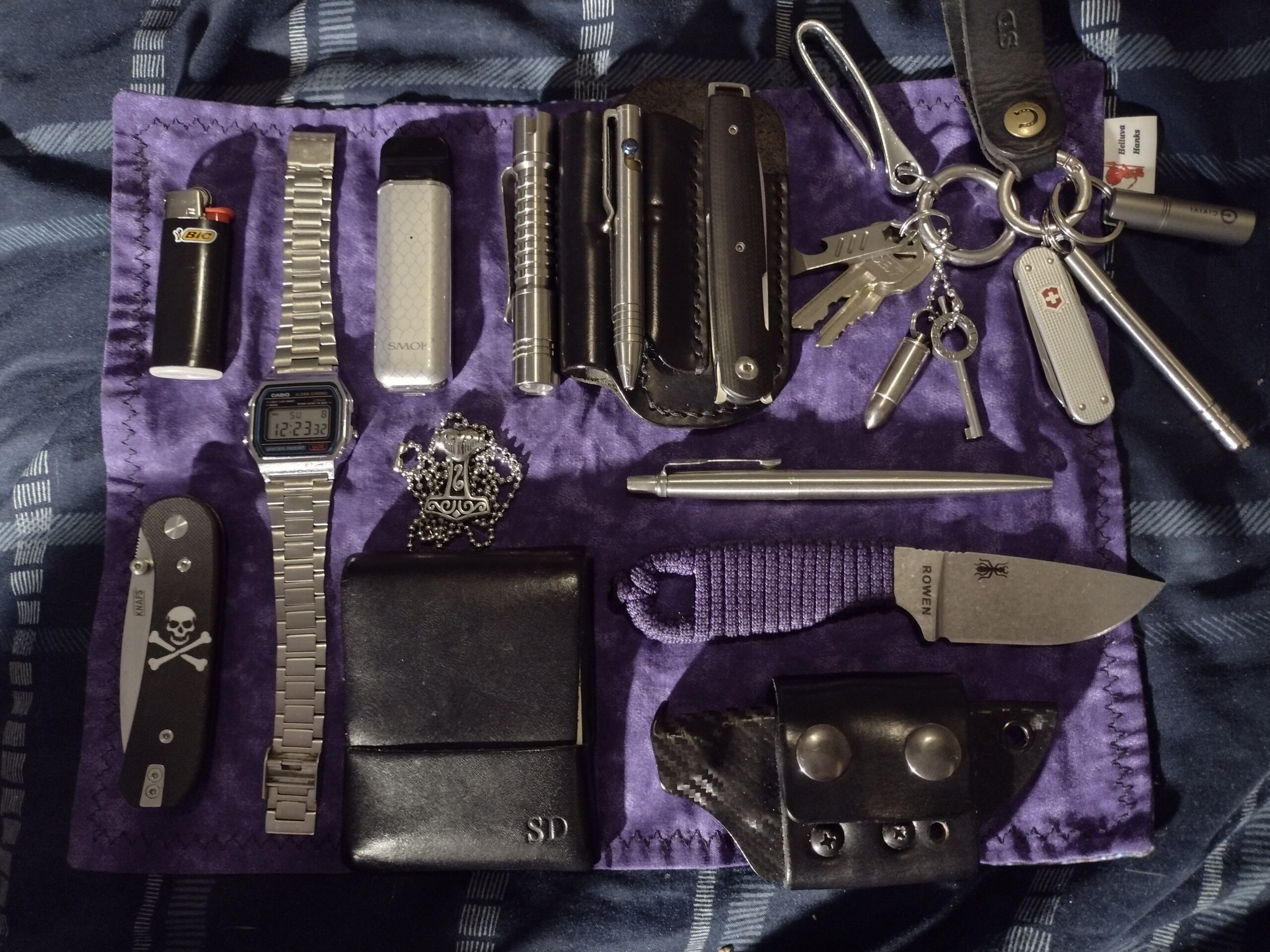
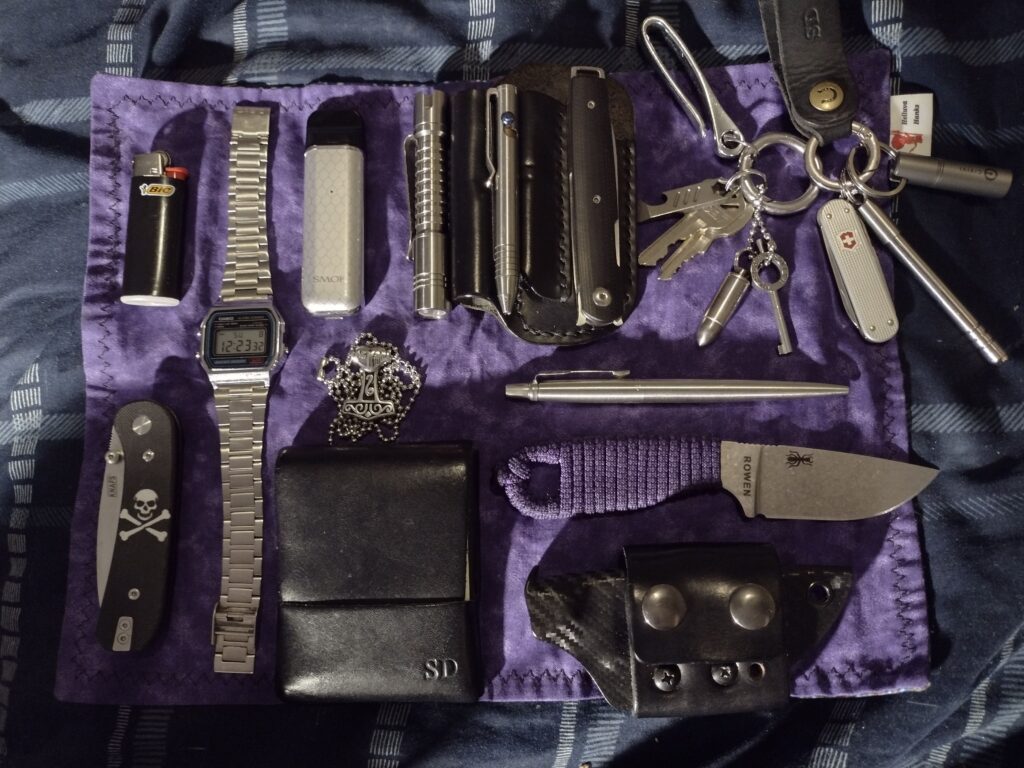
The "four-knife" strategy employed by Stephen includes three folding knives and one fixed-blade knife, each selected for specific utility tasks that occur outside the sanitized zone of the cutting board. This methodology highlights a growing trend among professionals who view their EDC as a "support kit" rather than a replacement for specialized professional equipment. By using dedicated folders for opening boxes and cutting plastic strapping, Stephen ensures that his high-end culinary knives remain razor-sharp and uncontaminated by adhesives, tape residue, or non-food-grade materials.
Technical Specifications and the Selection of Materials
The gear selected by Stephen reflects a sophisticated understanding of metallurgy and tool design, balancing cost-effectiveness with high-performance materials. A standout piece in his collection is the ESEE Izula in S35VN steel. The Izula, named after the "Isula" or "Bullet Ant" of the Amazon, is a legendary fixed-blade knife known for its durability and compact profile. While the standard Izula is often crafted from 1095 carbon steel—valued for its toughness and ease of sharpening—the S35VN version represents a significant upgrade in edge retention and corrosion resistance.
S35VN is a martensitic stainless steel designed to offer improved toughness over its predecessor, S30V. Developed by Crucible Industries in collaboration with renowned knifemaker Chris Reeve, it incorporates niobium to create a finer grain structure. For a cook working in a humid, high-activity kitchen environment, the corrosion resistance of S35VN is a practical necessity. The knife is carried in a molded polymer sheath, often supplemented with leather components or keychain systems to consolidate space and ensure the tool is accessible but out of the way during physical labor.
In addition to the fixed-blade ESEE, the inclusion of brands like Knafs and Boker indicates a diverse approach to folding knives. Knafs, a brand founded by industry veteran Ben Petersen, focuses on utilitarian, "everyman" designs that prioritize ease of maintenance and practical blade geometry. Boker, a historic German manufacturer based in Solingen, offers "gentleman’s" folders that provide a slimmer, more discreet profile for tasks that require a less intimidating tool.
The Role of Documentation and Writing Instruments
Beyond blades, the modern EDC kit emphasizes the importance of communication and documentation. In the culinary world, this manifests in the need to label containers, record inventory, and update prep lists. Stephen’s kit features a dual-pen system that highlights the two ends of the EDC market: the Parker Jotter and a premium titanium bolt-action pen.
The Parker Jotter, first introduced in 1954, remains a staple of professional writing due to its reliability and all-stainless-steel construction. At a price point often under $10, it serves as a "workhorse" instrument that can withstand the drops and spills common in a kitchen. Conversely, the titanium bolt-action pen represents the "premium" side of EDC. Titanium is favored for its high strength-to-weight ratio and hypoallergenic properties. The bolt-action mechanism is not merely aesthetic; it provides a mechanical reliability that is less prone to accidental deployment or failure compared to standard click or twist mechanisms.
Organizational Systems and Pocket Management
A common challenge for individuals who carry multiple tools is the physical weight and bulk of the gear. "Pocket sag" can be a significant distraction during a twelve-hour shift on the line. Stephen utilizes leather sheaths and keychain systems to consolidate his gear, allowing it to "hang off the body" rather than sit at the bottom of a pocket.
This method of organization is reflective of a broader shift in the EDC community toward "modular" carry. By using clips and external sheaths, professionals can maintain a high degree of mobility. In a kitchen, where cooks must move quickly through narrow aisles and around hot equipment, having gear secured to the belt or the hip prevents snagging and ensures that tools are always in a predictable location. This predictability is a key factor in workplace efficiency, reducing the "search time" for a tool when a task needs to be completed immediately.
Industry Context: The Growth of the EDC Market
The detailed nature of Stephen’s kit is part of a larger economic and cultural trend. The global everyday carry market has seen exponential growth over the last decade. Market analysis suggests that the demand for high-quality pocket tools, portable lighting, and durable writing instruments is driven by a consumer base that values "Buy It For Life" (BIFL) products.
In the United States, particularly in states like Minnesota where outdoor culture and manual labor are prominent, the preference for "Made in the USA" brands like ESEE is significant. These products are often backed by lifetime warranties, making them attractive to professionals who view their gear as a long-term investment. The transition of materials like S35VN and titanium from aerospace and high-end custom manufacturing into the pockets of everyday workers signifies a maturation of the tool industry, where performance metrics once reserved for specialists are now accessible to the general public.

Health and Safety Implications: The Professional Response
From a regulatory standpoint, the use of personal knives in a professional kitchen is a nuanced issue. Most health departments, including the Minnesota Department of Health, have strict guidelines regarding tool sanitation. Stephen’s insistence on "no food prep with my knives" is more than a personal preference; it is a best practice that aligns with Hazard Analysis and Critical Control Point (HACCP) principles.
HACCP is a management system in which food safety is addressed through the analysis and control of biological, chemical, and physical hazards. By using separate tools for "dirty" tasks (like breaking down cardboard, which can harbor pests or dust) and "clean" tasks (food prep), Stephen mitigates the risk of physical hazards entering the food supply. While some might view carrying four knives as excessive, from a safety perspective, it allows for a clear "zoning" of tools that prevents the migration of contaminants.
Broader Impact and Implications
The profile of a Minnesota cook’s EDC highlights the changing nature of the modern workforce. We are seeing a move away from "disposable" culture toward a more intentional relationship with the objects we carry. For the culinary professional, this means having the right tool for the right job, whether that is a chef’s knife for a julienne or a folding knife for a delivery pallet.
Furthermore, the EDC movement fosters a sense of preparedness that extends beyond the workplace. The ability to handle minor repairs, document information instantly, and manage tasks efficiently contributes to a more resilient and capable workforce. As more professionals share their "carries," the exchange of information regarding tool durability and utility continues to drive innovation in the manufacturing sector.
In conclusion, Stephen’s everyday carry is a testament to the intersection of personal passion and professional necessity. It demonstrates that even in a traditional field like cooking, there is room for the integration of modern materials and tactical organization. By maintaining a strict boundary between his utility tools and his culinary instruments, he upholds the highest standards of his craft while ensuring he is prepared for any challenge the workday may present. The evolution of EDC continues to prove that the most valuable tool is the one you have on you, provided it is used with the expertise and care the profession demands.