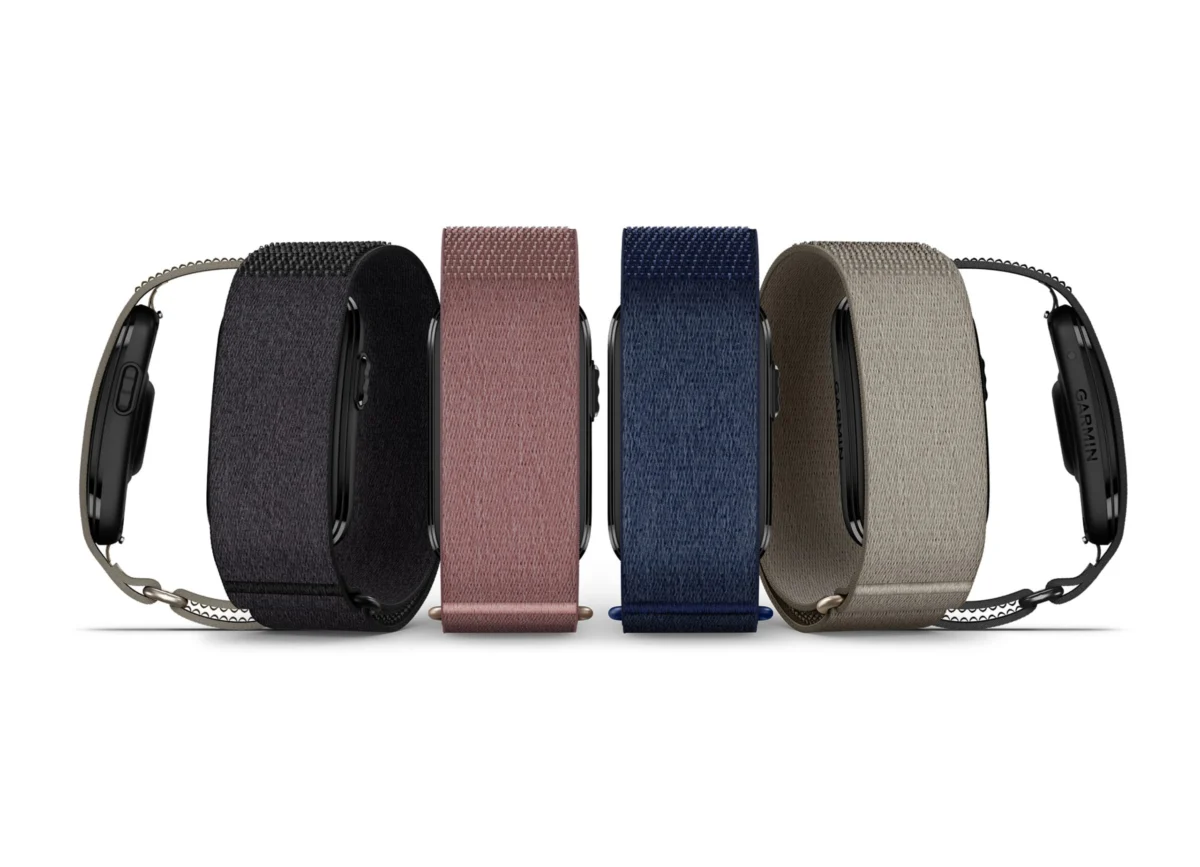
Garmin has officially announced its entry into the screen-less wearable market with the introduction of the Garmin Cirqa, a minimalist smart band designed to compete directly with established players like Whoop and Oura. The device, which is scheduled for release on July 24th, represents a significant shift in Garmin’s product strategy, moving away from its traditional focus on display-heavy GPS watches toward a low-profile, recovery-focused accessory. Priced at $199, the Cirqa aims to disrupt the industry by offering a comprehensive health-tracking experience without the mandatory monthly subscription fees that have become a hallmark of the high-end fitness tracker segment.
The Cirqa is engineered for users who seek the deep physiological insights of a high-end wearable but prefer the aesthetics of a traditional timepiece or a bare wrist. By removing the display, Garmin has optimized the device for "passive" tracking, focusing on long-term health trends rather than real-time notifications or interactive apps. This move comes at a time when "subscription fatigue" is becoming a growing concern among tech consumers, positioning Garmin as a hardware-first alternative in a market increasingly dominated by recurring revenue models.
Product Specifications and Design Philosophy
The Garmin Cirqa features a streamlined, screen-less chassis wrapped in a high-quality fabric strap. The design is intended to be unobtrusive, allowing it to be worn 24/7 without the bulk associated with traditional smartwatches. One of the device’s most versatile features is its dual-wear capability; it is designed to be worn either on the wrist or as an armband, the latter being a popular choice for athletes who find wrist-based trackers intrusive during specific movements like weightlifting or combat sports.
Under the hood, the Cirqa is equipped with Garmin’s latest sensor suite, capable of monitoring heart rate, blood oxygen saturation (SpO2), and skin temperature. The device boasts a battery life of up to ten days, significantly outperforming many of its competitors in the screen-less category, which typically offer between five and seven days of power. This extended battery life is a critical component of the Cirqa’s value proposition, as it minimizes the "data gaps" that occur when users have to remove their devices for frequent charging.
Disrupting the Subscription Model
The most notable aspect of the Cirqa launch is Garmin’s rejection of the mandatory subscription model. Currently, the market leader in screen-less bands, Whoop, requires a monthly membership ranging from $20 to $30 to access any data from the device. In contrast, Garmin provides the majority of its analytics, including sleep tracking, training status, and 24/7 health monitoring, for free through the Garmin Connect app.
While Garmin is introducing a "Connect+" service that offers AI-powered nutrition insights and deeper data synthesis, the company has clarified that this is an optional tier. The core biometric data and the tracking of over 80 specific activities remain accessible to all users without additional cost. This strategy leverages Garmin’s existing ecosystem, which millions of runners, cyclists, and outdoor enthusiasts already use, providing a seamless transition for those who want to supplement their primary GPS watch with a secondary, more comfortable sleep and recovery tracker.
Contextual Background: The Evolution of Garmin
Garmin’s decision to launch the Cirqa is a calculated move based on years of market evolution. Founded in 1989, Garmin originally built its reputation on Global Positioning System (GPS) technology for aviation and marine industries. Over the last two decades, it transitioned into a powerhouse in the consumer fitness space, with its Forerunner and Fenix series becoming the gold standard for endurance athletes.
However, as the wearable market matured, a new niche emerged: the "invisible" wearable. Users who already own luxury mechanical watches or who suffer from "screen glare" and notification anxiety began looking for devices that provide health data without the digital distractions. Whoop successfully capitalized on this trend, creating a cult-like following among professional athletes. By launching the Cirqa, Garmin is finally addressing this specific demographic, combining its superior sensor accuracy and established data platform with a form factor that respects the user’s desire for minimalism.
Technical Capabilities and Data Integration
The Cirqa integrates fully with the Garmin Connect ecosystem, which has undergone significant updates to accommodate the new hardware. The device utilizes Garmin’s proprietary algorithms to calculate "Body Battery"—a metric that estimates a user’s energy levels throughout the day based on heart rate variability (HRV), stress, and activity.
Key features included in the Cirqa’s tracking suite include:

- Advanced Sleep Monitoring: Detailed breakdowns of sleep stages (light, deep, REM) and a "Sleep Score" that evaluates the quality of rest.
- Training Readiness: An analysis of how the body is responding to recent workouts, helping users decide whether to push hard or take a recovery day.
- All-Day Stress Tracking: Using HRV to identify when the body is under physiological stress.
- Activity Profiles: Support for over 80 sports, including niche activities like pickleball, bouldering, and HIIT.
The inclusion of SpO2 monitoring is particularly relevant in the current health climate, as blood oxygen levels are often used as a proxy for respiratory health and altitude acclimation. By providing this data in a $199 device without a subscription, Garmin is putting significant pressure on competitors who charge a premium for similar insights.
Market Analysis and Industry Implications
Industry analysts suggest that the Garmin Cirqa could represent a turning point in the wearable wars. For years, companies have experimented with different ways to monetize data. While Apple and Samsung have focused on the "smart" features of their watches (LTE, apps, payments), Garmin and Whoop have fought over the "fitness" crown.
"The launch of Cirqa is a direct shot across the bow for Whoop," says market analyst Marcus Thorne. "Whoop’s business model relies on the idea that the hardware is free or cheap, but the data is a service. Garmin is flipping that on its head by saying the hardware is the investment and the data is your right as a consumer. For the serious athlete who plans to track their health for five years, the Cirqa is thousands of dollars cheaper than a subscription-based alternative."
Furthermore, the Cirqa’s launch highlights a growing trend in "hybrid" wearing. Many Garmin users currently wear a Fenix or Epix watch during workouts but find them too bulky for sleep. The Cirqa allows these users to stay within the Garmin ecosystem 24/7, ensuring that their recovery data is perfectly synced with their workout data without needing to bridge two different software platforms.
Chronology of the Screen-less Wearable Trend
To understand the significance of the Cirqa, one must look at the timeline of screen-less health tech:
- 2012-2014: Early pioneers like Fitbit (Flex) and Jawbone (UP) popularize screen-less bands, focusing primarily on step counting.
- 2015-2018: Whoop enters the market, shifting the focus from steps to recovery and HRV, targeting elite athletes.
- 2019-2021: The "Wellness Boom" occurs during the pandemic. Oura (smart ring) and Whoop see massive growth as people become obsessed with sleep and immune system readiness.
- 2022-2023: Subscription models become the industry standard for high-end recovery trackers. Garmin begins integrating "Training Readiness" into its high-end watches but lacks a dedicated screen-less band.
- July 2024: Garmin officially announces the Cirqa, aiming to reclaim the minimalist market with a one-time purchase model.
Official Responses and Consumer Expectations
While official statements from competitors have not yet been released, the fitness community’s reaction has been overwhelmingly positive regarding the price point and the lack of a mandatory subscription. Garmin’s Vice President of Global Consumer Sales recently hinted in a press briefing that the Cirqa is "the answer for those who want Garmin’s world-class analytics without the footprint of a traditional watch."
Early testers have noted that the 10-day battery life is a "game-changer" for the category. Most screen-less bands require charging twice a week; the Cirqa’s ability to last nearly a week and a half puts it in a league of its own, especially for travelers and outdoor enthusiasts who may not have daily access to power.
Broader Impact on the Tech Landscape
The release of the Garmin Cirqa may force a broader re-evaluation of how health data is sold to consumers. If Garmin succeeds in capturing a significant portion of the minimalist wearable market, it could signal the end of the "subscription-only" era for fitness trackers. It also places Garmin in a unique position to capture the "analog watch enthusiast" market—a demographic that has largely avoided wearables because they did not want to replace their mechanical timepieces.
Moreover, the "Connect+" AI-powered insights show that Garmin is not entirely ignoring the software-as-a-service (SaaS) model. Instead, they are making it an "add-on" rather than a "gatekeeper." This tiered approach respects the casual user while providing a pathway for "bio-hackers" and professional athletes to pay for more advanced computational analysis.
As the July 24th launch date approaches, the industry will be watching closely to see if the Cirqa can deliver on its promises of accuracy and convenience. If it does, the $199 investment may become the new benchmark for what consumers expect from a premium fitness wearable. In a world where we are increasingly "renting" our technology through monthly fees, Garmin’s move back toward ownership is a bold, and perhaps necessary, step in the evolution of personal health tech.