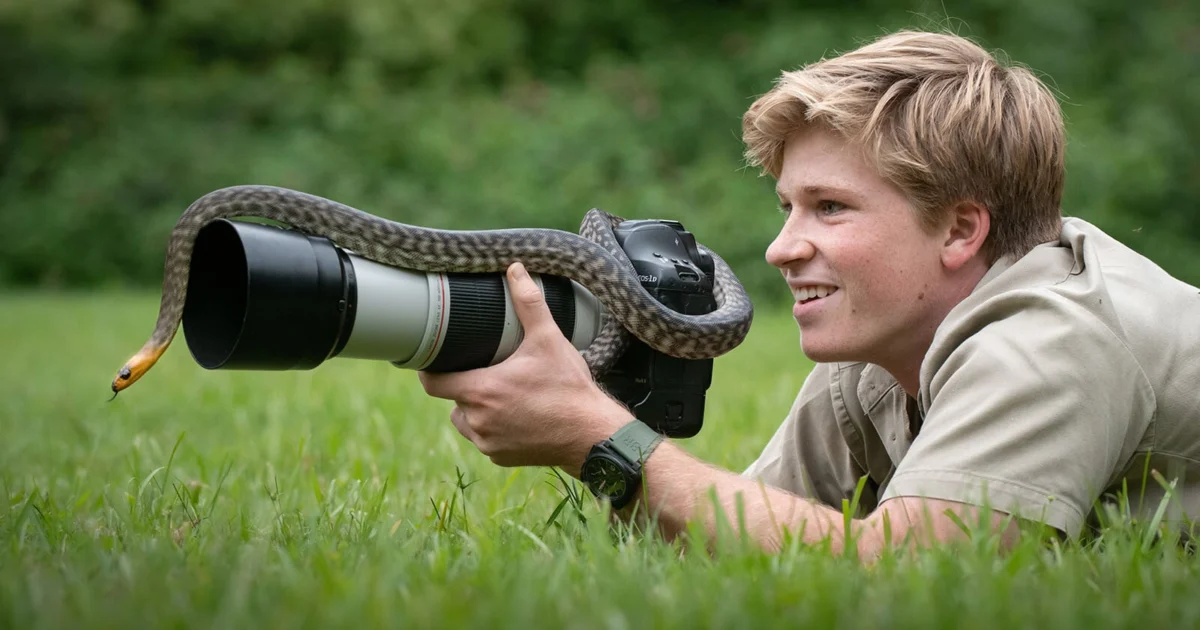
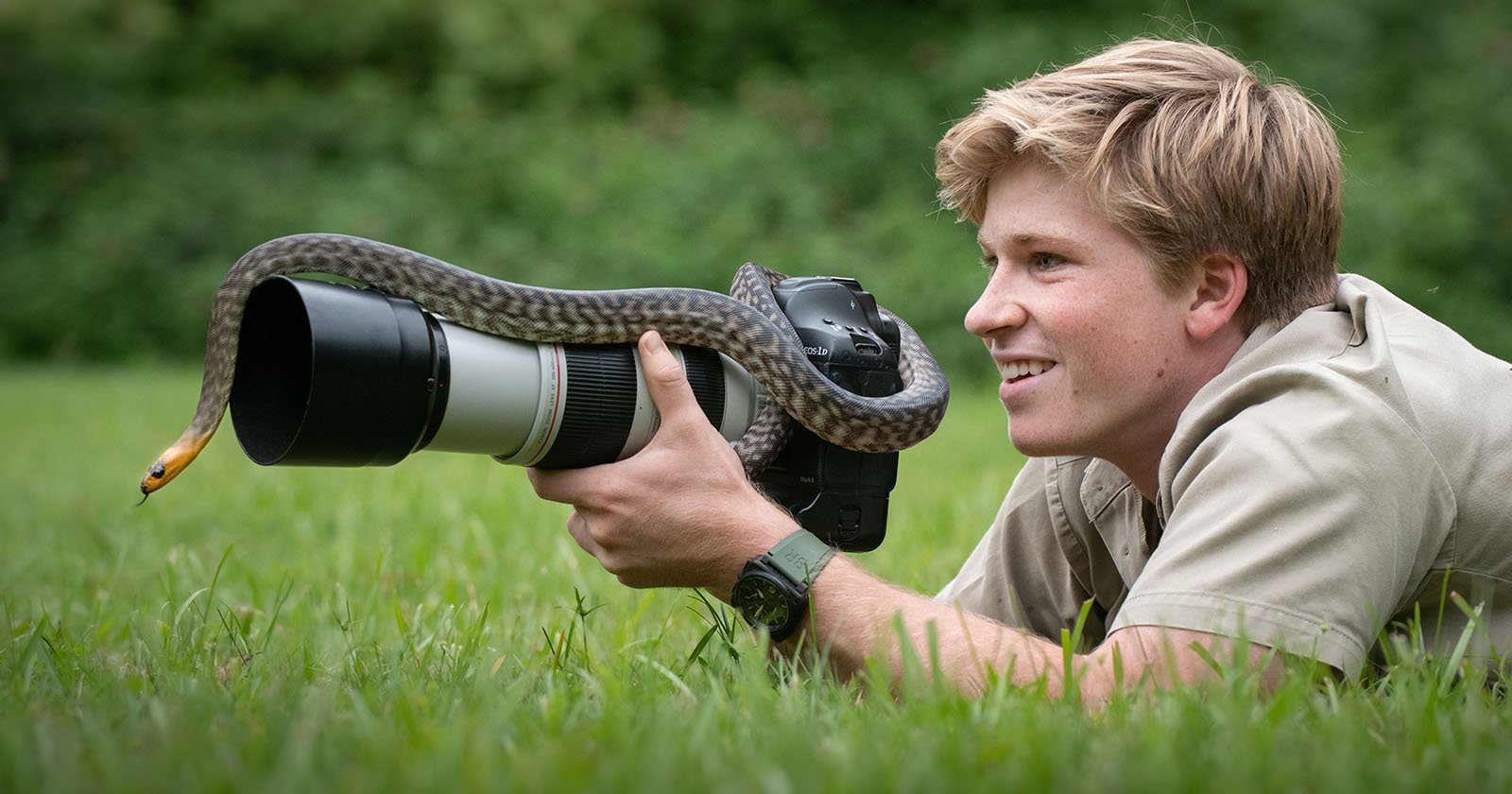
In a recent wide-ranging interview with Parade magazine, acclaimed conservationist, television presenter, and wildlife photographer Robert Irwin articulated his deep-seated passion for photography, his burgeoning career, and his significant concerns regarding the growing influence of artificial intelligence (AI) on the art form. Irwin, who has expanded his public profile significantly since PetaPixel last spoke with him, emphasized that photography has been a foundational element of his life, shaping his identity and his mission to connect people with the natural world.
"This has been a passion project of mine and ours for a very long time," Irwin stated in the interview, referring to his lifelong dedication to photography. "A lot of people might not realize this, but there’s this part of my life that’s been really probably the most formative part of my life and really created the person I am today, which is photography." Now 22 years old, Irwin’s multifaceted career includes a successful stint on Dancing With the Stars, further solidifying his presence in the public eye.
The Artistry and Authenticity of Photography
Irwin, a skilled and accomplished photographer in his own right, expressed a keen awareness of the evolving landscape of the photography industry, particularly the rise of generative AI. He voiced apprehension about how this technology could potentially undermine the integrity and impact of genuine wildlife photography.
"As with any advancement in technology, I think we sometimes forget about the environmental destruction that it can cause," Irwin remarked, drawing a parallel between technological progress and its often-overlooked ecological consequences. He specifically addressed the implications for photography: "With AI, I think not only does it take away from the artistry of photography, but it also dilutes what is impressive. Because we’ve seen so many incredible things, we don’t realize that what is real and that’s more amazing because it’s real, you know?"
He elaborated on this point by describing the potential for AI-generated imagery to create a disconnect from reality. "When you see the image of the, I don’t know, eagle riding the elephant or whatever ridiculousness it is that people genuinely think is real, when there is the actual real amazing photo, it almost dilutes it because we’ve seen so many incredible things." This dilution, he explained, can lead to a diminished appreciation for the authentic wonders of the natural world that are captured through dedicated effort and genuine observation.
A World of Unseen Wonders
Despite his extensive experience and numerous encounters with wildlife, Irwin revealed that his list of animals to photograph in their natural habitats remains extensive. He noted that many people assume he has seen every creature imaginable, but this is far from the truth. "Anyone who has a passion for wildlife will tell you they have a list that’s a mile of long of what they want to see next," he shared.
His travel aspirations are significant, with a particular focus on regions he has yet to explore. "I’ve always wanted to see sloths in the wild," Irwin expressed, highlighting a dream encounter. He also voiced a strong desire to visit South America and the Galapagos Islands, renowned biodiversity hotspots. The Galapagos, in particular, offer a unique opportunity for wildlife observation due to the archipelago’s isolation and the fearless nature of its endemic species.
"I have a love for Komodo dragons. I’ve never photographed them in the wild. That is absolutely top of my list," he stated, underscoring the allure of encountering these formidable reptiles. The Komodo dragon, the world’s largest living lizard, is a species that commands respect and awe, and photographing it in its natural environment would be a significant achievement.
Furthermore, Irwin identified elusive and iconic species as prime targets for his photographic endeavors. "Obviously, snow leopards. I think as a photographer, that is the pinnacle," he admitted, referring to the grace and camouflage of these mountain dwellers. The snow leopard’s natural habitat in the rugged, high-altitude regions of Central and South Asia presents immense photographic challenges.
"Polar bears! That’s another one that I’ve always wanted to see. A polar bear in the wild. I think I would just squeal with excitement if I saw one of them," he exclaimed, conveying his unbridled enthusiasm for the prospect of witnessing these magnificent Arctic predators. The diminishing sea ice due to climate change makes encounters with polar bears increasingly precarious and highlights the urgency of conservation efforts in their fragile ecosystem.
Photography as a Tool for Conservation
Irwin strongly believes that photography is not merely an artistic pursuit but a powerful instrument for advocating animal welfare and habitat preservation. He recounted how his journey with photography began at a young age, transforming into his primary means of communicating his passion for conservation.
"So I picked up a camera, and I started looking at it from an artistic perspective. It just became the biggest part of my life from about age ten, all the way through my teenage years. I’ve always got a camera with me. Now it’s about I know that feeling that it gave me as a kid, and I want to give other kids that feeling," Irwin explained. This sentiment underscores his desire to inspire the next generation of conservationists through the captivating power of imagery.
"I’ve spent many, many years of my life capturing nature through photography. And growing up, [it] was my kind of individual way of spreading this conservation message that I’m so passionate about," he added. His approach integrates personal expression with a broader mission, utilizing his photographic skills to raise awareness and foster a deeper connection between audiences and the natural world.
The Crikey! Magazine Photography Competition
In alignment with his commitment to authentic wildlife storytelling, Robert Irwin and Australia Zoo are spearheading the 10th anniversary edition of the Crikey! Magazine Photography Competition. This international platform is dedicated to showcasing exceptional photography that champions conservation. The competition is currently accepting entries, with a deadline of August 31, 2026.
The competition aims to foster a global community of photographers who are passionate about capturing the essence of nature. Irwin elaborated on his vision for the submissions: "I’m looking for storytelling that shows nature as it’s intended. You’re not meddling with anything. You’re letting nature take its course, and you’re photographing it in its true and raw state."
He reiterated his firm stance against the inclusion of AI-generated images, emphasizing the irreplaceable value of authentic moments. "I don’t care how many AI photos you see. When you see a real, true representation of nature, there is a visceral feeling that hits you in the heart; you just can’t deny it. I think storytelling and art has to be authentic, and that is just so important. In wildlife photography, we need a true and authentic representation of nature. In our competition at least, there is no room for AI, that’s for sure. It ain’t happening."
The Crikey! Magazine Photography Competition is open to photographers of all levels, from novices to seasoned professionals. Irwin encourages aspiring participants, stating, "There’s a category for you to tell your story." This inclusive approach aims to democratize wildlife photography and provide a platform for diverse perspectives and compelling narratives.
The Broader Implications of AI in Photography
Irwin’s concerns about AI extend beyond the artistic realm and touch upon the very definition of reality in visual media. The proliferation of sophisticated AI image generators raises questions about authenticity, trust, and the potential for misinformation. As AI models become more advanced, distinguishing between genuine photographs and AI-generated fakes will become increasingly challenging for the average viewer.
This presents a significant challenge for conservation efforts, which rely heavily on the public’s belief in the reality of the environmental issues depicted. If audiences become desensitized to or skeptical of visual evidence due to the prevalence of AI-generated content, the urgency and impact of conservation messages could be significantly diminished.
The photographic industry, therefore, faces a critical juncture. While AI tools can offer new avenues for creative expression and post-processing, the ethical considerations surrounding their use, particularly in sensitive fields like wildlife photography, demand careful attention. Competitions like the Crikey! Magazine Photography Competition serve as vital bulwarks, promoting and celebrating the integrity of real-world observation and the profound connection it fosters.
The enduring power of a genuine photograph lies in its ability to transport the viewer to a specific moment in time, capturing the raw beauty, vulnerability, and wonder of the natural world. Robert Irwin’s advocacy underscores the imperative to preserve this authenticity, ensuring that the images that inspire conservation are as real and impactful as the creatures and landscapes they represent.