In a desperate battle against extinction, a dedicated team of maverick biologists is pioneering a revolutionary approach to conservation, teaching one of the world’s rarest birds, the Northern bald ibis, a new migratory route through innovative methods. This ambitious project, spearheaded by organizations like the Waldrappteam, seeks to re-establish a lost connection between breeding grounds and wintering sites, offering a glimmer of hope for a species teetering on the brink.
The journey began in April 2023 at a secluded aviary in southern Austria, nestled amidst rugged mountains and verdant valleys. For twenty-five-year-old Barbara Steininger, the moment of becoming a foster mother was filled with a palpable nervousness. "It’s not an everyday occurrence," she admitted, her voice tinged with anticipation, "especially if your fosterlings are birds." This sentiment underscores the profound personal commitment required by the conservationists involved.
Moments later, a zookeeper from Wildlife Park Rosegg placed two featherless chicks into Steininger’s warm, cupped hands. Her freckled face broke into a radiant smile, a stark contrast to the vulnerability of the tiny creatures. This marked the beginning of an extraordinary undertaking; two chicks down, thirty-three more to go. From that chilly spring day, Steininger and her colleague, twenty-eight-year-old Helena Wehner, became the sole caregivers for these fragile lives. Their role transcended mere observation; it demanded the unwavering dedication of parents. "It’s much like being a mom to a human," Wehner explained, highlighting the essential components of their care. "Cuddles are as essential as words of encouragement and adoration, all delivered in baby speak."
The demanding regimen involved hand-feeding the chicks eight times a day. The sustenance provided, however, was far from typical baby food. "Just that it’s not breast milk or formula," Wehner elaborated, detailing a carefully formulated mix of shredded beef hearts and mice, designed to provide the necessary nutrients for growth. This intensive, hands-on approach is reserved for a species facing an existential crisis: some of the last remaining Northern bald ibises.
The Plight of the Northern Bald Ibis
The Northern bald ibis (Geronticus eremita) is a species that has witnessed a dramatic decline in its population over the past centuries. Once widespread across Europe, North Africa, and the Middle East, its range has contracted severely. Habitat loss, hunting, and pesticide use in agricultural areas have been primary drivers of this decline. The species is now classified as Critically Endangered by the International Union for Conservation of Nature (IUCN), with estimates of wild populations in the low hundreds.
Historically, these large, dark birds with distinctive bald heads and red faces were known for their long-distance migrations. They would breed in colonies in Europe, such as the famous Waldrapp colonies in Austria and Germany, and then undertake an arduous journey south to overwintering grounds in the Mediterranean region, particularly Italy. However, over the last few decades, this migratory instinct appears to have been lost or significantly disrupted in some populations. The exact reasons for this "migration amnesia" are complex and likely multifaceted, involving a combination of environmental changes, reduced numbers of experienced migrating individuals, and potentially changes in food availability.
Re-establishing Ancient Routes: The Waldrappteam’s Innovative Strategy
The Waldrappteam, a non-profit organization dedicated to the conservation of the Northern bald ibis, has been at the forefront of efforts to reverse this trend. Their approach is not merely about captive breeding; it is about rewilding and re-establishing vital ecological connections. A cornerstone of their strategy is to reintroduce the lost migratory behavior by guiding young ibises, raised in captivity, along historical migratory routes.
The process begins with imprinting. From the moment they hatch, the chicks are raised by human foster parents, who become their primary social bond. This imprinted connection is crucial for the birds to accept humans as their guides. As the young ibises grow, they are introduced to ultralight aircraft piloted by the conservationists. These aircraft mimic the flight patterns of adult birds, becoming the new "flock leaders" for the young ibises.
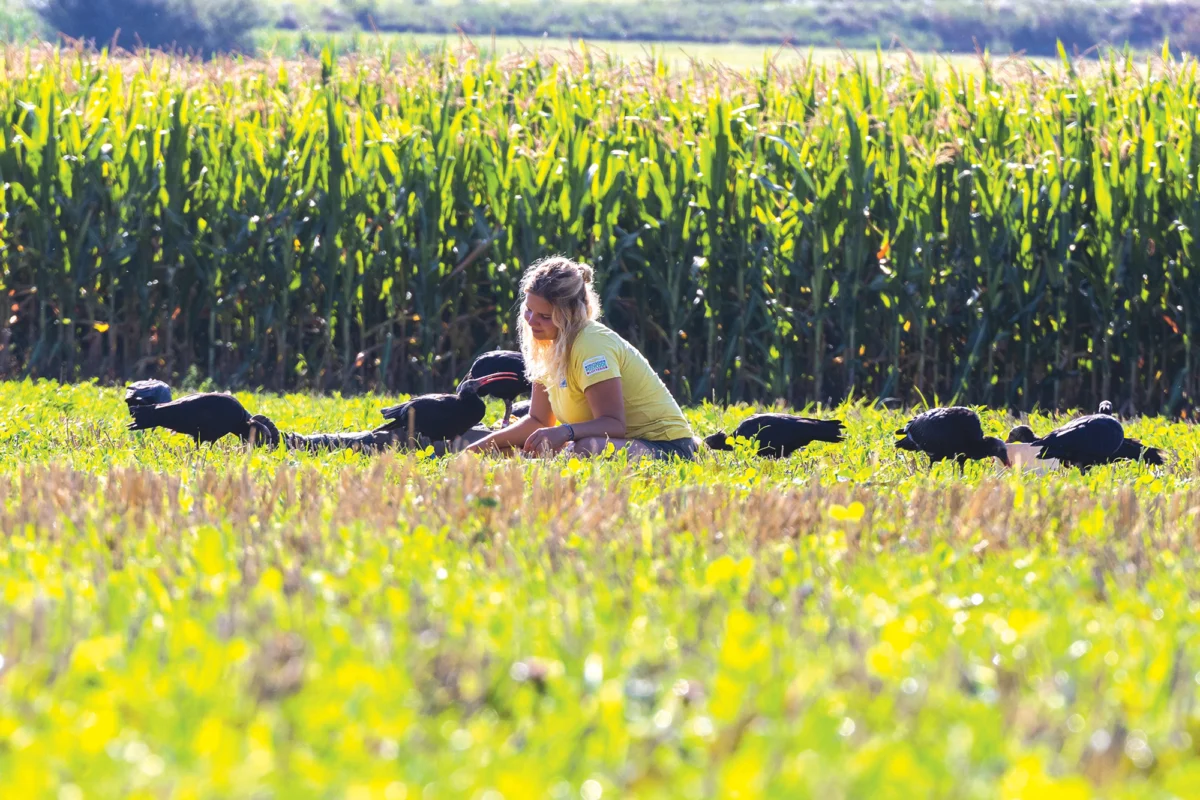
The practice flights, as depicted in the accompanying image, are a critical part of this training. Johannes Fritz, a key figure in the Waldrappteam and a seasoned bird trainer, works closely with the "bird moms" like Steininger and Wehner. These flights are meticulously planned and executed, gradually familiarizing the young ibises with long-distance aerial movement. The goal is for the birds to associate the ultralights with migration and follow them on their journey south.
A Chronology of the Reintroduction Effort
The reintroduction of the Northern bald ibis to Europe is not a new endeavor, but the current intensive effort to re-establish migratory routes represents a significant escalation. The Waldrappteam’s work has been ongoing for years, with various pilot projects and breeding programs. However, the specific cohort of birds being raised in 2023 and the subsequent migration attempts represent a critical phase in their long-term strategy.
- Early 2000s: The Waldrappteam initiates its efforts, focusing on captive breeding and establishing a solid understanding of the species’ biology and behavioral needs.
- Mid-2010s: Pilot projects begin to test the feasibility of imprinting and guiding young ibises with ultralight aircraft. These early attempts faced challenges, including the birds’ reluctance to fly long distances or their tendency to stray from the intended path.
- 2010-2020: Continued research and refinement of training techniques. This period saw incremental successes and valuable lessons learned about the best age for imprinting, optimal training environments, and the importance of experienced human "flock leaders."
- April 2023: Barbara Steininger and Helena Wehner begin their intensive hand-rearing of a new cohort of Northern bald ibis chicks at Wildlife Park Rosegg in Austria. This group is destined for the reintroduction program.
- Late Spring/Summer 2023: As the chicks grow, they are introduced to ultralight aircraft and begin practice flights, a crucial stage in preparing them for migration.
- Autumn 2023 (Projected): The trained ibises, under the guidance of the ultralight aircraft, are expected to embark on their first migratory journey south, aiming for established wintering grounds in Italy. This will be a crucial test of the program’s success.
- Ongoing: The Waldrappteam continues to monitor wild and reintroduced populations, gather data, and adapt their strategies based on the outcomes of each migratory season. Successive years of migration are vital to reinforcing the learned behavior and ensuring the establishment of a self-sustaining migratory population.
Supporting Data and Scientific Basis
The scientific principles underpinning the Waldrappteam’s work are rooted in ethology, the study of animal behavior, and conservation biology.
- Imprinting: As demonstrated by Konrad Lorenz with greylag geese, birds can form strong social bonds with the first moving object they see after hatching. For Northern bald ibises, this means recognizing human handlers and, subsequently, the ultralight aircraft as their kin and guides.
- Learned Migration: Unlike genetically programmed innate migration, the Northern bald ibis’s migratory routes were historically learned behaviors passed down through generations. The loss of experienced migrants and stable traditional routes created a gap that the Waldrappteam aims to fill through artificial guidance.
- Population Dynamics: The Northern bald ibis is a classic example of a species suffering from a "vicious cycle" of decline. With fewer birds, there are fewer experienced migrants to teach the younger generation, further hindering migration. Captive breeding and artificial guidance directly address this bottleneck.
- Ecological Connectivity: Re-establishing migratory routes is not just about the birds’ survival; it’s about restoring ecological connectivity. Migratory species play vital roles in ecosystems, from seed dispersal to nutrient cycling.
Official Responses and Broader Implications
The conservation efforts for the Northern bald ibis have garnered support from various governmental and non-governmental organizations across Europe. The European Union’s LIFE program, which funds environmental projects, has been a significant contributor to the Waldrappteam’s initiatives.
"The work being done by the Waldrappteam is absolutely critical for the survival of the Northern bald ibis in Europe," stated a spokesperson for the European Commission’s Directorate-General for Environment. "Projects like this, which combine cutting-edge scientific methods with unwavering dedication, are essential for biodiversity conservation. We are hopeful that their efforts will lead to the re-establishment of a viable migratory population."
National wildlife agencies in Austria, Germany, and Italy also collaborate with the Waldrappteam, facilitating breeding programs, providing access to protected areas, and monitoring the reintroduced birds. The success of this project has significant implications beyond the fate of a single species:
- Model for Other Endangered Migratory Birds: The techniques employed by the Waldrappteam could serve as a blueprint for the conservation of other migratory bird species facing similar challenges, such as the Great Bustard or certain crane species.
- Public Engagement and Awareness: The highly visible nature of guiding birds with ultralights captures public imagination, raising awareness about the plight of endangered species and the importance of conservation efforts. It fosters a sense of shared responsibility and can inspire greater engagement with environmental issues.
- Understanding Migration: The project provides invaluable data on avian navigation, learning, and the impacts of environmental change on migratory behavior, contributing to our broader scientific understanding of bird ecology.
- Restoration of Ecosystem Function: A thriving migratory population of Northern bald ibises can contribute to the health and balance of the ecosystems they inhabit, both in their breeding grounds and their wintering sites.
The journey of Barbara Steininger and Helena Wehner, cradling featherless chicks and preparing them for a flight into the unknown, encapsulates the profound dedication and innovative spirit driving the fight to save the Northern bald ibis. It is a testament to the belief that with scientific ingenuity and unwavering commitment, even the most precarious species can be guided towards a future of hope. The success of this ambitious undertaking will not only determine the fate of these remarkable birds but also offer a powerful lesson in humanity’s capacity to mend the damage inflicted upon the natural world.