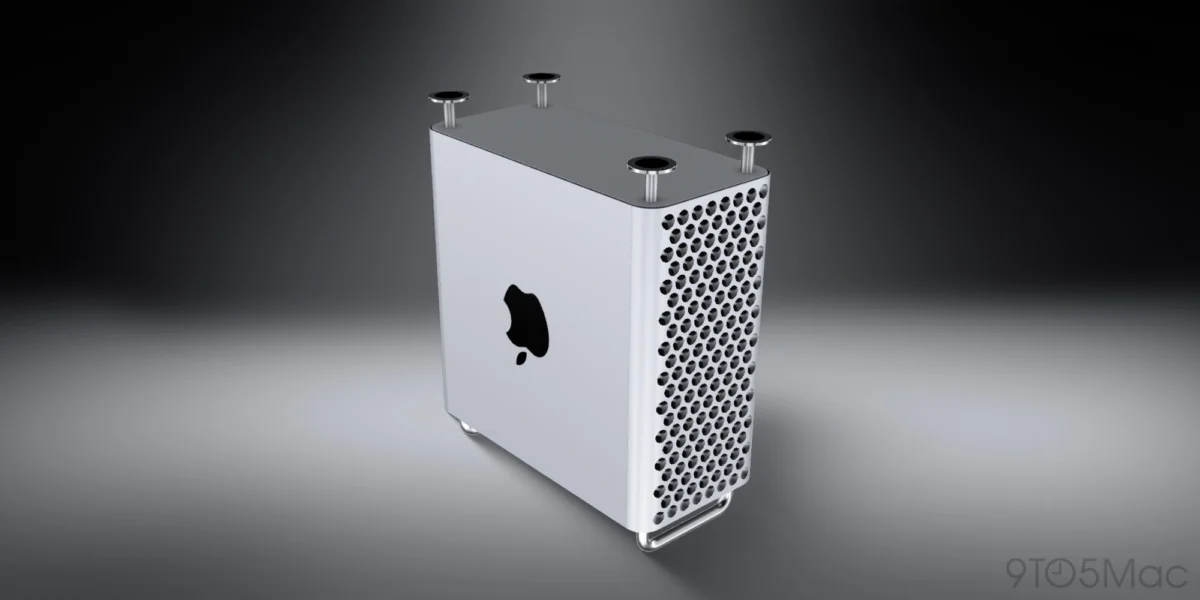
Apple Inc. officially ceased production and sales of its venerable Mac Pro desktop workstation in March, confirming it has no immediate intentions to release future hardware in the iconic professional computing line. This significant shift in Apple’s strategy for its high-end professional users has been further illuminated by a recent Bloomberg report from reliable insider Mark Gurman, which provides crucial context on previously unannounced development plans, including the cancellation of "Extreme" Apple Silicon chips and the surprising existence of an unreleased Intel-powered Mac Pro model. The revelation underscores a profound re-evaluation within Apple regarding the future of its most powerful and expandable desktop offerings, pointing towards a consolidated strategy centered around the Mac Studio.
The End of an Era: Apple Silicon’s Ascendancy and the Mac Pro’s Retreat
The decision to discontinue the Mac Pro marks the conclusion of a product line that has long symbolized Apple’s commitment to the most demanding creative and scientific professionals. For decades, the Mac Pro and its predecessors served as the powerhouse for industries ranging from film production and graphic design to scientific research and software development. However, the advent of Apple Silicon, beginning in 2020, heralded a new era of performance-per-watt efficiency and integrated architecture that increasingly challenged the traditional workstation paradigm.
Gurman’s Power On newsletter detailed that the discontinuation was "wasn’t always the plan," indicating internal deliberations and shifting priorities within Cupertino. Prior to the final decision, Apple had explored an ambitious roadmap for its custom silicon, which included a tier beyond the "Ultra" chips – dubbed "Extreme." These M2 Extreme and M3 Extreme chips were reportedly under development, designed to push the boundaries of processing power and unified memory further than anything seen before in Apple’s consumer or professional lineup. However, these projects were ultimately abandoned due to what Gurman described as "cost and demand concerns."
This suggests that even for a company known for pushing technological limits, the economic viability of an ultra-niche, ultra-high-performance chip proved challenging. The market for such an expensive and specialized component might have been deemed too small to justify the immense research, development, and manufacturing costs associated with scaling Apple Silicon to an "Extreme" level. The existing M1 and M2 Ultra chips, already formidable, likely satisfied a substantial portion of the high-end professional market, making the return on investment for an even more powerful, and thus more expensive, variant questionable.
Unveiling Scrapped Hardware: Intel’s Last Stand and a Lost M3 Ultra Mac Pro

The Bloomberg report further revealed that Apple had two specific Mac Pro models in development that never saw the light of day, codenamed J170 and J190. The details surrounding these unreleased machines offer a fascinating glimpse into Apple’s internal struggle with the transition away from Intel processors and the evolving definition of a "pro" machine in the Apple Silicon era.
Perhaps the most surprising tidbit is the existence of the J170, a new Intel Corp. Mac Pro. This revelation is particularly striking given Apple’s public and aggressive push towards its proprietary silicon since its announcement at WWDC 2020. The development of an Intel-based Mac Pro deep into the Apple Silicon transition period suggests that Apple may have been grappling with specific professional use cases or enterprise dependencies that were not immediately or fully addressed by its nascent M-series chips. Certain legacy software, specialized PCIe expansion cards, or particular virtual machine environments might have still necessitated an x86 architecture for a segment of its professional user base. It could also have been a contingency plan, a safety net for those who simply could not migrate away from Intel for mission-critical workflows, or a recognition of the time it would take for the Apple Silicon ecosystem to mature fully across all professional applications.
The second unreleased model, the J190, was envisioned as an M3 Ultra version of the Mac Pro. This machine was reportedly slated to launch alongside the M3 Ultra Mac Studio in early 2025. Its cancellation, despite the Mac Studio receiving an M3 Ultra update, reinforces the idea that Apple has chosen to consolidate its high-end desktop strategy around the Mac Studio form factor. The Mac Studio, first introduced in 2022, effectively bridged the gap between the Mac mini and the Mac Pro, offering substantial M1 Max and M1 Ultra power in a compact, semi-pro package. With subsequent generations, it appears Apple believes the Mac Studio, equipped with its most powerful integrated chips, can adequately serve the vast majority of professionals who previously relied on the Mac Pro.
A Historical Perspective: The Mac Pro’s Evolution and Apple’s Pro Commitment
To fully appreciate the significance of the Mac Pro’s discontinuation, it is essential to trace its lineage and Apple’s historical relationship with its professional users. The Mac Pro name itself debuted in 2006, marking Apple’s transition from PowerPC (G5 Power Mac) to Intel processors. This original Intel Mac Pro was a modular, tower-style machine that offered extensive internal expandability, allowing users to upgrade RAM, storage, and even graphics cards with relative ease. It quickly became a staple in studios and creative agencies worldwide.
The product line saw a radical redesign in 2013 with the introduction of the cylindrical, "trash can" Mac Pro. While lauded for its innovative thermal design and compact footprint, this model faced criticism for its limited internal expandability, relying heavily on external Thunderbolt peripherals for I/O and upgrades. Many professional users felt it prioritized aesthetics over the practical needs of a truly "pro" workstation.
Recognizing these shortcomings, Apple famously brought a select group of journalists and professionals to its campus in 2017 to openly discuss the 2013 model’s limitations and promise a return to a more modular design. This candid admission led to the highly anticipated 2019 Mac Pro. The 2019 model was a return to the tower form factor, boasting impressive expandability through PCIe slots, a modular design, and robust Intel Xeon processor options. It was designed to be the ultimate professional machine, a direct competitor to high-end Windows workstations, and a symbol of Apple’s renewed commitment to its most demanding users.
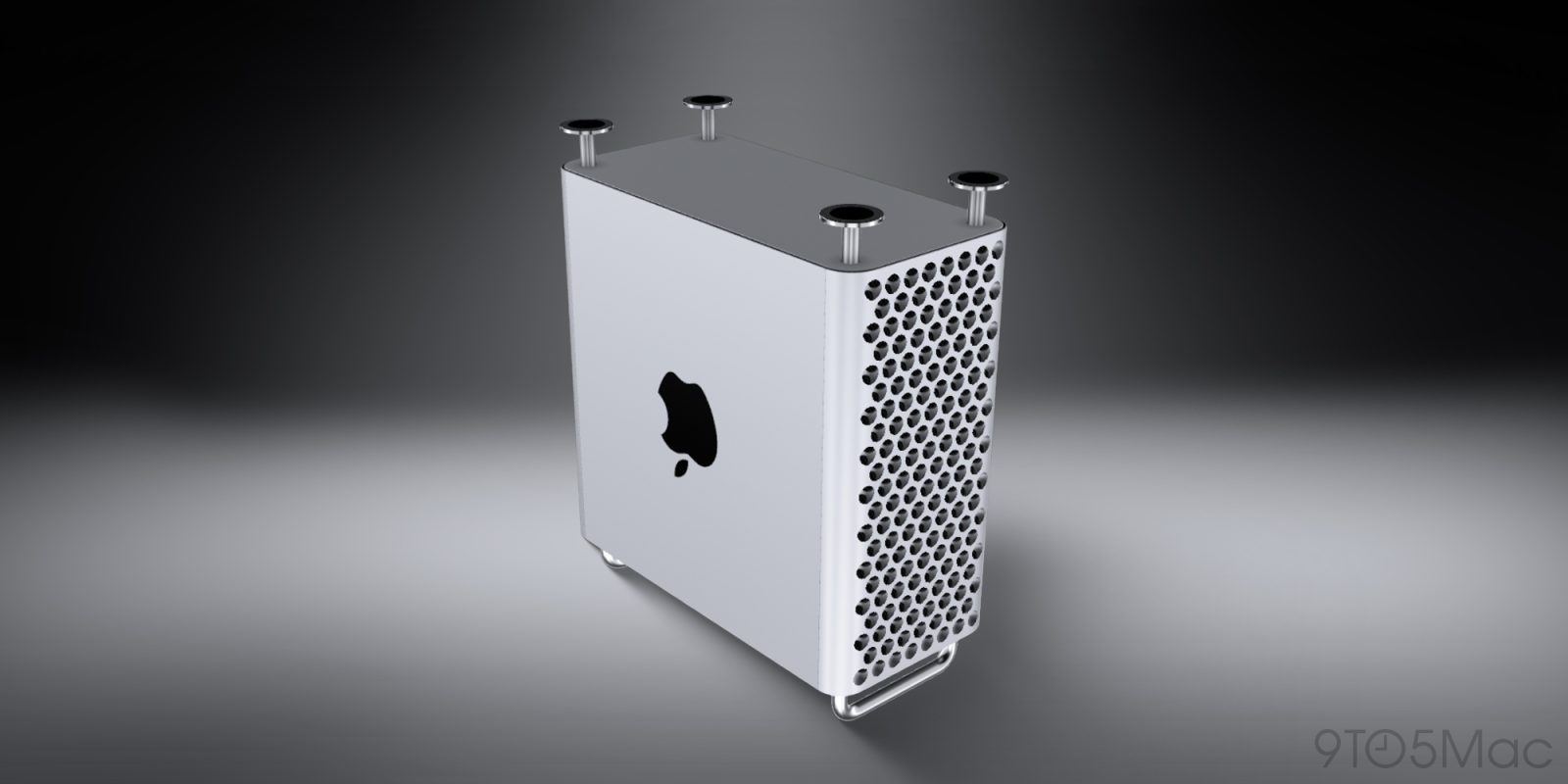
However, the 2019 Mac Pro arrived just a year before Apple announced its monumental shift to Apple Silicon. While it did receive an update in 2023 with the M2 Ultra chip, this model was criticized for essentially being a Mac Studio with PCIe slots. The M2 Ultra chip, being a System on a Chip (SoC), already integrated most components (CPU, GPU, RAM, Neural Engine) that would traditionally be handled by separate, upgradeable cards in a modular workstation. This limited the utility of the PCIe slots primarily to networking cards, storage expansion, or specific legacy I/O cards, rather than significant performance upgrades like graphics cards. The M2 Ultra Mac Pro, while powerful, felt like an awkward compromise, signaling that the traditional modular workstation concept was at odds with Apple Silicon’s integrated design philosophy.
The Rise of the Mac Studio and the Future of Pro Computing at Apple
The Mac Studio, launched in March 2022, effectively began to carve out the Mac Pro’s market share. Offering the formidable M1 Max and M1 Ultra chips in a compact, aluminum enclosure, it delivered exceptional performance for video editing, 3D rendering, and complex software development, often surpassing the performance of the Intel Mac Pro in many real-world professional benchmarks. Its success demonstrated that a significant portion of the professional market valued high, integrated performance and a smaller footprint over the extensive, but often underutilized, modularity of the Mac Pro.
With the Mac Pro now officially retired, the Mac Studio is firmly positioned as Apple’s flagship desktop for professionals. Gurman’s report indicates that new Mac Studios with M5 Ultra chips are anticipated as early as Fall 2026. This trajectory suggests that Apple’s strategy for professional computing will continue to emphasize highly optimized, integrated silicon, leveraging its control over both hardware and software to deliver peak performance and efficiency.
Implications for Professional Users and the Broader Industry
The discontinuation of the Mac Pro carries several significant implications for professional users and the wider workstation market.
Firstly, for users who relied heavily on the Mac Pro’s extensive PCIe expansion capabilities – particularly for specialized GPUs, custom DSP cards, or high-speed storage arrays that couldn’t be accommodated by external Thunderbolt solutions – this news represents a loss. While Thunderbolt technology has advanced significantly, offering impressive external connectivity, it still presents limitations compared to direct internal PCIe slots, especially concerning bandwidth and latency for certain niche applications. Industries such as high-end audio production, scientific computing, and certain visual effects pipelines may need to re-evaluate their workflows or consider alternative platforms.

Secondly, this move solidifies Apple’s commitment to its integrated Apple Silicon architecture. The decision to abandon "Extreme" chips due to cost and demand concerns suggests that Apple believes the current and future iterations of its "Ultra" chips, integrated into compact form factors like the Mac Studio, provide sufficient power for the vast majority of its professional user base. It also implies a prioritization of efficiency and seamless integration over raw, brute-force modularity. This approach allows Apple to maintain tighter control over the user experience and optimize performance across its entire ecosystem.
Thirdly, the Mac Pro’s exit could lead to a further fragmentation of the professional workstation market. While some users will undoubtedly migrate to the Mac Studio, others might explore high-end Windows workstations from manufacturers like HP, Dell, or Lenovo, or even custom-built Linux machines, especially if their specific needs for upgradability or legacy hardware support are not met by Apple’s current offerings. This could mean a slight erosion of Apple’s market share in the most extreme professional segments, even as its overall Mac sales continue to grow driven by the success of its integrated silicon.
Finally, the revelation of an unreleased Intel Mac Pro (J170) highlights the deep-seated challenges and considerations Apple faced during its transition away from Intel. It underscores that the shift was not merely a technical endeavor but also a strategic tightrope walk, balancing the desire for innovation with the practical realities of a diverse and demanding professional user base. The decision to ultimately scrap this Intel model, along with the M3 Ultra Mac Pro (J190), reinforces the notion that Apple’s vision for its future involves a complete and unwavering commitment to its proprietary silicon, even if it means letting go of product lines that once defined its pro-segment dominance.
The Road Ahead: Integrated Power and Evolving Workflows
As Apple moves forward, the Mac Studio will be the undisputed champion of its desktop professional lineup. The anticipated M5 Ultra chips promise to continue the trend of significant performance improvements, likely with enhanced neural engine capabilities for AI and machine learning workloads, faster unified memory, and more efficient CPU/GPU core configurations. Professionals will increasingly rely on the power of these integrated SoCs, coupled with the robust software optimization Apple provides, to drive their demanding tasks.
The "sad end to an era" for the Mac Pro is also a clear signal of a new beginning for Apple’s professional hardware strategy. It’s a testament to the transformative power of Apple Silicon and a bold step towards a future where high-performance computing is increasingly defined by integrated design, efficiency, and a tightly controlled hardware-software ecosystem. While some may mourn the loss of the modular workstation, Apple’s trajectory suggests a future where professional power is delivered in more compact, efficient, and seamlessly integrated packages, compelling users to adapt their workflows to a new paradigm of computing excellence.