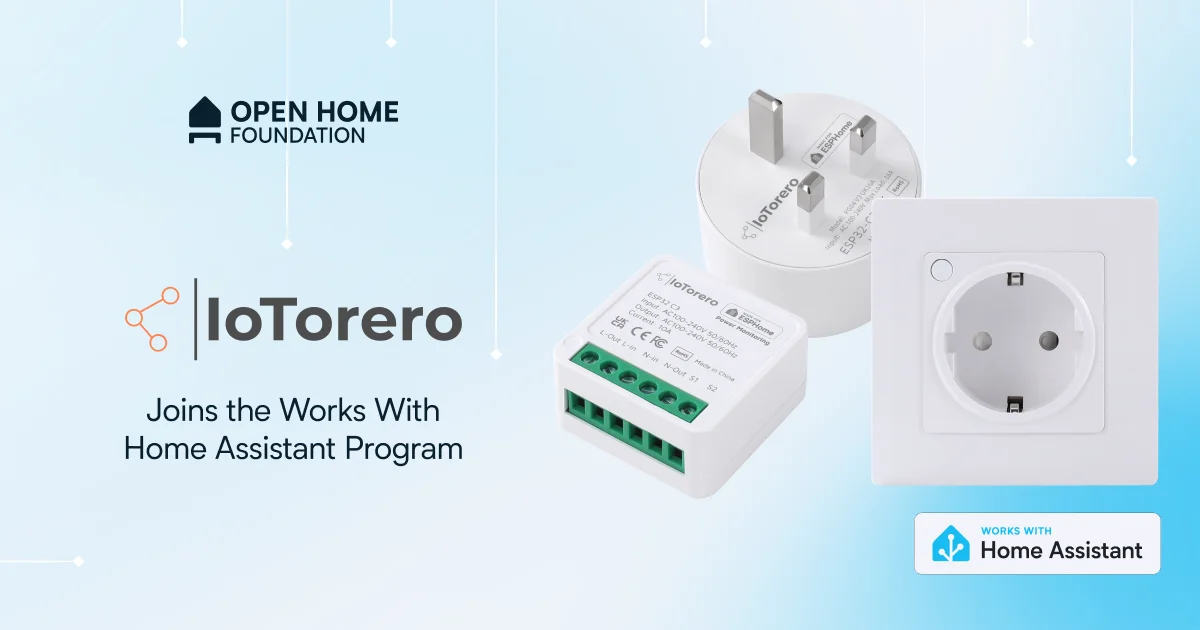
The smart home automation ecosystem reached a significant milestone this month as IoTorero, a prominent manufacturer of open-source hardware, officially joined the Works with Home Assistant program. This partnership marks a pivotal shift in the accessibility of ESPHome-ready devices, bringing the first certified pre-flashed smart plugs and relays to the Home Assistant platform. By aligning with the Open Home Foundation’s rigorous standards for local control and privacy, IoTorero—formerly known as Athom Technology—aims to bridge the gap between complex DIY configurations and user-friendly, out-of-the-box smart home solutions.
The Evolution of IoTorero and the Open Source Hardware Movement
The trajectory of IoTorero began in 2020 under the name Athom Technology. From its inception, the company distinguished itself by focusing on the research, development, and manufacturing of hardware specifically designed for the open-source community. Unlike many competitors in the Internet of Things (IoT) sector that rely on proprietary cloud-based ecosystems, IoTorero adopted a "local-first" philosophy. This approach ensures that devices remain functional even in the absence of an internet connection or if the manufacturer’s servers are decommissioned.
The transition from Athom Technology to IoTorero reflects a strategic rebranding intended to emphasize the company’s commitment to the Internet of Things while maintaining its roots in community-driven innovation. The name change coincided with an increased focus on ESPHome, an open-source system that allows users to create custom firmware for ESP8266 and ESP32 microcontrollers. By pre-flashing their hardware with ESPHome, IoTorero eliminates one of the most significant barriers to entry for Home Assistant users: the need for manual firmware compilation and flashing.
Historically, smart home enthusiasts had to purchase generic hardware and "hack" it to run open-source firmware—a process that often voided warranties and required technical expertise in soldering or serial communication. IoTorero’s entry into the Works with Home Assistant program legitimizes the "pre-flashed" market, offering consumers hardware that is both open by design and officially supported by the leading home automation platform.
Technical Specifications and Certified Hardware Overview
The certification process for the Works with Home Assistant program is exhaustive, requiring devices to meet strict criteria regarding local control, privacy, and long-term support. IoTorero has successfully certified seven devices, all of which also carry the "Made for ESPHome" badge. This secondary certification serves as a prerequisite, ensuring that the hardware is fully optimized for the ESPHome environment.
Smart Energy Monitoring Plugs
The flagship products in the certified lineup include a series of smart plugs tailored for various international markets, including the United States, European Union, United Kingdom, and Australia. These devices utilize the ESP32-C3 chipset, a power-efficient RISC-V based microcontroller.
A critical feature of these plugs is their integrated power monitoring capability. They are engineered to track several electrical metrics in real-time:
- Voltage (V): Monitoring the stability of the electrical supply.
- Current (A): Tracking the flow of electricity to the appliance.
- Power (W): Measuring active energy consumption.
- Total Consumption (kWh): Providing historical data for energy auditing.
These metrics integrate directly into the Home Assistant Energy Dashboard, allowing users to visualize their carbon footprint and identify "vampire loads"—devices that consume significant power even when in standby mode.
Power Monitoring Mini Relay
In addition to the plug-and-play smart plugs, IoTorero has certified a Power Monitoring Mini Relay. Designed for hardwired installations, this device is approximately the size of a matchbox, making it suitable for placement behind traditional wall switches or inside electrical cabinets. The relay allows for the automation of "dumb" appliances, garage door openers, and lighting circuits while maintaining the same level of energy monitoring and local control found in the smart plugs.
The Role of ESPHome and the 2026 Platform Updates
The partnership comes at a time of rapid innovation for the ESPHome platform. In mid-2026, the ESPHome team released version 2026.6.0, which introduced a transformative User Interface (UI) and a new "Device Builder." This update shifted the platform away from its traditional code-heavy dashboard toward a visual workspace.
For IoTorero users, this update is particularly significant. While the devices work immediately upon connection to Home Assistant, the new Device Builder allows users to customize their hardware without writing YAML code. Users can now rename entities, adjust sensor update intervals, or modify internal logic through a graphical interface. This synergy between IoTorero’s pre-flashed hardware and ESPHome’s visual tools represents a major step toward making high-level home automation accessible to non-technical users.
Furthermore, IoTorero maintains a public GitHub repository containing the configuration files for all their devices. This transparency allows advanced users to verify the security of the code or use the configurations as a template for their own custom builds, fostering an environment of shared knowledge and continuous improvement.
Strategic Implications for the Open Home Foundation
The Open Home Foundation (OHF), which oversees the development of Home Assistant and ESPHome, emphasizes three core pillars: Privacy, Choice, and Sustainability. The inclusion of IoTorero in the Works with Home Assistant program reinforces these values in several ways.
Privacy and Local Control
By operating locally, IoTorero devices do not transmit usage data to external servers. This is a stark contrast to the standard IoT model, where user habits and energy consumption patterns are often harvested by manufacturers. In the IoTorero ecosystem, all data remains within the user’s local network, mitigating the risks associated with data breaches or unauthorized surveillance.
Sustainability and E-Waste Reduction
Sustainability is addressed through the longevity of the hardware. Proprietary devices often become "bricks" when a company goes bankrupt or decides to end support for a specific product line. Because IoTorero devices use open firmware and standardized hardware, they can be maintained and updated indefinitely by the community.
Additionally, the certified devices function as Bluetooth proxies. Using the ESP32-C3’s onboard Bluetooth capabilities, these plugs and relays can capture signals from low-energy (BLE) sensors (such as temperature or moisture sensors) and relay them to the Home Assistant server. This functionality eliminates the need for dedicated Bluetooth bridges, reducing the overall number of electronic devices required in a home and subsequently lowering electronic waste.
Official Statements and Community Impact
The move has been met with positive reactions from both the corporate leadership and the user community. Aiden Tang, CTO and Co-Founder of IoTorero, highlighted the strategic importance of the certification. "Since our inception in 2020, we have been dedicated to the research and manufacturing of open-source smart home hardware," Tang stated. "By joining the Works with Home Assistant program, we ensure that customers can select and purchase our products with complete confidence, knowing they are getting high-quality devices that respect their privacy and offer long-term reliability."
The Home Assistant community has historically supported IoTorero (as Athom Technology), notably during the previous year’s Community Day events where the company donated hardware samples for testing and development. This grassroots relationship has been formalized through the certification, providing a clear signal to consumers that IoTorero is a preferred partner for the ecosystem.
Comparative Analysis: Open Source vs. Proprietary Standards
The integration of IoTorero highlights a growing divide in the smart home market. On one side are the "walled gardens" of major tech conglomerates, and on the other is the "Open Home" movement. While standards like Matter aim to improve interoperability between proprietary systems, they do not always guarantee the level of transparency and local-first operation that ESPHome provides.
The Works with Home Assistant program acts as a certification layer that guarantees a specific user experience. While many devices "work" with Home Assistant via community-developed integrations, those with official certification have undergone rigorous in-house testing using standard hardware like the Home Assistant Green. This ensures that the integration is robust, the documentation is accurate, and the manufacturer has committed to maintaining compatibility through future software updates.
Future Outlook for IoTorero and Home Assistant
As the partnership matures, both parties have indicated an openness to expanding the list of certified devices. The current lineup of plugs and relays is viewed as a foundational offering, with potential future entries including specialized sensors, LED controllers, and more complex automation modules.
The success of IoTorero within the program may also serve as a blueprint for other hardware manufacturers. It demonstrates that there is a viable commercial market for hardware that empowers users rather than restricting them. For the broader IoT industry, this partnership suggests that the demand for privacy-centric, locally controlled devices is moving from a niche hobbyist requirement to a mainstream consumer expectation.
In conclusion, IoTorero’s entry into the Works with Home Assistant program is more than a simple product endorsement; it is a validation of the open-source hardware model. By providing high-quality, pre-flashed ESPHome devices, IoTorero and the Open Home Foundation are simplifying the path to a secure, private, and sustainable smart home. This collaboration ensures that as the smart home market grows, users retain the freedom to control their own technology, free from the constraints of cloud dependency and proprietary limitations.