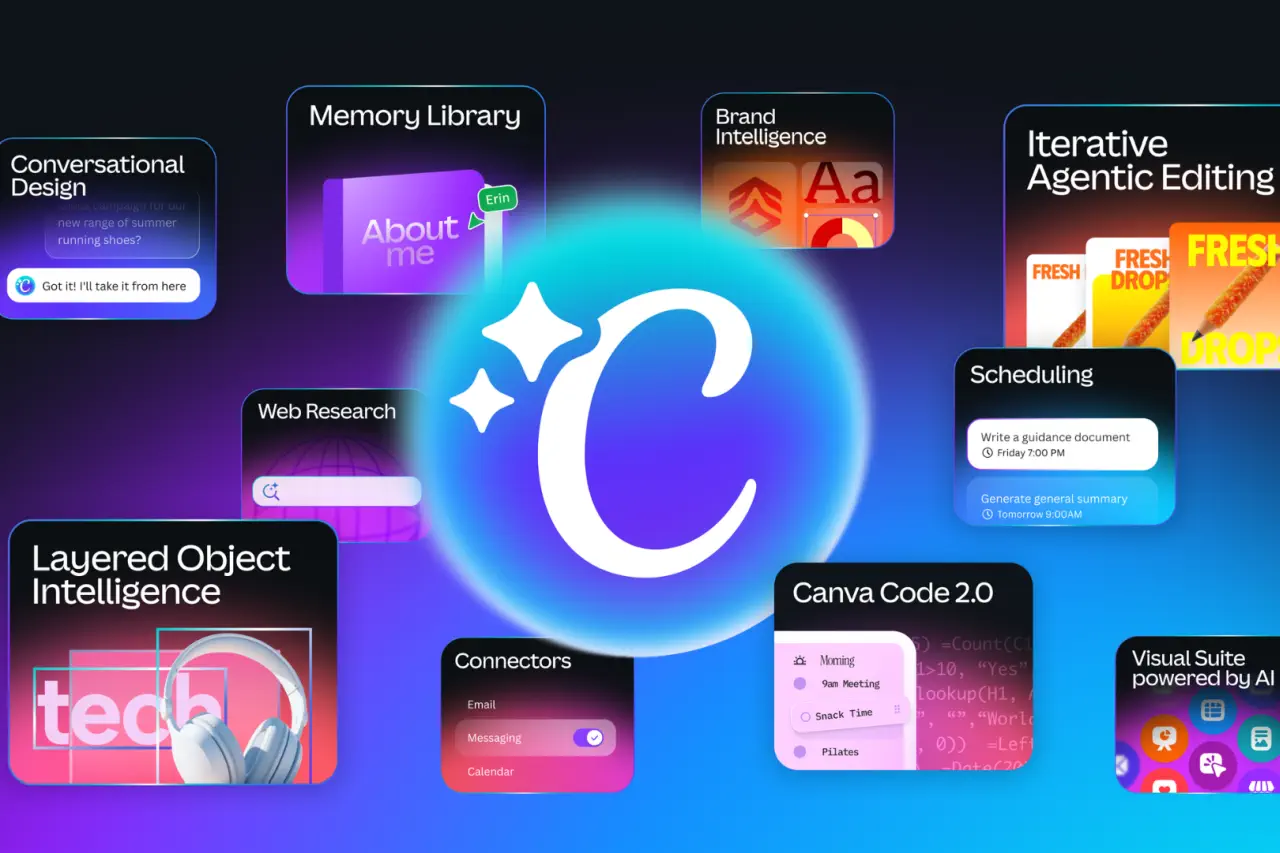
Canva, the global visual communication platform, has announced the launch of Canva AI 2.0, a significant advancement designed to integrate sophisticated generative artificial intelligence capabilities more deeply into its ecosystem. This ambitious update aims to transform the creative process, moving beyond individual AI tools to a more cohesive, intelligent, and responsive system. At its core, Canva AI 2.0 is engineered to democratize design further, enabling users of all skill levels to harness the power of AI for faster, more intuitive, and highly personalized content creation. The new suite of features promises to elevate user experience, streamline workflows, and unlock unprecedented creative potential, marking a pivotal moment in Canva’s mission to make design accessible to everyone.
A New Paradigm in Generative Design: Understanding Canva AI 2.0’s Core Innovations
Canva AI 2.0 introduces a robust framework that goes beyond simple automation, focusing on creating a more intelligent and collaborative design partner. This new iteration integrates advanced generative AI models that can understand context, anticipate user needs, and execute complex creative tasks with remarkable autonomy. The update is built upon several key pillars, each designed to enhance a specific aspect of the design journey, from ideation to execution. The emphasis is on enabling users to articulate their vision through natural language prompts, allowing the AI to translate these ideas into high-quality visual assets across various formats. This represents a strategic shift for Canva, positioning it not just as a design tool, but as an intelligent creative assistant that learns and adapts to its users.
Key Pillars of Innovation in Canva AI 2.0
The new AI 2.0 suite is underpinned by several innovative features, each contributing to a more seamless and powerful design experience:
-
Conversational Design: This feature is central to Canva AI 2.0’s user-centric approach. Instead of navigating complex menus or tools, users can interact with the AI using natural language prompts. For instance, a user might simply type, "Create a vibrant social media post for a summer sale, featuring a coffee cup and a beach background, with a call to action ‘Shop Now’." The AI would then generate several design options, which the user can refine further through conversational commands like "Make the text bolder," "Change the coffee cup to a smoothie," or "Try a different color palette." This iterative, dialogue-based design process significantly lowers the barrier to entry for complex creative tasks, allowing individuals without formal design training to achieve professional results. It accelerates the ideation phase and allows for rapid prototyping, dramatically cutting down the time from concept to completion. This conversational interface mirrors the intuitive chat experiences users are accustomed to, making design feel less like a technical task and more like a collaborative conversation.
-
Object-Based Intelligence: Moving beyond simply recognizing pixels, Canva AI 2.0’s Object-Based Intelligence allows the AI to understand individual elements within a design. This means the AI can identify and manipulate specific objects—such as images, text boxes, shapes, or icons—as distinct entities. For example, if a user uploads a photograph, the AI can intelligently isolate the subject, remove backgrounds, or apply effects only to specific objects within the image, all while maintaining the integrity of the surrounding design. This granular control empowers users to make precise edits with simple commands, enhancing flexibility and efficiency. The AI understands the semantic meaning and hierarchical relationship of objects, enabling it to suggest appropriate placements, sizes, and styles in relation to other design elements, ensuring visual harmony and balance.
-
Agentic Orchestration: Perhaps one of the most sophisticated features, Agentic Orchestration signifies the AI’s ability to break down complex, multi-step creative projects into smaller, manageable tasks and then coordinate multiple specialized AI models (agents) to complete them. For example, if a user requests, "Design a complete marketing campaign for a new fitness class, including flyers, Instagram stories, and an email newsletter, adhering to our brand guidelines," the Agentic Orchestration system would:
- Access the user’s "Living Memory" and "Brand Intelligence" to retrieve brand assets and preferences.
- Delegate to a text generation agent to draft compelling copy for each format.
- Engage an image generation agent to create relevant visuals for flyers and social media.
- Utilize a layout agent to arrange elements according to design principles for each specific medium.
- Employ an optimization agent to ensure all assets are correctly sized and formatted for their respective platforms.
This coordinated effort streamlines complex projects, ensuring consistency across all deliverables and significantly reducing manual effort. It transforms Canva from a tool for creating individual designs into a platform for managing and executing entire creative strategies.
-
Living Memory: This feature enables Canva AI 2.0 to learn and remember user preferences, design choices, brand guidelines, and past interactions over time. As users create more designs, the AI develops a personalized understanding of their style, frequently used elements, and common requests. This "memory" allows the AI to offer increasingly tailored suggestions, automate repetitive tasks based on learned habits, and maintain consistency across projects without explicit instructions each time. For a business, this means the AI consistently applies the correct brand voice, color palettes, and typography, reinforcing brand identity effortlessly. The Living Memory also extends to understanding the context of ongoing projects, allowing the AI to pick up exactly where a user left off, even days or weeks later, making the creative process truly continuous and intuitive.
-
Brand Intelligence: Critical for businesses and organizations, Brand Intelligence leverages AI to ensure strict adherence to established brand guidelines across all generated content. This includes automatically applying correct logos, fonts, color schemes, imagery styles, and even tone of voice. The AI proactively monitors and enforces these guidelines, preventing off-brand creations and ensuring a unified brand presence across all communication channels. This feature is invaluable for marketing teams, agencies, and large enterprises that need to maintain brand consistency at scale, significantly reducing the need for manual brand checks and approvals. It essentially bakes brand governance directly into the creative process, safeguarding brand integrity while accelerating content production.
Enhanced Workflow Integration and Connectivity
Canva AI 2.0 is not just about internal improvements; it also emphasizes seamless integration with external productivity and communication platforms. The update introduces robust connectivity with widely used applications such as Slack, Gmail, Zoom, Google Drive, and Notion. These integrations mean that users can initiate, collaborate on, and share designs directly from their preferred work environments, minimizing context switching and enhancing overall productivity. For instance, a user might receive a design request in Slack, generate the design using Canva AI 2.0, and then share it back into Slack or attach it to a Gmail, all without leaving their primary workspace. This interconnectedness is crucial for modern, distributed teams and agile workflows.
Furthermore, the introduction of Canva Code 2.0 marks a significant step towards bridging the gap between design and development. Canva Code 2.0 allows users to export their designs into functional HTML, providing greater flexibility for web developers and advanced users. This feature empowers designers to create visually rich web elements within Canva and then hand off clean, editable code to developers, streamlining the web development process. It’s a testament to Canva’s commitment to supporting a broader spectrum of creative professionals and expanding its utility beyond traditional graphic design. The ability to generate responsive, high-quality HTML directly from a design tool will accelerate web content creation and ensure design fidelity from concept to live deployment.
The Broader Context: Canva’s Evolution and the AI Landscape

Canva’s journey began with a mission to democratize design, making professional-quality tools accessible to everyone. From its inception in 2013, it has grown exponentially, attracting a user base of over 170 million monthly active users globally. Its success stems from its intuitive drag-and-drop interface, vast library of templates, and affordable pricing. The introduction of AI 2.0 is a natural progression of this mission, leveraging cutting-edge technology to further empower its diverse user base.
Prior to AI 2.0, Canva had already integrated several standalone AI features that proved highly popular, such as Magic Design (generating designs from text prompts), Magic Write (AI-powered copywriting), Background Remover (one-click image background removal), and Text-to-Image generators. These tools laid the groundwork, familiarizing users with the power of AI in design. AI 2.0, however, represents a fundamental shift from individual AI utilities to an integrated, intelligent design system, where AI capabilities are deeply woven into every aspect of the platform, working in concert to understand and fulfill complex creative briefs.
The timing of Canva AI 2.0’s launch aligns with a booming global interest and investment in generative AI. The generative AI market, valued at approximately $11.3 billion in 2023, is projected to reach over $51.8 billion by 2028, demonstrating the immense potential and demand for these technologies across various industries. Major players like Adobe (with its Firefly generative AI suite), Microsoft (integrating Copilot across its productivity tools), and Google (with Gemini in Workspace) are all heavily investing in AI-powered creative solutions. Canva’s unique positioning, catering to both casual users and professionals, allows it to democratize these advanced capabilities on an unprecedented scale, often making them more accessible and user-friendly than enterprise-grade alternatives. This strategic move solidifies Canva’s competitive edge in the rapidly evolving creative technology landscape.
Strategic Implications and Market Impact
Canva AI 2.0 carries significant implications for various sectors:
-
Empowering Non-Designers: The most immediate impact will be on individuals and small businesses without dedicated design resources. Conversational Design and Agentic Orchestration will allow them to create sophisticated marketing materials, presentations, and social media content that previously required professional design skills or significant time investment. This further democratizes design, enabling more people to effectively communicate visually.
-
Boosting Professional Productivity: While simplifying design for novices, AI 2.0 also offers substantial productivity gains for professional designers and marketing teams. By automating repetitive tasks, generating initial concepts, and ensuring brand consistency, designers can focus more on strategic thinking, high-level creative direction, and intricate refinements, rather than manual execution. This shift could lead to faster project turnaround times and greater creative output.
-
Enhanced Brand Consistency: For businesses, the combination of Living Memory and Brand Intelligence is a game-changer. It ensures that all content produced, regardless of who creates it, adheres strictly to brand guidelines. This is crucial for maintaining a strong, unified brand identity across all customer touchpoints, which can be challenging for large organizations with multiple content creators.
-
Future of Work in Creative Industries: The advancements in AI 2.0 suggest a future where AI acts as a true co-pilot in creative endeavors. This could redefine roles within design and marketing, placing a greater emphasis on strategic oversight, prompt engineering, and human-AI collaboration. While some fear job displacement, many industry analysts predict that AI will augment human creativity, allowing professionals to achieve more with less effort.
-
Ethical Considerations and Responsible AI: As generative AI becomes more powerful, ethical considerations regarding intellectual property, data privacy, and the potential for misuse become paramount. Canva, like other responsible AI developers, is expected to implement robust safeguards and guidelines. The introduction of the "AI Pass" can be inferred as a mechanism for managing and potentially monitoring AI usage within organizations, ensuring responsible deployment and compliance. This could involve credit systems for generative features, organizational controls over AI access, or analytics on AI-generated content to ensure adherence to ethical guidelines and brand safety. Transparency in AI generation, attribution, and user control over data will be critical for user trust and widespread adoption.
Canva’s AI Pass: Managing the Power of AI
The mention of "AI Pass" suggests Canva’s foresight in managing the deployment and usage of these powerful new AI tools, especially within team and enterprise environments. While specific details about the AI Pass are yet to be fully disclosed, it is likely designed to provide organizations with a comprehensive solution for controlling, monitoring, and optimizing their AI usage within Canva. This could manifest as:
- Credit-based System: A mechanism where users or teams consume credits for advanced generative AI features, allowing organizations to manage costs and allocate resources efficiently.
- Usage Governance: Tools for administrators to set permissions, restrict certain AI functionalities, or monitor the types of content being generated by AI, ensuring compliance with internal policies and external regulations.
- Access Control: A tiered system that grants different levels of AI access based on user roles or subscription plans, allowing for tailored experiences and preventing unauthorized use of advanced features.
- Brand Safety and Compliance: Features integrated with Brand Intelligence that allow organizations to flag or filter AI-generated content that deviates from brand guidelines or ethical standards.
The AI Pass underscores Canva’s commitment not only to innovation but also to responsible and manageable integration of AI into professional workflows, acknowledging the need for control and accountability in an increasingly AI-driven creative landscape.
In conclusion, Canva AI 2.0 represents a significant leap forward for the platform, cementing its position at the forefront of accessible creative technology. By deeply integrating generative AI through features like Conversational Design, Object-Based Intelligence, Agentic Orchestration, Living Memory, and Brand Intelligence, Canva is poised to redefine how individuals and organizations approach visual communication. Combined with enhanced workflow integrations and the introduction of Canva Code 2.0, this update promises to unlock new levels of creativity and productivity, further democratizing design and empowering a global community of users to bring their ideas to life with unprecedented ease and sophistication. The future of design, as envisioned by Canva AI 2.0, is intelligent, intuitive, and seamlessly integrated into every aspect of our digital lives.