








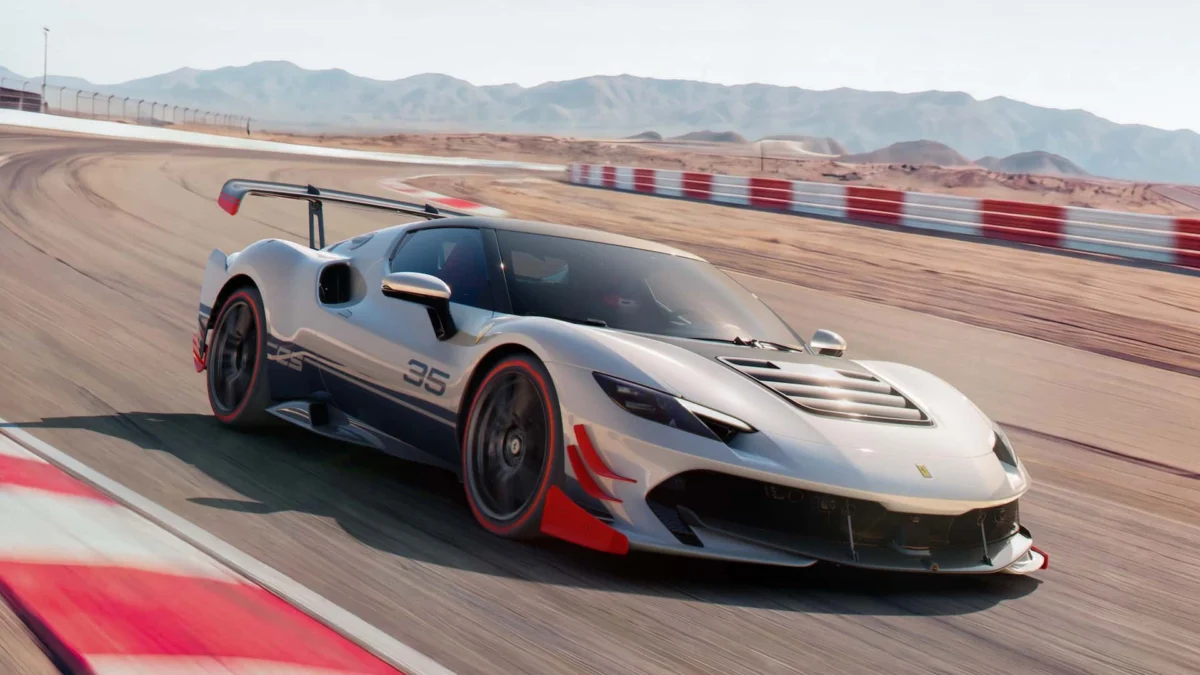
The curtains open, and for a moment, the room falls into a heavy, expectant silence. Before the technical specifications are even recited, the visual impact of the new Ferrari 296 Challenge Stradale commands absolute attention. It is a machine that marks a profound turning point for the Prancing Horse, representing a departure from the increasingly hybridized future of the automotive industry. While most manufacturers are leaning into electrification to supplement performance, Ferrari has chosen to strip back the 296 platform to its most visceral, mechanical essence. This is, by the manufacturer’s own admission, a disruption of balance—a road-legal vehicle that prioritizes the cold, hard metrics of a race track above the creature comforts typically expected of a grand tourer.
Developed in tandem with the 296 Challenge Evo, which is slated to headline Ferrari’s prestigious one-make racing series beginning in 2027, the Challenge Stradale acts as a bridge between the street and the circuit. Priced at approximately $307,000, the vehicle serves as a testament to the company’s heritage, proving that even in the modern era, the most rewarding driving experiences are often found in the absence of excess.
The Philosophy of Purity: Abandoning the Hybrid
The most significant engineering decision regarding the 296 Challenge Stradale is the total omission of the hybrid system found in the standard 296 GTB. In the base model, the electric motor provides a surge of torque that masks turbo lag and aids in immediate acceleration. By removing the battery pack and the electric motor, Ferrari has fundamentally altered the vehicle’s dynamic character.
Removing the hybrid components has resulted in a weight reduction of 308 pounds compared to the 296 GTB, bringing the dry weight down to a lean 2,932 pounds. This weight shedding is not merely about acceleration; it is about the physics of handling. With less mass to manage, the car’s agility is transformed. Engineers note that while the 296 Speciale was designed to be approachable and forgiving, the Challenge Stradale is an uncompromising instrument. It requires a driver who understands the nuance of weight transfer, as the car relies entirely on its internal combustion engine and advanced aerodynamics to manage speed through corners.
Mechanical Mastery: The 3.0-Liter Twin-Turbo V6
At the heart of the machine lies the same 3.0-liter twin-turbocharged V6 that powers the 296 series, with the turbochargers mounted within the "V" of the engine block to reduce lag and improve packaging. Without the electric motor to fill in the torque gaps, Ferrari’s powertrain engineers focused on increasing boost pressure and refining variable valve timing. The result is a 32 percent increase in dynamic torque compared to the standard 296 GTB.
The engine produces 670 horsepower, channeled through an eight-speed dual-clutch transmission. This gearbox is particularly noteworthy for its dual-personality software. When the driver is cruising at lower speeds, the transmission adopts a smooth, refined calibration borrowed from the SF90 XX Stradale. However, when the car is pushed to its limits, the software switches to a race-derived logic, executing gear changes in just 170 milliseconds. The auditory experience is equally focused, with an exhaust note that climbs sharply to an 8,500 rpm redline, exiting through a titanium-heavy exhaust system designed to maximize flow and minimize backpressure.
Performance Metrics and Track Pedigree
The performance figures of the 296 Challenge Stradale are staggering for a vehicle that can legally navigate public roads. The car achieves a 0-60 mph sprint in 2.8 seconds and hits 124 mph in just 7.9 seconds. Its top speed exceeds 186 mph. Perhaps more telling than its straight-line speed is its performance at Fiorano, Ferrari’s private test track, where it clocks a lap time of 1 minute and 18.5 seconds.
These times are achieved not just through raw power, but through an unprecedented level of chassis rigidity and downforce. Body roll has been reduced by 68 percent compared to the 296 GTB, while lateral performance—the car’s ability to grip the pavement in high-speed corners—has improved by 7 percent. Stability, a critical factor for drivers pushing near the limit, has seen a 34 percent increase.
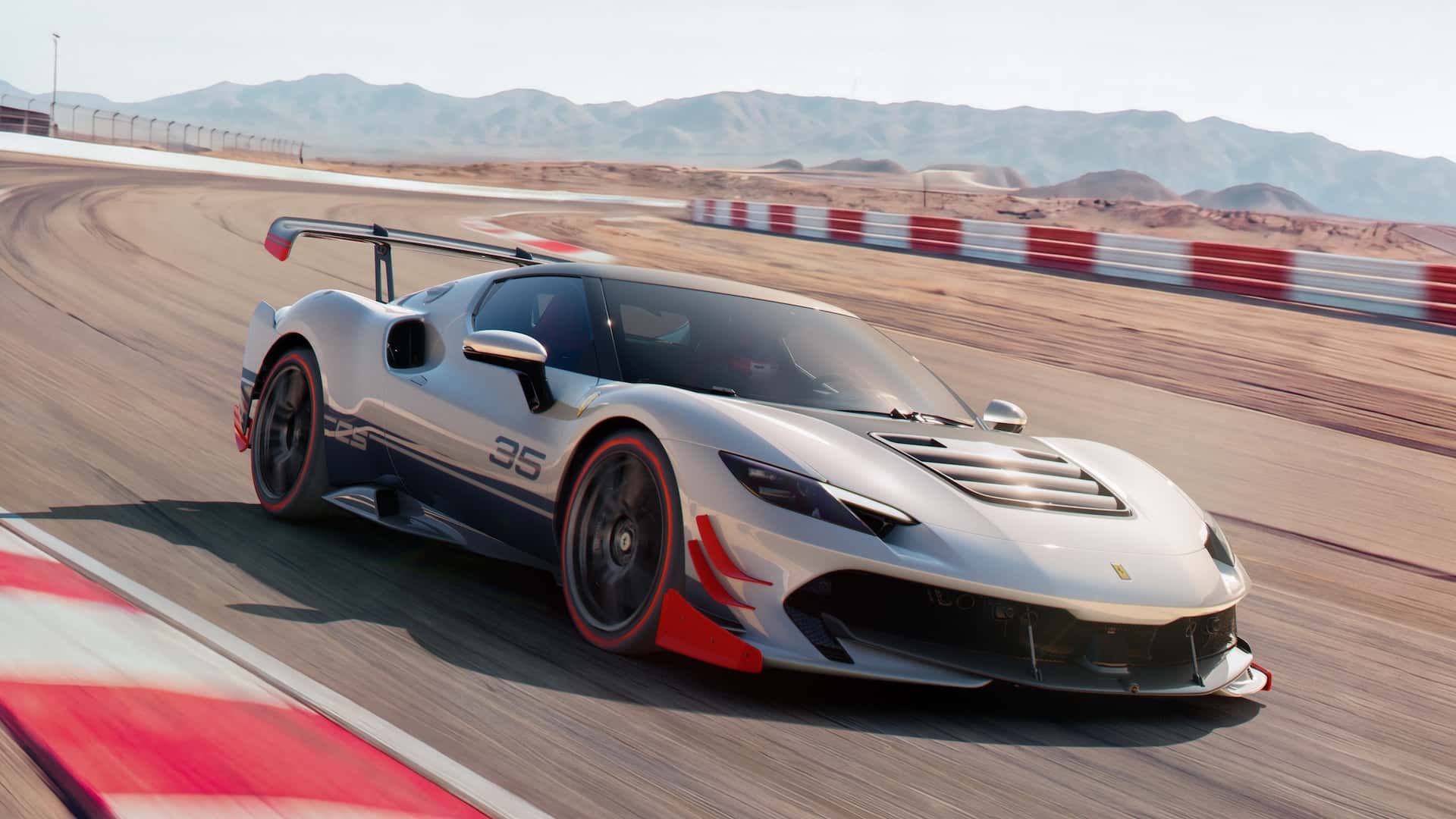
To achieve this, Ferrari utilized a "spring-in-series" setup borrowed from the Challenge Evo race car. The semi-active dampers now feature additional rebound settings, allowing the car to maintain a semblance of composure on uneven road surfaces despite being tuned for the high-speed demands of a closed circuit.
Aerodynamics: The Science of Downforce
Aerodynamics serves as the backbone of the Challenge Stradale’s design. The vehicle generates 1,360 pounds of downforce at 155 mph, a 72 percent increase over the base GTB model. The design language, led by Flavio Manzoni and the team at Centro Stile, is overtly functional. The front of the car features a technical insert on the hood and bumper-mounted "claws" that channel air to manage pressure and cooling.
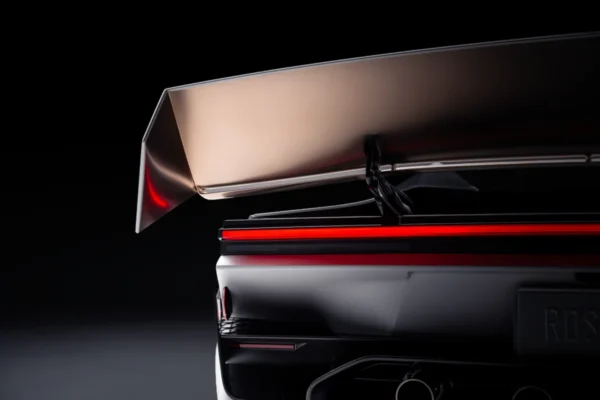
The most prominent feature is the rear fixed wing. While it draws inspiration from the 296 Challenge Evo, the mounting system was modified to meet international road-legal requirements, specifically those mandated in the United States. Unlike the swan-neck design seen on the dedicated race car, the road-legal wing attaches from underneath, ensuring it complies with pedestrian safety and homologation standards while still providing 595 pounds of downforce on its own.
The Evolution of the "Challenge" Lineage
The relationship between Ferrari’s road cars and its racing efforts is the bedrock of the company’s identity. Since the inception of the Ferrari Challenge series in 1993, the company has consistently funneled racing technology into consumer-facing products. From the 348 to the F355 and the 360, each generation has sought to provide owners with a tangible connection to the track.
The 296 Challenge Stradale is the culmination of three decades of this philosophy. It moves away from the "all-rounder" concept that defines much of the modern supercar market. In an era where manufacturers are racing to see who can fit the largest battery or the most complex software suite, Ferrari has taken a calculated risk by betting on the purity of the internal combustion engine and the mastery of vehicle dynamics.
Implications and Market Impact
The market impact of the 296 Challenge Stradale is likely to be significant. By positioning the car as a track-focused machine that sits just beneath the extreme, limited-production models like the 499P Modificata, Ferrari is catering to a specific demographic of collectors and enthusiasts who prioritize track-day performance over daily usability.
Furthermore, the vehicle’s development timeline—coordinated with the 2027 launch of the new Challenge series—signals that Ferrari is committed to keeping the internal combustion engine relevant in the context of professional and amateur racing for years to come. This creates a halo effect for the brand, reinforcing its image as a manufacturer that values the driver’s connection to the machine above all else.
Technical Data Summary
- Engine: 3.0-liter twin-turbocharged V6 (non-hybrid)
- Horsepower: 670 hp
- Dry Weight: 2,932 lbs
- Power-to-Weight Ratio: 4.37 lbs/hp
- Downforce: 1,360 lbs at 155 mph
- 0-60 mph: 2.8 seconds
- 0-124 mph: 7.9 seconds
- Fiorano Lap Time: 1:18.5
- Stopping Distance (124-0 mph): 331 feet
Conclusion
The Ferrari 296 Challenge Stradale is more than just a lighter, faster version of an existing car; it is a statement of intent. It demonstrates that Ferrari, despite the pressures of global emissions standards and the industry-wide shift toward electrification, remains deeply committed to the traditional tenets of sports car engineering: weight reduction, aerodynamic efficiency, and the refinement of the combustion engine.
For the driver, this means a car that is physically demanding, aurally stimulating, and technically precise. It is a machine that does not hide its intent. Whether it is the exposed carbon fiber in the cabin, the absence of the heavy hybrid powertrain, or the aggressive aero package that defines its silhouette, every element of the 296 Challenge Stradale serves a singular purpose. It is a reminder that while the future of the automobile may be changing, the thrill of driving—when distilled to its purest form—remains an art form that Ferrari is determined to preserve. As the brand looks toward its next decade of production, this car stands as a benchmark for what is possible when engineers are given the license to ignore the compromises of the mainstream and focus exclusively on the pursuit of the perfect lap.