




Tesla has officially commenced the rollout of Full Self-Driving (FSD) version 15 to members of its Early Access Program, marking a significant milestone in the company’s ongoing transition toward fully autonomous vehicle operations. The deployment follows statements made earlier by CEO Elon Musk, who indicated that a broader public release would take place in December, coinciding with Tesla’s traditional end-of-year software distribution cycle. As the automotive industry closely watches the evolution of advanced driver-assistance systems, FSD v15 introduces a comprehensive suite of underlying architectural upgrades, safety enhancements, and a radically redesigned user interface designed to bridge the gap between driver supervision and eventual autonomous operation.
Chronology and Development of the FSD v15 Rollout
The path to FSD v15 has been defined by incremental advances in Tesla’s end-to-end neural network architecture. Throughout much of 2026, Tesla executives and engineering leads, including Head of AI Ashok Elluswamy, hinted at major structural revisions aimed at addressing longstanding edge cases that plagued previous iterations. In September, internal roadmaps and preliminary statements signaled that collision avoidance and reaction times in high-risk scenarios would be primary focus areas for the fifteenth major software revision.
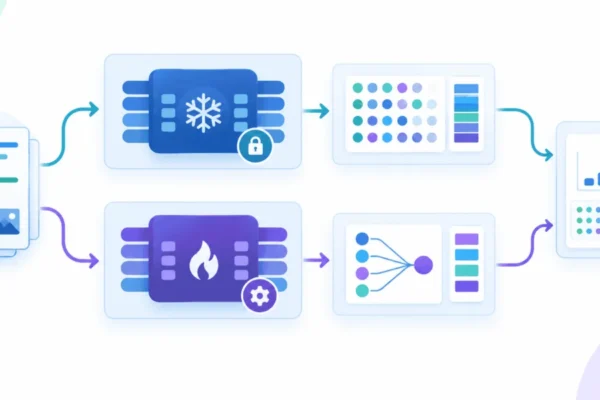
The timeline accelerated sharply in late November when Elon Musk addressed architectural fine-tuning techniques on social media, comparing traditional supervised fine-tuning methods unfavorably to more deeply integrated primary neural training loops. During this same communication window, Musk confirmed that the software would debut widely in December. Shortly after these announcements, Tesla initiated the initial wave of deployment to Early Access Program (EAP) participants, allowing select drivers to evaluate the system in real-world conditions. This tiered release strategy mirrors Tesla’s established deployment protocol, ensuring that early builds undergo rigorous validation by experienced users before reaching the broader consumer fleet equipped with AI4 hardware and AMD Ryzen infotainment systems.
Core Technical Enhancements and Safety Improvements

FSD v15 brings a multitude of functional upgrades that affect nearly every dimension of the vehicle’s driving behavior. According to the official release notes and corporate disclosures, the most prominent advancement is a claimed twenty-fivefold improvement in the handling of safety-critical edge cases. This leap is attributed to continuous retraining of Tesla’s end-to-end driving network on massive datasets compiled from global fleet telemetry.
Among the operational refinements included in the initial EAP build are significant upgrades to navigation logic. The system now incorporates start- and end-of-trip route preferences learned dynamically from fleet-wide routing data, with subsequent v15 patches slated to expand this capability to entire journeys. Furthermore, environmental perception algorithms have been recalibrated to deliver superior detection of dynamic and static obstacles, including road signs, stray animals, hazardous debris, potholes, and standing water accumulations.
Speed management has also been tuned for greater harmonization with complex driving environments. The software now executes more natural velocity adjustments when traversing school zones or operating during adverse weather events. Additionally, FSD v15 introduces automated deceleration for speed cameras—a heavily requested feature in regions with dense automated enforcement infrastructure—and an innovative "Bike Rack Mode" that permits the activation of driver-assistance features while utilizing exterior hitch-mounted accessories.

The Introduction of Tesla Reality View and Unreal Engine Integration
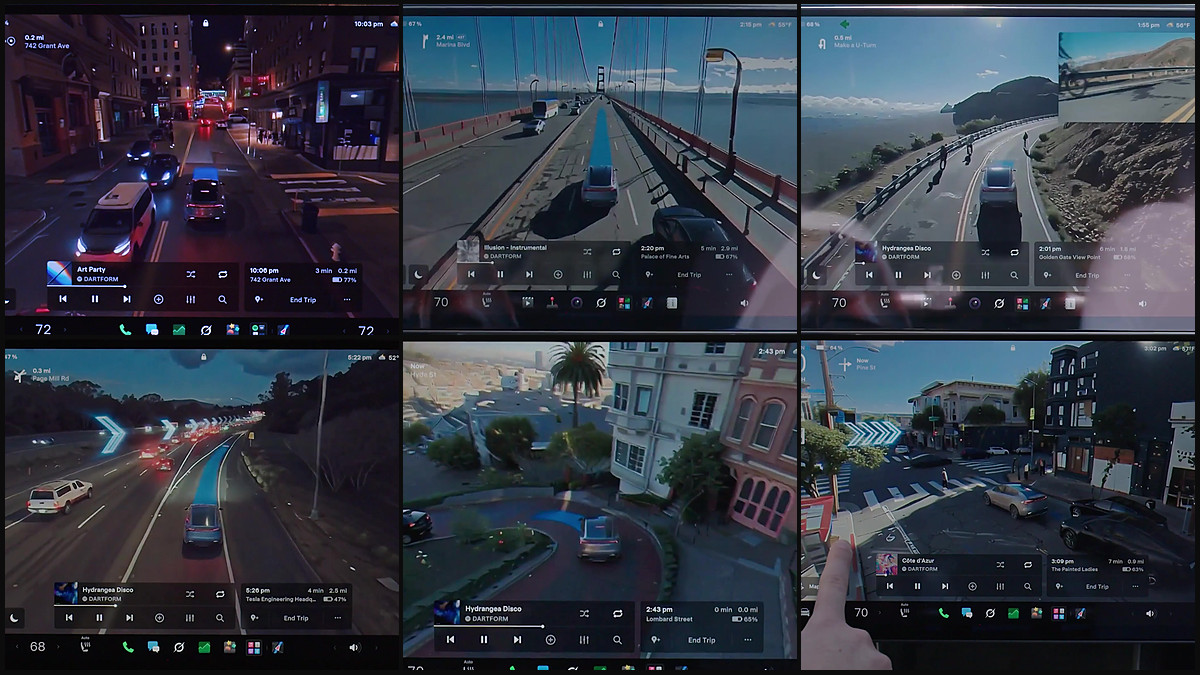
One of the most visually striking aspects of the FSD v15 deployment is the introduction of "Tesla Reality View." Serving as a complete overhaul of the vehicle’s real-time driver visualization interface, this feature provides a high-fidelity graphical representation of the vehicle’s immediate surroundings and intended trajectory.
Industry analysts and automotive software researchers have noted that the graphical rendering quality strongly suggests the implementation of Epic Games’ Unreal Engine, a possibility first hinted at through code discoveries in late 2025. This advanced rendering engine enables the vehicle’s computer to re-render physical reality in a fluid, highly detailed manner on the central touchscreen. Beyond aesthetic improvements, the interface is explicitly designed to offer transparent operational intent, allowing drivers to visually confirm and anticipate maneuvers planned by the autonomous system in real time.

Broader Autonomous Strategy and Ecosystem Context
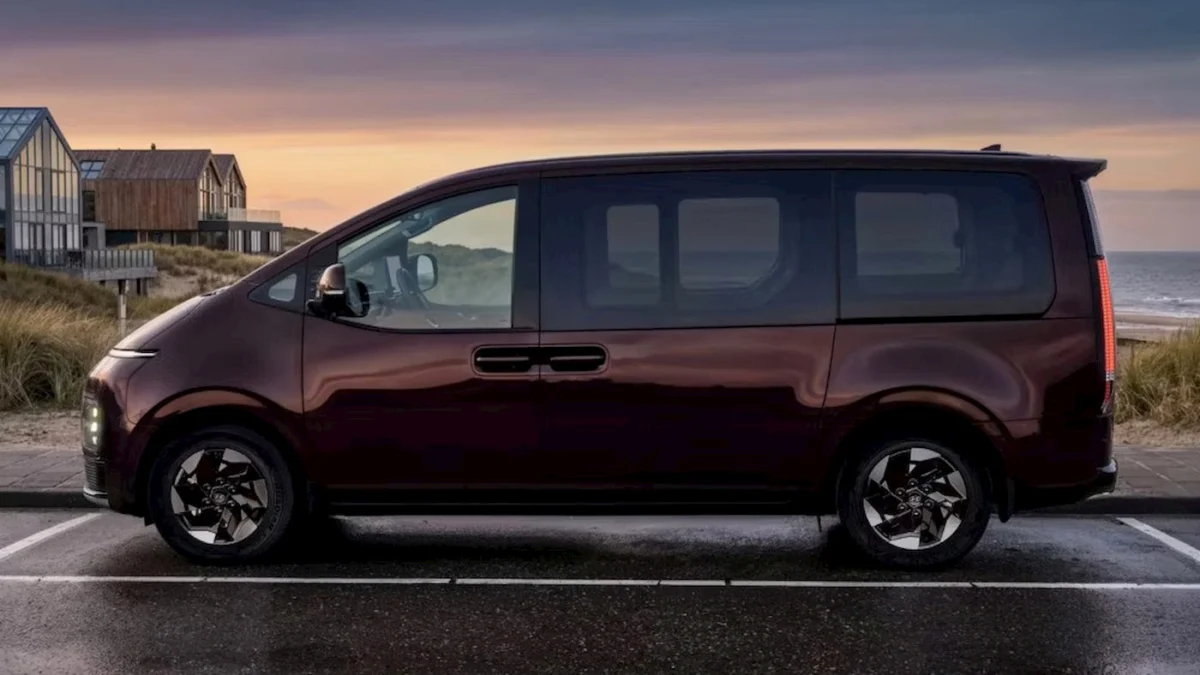
The release of FSD v15 does not occur in a vacuum; it arrives as Tesla aggressively scales its broader autonomous ecosystem, which includes dedicated commercial robotaxis and personal autonomous vehicle configurations. Speaking at prominent industry events earlier in the week, Musk outlined plans for an expanded autonomous lineup, including a steering-wheel-free variant of the Model Y designed to cater to families and groups requiring higher passenger capacity than the two-seat Cybercab.
These developments underscore Tesla’s corporate pivot toward valuing its software and robotics infrastructure above traditional automotive manufacturing margins. With urban robotaxi deployments expanding to multiple major metropolitan areas and personal deployment frameworks taking shape, the reliability improvements introduced in FSD v15 serve as critical technical stepping stones toward achieving unmonitored, unsupervised autonomous operation.
Fact-Based Analysis of Market Implications
The deployment of FSD v15 carries substantial implications for both Tesla’s product valuation and the wider regulatory landscape governing autonomous vehicles. By attempting to resolve persistent user complaints—such as erratic lane-change timing, reluctance to utilize HOV lanes, and poor management of road surface anomalies—Tesla aims to increase consumer trust and reduce the cognitive load placed on human supervisors.
However, the transition from supervised to unsupervised operation remains subject to rigorous regulatory scrutiny across international jurisdictions. While the numerical safety improvements cited by Tesla indicate significant algorithmic maturation, regulatory approval in key international markets, such as China and the European Union, will depend heavily on empirical safety data gathered from public deployments like the current EAP rollout. As Tesla prepares for its nationwide holiday software distribution in December, the performance of FSD v15 will be scrutinized by consumers, competitors, and safety regulators alike to determine whether the software can consistently deliver on its ambitious technical promises.