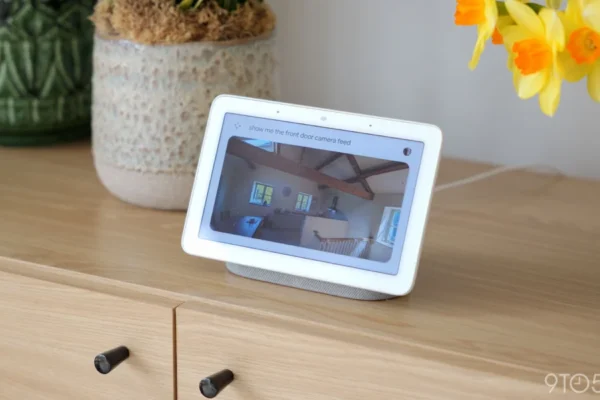









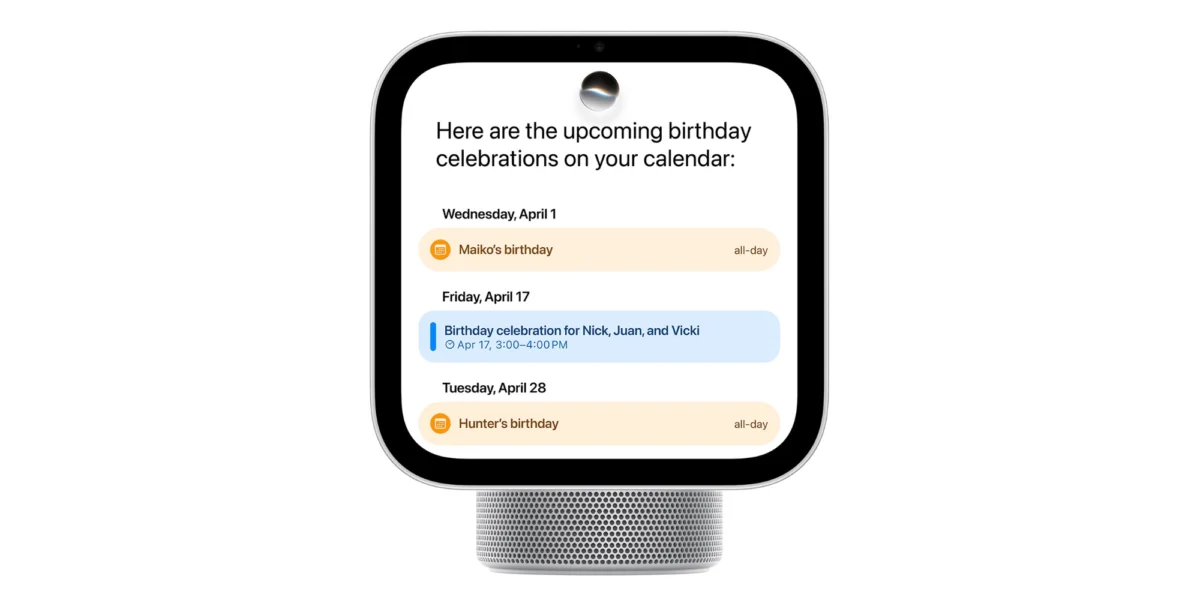
Apple has deployed a critical day-one software update for its highly anticipated HomeView smart display units, rolling out HomeView Software Version 27.2 just hours before the hardware officially lands in the hands of consumers. The newly released software package, designated as build 24V526, targets and resolves nine distinct security vulnerabilities that span several core system components, including AirPlay, Bluetooth connectivity, the Messages application, and system input management frameworks.
The timing of the update underscores the accelerating challenges hardware manufacturers face in securing connected devices prior to their retail debut. Although the first HomeView units are scheduled for delivery to early pre-order customers tomorrow, industry analysts note that modern consumer electronics frequently require immediate patches to address zero-day or recently disclosed vulnerabilities that are discovered between the finalization of factory firmware and the product’s official distribution date. Consequently, cybersecurity professionals and Apple representatives are strongly advising all incoming HomeView owners to check for and apply Software Version 27.2 immediately upon unboxing their new devices.
Chronology of the Vulnerability Disclosures and Cross-Platform Integration
The security flaws addressed in HomeView Software Version 27.2 are not entirely isolated to the new smart display hardware. Many of these vulnerabilities were concurrently identified and patched across Apple’s broader ecosystem, appearing in parallel updates for iOS 27.2, iPadOS 27.2, and macOS 27.2 Golden Gate. This synchronized patch deployment highlights the shared codebases underpinning Apple’s diverse product portfolio, where a logic flaw or memory management issue in a framework like CoreUtils or App Intents can manifest across iPhones, tablets, desktop computers, and now, home automation displays.
The discovery timeline for these vulnerabilities stretches across contributions from both internal Apple security engineers and external researchers. Among the notable external contributors acknowledged in Apple’s official security documentation is László Várady, who identified an authorization flaw within App Intents (tracked as CVE-2026-113963) that could potentially allow an unauthorized third-party application to access sensitive user data through improper state management. Additionally, anonymous security researchers played a pivotal role in flagging critical communication flaws within the Messages application and Bluetooth pairing mechanisms.
Detailed Breakdown of Patched Security Flaws

The official release documentation for HomeView Software Version 27.2 outlines nine specific common vulnerabilities and exposures (CVEs) addressed by build 24V526. The scope of these vulnerabilities demonstrates the multifaceted attack vectors targeting modern smart home devices, which must process continuous audio-video streams, local wireless pairing requests, and remote cloud communications.
-
AirPlay Pairing Rate Limit Bypass (CVE-2026-113968): Identified as a logic issue stemming from improper state management, this vulnerability could allow a malicious actor within physical Bluetooth range to bypass the established rate limits on pairing code attempts. By circumventing these protective throttles, an attacker could theoretically increase the speed of brute-force pairing attacks against the device’s AirPlay subsystem.
-
App Intents Authorization Flaw (CVE-2026-113963): Discovered by researcher László Várady, this issue involved an authorization loophole within App Intents. If
exploited, a poorly secured or malicious application running within the ecosystem might gain unauthorized access to sensitive user data due to insufficient state validation.
-
Bluetooth Memory Corruption (CVE-2026-113970): An internal Apple discovery, this vulnerability involved a classic use-after-free memory management bug within the Bluetooth stack. An attacker positioned within Bluetooth range could potentially exploit this flaw to corrupt process memory, leading to potential system instability or arbitrary code execution.
-
Brotli Data Processing Vulnerability (CVE-2026-111497): This out-of-bounds write issue stemmed from insufficient input validation when processing maliciously crafted compressed data streams using the Brotli algorithm. Successful exploitation could lead to memory corruption during data decompression routines.
-
CoreUtils Bluetooth Auto-Pairing (CVE-2026-113965): Apple addressed a significant check-validation flaw within CoreUtils that could have allowed an unauthorized, malicious Bluetooth device to establish a device pairing without requiring active user confirmation or interaction.

-
CoreUtils Pairing Rate Limit Logic Flaw (CVE-2026-113964): Flagged by an anonymous researcher, this logic flaw closely mirrors the AirPlay vulnerability, enabling an attacker within Bluetooth range to bypass rate-limiting controls on pairing attempts and facilitate unauthorized pairing procedures.
-
Messages Group Chat Authorization (CVE-2026-113961): Highlighted by an anonymous researcher, this authorization and validation defect could allow a remote attacker to forcibly join an active iMessage group chat without proper authorization, thereby gaining access to incoming group messages.
-
Messages Historical Data Exposure (CVE-2026-113960): Also discovered by an anonymous researcher, this vulnerability concerned the handling of message history upon user additions to group chats. Specifically, a newly added user might improperly gain access to sensitive messages transmitted within the group prior to their official addition date. Apple resolved this by entirely removing the vulnerable legacy code block.
-
Rapportd AirPlay Network-Level Bypass (CVE-2026-113969): An internal discovery addressing a logic issue in network state management, this flaw allowed an attacker situated on the same local network to bypass the strict rate limits governing AirPlay pairing code verification attempts.
Broader Industry Implications and the Evolving Smart Home Threat Landscape
The rapid deployment of a security patch for an unreleased product category highlights the shifting paradigm of Internet of Things (IoT) and smart home security. As consumer devices like the HomeView become central hubs for domestic automation, communication, and personal data management, they naturally become high-value targets for malicious actors seeking entry points into private residential networks.
Historically, smart home displays and connected hubs have faced criticism from security researchers regarding delayed update cycles and long-term support limitations compared to smartphones and personal computers. Apple’s proactive approach—integrating HomeView into its primary operating system security release cycles and pushing a day-one fix for publicly disclosed vulnerabilities—sets a benchmark for enterprise accountability in consumer hardware manufacturing. By ensuring that vulnerabilities discovered in iOS and macOS frameworks are immediately mitigated in newly introduced device categories, the company seeks to maintain consumer trust in its unified ecosystem architecture.

Siri AI Limitations and Future Software Roadmap
In tandem with the release of HomeView Software Version 27.2, Apple has provided additional clarity regarding the functional capabilities of the device’s built-in Siri artificial intelligence assistant at launch. Industry observers and early reviewers have noted that HomeView’s Siri integration currently enforces strict safety protocols that prevent the assistant from executing voice commands associated with physical home security access, such as unlocking residential entry doors or opening automated garage doors via voice prompting alone.
To address these functional limitations while preserving high security standards, Apple confirmed earlier today that a subsequent software update scheduled for release next month will introduce comprehensive security accessory support to the HomeView platform. This forthcoming update is expected to integrate advanced authentication methods—potentially leveraging proximity sensing, biometric verification via paired wearable devices, or multi-factor confirmation workflows—to safely permit voice-activated control of physical locks and garage mechanisms without compromising user safety.
As consumers unbox their new hardware units tomorrow, the immediate application of HomeView Software Version 27.2 remains the single most critical step in safeguarding the device against known network and proximity-based exploits. With further feature expansions and security enhancements slated for release in the coming weeks, Apple’s day-one patch marks the beginning of what is expected to be a rigorously maintained software lifecycle for the company’s latest smart home venture.