












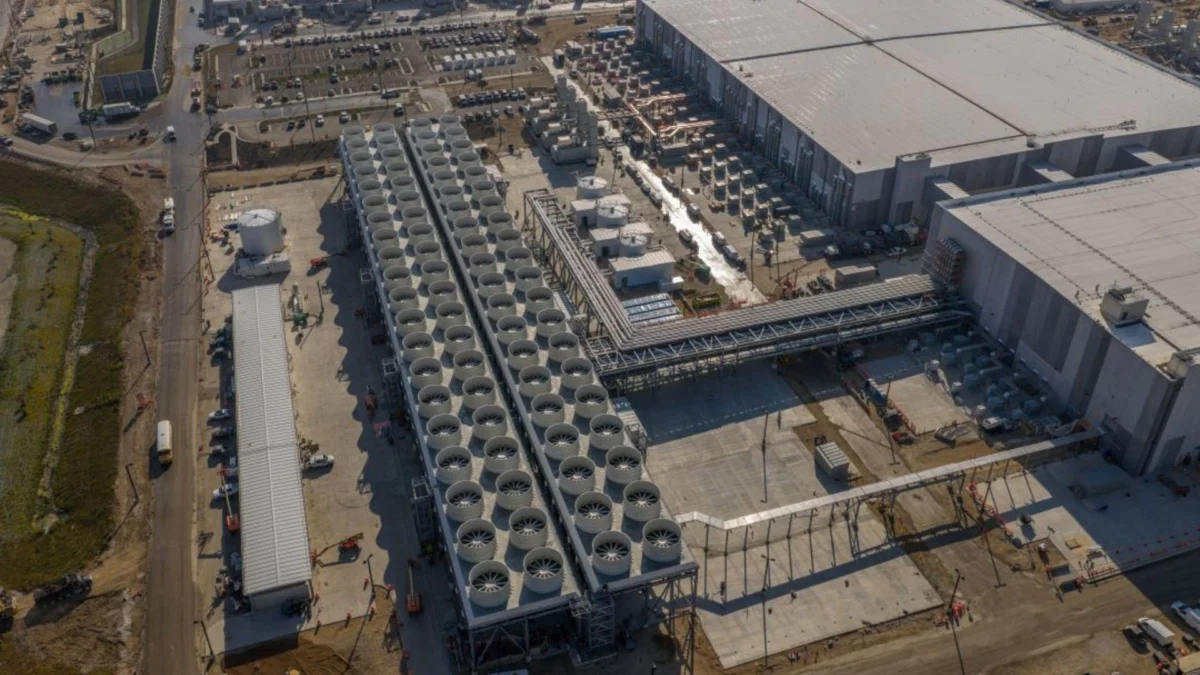
Yandex Cloud, the infrastructure arm of Russia’s premier technology conglomerate often referred to as the country’s equivalent to Google, has issued a comprehensive status update regarding the severe infrastructural blows inflicted upon its enterprise data centers by recent drone strikes. While the firm has publicly emphasized its resilience and recovery efforts, the fine print of its latest corporate disclosures reveals an unsettling reality for affected clients: a small fraction of customer data has been permanently destroyed and is beyond recovery due to catastrophic physical damage sustained by enterprise hardware.
The disclosure marks a critical turning point in the intersection of geopolitical conflict and modern digital infrastructure. As physical attacks increasingly target critical IT architecture, major cloud providers find themselves confronting unprecedented vulnerabilities. For Yandex Cloud, which underpins a vast ecosystem of Russian digital services, e-commerce platforms, and government-linked operations, the incident serves as a stark reminder of the physical risks facing centralized data repositories in times of war.
The Scope of the Recovery and the Admission of Permanent Loss
In an official blog post published by the Yandex Cloud division, the company sought to reassure its user base by highlighting the scale of its restoration efforts. According to the translated corporate statement, technical teams successfully "restored access to more than 97% of customer data." On the surface, regaining access to the vast majority of stored files, databases, and application states within a short window appears to be a notable engineering achievement, particularly given the chaotic and volatile circumstances surrounding the facilities.
However, a closer examination of the metrics reveals a more concerning picture. Buried within the technical disclosures is the explicit admission that the remaining 2.84 percent of customer data cannot be recovered. Yandex attributed this permanent loss to "critical damage to equipment," indicating that the physical force of the drone strikes obliterated not just server enclosures and power distribution units, but the underlying magnetic and solid-state storage media itself.
For enterprise clients operating in sectors where every single byte of transactional, financial, or operational data is critical, a 2.84 percent data loss rate translates into substantial operational disruption. While large for enterprise standards, the absolute volume of lost data across thousands of independent corporate tenants remains opaque, as Yandex has not yet released a granular breakdown of which specific industries or clients bore the brunt of the permanent destruction.
Chronology of the Attacks: A Two-Day Escalation
The data loss events were not the result of a single isolated incident, but rather part of a coordinated and rapidly escalating campaign targeting Russia’s digital infrastructure backbone. According to Russian state media and industry reports, the devastation unfolded across a concise timeline that caught cloud operators off guard.
The crisis began when a primary Russian data center facility came under fire from Ukrainian drones, triggering immediate cascading failures across localized cloud nodes. Before engineering teams could fully assess the damage, isolate compromised zones, and implement failover protocols, a second major data center facility was struck just two days later.
The compounding nature of these successive strikes severely hampered disaster recovery operations. Modern cloud infrastructure relies heavily on geographic redundancy—replicating data across multiple physical locations to ensure seamless failover if one site goes offline. However, when multiple primary and secondary facilities within the same operational region are targeted and crippled in rapid succession, the foundational assumptions of high-availability architecture are severely tested.
Russian state media and technical monitors confirmed that the dual strikes resulted in multiple server modules being "completely taken out." The intense kinetic impact and subsequent fires overwhelmed local fire suppression and electrical redundancy systems, rendering entire server halls inoperable and cutting off power to SAN (Storage Area Network) arrays before synchronization protocols could finish replicating data to safer, uncompromised regions.
Technical Anatomy of Cloud Vulnerability
The incidents involving Yandex Cloud underscore a harsh reality for the modern cloud computing paradigm: physical security is inextricably linked to data integrity. While cloud providers routinely market their services as abstract, ethereal entities existing safely "in the cloud," every byte of data ultimately rests on physical silicon, spinning platters, and copper wiring housed within concrete-and-steel warehouses.
When a facility suffers a direct kinetic hit from an explosive payload, the resulting damage extends far beyond simple power outages or severed fiber-optic lines. The blast radius typically induces severe shockwaves, thermal spikes, and catastrophic electrical surges that fry motherboard components, corrupt RAID controllers, and shatter delicate read/write heads inside hard disk drives.
Furthermore, the loss of active cooling systems during a kinetic attack can cause rapid thermal degradation of server hardware. Even if storage media survives the initial kinetic impact, subsequent fires or smoke damage often introduce corrosive particulates that permanently compromise electronic contacts. In the case of Yandex, the combination of structural collapse and equipment incinerations created scenarios where traditional data carving and forensic recovery techniques proved entirely ineffective.
Industry Implications and the Broader Geopolitical Context
The vulnerability of Russian digital infrastructure to aerial attacks introduces profound implications for both the regional tech sector and the global cloud industry. As asymmetric warfare increasingly incorporates cyber and kinetic attacks against civilian and dual-use infrastructure, data centers have emerged as high-value strategic targets.
For Yandex, the incident represents a severe reputational and operational challenge. Often hailed as a technological titan capable of rivaling Western internet giants within the Russian domestic market, the company relies heavily on corporate trust to maintain its enterprise cloud market share. Enterprise customers migrating to Yandex Cloud do so under the assumption that their data is insulated from physical threats through robust redundancy and geographic dispersion. The admission of permanent data loss may force domestic enterprises to re-evaluate their risk management strategies, prompting a shift toward hybrid architectures, multi-cloud redundancy, or localized on-premises storage solutions.
Moreover, the strikes highlight the broader isolation of the Russian technology ecosystem. Due to international sanctions and export controls stemming from the ongoing conflict in Ukraine, Russian firms like Yandex face severe difficulties in procuring advanced enterprise hardware, high-end server components, and specialized data center infrastructure from Western manufacturers. Replacing destroyed server modules, enterprise-grade storage arrays, and high-capacity processors is significantly more complex and costly under sanctions, potentially slowing down the total rehabilitation of the damaged facilities.
Official Responses and Future Outlook
Official communications from Yandex Cloud have attempted to balance transparency regarding the technical recovery limitations with reassurance regarding future system stability. The company’s engineering teams have reportedly been working around the clock to re-architect surviving network segments, reinforce physical security parameters at remaining operational sites, and evaluate contingency protocols to prevent future cascading failures.
However, industry analysts note that technical fixes alone cannot eliminate the existential risks posed by active armed conflict. Unless facilities are moved deeper into secure interior regions or heavily fortified against aerial threats, cloud infrastructure within range of long-range drones remains inherently precarious.
As the conflict continues, the digital landscape is witnessing an unprecedented convergence of traditional warfare and information-era infrastructure. The Yandex Cloud incident will likely be studied by military strategists and cybersecurity experts alike as a defining case study in the physical fragility of centralized digital repositories. For Yandex and its enterprise customers, the road to full recovery involves not just restoring the 97 percent of data that survived, but fundamentally redefining what resilience means in an era where data centers are on the frontline of war.