








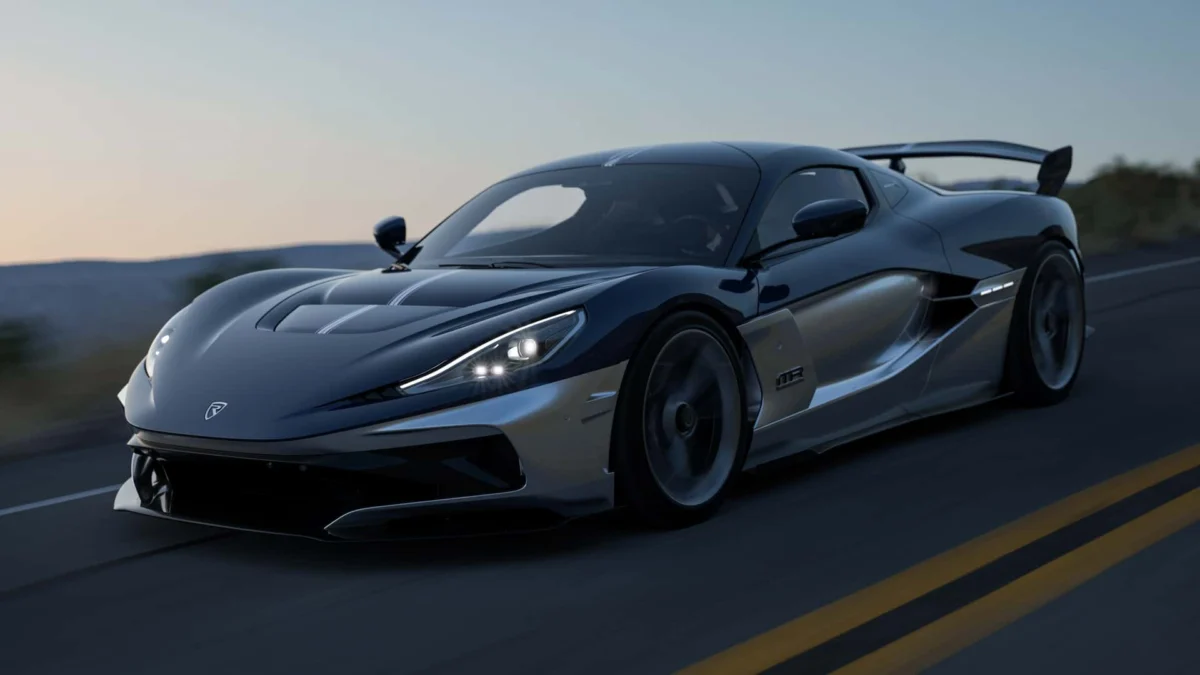
The era of the Rimac Nevera is drawing to a quiet but definitive close. Mate Rimac, the visionary founder and CEO of the Croatian automotive powerhouse, recently confirmed via social media that the company is finalizing the production of the final ten units of the Nevera R. This milestone marks the end of a transformative chapter for the brand, which ascended from a niche electric vehicle (EV) startup to a central pillar of the modern hypercar industry. With the remaining vehicles slated for customer delivery by the conclusion of 2024, Rimac Automobili will cease manufacturing the model that effectively put the company on the global automotive map.
A Chronology of Innovation
The journey of the Nevera began long before it reached public roads. It was first introduced to the world at the 2018 Geneva International Motor Show as the Rimac C_Two, a concept vehicle that promised to rewrite the rules of performance. At the time, the industry was skeptical of the feasibility of a high-performance, battery-electric powertrain capable of challenging established internal combustion giants. However, the subsequent years of rigorous testing, engineering refinement, and software development saw the concept evolve into the production-ready Nevera.
By 2021, the production version was unveiled, bringing with it a suite of performance metrics that seemed plucked from science fiction. The car officially entered the hands of its first customers in 2022, with the inaugural production model delivered to none other than former Formula 1 World Champion Nico Rosberg. Over the past three years, the Nevera has served as a technological showcase, proving that electric propulsion could offer not just superior straight-line speed, but the precise handling and character required of a world-class grand tourer.
Production Statistics and Market Reach
According to the latest figures shared by the Rimac leadership, the company will have produced a total of 71 Nevera hypercars since the start of production. This total comprises 51 standard Nevera models and 20 examples of the high-performance Nevera R, a variant that pushed the envelope of the platform’s capabilities even further.
While the original business plan in 2018 anticipated a total production run of 150 vehicles, the company has decided to sunset the project earlier than initially projected. This shift is not necessarily an indication of waning demand, but rather a strategic realignment. In the hypercar segment, scarcity is often a deliberate component of brand prestige. By capping the production at 71 units, Rimac has ensured that each car remains a collector’s item, potentially bolstering their long-term residual value. Mate Rimac, reflecting on the achievement, noted that the model achieved its primary goal: establishing the brand’s technical legitimacy.
Engineering Mastery: The Nevera and Nevera R
The technical specifications of the Nevera remain, even by today’s standards, staggering. The standard Nevera features a quad-motor setup delivering 1,914 horsepower, enabling a 0-60 mph sprint in 1.85 seconds and a top speed of 258 mph. Its ability to complete the standing quarter-mile in 9.1 seconds redefined the industry benchmark for electrified acceleration.
The Nevera R, released as the final, more aggressive iteration of the platform, further intensified these figures. With its output increased to 2,107 horsepower, it shaved the 0-60 mph time down to 1.74 seconds and improved the quarter-mile time to a blistering 8.23 seconds. These vehicles were not merely tests of speed; they were platforms for Rimac’s proprietary battery management systems, torque vectoring, and thermal management technology. The data gathered from these 71 vehicles has provided the foundational knowledge for every project the Rimac Group currently has under development.

The Evolution of the Rimac Group
The conclusion of the Nevera production line represents a shift in the corporate architecture of the Rimac Group. The organization has matured into a multifaceted entity, branching out into technology supply and joint ventures. Rimac Technology, a dedicated division within the group, has become a key supplier of high-performance EV components for major automotive OEMs, effectively turning the company’s R&D prowess into a sustainable revenue stream.
Perhaps the most significant development in the company’s history was the 2021 formation of Bugatti Rimac, a joint venture that fused the storied history of the French marque with the cutting-edge electric expertise of the Croatian team. This collaboration has already borne fruit with the introduction of the Bugatti Tourbillon, a hybrid hypercar that pairs a massive, naturally aspirated 8.3-liter V16 engine with three electric motors to produce 1,800 horsepower. The lessons learned during the Nevera’s development were instrumental in the engineering of the Tourbillon’s complex electrical architecture.
Diversification into Autonomous Transport
While hypercars remain the company’s spiritual core, the Rimac Group is simultaneously looking toward the future of urban mobility. Through its subsidiary, Verne, the company is developing a fleet of autonomous robotaxis. This move mirrors trends seen in Silicon Valley, such as the development of the Tesla Cybercab, but with a focus on European urban environments. The Verne project, which began operations earlier this year, represents a significant pivot for the group, moving from the niche world of high-end performance to the high-volume world of mobility-as-a-service.
The Legacy of the Nevera
The Nevera’s place in history is already secure. It proved that the transition to electrification did not necessitate a compromise in the emotional experience of driving. For owners, the car represents the dawn of the electric hypercar era—a vehicle that challenged the dominance of the combustion engine while simultaneously pushing the boundaries of what is physically possible on a racetrack.
In his public comments regarding the end of production, Mate Rimac was candid about the broader significance of the vehicle. "Without that, there wouldn’t be the Tourbillon today; there wouldn’t be this factory," he stated. This acknowledgement underscores the role of the Nevera as an incubator for the entire organization. It allowed Rimac to scale its infrastructure, attract top-tier engineering talent, and earn the trust of investors and industry partners alike.
Strategic Implications and Future Outlook
The decision to end production at 71 units is also a testament to the agility of the Rimac business model. Unlike traditional manufacturers tied to massive, multi-year production cycles for a single model, Rimac has demonstrated an ability to iterate rapidly and transition between projects. By limiting the Nevera run, the company frees up manufacturing capacity and engineering resources to focus on the next generation of hypercars and the expansion of its technology division.
As the final ten Nevera Rs leave the assembly line in Croatia, the automotive world is left to observe where the Rimac Group goes next. The company is currently managing a complex portfolio that spans luxury hybrid hypercars (Bugatti), advanced EV component manufacturing, and the development of autonomous transport solutions. The Nevera was the vehicle that established the company’s reputation for excellence; the projects that follow will determine whether the company can maintain that momentum in an increasingly crowded and competitive electrified landscape.
For those who own a Nevera, the finalization of the production run is a point of distinction. They possess one of the limited series that proved the viability of an entire movement. For the automotive industry at large, the Nevera serves as a permanent marker of the point at which electric vehicles transitioned from experimental prototypes to the absolute pinnacle of automotive engineering. As Rimac moves forward, the legacy of the Nevera will likely be felt in every high-performance EV that hits the road over the coming decade.