








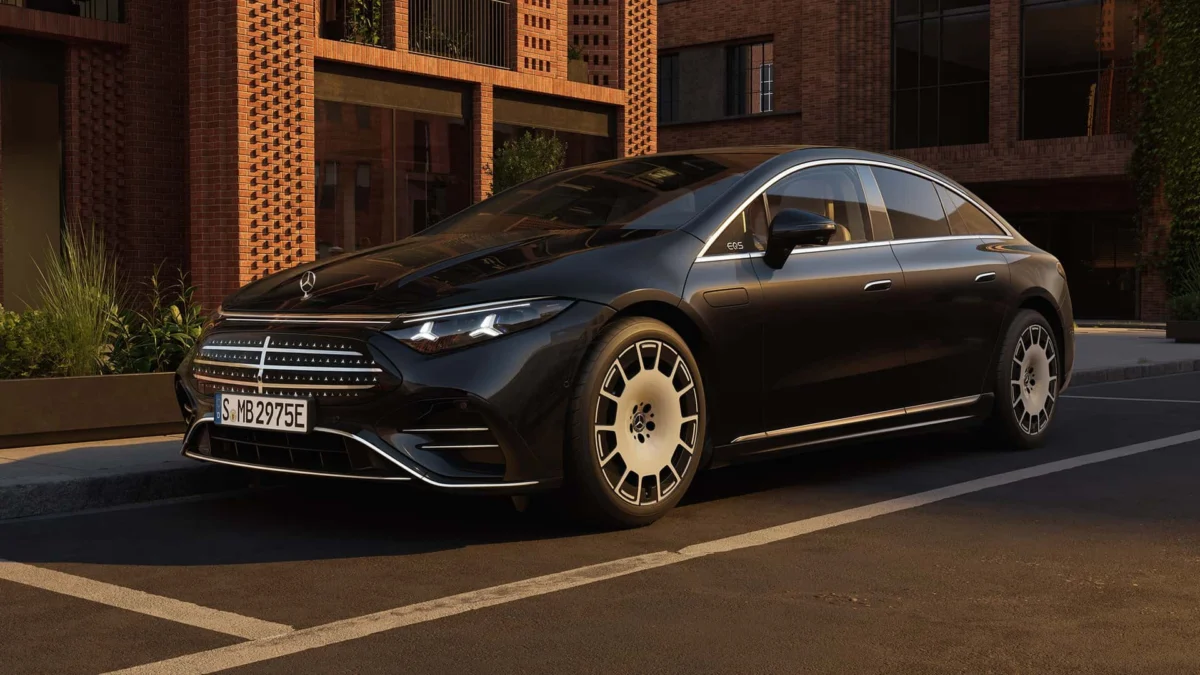
The landscape of electric mobility reached a significant milestone this month as the 2027 Mercedes-Benz EQS 450+ sedan successfully completed a real-world range test conducted by Edmunds, clocking an impressive 539 miles on a single charge. This achievement not only eclipses the vehicle’s official EPA rating of 467 miles by a margin of 72 miles but also establishes a new benchmark for production electric sedans. By surpassing the previous record held by the Lucid Air Dream Edition by 34 miles, the EQS 450+ serves as a definitive signal that the era of severe range anxiety—once the primary psychological barrier to EV adoption—is effectively nearing its conclusion.
Technical Evolution and Engineering Upgrades
The performance of the 2027 model is the result of a deliberate, multi-faceted engineering overhaul by Mercedes-Benz. The transition to the 2027 model year saw the implementation of a more energy-dense 122-kilowatt-hour battery, a notable increase from the 118 kWh capacity found in its immediate predecessor. Beyond mere battery size, the drivetrain received a critical upgrade: the integration of a two-speed transmission for the rear motor, which optimizes torque delivery and efficiency across varying speed ranges.
Furthermore, the vehicle’s architecture has been migrated to a sophisticated 800-volt electrical platform. This high-voltage system is instrumental not only in reducing thermal stress during high-speed cruising but also in facilitating rapid energy transfer. The combination of these improvements allows the vehicle to operate with greater efficiency, effectively squeezing more distance out of every kilowatt-hour. This technical progression highlights the shift from simply "stuffing" larger batteries into vehicles toward a more holistic approach that balances energy density, motor efficiency, and power management.
Chronology of Range Testing
To understand the significance of this 539-mile result, it is necessary to examine how testing methodologies have evolved alongside the vehicles themselves. Edmunds utilizes a rigorous testing route that maintains a 60/40 split between city and highway driving. This methodology provides a distinct counterpoint to the EPA’s standardized testing, which historically relies on a 55/45 city-to-highway ratio.
The trajectory of EV range capability has been rapid. Ten years ago, the Tesla Model S was largely solitary in its ability to offer a range approaching the 300-mile mark. Throughout the subsequent decade, the industry saw a gradual creep in these figures, but the last 24 months have seen a surge in performance. The inclusion of the EQS 450+ into the "500-mile club" is part of a growing trend where top-tier luxury manufacturers are prioritizing long-distance travel capabilities. While the Cadillac Escalade IQ remains the overall leader in Edmunds’ specific testing, having covered 558 miles, the fact that a luxury sedan is now competing directly with heavy-duty SUVs in pure distance capabilities underscores the massive strides in aerodynamic efficiency and battery chemistry.
Charging Infrastructure and Efficiency
A critical component of the EQS 450+’s success is its performance at the charging station. A long range is of limited utility if the time required to replenish that energy is prohibitive. The 800-volt architecture allows the EQS to utilize high-powered DC fast-charging stations more effectively, minimizing the "miles-per-hour" charging metric.
In recent evaluations, the EQS 450+ demonstrated the ability to recover 100 miles of range in just 7 minutes. This performance metric places it in the top tier of all EVs currently on the market, trailing only the specialized charging curves of the Hyundai Ioniq 6 and the recently introduced Mercedes-Benz CLA 250+. The latter model shares much of the underlying DNA of the EQS, including the two-speed transmission and 800-volt infrastructure, signaling that Mercedes-Benz intends to cascade these performance benefits down to their entry-level and mid-range electric offerings.
Market Context and Economic Implications
While the 539-mile test result is a technical triumph, it is vital to contextualize the vehicle’s market position. The test unit was equipped with options that pushed its retail price toward the $122,000 threshold. For the average consumer, this price point remains prohibitive. However, industry analysts note that the "trickle-down" effect in automotive technology is inevitable.
The primary implication of this test is not necessarily that every driver needs 500 miles of range, but rather that the engineering hurdles preventing such distances have been removed. The industry is reaching a point of "range sufficiency." Data from Edmunds indicates that more than 90 different models currently available on the market have exceeded the 300-mile threshold in real-world testing. This figure represents a shift from a "luxury-only" feature to a standard expectation for mid-market vehicles, such as the Chevrolet Equinox EV and the Kia EV3. As these technologies scale, the cost of high-density battery packs and efficient power electronics is expected to decrease, further closing the price gap between internal combustion engine (ICE) vehicles and their electric counterparts.
Broader Industry Impact
The broader shift in the automotive market is moving toward normalizing the EV ownership experience. Obstacles such as charging infrastructure reliability and the initial purchase price remain central to public discourse. However, the "range anxiety" argument, which dominated EV discussions for the better part of a decade, is losing its factual basis.
Manufacturers are now focusing on the "second wave" of EV development. Where the first wave was about proving the viability of electric propulsion, the current wave is focused on convenience and user experience. The 2027 Mercedes-Benz EQS 450+ represents the pinnacle of this focus, where the car does not merely attempt to mimic the convenience of a gasoline vehicle but aims to offer an experience that is demonstrably better in terms of refueling efficiency and total trip capability.
Analysis of Future Trends
Looking ahead, the industry is poised to move beyond the race for raw range numbers. As vehicles consistently surpass the 400-mile mark, engineers are likely to shift their focus toward weight reduction and faster charging speeds rather than simply increasing battery size. The weight of large battery packs has been a persistent criticism of long-range EVs, affecting handling and tire wear. Future iterations of the Mercedes-Benz EQS and its competitors will likely leverage advancements in solid-state batteries or high-silicon anode chemistry to achieve current performance levels with lighter, smaller, and more sustainable power units.
Furthermore, the integration of smart energy management systems—which account for traffic, weather, and topographical data—will likely continue to play a larger role in helping drivers maximize the utility of their range. The 2027 EQS is not an outlier, but rather a leading indicator of where the mainstream market will be in five years.
Conclusion
The performance of the 2027 Mercedes-Benz EQS 450+ serves as a technical milestone that provides a clearer picture of the future of electric transport. By combining a 122-kWh battery, an 800-volt architecture, and a two-speed transmission, the vehicle has effectively dismantled the argument that EVs are inherently limited by their range. While the high cost of the vehicle ensures it remains a luxury item for the time being, the underlying technology is rapidly becoming accessible to a wider demographic. As infrastructure continues to expand and the cost of entry continues to fall, the legacy of the 539-mile test will likely be viewed as the moment when the last significant barrier to mass EV adoption began to collapse. The data confirms that for the modern consumer, the question is no longer "how far can I go?" but rather "how fast can I continue my journey?"—a question that the automotive industry is now answering with unprecedented efficiency.