







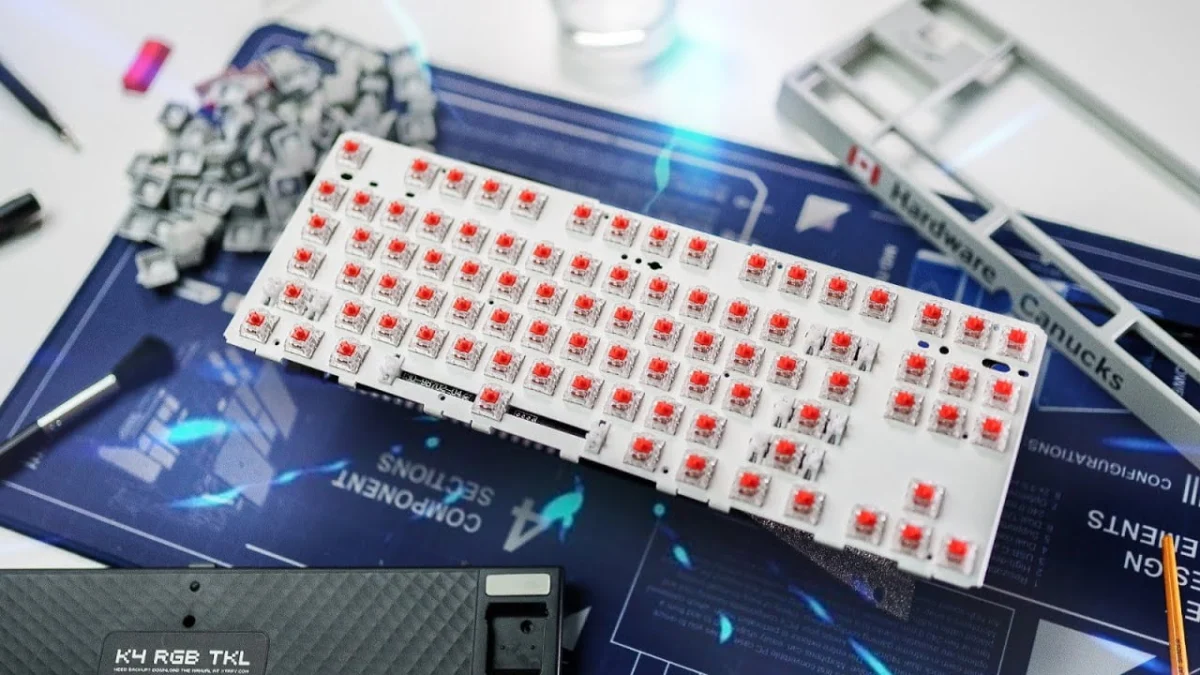
The maintenance of high-performance peripheral hardware has become an increasingly critical aspect of modern computing ergonomics, particularly as mechanical keyboards command significant financial investments from enthusiasts and professionals alike. A prime case study in long-term peripheral preservation involves the XTRFY K40 TKL RGB Hardware Canucks Edition, a tenkeyless mechanical gaming keyboard that has served as a daily driver since its market debut in 2019. After two years of continuous operational deployment without a comprehensive maintenance cycle, peripheral diagnostics reveal a predictable accumulation of organic particulates, atmospheric dust, and localized grease. While commercial cleaning kits are widely distributed across online marketplaces such as Amazon, a systematic approach utilizing common household tools often yields superior results while mitigating the risk of hardware degradation. This report examines the step-by-step restoration process for a heavily utilized mechanical keyboard, offering technical insights into structural disassembly, particulate extraction, chemical solvent application, and component reassembly.
Background Context and Peripheral Evolution
Mechanical keyboards have experienced a profound renaissance over the past decade, shifting from utilitarian office peripherals to highly customized, premium inputs valued for their tactile feedback, acoustic profiles, and aesthetic versatility. Models such as the XTRFY K4 series incorporate sophisticated design elements, including integrated dampening foam to optimize acoustic resonance, specialized stabilizers for long-form keys, and durable chassis architecture.
However, the very design features that make mechanical keyboards superior—tight tolerances, mechanical switches, and recessed keycap arrays—also create micro-environments ideal for the entrapment of debris. Dust, dead skin cells, airborne fibers, and natural finger oils inevitably migrate past the keycap perimeters. Over extended periods, this organic matter amalgamates with factory-applied lubricant on the mechanical stabilizers, creating a viscous, highly adhesive grime that can impede switch travel, alter acoustics, and present aesthetic concerns, particularly on contrasting white base plates. Technical analysts and ergonomics experts increasingly emphasize routine maintenance not merely for aesthetic preservation, but to ensure optimal switch actuation longevity and hygienic operation.
Chronology of the Restoration Process
Restoring a heavily soiled mechanical keyboard requires a methodical, phased approach to prevent structural damage to the printed circuit board (PCB), switches, and keycaps. The restoration procedure executed on the XTRFY K40 TKL followed a strict operational chronology spanning approximately three hours, excluding drying time.
Initial Dry Extraction and Preparation
The maintenance protocol commenced with preliminary dry particulate removal. The keyboard was inverted and gently agitated to dislodge loose debris, hair strands, and particulate matter trapped within the switch housing matrix. Following this initial phase, the peripheral underwent structural triage. Unlike floating-key designs where keycaps are suspended above an exposed mounting plate, the XTRFY K40 features a partial frame architecture. To gain unhindered access to the perimeter switch zones, technicians removed the peripheral’s top metal plate. This critical step bypassed the traditional constraints of non-floating designs, allowing unimpeded access to the edges of the chassis. Prior to keycap extraction, visual mapping was performed by referencing a high-resolution digital layout of the keyboard on a dedicated monitor, mitigating the risk of incorrect keycap reinstallation.
Keycap Extraction and Chemical Immersion
With the top plate detached, a specialized wire keycap puller was deployed to systematically remove all keycaps. Special care was applied to stabilized keys—such as the spacebar, left shift, and return keys—by exerting balanced, alternating pressure to prevent damage to the delicate stem inserts and wire stabilizers. The extracted keycaps were subsequently subjected to a one-hour immersion in a tepid soapy water bath. This aqueous surfactant solution served to dissolve surface grease, finger oils, and localized particulate accumulation near the keycap stems. Throughout the soaking process, the water was replaced multiple times to prevent suspended particulate redeposition, followed by manual drying on lint-free kitchen textiles.
Chassis Disassembly and Mechanical Scrubbing
Concurrently, the keyboard chassis underwent deep internal cleaning. Fastener removal allowed the detachment of the primary top plate, exposing the internal acoustic dampening foam and the underlying PCB assembly. Initial dry sweeping of the switch plate utilized firm-bristled artist paintbrushes to displace coarse particulate matter. Industry specialists note that debris concentration is rarely uniform; macroscopic analysis revealed that hair and heavy particulate accumulation was heavily localized around high-traffic mechanical inputs, specifically the spacebar, left shift key, and enter key.
To combat sticky, viscous grime around the lubricated stabilizers, technicians transitioned from dry brushes to precision cotton swabs saturated in a controlled 50/50 solution of isopropyl alcohol and distilled water. Pure water proved insufficient in breaking down the polymerized grease matrices, necessitating the solvent properties of alcohol. Rigorous mechanical agitation was required to lift stubborn adhesive residue from the white base plate. Technicians exercised caution to avoid excessive liquid deployment, ensuring that no moisture migrated past the switch housings to compromise the underlying PCB. Furthermore, care was maintained to preserve an adequate threshold of factory lubricant on the mechanical stabilizers, preventing acoustic degradation and excessive friction upon reassembly.
Supporting Data and Technical Specifications
Understanding the material composition of mechanical peripherals is vital for executing safe maintenance protocols. Keycap manufacturing typically relies on two primary thermoplastic polymers: Acrylonitrile Butadiene Styrene (ABS) and Polybutylene Terephthalate (PBT).
| Component | Material Composition | Cleaning Sensitivity | Recommended Solvent |
|---|---|---|---|
| Keycaps (ABS/PBT) | Thermoplastic Polymer | Moderate to High (ABS vulnerable to high-concentration alcohol) | Tepid soapy water; mild isopropyl wipe |
| Chassis / Top Plate | Anodized Aluminum / Painted Steel | Low | 50/50 Isopropyl Alcohol and Water |
| Switch Housings / PCB | Polycarbonate, Copper, Silicon | Extreme (High risk of liquid ingress failure) | Dry brushing / Compressed air only |
| Stabilizers | Nylon / Metal Wire with PTFE/Dielectric Grease | Moderate (Grease depletion risk) | Cotton swab spot-cleaning |
Technical data compiled from hardware maintenance laboratories indicates that while isopropyl alcohol is exceptionally effective at dissolving organic grime, concentrations exceeding 90% applied directly to ABS plastic keycaps over extended durations can induce surface micro-fissures and accelerate wear of printed legends. Consequently, controlled application via damp swabs is heavily favored over total immersion in alcohol solutions. Similarly, the introduction of liquids directly onto switch stems risks short-circuiting the PCB diodes or contaminating the internal leaf spring contacts, potentially leading to switch chattering or complete electrical failure.
Official Responses and Industry Standards
Major mechanical keyboard manufacturers, including Cherry, Keychron, and XTRFY’s parent company, Fnatic, generally outline conservative maintenance guidelines in their official product documentation. Industry representatives frequently emphasize preventative care over aggressive chemical restoration.
"While mechanical keyboards are engineered for durability, enduring millions of actuations, the introduction of foreign particulate matter and chemical solvents outside manufacturer specifications can invalidate warranty coverage," notes a leading hardware support engineer specializing in input devices. "Routine maintenance should ideally rely on compressed gas and dry microfiber micro-interventions every three to six months. Deep chemical restorations should be reserved for severe contamination events and executed with strict adherence to moisture-mitigation protocols."
Furthermore, ergonomic consultants point out that unmaintained keyboards can harbor significant bacterial loads, transforming high-touch peripherals into vectors for microbial transfer within shared office and gaming environments. Regular sanitization of keycap surfaces via mild disinfecting agents is increasingly recommended by workplace wellness coordinators.
Broader Impact and Implications
The meticulous restoration of high-end mechanical keyboards reflects a broader cultural and economic shift toward hardware longevity and the "Right to Repair" movement. In an era dominated by disposable consumer electronics and planned obsolescence, the ability to service, clean, and revitalize mechanical input devices underscores the enduring value of modular hardware architecture.
Economically, high-end mechanical keyboards often represent investments ranging from $100 to upwards of $300. Routine user-executed maintenance extends the operational lifecycle of these peripherals, deferring replacement costs and reducing electronic waste generation. Environmentally, every keyboard successfully restored through simple cleaning rather than discarded represents a reduction in non-biodegradable polymer and electronic component waste entering municipal landfills.
Moreover, the psychological and tactile benefits of a thoroughly cleaned keyboard are substantial. Users frequently report a marked improvement in acoustic consistency, smoother switch actuation travel, and enhanced tactile feedback following the removal of particulate obstruction and degraded lubricant. As the enthusiast community continues to grow, technical literacy regarding peripheral maintenance is transitioning from a niche hobbyist skill to a mainstream competency among digital professionals.
Conclusion and Future Outlook
The comprehensive restoration of the XTRFY K40 TKL RGB Hardware Canucks Edition demonstrates that severe particulate accumulation and sticky organic grime can be successfully remediated through methodical disassembly, targeted solvent application, and careful reassembly. By employing a structured protocol—utilizing dry particulate extraction, controlled aqueous surfactant washing for keycaps, and localized isopropyl alcohol scrubbing for chassis components—users can restore aged hardware to near-factory condition.
As peripheral design continues to evolve, manufacturers are encouraged to adopt modular assembly practices, such as removable top plates and hot-swappable switch sockets, which significantly lower the barrier to entry for comprehensive hardware maintenance. Ultimately, responsible peripheral ownership requires balancing aesthetic and functional restoration with stringent safety measures to protect sensitive electronic components, ensuring both longevity and optimal performance for years to come.