




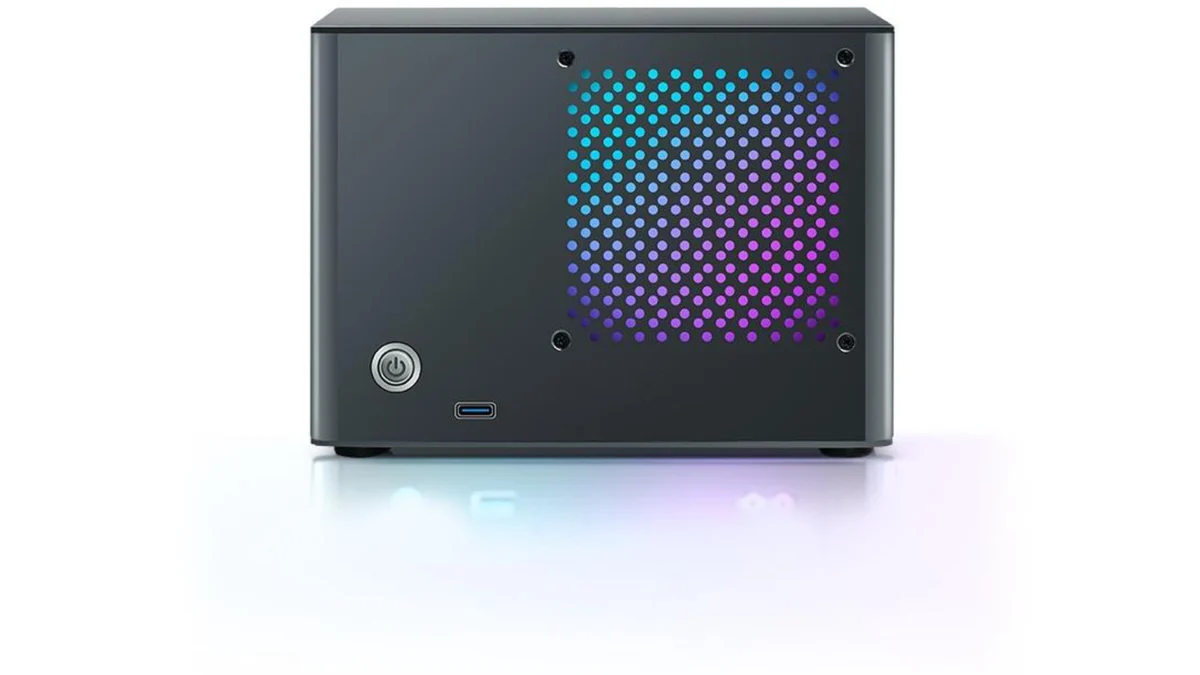
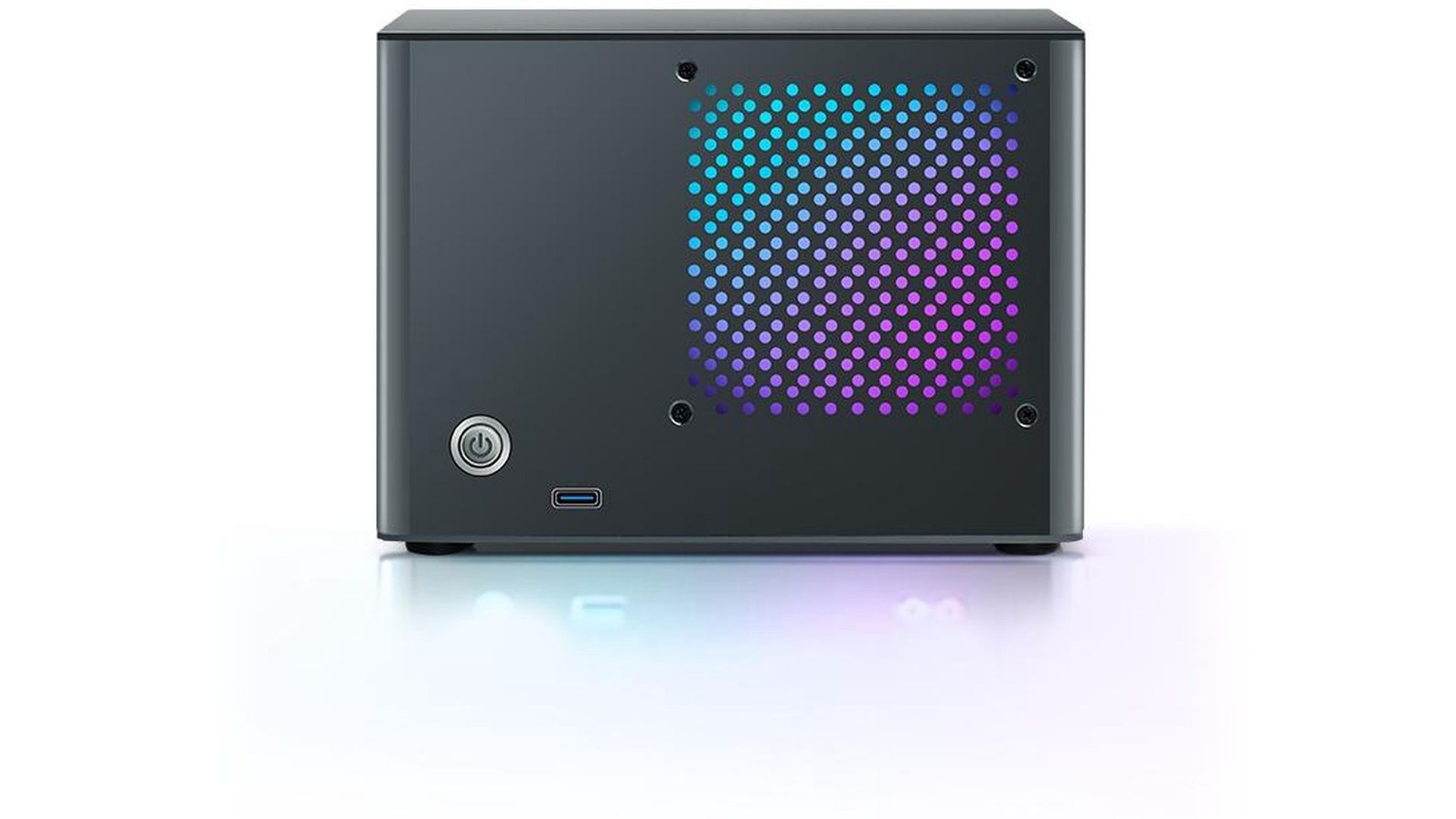
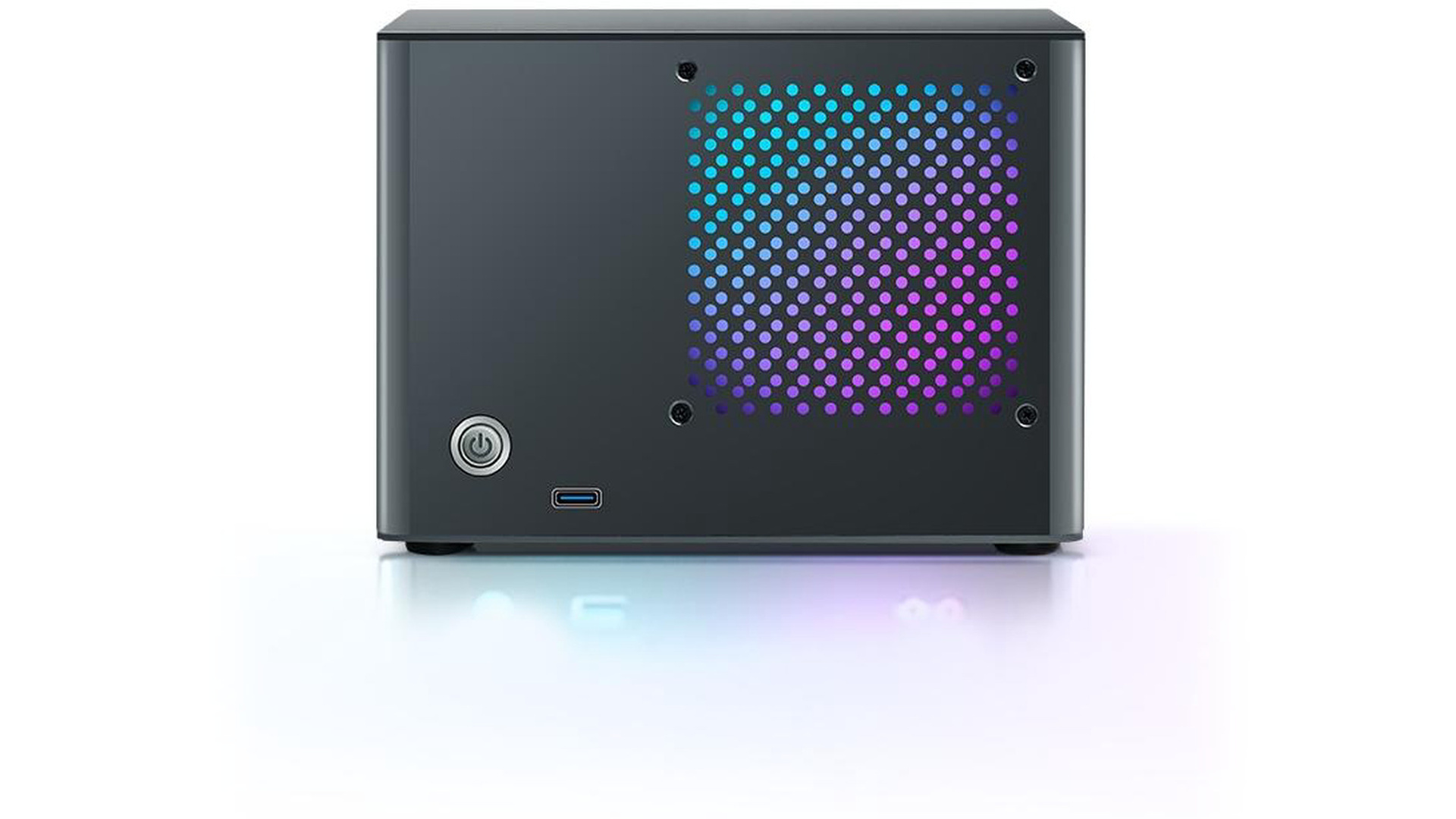
The modern landscape of artificial intelligence hardware development has long been dominated by astronomical capital expenditures, with enterprise-grade accelerators commanding luxury price tags well into the tens of thousands of dollars. However, a novel hardware offering spotted on Newegg is challenging conventional cost barriers by packaging legacy data center power into a remarkably small form factor. The newly listed Rmatamini P99S "Mini AI Workstation" integrates an Nvidia Tesla V100 data center graphics processing unit featuring 16GB of High Bandwidth Memory 2 (HBM2) into a compact 5.6-liter enclosure, retailing for a competitive $699.
This unexpected pairing of a 2017 enterprise-class accelerator with consumer-grade and mobile computing architecture highlights a
broader, ongoing shift in the hardware industry. As global demand for high-speed memory outstrips manufacturing output—driving up the cost of modern consumer graphics cards and specialized AI development boxes alike—hardware hobbyists, independent researchers, and budget-conscious developers are increasingly turning to repurposed data center silicon to power local machine learning tasks.
Anatomy of an Unconventional Mini AI Rig
At first glance, the specifications of the Rmatamini P99S read like an eclectic mix of eras and tiers. The centerpiece of the system is the Nvidia Tesla V100, an enterprise accelerator originally launched in 2017 with an initial price tag scaling up to $10,000. Despite its age, the V100 retains a formidable technical specification sheet, anchored by its implementation of HBM2 memory.
The system pairs this legacy powerhouse with an Intel Core i7-10850H processor. Released in 2020, the Core i7-10850H is a 45-watt mobile-centric laptop CPU featuring six cores, twelve threads, and support for 16 PCIe 3.0 lanes—matching the PCIe 3.0 interface native to the Tesla V100. Because the Tesla V100 is a dedicated headless data center card designed entirely for compute tasks, it lacks physical display outputs. Consequently, the workstation relies on the Intel CPU’s integrated graphics to drive user displays.
Rounding out the core hardware specifications are 16GB of DDR4 system memory, a 512GB NVMe solid-state drive, a robust 700-watt power supply unit, and a pre-installed license for Windows 11 Pro. The entire assembly is shipped directly from international manufacturing hubs with free shipping options, presenting a ready-to-deploy hardware package that bypasses the traditional complexities of sourcing, modding, and cooling loose server components.
Cost Breakdown and Market Dynamics
To understand the value proposition of the $699 Rmatamini P99S, market analysts must examine the individual valuation of its primary components. Standalone pricing for a brand-new Nvidia Tesla V100 16GB PCIe card on platforms like Amazon places the hardware near $584 through select third-party enterprise vendors, though strictly limited stock applies. Meanwhile, refurbished or open-box variations of the same enterprise graphics card can frequently be sourced for approximately $410.
Deducting the estimated value of the GPU from the overall system price reveals that the remainder of the computer—including the Intel processor, motherboard, power supply, RAM, storage, chassis, and operating system license—effectively costs between $115 and $290. In a retail climate where dedicated mini PCs with modest integrated graphics routinely command comparable baseline prices, obtaining a dedicated CUDA-capable enterprise accelerator within the bundle alters the value equation for local developers.
This pricing structure gains additional context when viewed alongside broader trends in the semiconductor supply chain. Throughout early 2026, industry reports from technology publications including TechRadar and TechSpot have repeatedly tied runaway component costs to intense global demand for advanced RAM. Manufacturers prioritizing high-bandwidth and high-capacity memory modules for enterprise data centers have triggered supply crunches in the consumer sector. For instance, pricing for 16GB Nvidia RTX 5060 Ti graphics cards experienced double-digit percentage surges over brief three-month windows, while Nvidia itself adjusted the pricing of specialized hardware such as the DGX Spark upward from $3,999 to $4,699, explicitly citing constrained memory supply chains. Against this inflationary backdrop, alternative avenues for securing high-bandwidth memory have taken on renewed significance.
Performance Metrics for Local AI Workloads
The resurgence of interest in the Tesla V100 is not merely a byproduct of low entry costs; it is fundamentally driven by memory architecture. Memory bandwidth has emerged as the single most critical bottleneck for local large language model (LLM) inference and token generation.
The Nvidia Tesla V100 boasts an impressive 900GB/s of memory bandwidth, a figure that dwarfs the 448GB/s bandwidth found on modern mid-tier consumer cards like the RTX 5060 Ti 16GB. This substantial bandwidth advantage allows older enterprise silicon to punch well above its weight class when processing conversational AI models locally.
Independent testing conducted by hardware enthusiasts and benchmark channels throughout early 2026 has validated the viability of the V100 in modern homelab environments. In evaluations highlighted by industry outlets, a modified 16GB V100 setup achieved an output of approximately 130 tokens per second when running models such as gpt-oss-20b, outperforming contemporary consumer GPUs like the AMD Radeon RX 7800 XT. Similarly, the card delivered roughly 108 tokens per second on Gemma 4 e4b. Even when power-capped at a conservative 100 watts, the card maintained a steady 95 tokens per second, with total system power consumption hovering around 170 watts at the wall.
Practical Limitations and Software Support Caveats
Despite the compelling performance-per-dollar metrics, prospective buyers of the Rmatamini P99S must navigate a series of significant technical caveats and long-term software limitations.
Chief among these is the rapidly approaching end of software support for Nvidia’s Volta architecture. Industry documentation indicates that the upcoming Nvidia R580 driver branch will serve as the final driver series to offer native support for Volta, alongside older Maxwell and Pascal architectures. Furthermore, modern software frameworks are steadily moving past the capabilities of the V100’s underlying hardware. Recent iterations of vLLM require compute capabilities higher than Volta’s native 7.0 specification, and modern CUDA development toolkits like CUDA 13 can no longer natively build code for the V100.
While community workarounds, specialized forks, and older builds of software like Ollama and llama.cpp continue to maintain functionality, the window for seamless, mainstream software integration is steadily narrowing. Additionally, Volta’s tensor cores are restricted to FP16 operations, meaning newer low-precision formats such as BF16 are entirely unsupported by the hardware.
Hardware constraints also present boundaries for practical use cases. While 16GB of VRAM is sufficient to host smaller mixture-of-experts models entirely on the card—such as Gemma 4 26B-A4B, as noted in open-source deployment kits—denser 30B-class models will fail to fit within the allocation. Given that the host system contains only 16GB of standard system RAM, there is minimal headroom to offload overflow data to the CPU without suffering severe performance degradation. For users requiring greater headroom, RmataMini PC also offers an alternative 32GB SKU, though it commands a substantial price premium, retailing for $1,500 after markdowns from a $2,000 sticker price.
Broader Industry Implications and Market Outlook
The appearance of pre-built mini workstations housing repurposed data center components underscores a growing niche within the personal computing and AI development markets. As artificial intelligence applications transition from cloud-based server farms to local edge devices, developers require accessible hardware capable of running sophisticated models without incurring recurring cloud subscription fees or massive upfront capital costs.
For developers, students, and hobbyists who lack the technical inclination to source individual server components, construct custom cooling ducts, or manually modify power delivery systems, pre-built solutions like the Rmatamini P99S offer a frictionless entry point into CUDA-based development. At $699, the system provides a functional, albeit niche, hardware bridge in an era where high-bandwidth memory remains exceptionally expensive.
At the same time, consumers must weigh immediate affordability against long-term utility. The finite software lifecycle of the Volta architecture means that hardware investments of this nature operate on borrowed time regarding official driver support and cutting-edge machine learning frameworks. Nevertheless, for those seeking dedicated local compute power on a strict budget, repurposing enterprise legends into compact desktop form factors demonstrates the enduring ingenuity of the hardware community in the face of broader macroeconomic and supply chain pressures.