







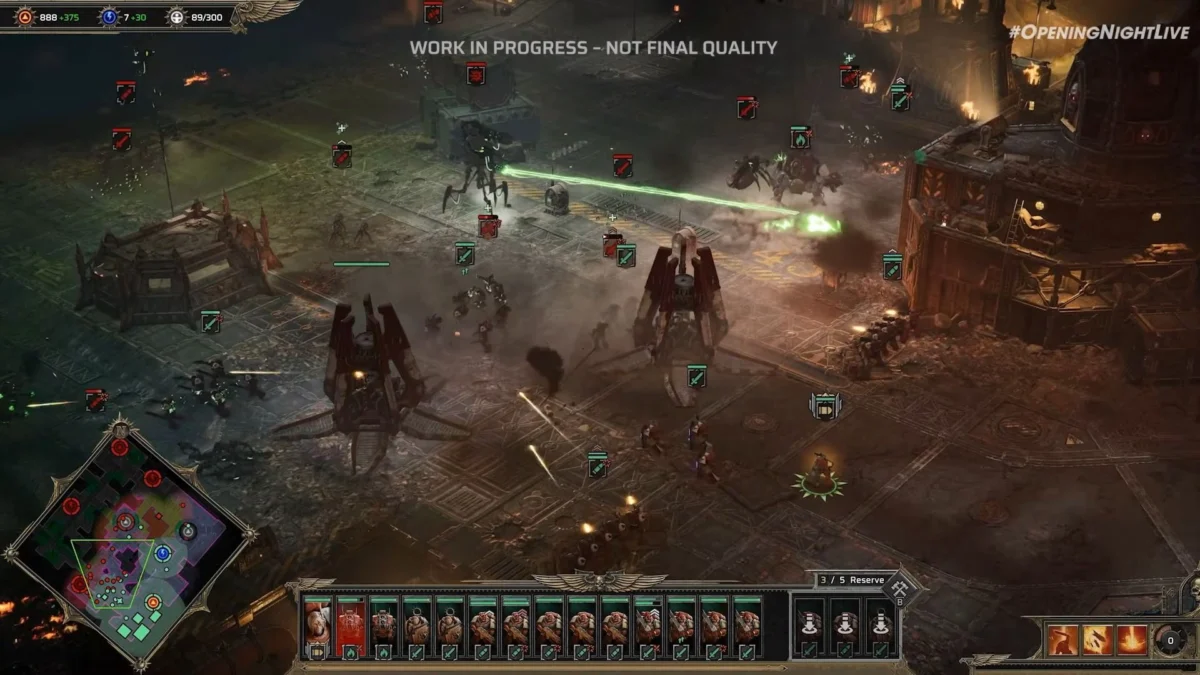
The development of a real-time strategy (RTS) title within a massive intellectual property is a monumental task, but few universes demand the meticulous balance and historical reverence required by Games Workshop’s sprawling sci-fi setting. As the gaming community eagerly anticipates the December 3 PC release of Warhammer 40,000: Dawn of War 4, developer King Art Games has opened up about the intricacies of bringing order to the chaotic battlefields of the 41st millennium. In a comprehensive discussion with industry media, Creative Director Jan Theysen detailed the formidable challenge of engineering four distinct, asymmetric playable factions—the Space Marines, Orks, Necrons, and the Adeptus Mechanicus—without eroding their defining traits, lore identities, or gameplay functionality.
The Scale and Scope of Modern Real-Time Strategy Design
When King Art Games first conceptualized the project, the scope quickly expanded beyond traditional RTS boundaries. The studio ultimately committed to constructing four massive, highly detailed faction campaigns featuring branching narratives that span an astounding 70 distinct missions. This ambitious design choice transformed what could have been a standard multiplayer-focused strategy game into a sweeping narrative experience. However, the sheer volume of content introduced a staggering logistical puzzle: balancing tens of thousands of potential unit permutations, weapon loadouts, and tactical abilities.
Theysen noted that managing this matrix of combat interactions is a "super challenging" undertaking. With four factions possessing radically different economic models, unit compositions, and operational doctrines, ensuring fair play while preserving the visceral, lore-accurate feeling of each army required a meticulously phased development process. Rather than beginning with mathematical spreadsheets and win-rate percentages, King Art Games adopted a philosophy rooted in intuitive design and faction identity.
Translating Lore Into Intuitive Gameplay Mechanics
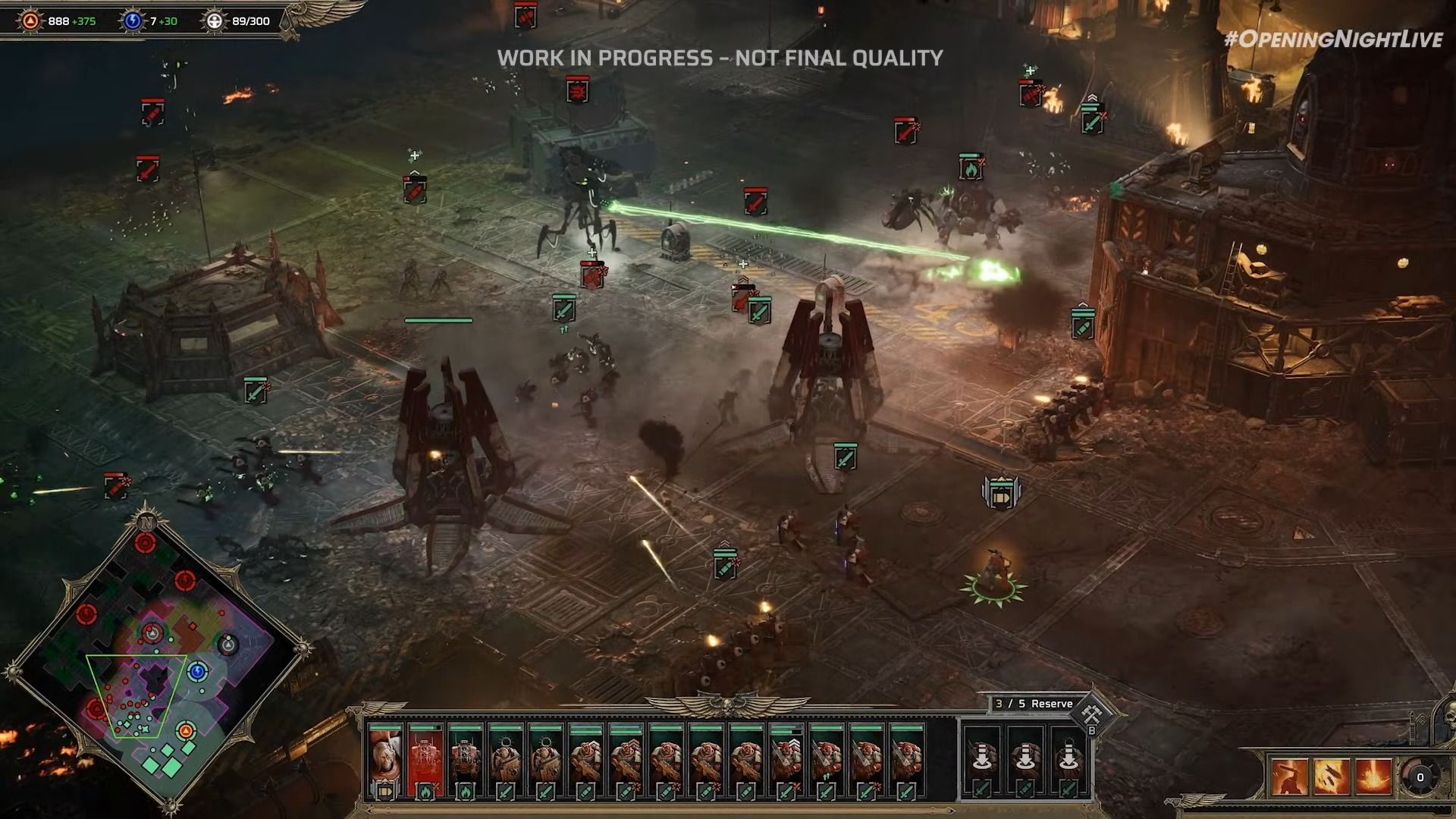
The cornerstone of King Art’s balancing strategy relies on emotional and mechanical resonance. According to Theysen, the development team prioritized establishing how each faction is "supposed to feel" to the player, ensuring that even newcomers to a specific army would naturally gravitate toward its intended playstyle without needing a deep background in Warhammer lore.
This philosophy is most evident in the contrasting mechanics of the Imperium’s Adeptus Astartes and the chaotic hordes of the Greenskins. Space Marine units are designed to be exceptionally formidable, high-cost assets that require significant resource investment and feature deep upgrade paths. Consequently, players naturally develop a protective attachment to individual squads, striving to keep them alive on the battlefield.
Conversely, Ork units are engineered to be inexpensive, numerous, and remarkably expendable. Players commanding the Orks can field massive mobs from the opening moments of a match, utilizing sheer numerical superiority to overwhelm opponents, fully aware that heavy casualties are an inevitable aspect of the Greenskin strategy. This organic psychological shift—where Space Marine commanders carefully micro-manage elite squads while Ork warlords hurl tidal waves of bodies at the enemy—emerges naturally from the underlying mathematical design rather than forced tutorials.
The Iterative Balancing Lifecycle: From AI Simulations to Community Discovery
Once the foundational identity and early-, mid-, and late-game unit progressions are established, the development cycle transitions into a rigorous testing phase. King Art Games utilizes a multi-layered approach to iron out disparities between the factions. Internal playtesting by human developers is paired with extensive automated testing, where the game’s internal artificial intelligence plays matches against itself across various maps and configurations.
This automated data harvesting provides the balancing team with robust statistical insights, highlighting win-rate anomalies, overpowered unit combinations, and map-specific advantages. Developers can then adjust numerical dials—such as health pools, damage outputs, or resource generation rates—to bring outlier factions like the Necrons into alignment. The overarching goal during this phase is to curb excessive power levels without stripping away the core identity that makes each faction unique.

However, Theysen acknowledges that internal testing is only the prologue to the true balancing trial. The moment a complex RTS title is released into the wild, the global player base inevitably discovers innovative strategies, unforeseen unit synergies, and meta exploits that developers could never fully anticipate during closed development. As a result, balancing is viewed by King Art Games as an ongoing, post-launch commitment rather than a static pre-release checklist. The studio remains prepared to deploy continuous patches and adjustments based on competitive community feedback once the game officially launches on PC this December.
Historical Context and Evolution From Previous Entries
The development of Dawn of War 4 also carries the heavy burden of legacy. The original Dawn of War, released by Relic Entertainment in 2004, remains a beloved touchstone for RTS purists, celebrated for its dynamic tactical combat, cover systems, and removal of traditional base-building chores in certain modes. However, that foundation is now more than two decades old.
To keep the franchise viable and engaging for contemporary audiences, King Art Games has thoughtfully integrated mechanics, UI design philosophies, and hero-focused gameplay elements inspired by its immediate predecessors, Dawn of War 2 and Dawn of War 3. While purists occasionally debate the merits of shifting focus away from the macro-management of the first game, the inclusion of robust hero upgrade paths and streamlined user interfaces reflects a modern design sensibility aimed at maintaining high engagement during prolonged skirmishes.
Furthermore, King Art has consciously designed battles to take longer, preventing matches from dissolving into quick, decisive snowball victories. By forcing players to carefully manage their resources and commit to strategic maneuvers over extended engagements, the game introduces a high-stakes tactical environment where a single misallocated resource pool can cost a player the entire war, echoing the grim attrition warfare characteristic of the Warhammer universe.
Broader Implications and Future Horizons for Console Strategy

Beyond the immediate technical and balancing hurdles of the PC release, King Art Games has cast its gaze toward the broader gaming landscape. While real-time strategy games have traditionally found their spiritual home on personal computers utilizing keyboard and mouse configurations, Theysen has openly discussed the technical feasibility of bringing Dawn of War 4 to home consoles.
Adapting a complex RTS with thousands of unit permutations and intricate command structures to gamepads remains one of the industry’s most daunting design challenges. Yet, advances in console hardware and UI adaptability have made developers increasingly willing to explore multi-platform strategies. While no official console release date has been confirmed, Theysen’s remarks suggest that the technical groundwork is being considered, which could eventually open the Warhammer franchise to a broader console audience.
As the December 3 launch date approaches, the success of Warhammer 40,000: Dawn of War 4 will hinge heavily on how well King Art Games has managed the delicate equilibrium between asymmetrical faction design and competitive fairness. If their rigorous testing protocols and dedication to lore-authentic unit psychology hold up under the scrutiny of the global strategy community, Dawn of War 4 could well establish a new benchmark for intellectual property adaptations within the real-time strategy genre.