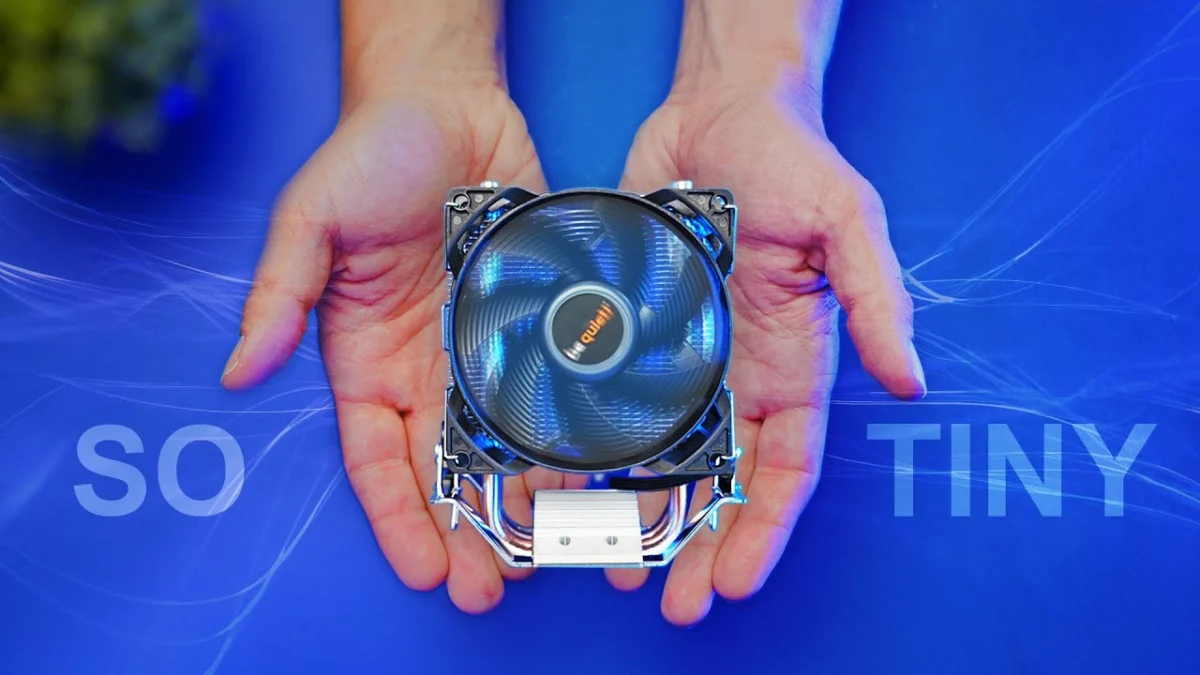
The landscape of PC component cooling has long been dominated by a spectrum of solutions, ranging from basic stock coolers to expansive air towers and sophisticated liquid cooling systems. Within this diverse market, German manufacturer be quiet! has introduced an iteration of its compact Pure Rock Slim series, the Pure Rock Slim 2, which is poised to redefine expectations for budget-friendly and space-conscious CPU cooling. Priced at an official $25, this 92mm cooler, despite its diminutive stature, has demonstrated surprising cooling prowess and remarkably quiet operation, challenging the performance of significantly larger and more expensive alternatives. Its design prioritizes broad compatibility, making it a compelling option for a wide array of system builders, particularly those navigating the constraints of small form factor (SFF) cases or adhering to strict budget limitations.
A New Standard for Compact Cooling: The Pure Rock Slim 2 Overview
The be quiet! Pure Rock Slim 2 enters a market segment often overlooked by high-performance enthusiasts but crucial for mainstream users and builders of compact systems. While the industry frequently highlights massive 120mm or 140mm tower coolers—such as the Cooler Master Hyper 212 Evo or the be quiet! Dark Rock Pro 4, known for their substantial cooling capacities—the Pure Rock Slim 2 champions an entirely different philosophy. Its 92mm fan and compact heatsink are engineered not for extreme overclocking, but for efficient, quiet cooling in scenarios where space is at a premium and a traditional AIO (All-in-One liquid cooler) or large air cooler is impractical or financially out of reach.
Measuring a mere 135mm in height, 82mm in depth, and 97mm in width, the Pure Rock Slim 2 is significantly more compact than typical tower-style heatsinks like the Noctua NH-U12S or the aforementioned Hyper 212 Evo, which can stand taller than 150mm. This size advantage is not merely aesthetic; it translates directly into enhanced compatibility, allowing the cooler to fit into chassis with restrictive height clearances, such as the popular Cooler Master NR200 SFF case, which has a maximum cooler height allowance of 155mm. This makes it an ideal choice for systems where maximizing internal airflow and avoiding obstruction of other components, such as RAM modules, are critical design considerations. The cooler’s design aligns with the natural airflow patterns within many cases, promoting better overall system thermals rather than creating internal turbulence.
Market Context: The Evolving Landscape of CPU Cooling
The CPU cooling market has seen considerable evolution over the past two decades. Early solutions often consisted of basic aluminum heatsinks with small, noisy fans. As processor power increased, so did the demand for more robust cooling. This led to the proliferation of larger air coolers featuring multiple heat pipes, dense fin arrays, and larger fans (120mm and 140mm) capable of moving more air quietly. Simultaneously, liquid cooling, initially a niche enthusiast pursuit, became more accessible with the advent of sealed AIO units, offering superior thermal performance and often a more compact footprint around the CPU socket itself, albeit with radiators and fans still requiring case space.
Despite these advancements, a significant segment of the market still relies on efficient and affordable air cooling. Stock coolers provided with CPUs have improved, but often fall short in noise reduction and sustained performance under load. This creates a clear demand for aftermarket solutions that offer a better balance of price, performance, and acoustics. Furthermore, the rising popularity of Small Form Factor (SFF) PC builds has created a specialized need for low-profile or slim tower coolers. SFF enthusiasts prioritize compact dimensions without sacrificing too much performance, and many traditional high-performance coolers simply do not fit these confined chassis. The Pure Rock Slim 2 directly addresses this growing demand, positioning itself as a strong contender in a category where options are often limited or significantly more expensive. Other notable 92mm coolers in this segment, though often at a slightly higher price point or with different design philosophies, include the Arctic Alpine series or Cooler Master’s more basic offerings, but few combine the brand recognition and acoustic optimization of be quiet! at this price.
Pricing and Availability Challenges in the Current Market
Officially priced at $25, the be quiet! Pure Rock Slim 2 represents an aggressive entry into the budget cooling segment. This price point positions it as one of the most affordable options from a major, reputable manufacturer, especially when considering its performance capabilities. To put this into perspective, many entry-level 120mm tower coolers typically start at $35-$50, while premium 92mm or 120mm coolers can easily exceed $60. The $25 MSRP aims to make quality aftermarket cooling accessible to a broader audience, providing a significant upgrade over basic stock coolers, which often generate noise and struggle under sustained loads.
However, the current retail environment for PC components presents unique challenges to consumers seeking this official price. The broader market has been affected by supply chain disruptions, increased demand, and the activities of third-party resellers. These factors have led to inflated prices for many newly released components, with some sellers purchasing inventory at retail and reselling it at a premium on platforms like Amazon and Newegg. Consequently, consumers interested in the Pure Rock Slim 2 may need to actively search various listings to find it at its intended $25 price. This situation reflects a larger trend in the PC hardware industry, where the MSRP (Manufacturer’s Suggested Retail Price) often deviates from the actual street price due to market dynamics. For a cooler designed to be budget-friendly, consistent availability at its official price is crucial for its market penetration and overall value proposition. Nevertheless, even with slight price fluctuations, its core value proposition remains strong when compared against coolers that typically start at $35-$50 or more.
Technical Deep Dive: Design and Engineering Philosophy
The be quiet! Pure Rock Slim 2’s engineering, though outwardly simple, incorporates several key technologies found in its higher-end counterparts. At its core, the cooler features a dense aluminum fin array designed to maximize surface area for heat dissipation. Heat is efficiently transferred from the CPU IHS (Integrated Heat Spreader) through a heatpipe direct touch (HDT) base. This design means the three 6mm copper heatpipes make direct contact with the CPU, bypassing a traditional copper base plate to potentially improve thermal transfer efficiency by reducing one layer of material. This method, while cost-effective, requires precise manufacturing to ensure a flat and even contact surface. The base comes with pre-applied thermal compound, a convenience for first-time builders or those seeking a quick installation, though it can be removed and replaced with preferred thermal paste if desired.
The 92mm fan is a crucial component of the Pure Rock Slim 2’s acoustic and thermal performance. It is a Pure Wings 2 model, a proprietary design by be quiet! known for its optimized airflow and low noise output. Operating at up to 2300 RPM, this might seem high compared to larger 120mm fans often found on more substantial coolers that spin at lower RPMs for quiet operation (e.g., 1500-1800 RPM). However, be quiet!’s engineering prowess in fan design ensures that even at these speeds, the Pure Wings 2 fan remains exceptionally quiet. This is a hallmark of the be quiet! brand, which prides itself on delivering high-performance components with minimal acoustic presence, a philosophy deeply ingrained since its founding in 2001 with a focus on silent computing.
Distinguishing the Pure Rock Slim 2 from its predecessor, the original Pure Rock Slim, reveals subtle but impactful refinements. be quiet! has slightly extended the fin array at the back, likely to enhance heat dissipation. Minor adjustments have also been made to the base plate, possibly to improve mounting pressure or thermal contact. However, the most significant improvements lie in the fan itself and, crucially, the installation process. These iterative enhancements underscore be quiet!’s commitment to continuous product improvement, even in its budget-oriented offerings.
User Experience: Simplified Installation for Broad Accessibility
One of the most notable improvements in the Pure Rock Slim 2 is its revised installation process, lauded for its simplicity and ease of use. For AMD systems, be quiet! has thoughtfully pre-installed the mounting bracket. This is a significant convenience, acknowledging the widespread popularity of AMD processors and motherboards in the current market, especially with the success of Ryzen platforms. The installation onto AMD’s standard motherboard mounting hardware is remarkably straightforward: users simply orient the cooler, clip it into place on each side, and secure it by pushing down. While this non-screw-down mount allows for a minimal amount of movement, be quiet! has engineered it to be secure, providing sufficient mounting pressure for effective thermal transfer. This approach makes it accessible even for novice builders.
For Intel systems, the process requires a minor initial step: removing the pre-installed AMD brackets via two screws and substituting them with Intel-specific brackets. A point of discussion, however, is be quiet!’s choice to utilize the older Intel push-pin installation method. While undeniably simple for ease of use, push-pin mounts are generally known to provide less consistent and lower mounting pressure compared to screw-down mechanisms. This can sometimes lead to slight variations in thermal performance. Despite this, for a budget cooler prioritizing ease of installation, the push-pin method serves its purpose adequately for mainstream Intel sockets. The simplicity means users can install the cooler without needing to access the motherboard’s backside, which can be advantageous in pre-built systems or tight cases.
Beyond the socket-specific mounting, a major advantage of the Pure Rock Slim 2’s slim profile is its unparalleled memory clearance. Even with all RAM slots populated, the cooler’s compact design ensures no interference with memory modules, regardless of their height or heatsink design. This vertical and horizontal clearance eliminates a common headache for PC builders, particularly those working with motherboards that have DIMM slots close to the CPU socket or high-profile RGB memory kits. This aspect significantly contributes to its broad compatibility and user-friendly nature.
Performance Benchmarks: Challenging Expectations
The true testament to any CPU cooler lies in its performance, and the Pure Rock Slim 2 delivers results that frequently defy its size and price point. Performance testing reveals remarkable acoustic efficiency. The 92mm Pure Wings 2 fan is so quiet that it reaches the minimum noise floor of testing equipment (often around 30-32 decibels, representing ambient room noise) at 70% fan speed. Even at its maximum speed, it only peaks at approximately 40 decibels, a level significantly lower than many competing coolers, including larger ones like the Hyper 212 Evo, which can reach 45-50 decibels at full load. This low noise output is a core design principle for be quiet! and a major selling point for users prioritizing a silent PC experience.
In direct cooling performance comparisons, the Pure Rock Slim 2 proved surprisingly competitive against established benchmarks. At a 95W thermal design power (TDP) load, typical of processors like an Intel Core i5-11400 or AMD Ryzen 5 5600X under full load, it managed to deliver cooling levels comparable to the Noctua NH-U12S, a premium 120mm cooler, while maintaining lower decibel levels than the Cooler Master Hyper 212 Evo. This is a remarkable achievement, especially considering the price disparity between these units, where the NH-U12S can cost several times more (often $70+) and even the Hyper 212 Evo typically retails for a higher price (around $40-$50) unless heavily discounted.
Pushing the envelope further, at a 125W TDP load—which is very close to the Pure Rock Slim 2’s maximum rated capacity of 130W—the cooler continued to impress. This load level is indicative of more demanding CPUs like an Intel Core i7-10700K or AMD Ryzen 7 5800X operating under heavy, sustained workloads. Repeated testing confirmed that it matched the NH-U12S in thermal performance up to 37 decibels and consistently outperformed the Hyper 212 Evo across all tested levels. This indicates that for many mainstream CPUs, including mid-range Intel Core i5/i7 and AMD Ryzen 5/7 processors that typically operate within or below this TDP range under normal loads, the Pure Rock Slim 2 offers more than adequate cooling. Its ability to handle these thermal loads while remaining quiet makes it an exceptionally strong contender in its category.
However, it is crucial to understand the cooler’s limitations. When subjected to a 150W TDP load, which would be typical for high-end CPUs like an Intel Core i9 or AMD Ryzen 9, especially when overclocked, the Pure Rock Slim 2 quickly reaches its thermal capacity. At this point, it is unable to effectively dissipate the heat, leading to thermal throttling and reduced performance. This underscores that for high-end CPUs, heavily overclocked processors, or workloads that consistently generate extreme heat, a larger, more robust cooling solution—such as a 240mm AIO or a high-end dual-tower air cooler—is necessary. The Pure Rock Slim 2 is designed for efficiency and compatibility within a specific thermal envelope, not for pushing the absolute limits of processor performance.
Implications for PC Builders and Enthusiasts
The introduction of the be quiet! Pure Rock Slim 2 carries significant implications for various segments of the PC building community. For budget PC builders, it offers an exceptional value proposition. At $25, it provides performance and acoustics far superior to most stock coolers and competes favorably with entry-level aftermarket options, making it a "no-brainer" upgrade for users looking to improve their system’s thermal management without breaking the bank. This enables more resources to be allocated to other critical components like the GPU or SSD.
For Small Form Factor (SFF) enthusiasts, the Pure Rock Slim 2 is a revelation. Its compact dimensions, particularly its low height and excellent memory clearance, solve many of the compatibility headaches associated with building in tight cases. It offers a viable air cooling alternative to AIOs, which, while effective, can introduce complexity and potential points of failure (pump noise, leaks) that some SFF builders prefer to avoid. Its quiet operation also aligns perfectly with the desire for silent SFF systems often used in living rooms or quiet workspaces.
For mainstream users and gamers, who typically do not engage in extreme overclocking or run top-tier, high-TDP processors, the Pure Rock Slim 2 represents a perfect balance. It provides stable, quiet cooling for everyday tasks, gaming, and productivity, ensuring their systems run efficiently and comfortably. It challenges the common misconception that effective cooling always requires a massive, expensive heatsink. This cooler effectively serves as a crucial component for systems that aim for a balance of cost-efficiency and performance longevity.
Broader Market Impact: Shifting Perceptions
The success of a cooler like the Pure Rock Slim 2 has the potential to shift perceptions within the broader PC hardware market. For years, the emphasis in aftermarket cooling has often been on bigger, more powerful solutions. The Pure Rock Slim 2 demonstrates that intelligent engineering, focused design, and efficient component selection can yield impressive results in a compact, affordable package. This could encourage other manufacturers to invest more in optimizing smaller form factor coolers, leading to a wider array of high-performing, budget-friendly options that cater specifically to the growing SFF market and cost-conscious consumers.
Furthermore, it educates consumers on the importance of matching cooling solutions to actual CPU power consumption. Many users unknowingly overspend on cooling solutions that far exceed their CPU’s thermal output, simply because larger coolers are perceived as "better." The Pure Rock Slim 2 highlights that for a significant majority of processors, a modest, well-designed air cooler is perfectly sufficient, offering an optimal balance of cost, performance, and acoustics. This could lead to more informed purchasing decisions and a more efficient allocation of resources within PC builds, ultimately benefiting the consumer by maximizing value.
Conclusion
The be quiet! Pure Rock Slim 2 stands as a testament to thoughtful engineering and strategic product positioning. It successfully defies expectations by delivering exceptional cooling performance and remarkably quiet operation in a package that is both diminutive and budget-friendly. Its broad compatibility, particularly its memory clearance and compact height, makes it an ideal solution for small form factor builds and any system where space is a premium. The streamlined installation process further enhances its appeal, making it accessible to builders of all experience levels.
While its 130W TDP limit means it won’t suffice for the most power-hungry processors or extreme overclocking scenarios, for the vast majority of mainstream and mid-range CPUs, the Pure Rock Slim 2 represents an almost unparalleled value at its $25 price point. It challenges the notion that effective cooling necessitates significant expenditure or massive hardware, proving that sometimes, less truly is more. For anyone seeking a quiet, compact, and highly effective CPU cooler without breaking the bank, the be quiet! Pure Rock Slim 2 presents itself as a compelling, if