









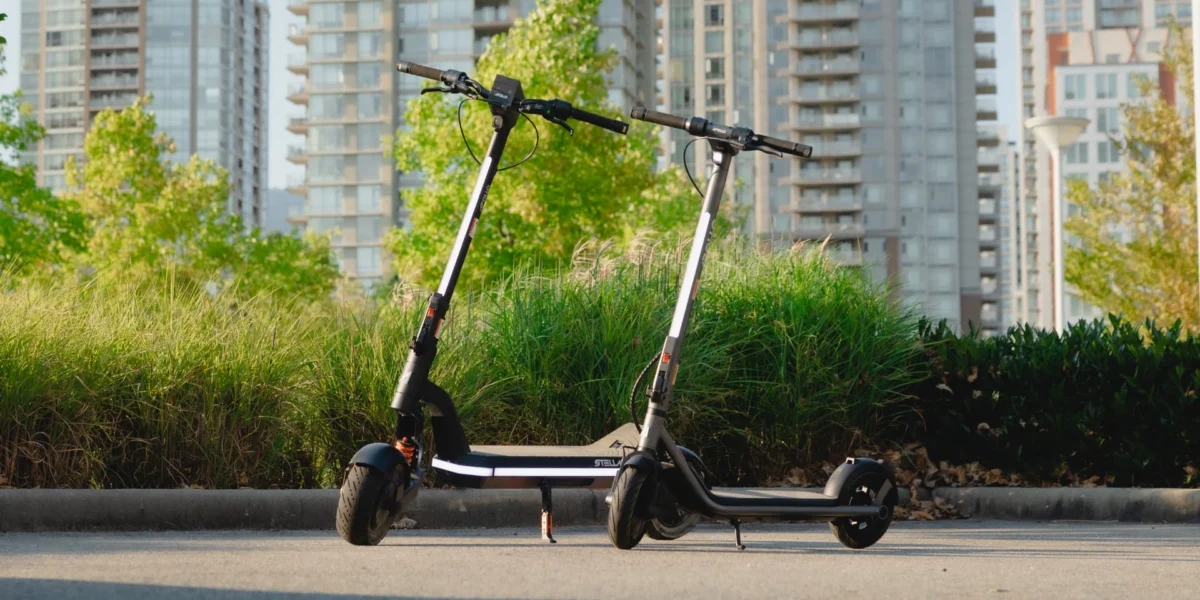
For years, the electric scooter market has been cleanly bifurcated into two distinct categories: ultra-cheap, mass-market commuters built primarily for casual weekend riders, and high-performance, premium personal electric vehicles (PEVs) designed for enthusiasts willing to invest upwards of $1,000. Among the brands that carved out a dominant position in the premium segment is Apollo, a company known for robust engineering, high speeds, and advanced technological integration. However, in a strategic pivot that signals a major shift in the urban mobility landscape, Apollo is officially entering the mass-market arena with the introduction of its most affordable offering to date: the Apollo Dash.
Carrying a standard manufacturer’s suggested retail price (MSRP) of $699—and a promotional launch price of $599 through November 30 as part of the brand’s Black Friday sales event—the Dash is engineered to capture a vastly broader demographic of urban commuters. Yet, industry analysts note that the launch is not merely a budget play. Instead, the Canadian-based micro-mobility firm is aiming to trickle down its signature hardware and software innovations into a more accessible price bracket, directly challenging established mass-market giants like Segway, Xiaomi, and NIU.
Main Facts and Specifications of the Apollo Dash
Despite occupying a lower price tier than traditional Apollo flagships like the Phantom, City, or Pro, the Dash boasts a specification sheet that rivals—and in some cases surpasses—many mid-tier competitors. At its mechanical and electrical core, the scooter features a robust 48-volt electrical architecture. This system powers a Bosch motor that delivers 600 watts of nominal power, with a peak output reaching 1,200 watts.

Riders can expect a governed top speed of 20 miles per hour (32 kilometers per hour), making it well-suited for urban bike lanes and suburban pathways. Energy is supplied by a 480Wh battery pack, which Apollo rates for up to 25 miles (40 kilometers) of range when operated in Eco mode.
Crucially, the implementation of a 48V electrical system addresses one of the most common complaints associated with entry-level, 36V or 24V electric scooters: power degradation. On many lower-cost vehicles, motor performance drops noticeably as the battery discharges, resulting in sluggish acceleration and poor hill-climbing capabilities near the end of a charge. Apollo’s 48V architecture is designed to mitigate this drop-off, ensuring consistent power delivery throughout the discharge cycle.
Weighing in at 43 pounds (19.5 kilograms), the Dash strikes a deliberate balance between structural rigidity and portability. It is light enough to be carried up a flight of stairs or stowed in the trunk of a compact car, though these weight and cost savings necessitated a few engineering compromises. Most notably, the Dash dispenses with mechanical or hydraulic suspension, relying instead on its tire volume and frame geometry to absorb minor road imperfections. Furthermore, Apollo has placed a strict rider weight limit of 220 pounds (100 kilograms) on the vehicle, explicitly directing heavier riders or those navigating severe terrain and steep inclines toward more robust, dual-motor models such as the Apollo Go.
Technology and Feature Integration
Where the Apollo Dash truly differentiates itself from generic mass-market alternatives is its deep integration of advanced software and safety features. Historically, budget scooters have skimped on auxiliary components to reduce bill-of-materials costs. The Dash, however, bucks this trend by packing a comprehensive suite of hardware and digital amenities.

Safety and visibility equipment includes IP66 water resistance—protecting the internal electronics against heavy rain and powerful water jets—alongside self-healing tubeless tires designed to automatically seal minor punctures. Regenerative braking is included to recapture kinetic energy during deceleration, feeding power back into the battery while reducing wear on the physical brake components. For urban visibility, the scooter is outfitted with built-in turn signals and Apollo’s proprietary Beam stem light.
On the digital front, the Dash matches the connectivity of its more expensive stablemates. It features Near Field Communication (NFC) unlocking for secure keyless ignition, native Apple Find My integration for anti-theft tracking, and full connectivity with the proprietary Apollo smartphone app for firmware updates, diagnostic monitoring, and customized ride profiles.
Chronology and Development Validation
The path to the Dash’s market debut involved rigorous testing protocols designed to ensure reliability—a frequent pain point for consumers purchasing first-generation or budget-oriented micro-mobility devices. According to engineering disclosures from Apollo, the frame of the Dash underwent structural durability validation equivalent to 10,000 kilometers (6,200 miles) of simulated stress testing before the green light was given for production.
Following laboratory testing, the company initiated a closed beta testing program to evaluate real-world performance. Over the course of the beta phase, test riders accumulated 1,002 miles across 144 distinct rides. Notably, Apollo reported zero punctures and zero mechanical maintenance issues during this period. Beta participants averaged 19 miles (30 kilometers) per journey while consistently returning to base with an average of 29% battery capacity remaining, validating the real-world utility of the 480Wh power pack under typical commuting conditions.

Consumer Demographics and Market Implications
To fully understand the commercial strategy behind the Apollo Dash, industry observers point to consumer acquisition data shared by the manufacturer. Market research conducted by Apollo indicates that 52% of its existing customer base previously owned entry-level electric scooters manufactured by mass-market stalwarts like Segway, Ninebot, Xiaomi, and NIU.
Historically, however, these consumers faced a steep financial barrier when upgrading to an Apollo vehicle, as the brand’s lineup predominantly commanded prices north of $1,000. By pricing the Dash at $699—and discounting it to $599 for its inaugural sales window—Apollo is effectively building a bridge for urban commuters to enter its ecosystem much earlier in their personal electric vehicle journey.
This pricing strategy places Apollo into direct, head-to-head competition with the exact brands that previously served as stepping stones for its customer base. Rather than ceding the sub-$700 market entirely to high-volume consumer electronics manufacturers, Apollo is betting that brand loyalty, higher-quality construction standards, superior safety certifications, and robust software ecosystems will sway budget-conscious buyers away from commoditized alternatives.
Broader Industry Impact

The launch of the Apollo Dash arrives at a critical juncture for the micro-mobility sector. As municipal infrastructure continues to adapt to micromobility, consumer demand has matured. Buyers are increasingly seeking devices that offer long-term durability, repairability, and advanced anti-theft capabilities rather than disposable, short-lifespan gadgets.
By introducing a product that democratizes high-voltage architecture and premium software integrations—such as Apple Find My and NFC authentication—at a sub-$700 price point, Apollo may force competing manufacturers to elevate the baseline specifications of their own entry-level portfolios.
As the inaugural production batch rolls out and the initial Black Friday promotional window runs toward its November 30 conclusion, the broader market will be watching closely to see whether the Apollo Dash can successfully convert mass-market commuters into long-term brand loyalists. For consumers, the release signifies a narrowing gap between budget affordability and premium engineering, offering a compelling new option for daily urban transit.