










The Dynamics of Residual Value and Consumer Sentiment
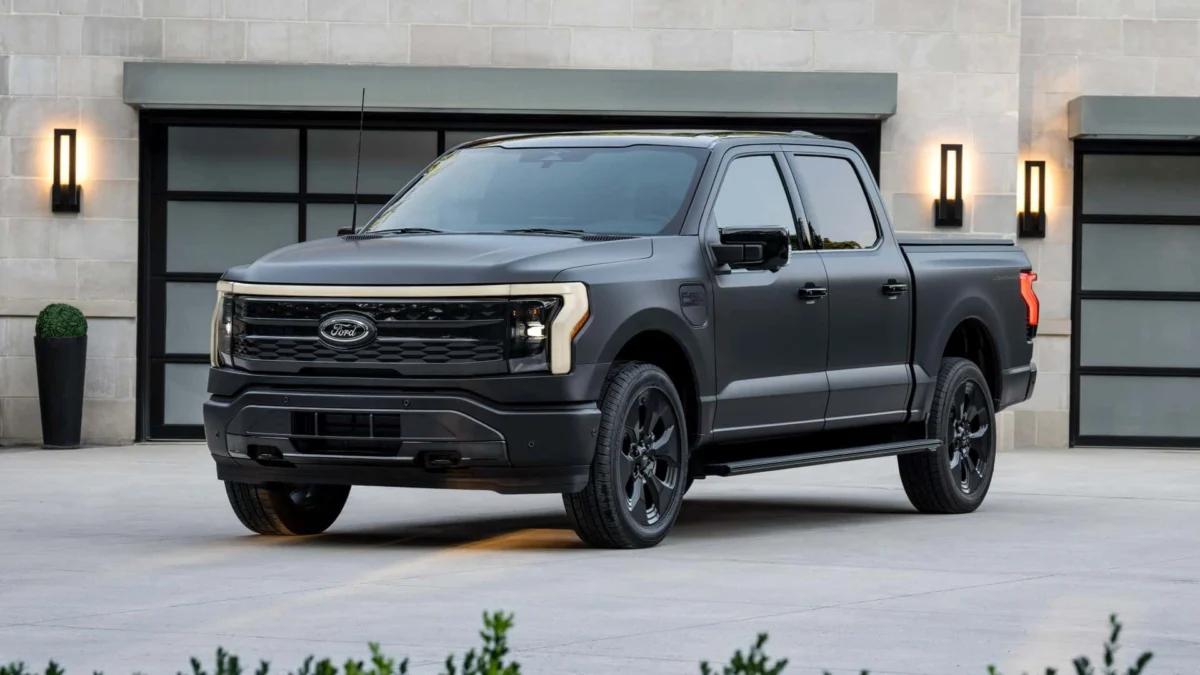
The recent activity within the Ford F-150 Lightning Owners Group on Facebook serves as a microcosm for this trend. A user identified as JF recently shared his experience with the online community, noting that the automotive retailer Carvana offered to purchase his vehicle for an amount that was "just a little less than we paid new." In subsequent correspondence with industry publications, the owner noted that while he genuinely enjoyed the driving experience and the utility of the vehicle, his lifestyle needs had shifted.
The owner’s reasoning for the sale provides insight into why these vehicles are retaining value: "We wanted something smaller, and with the current increase in resale value, the time to trade seemed right." This statement underscores a critical point—the Lightning is not being dumped by dissatisfied owners; rather, it is being treated as a high-value asset in a market that finally recognizes its utility at a more accessible price point.
A Chronology of the Lightning’s Market Journey
The trajectory of the Ford F-150 Lightning has been anything but linear since its inception. Announced with significant fanfare, the vehicle was positioned as the standard-bearer for Ford’s transition into the electric era.
- 2022 Launch: The F-150 Lightning officially entered the market, drawing substantial interest but struggling with production scaling and supply chain constraints.
- Pricing Volatility: The original promise of a $40,000 entry-level model proved difficult to sustain. Within months, inflationary pressures and battery costs pushed that starting price toward $50,000 and beyond, creating a perception of the truck as a luxury item rather than a working man’s tool.
- Production Shifts: By late 2024, Ford announced significant pauses in F-150 Lightning production. This decision was a strategic pivot, responding to cooling consumer demand for premium-priced EVs and allowing the company to re-evaluate its assembly line efficiency.
- December 2025 Termination: Ford confirmed the conclusion of the current generation’s production cycle, signaling a transition toward new powertrain architectures.
Why Used Buyers are Finding the "Sweet Spot"
The surge in interest for used Lightning models is largely attributed to the "value correction" occurring in the wholesale market. Industry experts note that the primary hurdle for the F-150 Lightning at launch was its barrier to entry. For many potential buyers, the initial MSRP was simply too high to justify the transition from a traditional internal combustion engine (ICE) truck.
Jimmy Douglas, CEO of the wholesale electric vehicle platform Plug, offered a compelling analysis in recent commentary provided to Bloomberg. According to Douglas, the market has reached an equilibrium point where the price of a used Lightning has dropped by 50 to 60 percent from its original sticker price. "It’s really a sweet spot," Douglas noted. "It’s an incredible truck for the money."
This transition has transformed the Lightning from a niche, high-cost innovation into a highly competitive value proposition. Buyers who were previously priced out are now finding that they can acquire a high-capability, technology-laden pickup for the price of a mid-size sedan. This demographic shift is fueling the current liquidity in the used market, which in turn is bolstering the resale value for early adopters like the owner mentioned previously.
The Technological Evolution: Moving Toward EREV
As Ford prepares to sunset the current iteration of the F-150 Lightning, the company is already looking toward the future of its electrified utility lineup. The successor to the current platform is expected to be an Extended-Range Electric Vehicle (EREV).

Unlike a traditional Battery Electric Vehicle (BEV) or a conventional hybrid, the EREV architecture maintains a large battery pack and electric propulsion motors but integrates an onboard gasoline-powered generator. This generator does not physically power the wheels; its sole function is to charge the battery while the vehicle is in operation. This design is engineered to address the two greatest sources of anxiety for truck owners: towing range and infrastructure availability.
Ford’s target for this new platform is an estimated range of over 700 miles when the battery and the onboard fuel tank are at full capacity. This configuration provides the silent, high-torque performance of an electric motor while offering the refueling convenience of a gas-powered truck. While an official release date has not been confirmed, industry analysts anticipate the EREV to debut before the next-generation F-150 platform arrives toward the end of the decade.
Broader Economic and Industrial Implications
The stabilization of the used F-150 Lightning market has several implications for the broader automotive industry.
First, it suggests that the "EV cliff"—the fear that electric vehicles would suffer from catastrophic, unrecoverable depreciation—is not a universal rule. Instead, depreciation is heavily dependent on the original entry price and the subsequent value proposition for the second owner. When the price is right, consumer demand for electric utility remains robust.
Second, the move toward EREV technology suggests that Ford recognizes the limits of current charging infrastructure for heavy-duty applications. By embracing a "best of both worlds" approach, the company is attempting to mitigate the risks associated with pure battery dependency, particularly for rural or commercial customers who require long-distance, high-load capabilities.
Third, the resale activity serves as a signal to manufacturers regarding the importance of affordability. The success of the Lightning in the used market indicates that the technology itself is highly valued by consumers; the primary failure was not the product, but the pricing strategy. Future product launches will likely emphasize price-to-utility ratios earlier in the development cycle to avoid the boom-and-bust cycle seen with the initial F-150 Lightning rollout.
Conclusion
The Ford F-150 Lightning remains a pivotal chapter in the history of the American pickup truck. While its tenure as a mass-market, full-electric vehicle may be concluding, its impact on the secondary market demonstrates a clear consumer appetite for electric utility. As the vehicle transitions into its next phase as an EREV, the lessons learned from the Lightning’s price fluctuations and consumer reception will undoubtedly shape the development of future electric trucks. For now, the owners of current-generation Lightnings are finding that their early investment in the electric revolution has proven surprisingly resilient, providing both a high-quality driving experience and a stable financial asset in an ever-changing automotive landscape.
The industry will continue to monitor these resale trends as an indicator of broader EV adoption. As more legacy trucks reach the used market, the data will provide a clearer picture of long-term battery health and component reliability, factors that will ultimately dictate the long-term legacy of the F-150 Lightning and its successors. For the moment, the market has spoken: the electric truck is here to stay, and it has found its footing in the hands of the secondary buyer.