









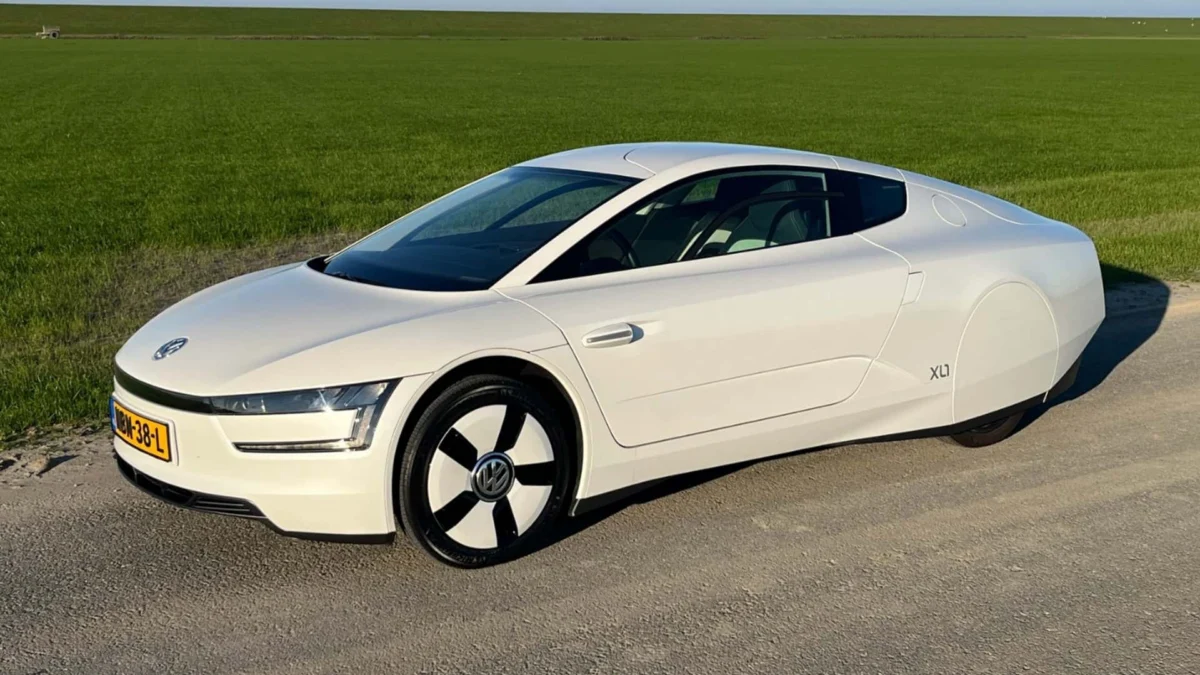
In the annals of automotive history, few vehicles represent the collision of uncompromising vision and extreme engineering quite like the Volkswagen XL1. Launched in 2013 following a grueling 12-year development cycle, the XL1 remains one of the most significant experiments in fuel efficiency ever conducted by a major manufacturer. With only 250 units ever produced, the vehicle occupies a niche in the collector’s market that renders it rarer than iconic supercars like the Bugatti Veyron. For enthusiasts and investors alike, a unique opportunity has emerged: a 2016 model with just over 1,000 miles on its odometer is currently being offered at auction via the platform Catawiki.
A Legacy of Ambition: The Ferdinand Piëch Vision
The genesis of the XL1 is inextricably linked to the uncompromising leadership of Ferdinand Piëch, the former chairman of the Volkswagen Group. Piëch, an engineer by trade and temperament, famously set a seemingly impossible goal for his development team: to create a "one-liter car"—a vehicle capable of traversing 100 kilometers on a single liter of fuel. This mandate sparked a project that spanned over a decade, evolving through several iterations, including the "1-Litre Car" concept shown in 2002 and the L1 concept in 2009, before culminating in the production-ready XL1.
The development process was not merely about powertrain efficiency; it was a holistic assault on the physical laws of drag and mass. Piëch’s insistence on the one-liter target forced engineers to rethink automotive architecture entirely. The project team operated under the assumption that if the car were light enough and slippery enough, it would require only a fraction of the energy typically consumed by a passenger vehicle. This philosophy pushed the boundaries of material science, leading to the extensive use of carbon-fiber-reinforced plastic (CFRP) for both the chassis and the body panels.
Chronology of the 1-Liter Concept
- 2002: The original 1-Litre concept is unveiled, featuring a tandem-seat layout and an extremely lightweight construction.
- 2009: The L1 concept debuts at the Frankfurt Motor Show, further refining the aerodynamics and diesel-hybrid powertrain.
- 2011: The XL1 concept is presented at the Qatar Motor Show, signaling a transition toward a more "road-ready" design.
- 2013: The production version of the XL1 is officially launched at the Geneva Motor Show, with an initial run of 250 units.
- 2016: Production concludes, marking the end of one of the most ambitious R&D programs in the modern automotive era.
Aerodynamics and Engineering Precision
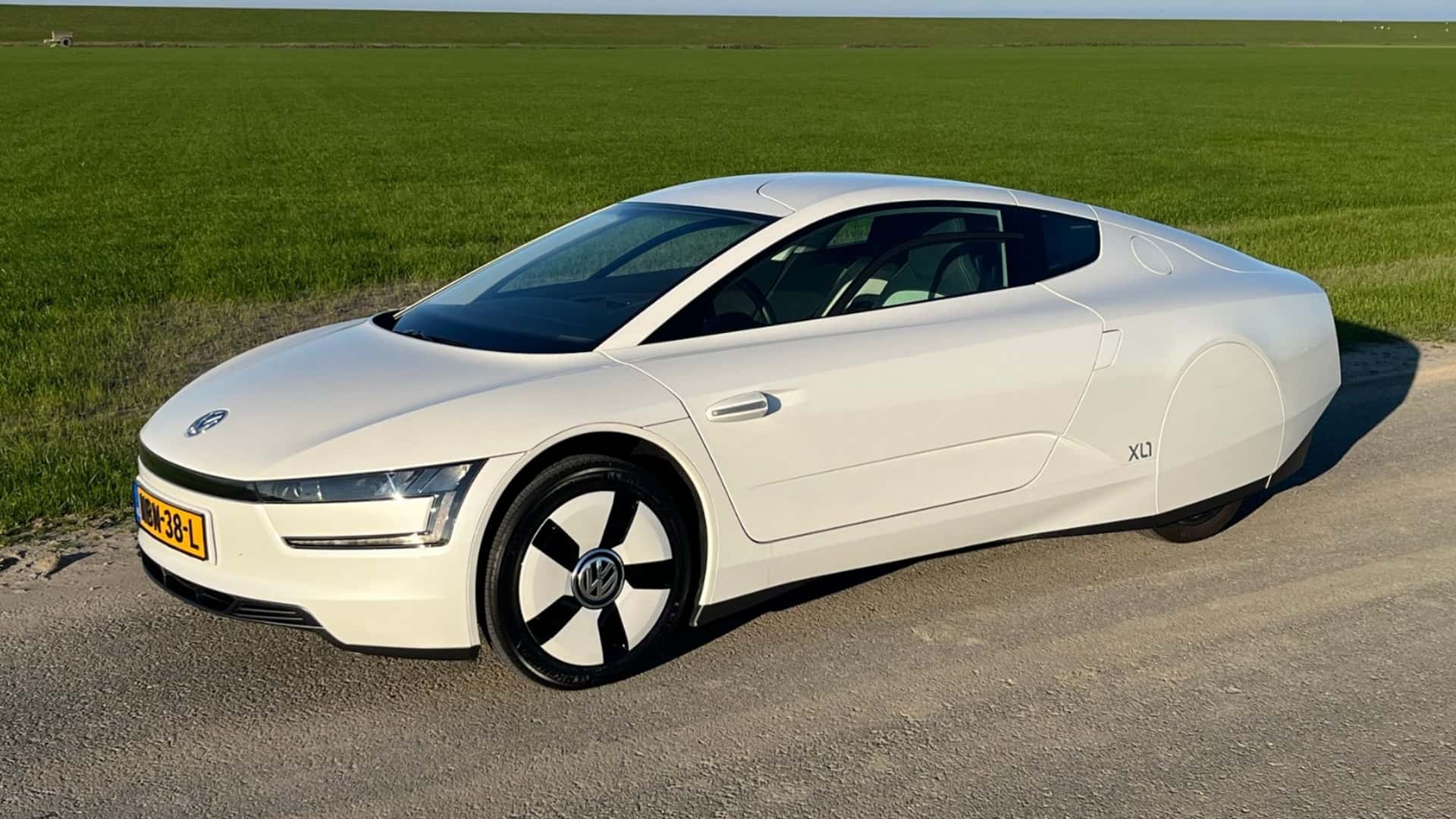
The XL1’s aesthetic is dictated by its function. With a drag coefficient of 0.189, it remains one of the most aerodynamic production cars ever built. To achieve this, the car utilizes a distinctive teardrop shape, fully covered rear wheels, and a tapering rear end. Inside, the cabin is equally unconventional; the two seats are staggered in an offset position to allow for a narrower frontal area, significantly reducing the vehicle’s profile.
Beneath the rear-hinged, butterfly-style doors lies a sophisticated mid-engine layout. The powertrain consists of a two-cylinder, 800cc turbo-diesel engine paired with an electric motor. This hybrid setup was integrated into a platform that weighs a mere 1,852 pounds (840 kilograms). The inclusion of a 5.5-kWh lithium-ion battery allowed the vehicle to function as a plug-in hybrid, capable of traveling 31 miles on electricity alone.
An interesting footnote in the vehicle’s design history is the plug-in charging mechanism. Because the hybrid functionality was a late addition to the project’s development, the car did not feature an integrated high-voltage charging system. Instead, the engineering team included a removable, 50-pound charging unit that sits in the rear trunk. While archaic by modern standards, it stands as a testament to the "fix-it-as-you-go" nature of this experimental program.
Efficiency Metrics and Performance Constraints
The primary objective of the XL1 was efficiency, and by that metric, it was a triumph. The vehicle achieved an EU-rated 0.9 liters per 100 km, equivalent to roughly 261 miles per gallon. During steady-state highway cruising at 62 mph, the vehicle requires only about 8 horsepower to maintain its velocity—an astonishing figure that highlights the efficiency of its low-drag design and lightweight construction.
However, this focus on efficiency came with significant trade-offs in performance. The engine produces just 68 horsepower. Consequently, the acceleration is leisurely, with a 0-60 mph time of approximately 13 seconds. For those accustomed to the instant torque of modern electric vehicles, the XL1 feels less like a performance machine and more like a high-tech laboratory experiment on wheels.
Market Context and Financial Implications
The unit currently listed on Catawiki is expected to fetch approximately $140,000. For potential buyers, the purchase is less about economic utility and more about historical preservation. While the car’s fuel efficiency is legendary, it is important to note the financial reality: the initial purchase price of $150,000 (at launch) combined with the rarity and maintenance costs of specialized carbon-fiber parts means that the "breakeven" point against a standard combustion vehicle is unreachable.
Furthermore, the car relies on diesel fuel, which has experienced significant price volatility. From a purely practical standpoint, a modern, mass-produced electric vehicle offers better range, better performance, and significantly lower operating costs. Yet, the XL1 is not designed for the commuter looking to save on fuel; it is designed for the collector who appreciates the audacity of a project that was, in many ways, years ahead of its time.
Broader Impact on the Automotive Industry
The XL1 served as a crucial proof-of-concept for Volkswagen. The data and experience gained from the project regarding lightweight materials, low-friction lubricants, and aerodynamic optimization were subsequently funneled into the company’s broader vehicle lineup. While the XL1 never achieved mass production, its influence can be seen in the development of subsequent hybrid and electric platforms within the Volkswagen Group.
Moreover, the XL1 challenged the industry to reconsider the relationship between weight and efficiency. At the time of its release, the trend was towards increasingly heavy vehicles loaded with complex electronic safety systems. The XL1 proved that, if one is willing to push the boundaries of design and cost, extreme efficiency is physically possible even without relying solely on large, heavy battery packs.
A Collector’s Perspective
For the discerning collector, the XL1 represents a rare confluence of "quirk" and quality. It is a car that refuses to fit into a standard category; it is neither a supercar nor an economy car, but a hybrid of both. Its limited production run of 250 units ensures that it will remain a centerpiece in any private collection.
The specific vehicle listed for auction is noted to be in excellent condition, with minimal usage. Given the volatility of the automotive collector market, such low-mileage examples rarely come to public auction. As the industry continues to pivot toward full electrification, the XL1 stands as a landmark of the internal combustion era’s final, most sophisticated refinement. It is a reminder of a time when the world’s largest automaker decided to ignore the bottom line in favor of pure, uncompromising engineering ambition.
Conclusion: The Future of the 1-Liter Ideal
While the era of the "1-liter car" as a diesel-powered endeavor has largely passed, the ethos that drove the XL1 remains vital. The industry continues to chase the same goals of reduced drag and minimized mass, albeit through the lens of battery-electric platforms. The XL1 remains a standard-bearer for this pursuit, a physical manifestation of an engineering challenge that changed the way we view automotive efficiency. Whether this specific unit sets a new record at auction remains to be seen, but its status as a milestone of 21st-century engineering is firmly cemented. Collectors and historians alike will likely view the auction of this 2016 model as a rare chance to own a piece of a vision that, while financially impractical, pushed the limits of what a car could be.