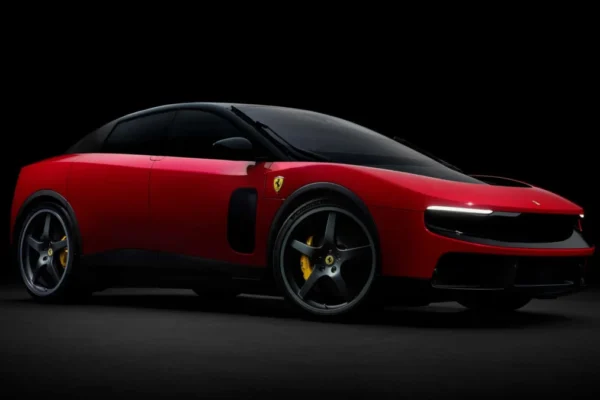










Ferrari’s first fully electric vehicle, the Luce, has officially sold out its production allocation for 2027, according to a recent announcement by Chief Executive Officer Benedetto Vigna. Delivering the automaker’s third-quarter financial results, Vigna confirmed that customer demand remains robust despite a turbulent debut that triggered intense debate across the global automotive industry. With initial customer deliveries slated to commence before the end of 2026, the four-door, five-seat liftback saloon has quickly commanded a lengthy waiting list, cementing its commercial appeal among the ultra-wealthy clientele even as purists question its aesthetic departure from traditional Italian supercars.
Unprecedented Architecture and Engineering Specifications
The Ferrari Luce represents a radical technological shift for a brand historically celebrated for its roaring internal combustion engines. Developed as a spacious grand tourer—and standing as the longest passenger vehicle ever produced by Maranello—the Luce is built upon an advanced 800-volt electrical architecture. It houses a substantial 122-kWh battery pack designed to deliver a targeted WLTP driving range of approximately 329 miles on a single charge.
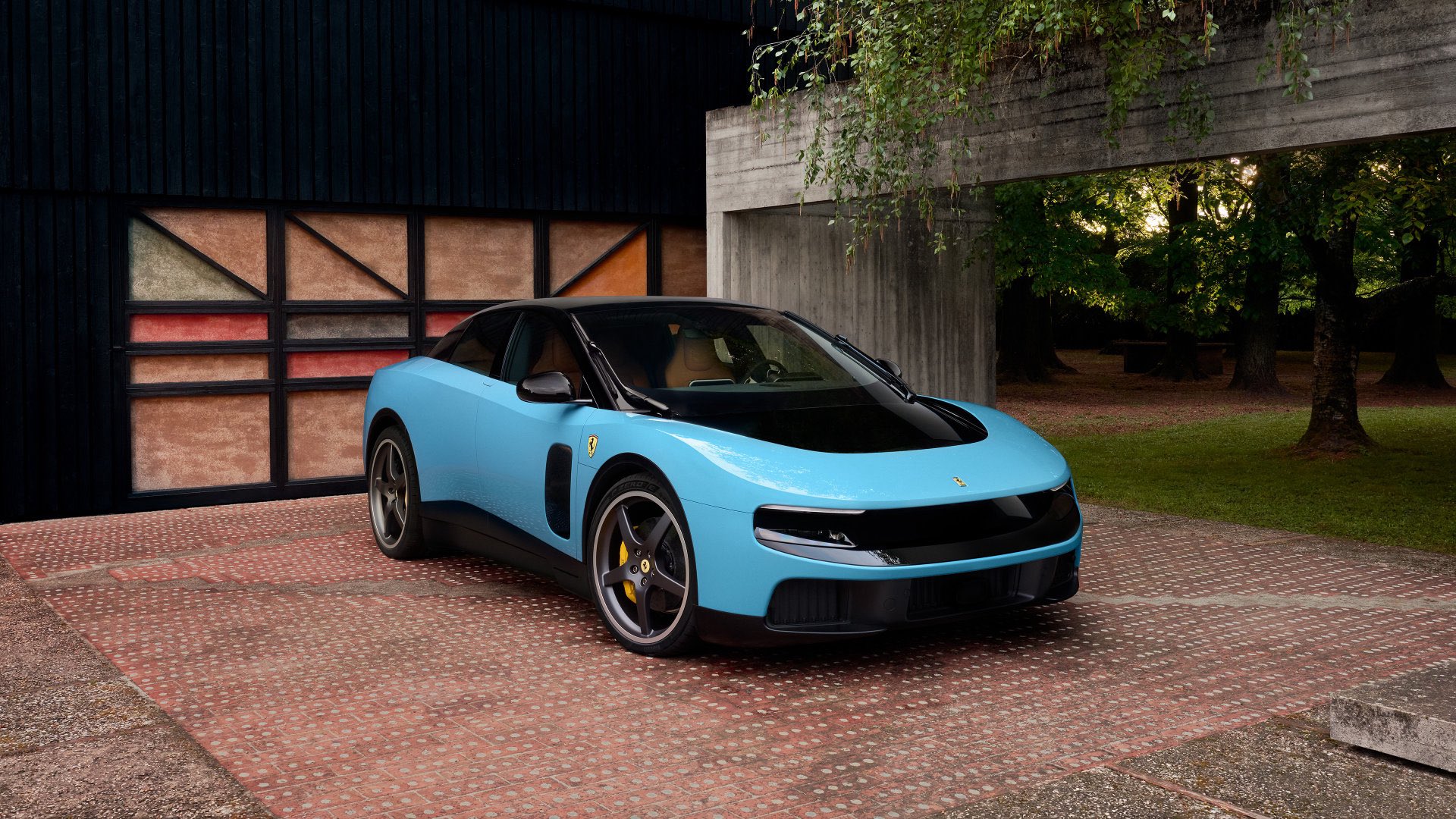
Propulsion is handled by a sophisticated quad-motor setup that generates an extraordinary 1,035 horsepower. This immense output allows the heavy grand tourer to accelerate from 0 to 62 miles per hour in a blistering 2.5 seconds. European pricing for the flagship electric vehicle starts near €550,000, with estimated United States configurations ranging from $560,000 to over $615,000 depending on bespoke options chosen through Ferrari’s tailoring programs.
The styling of the Luce was executed in collaboration with Jony Ive and Marc Newson’s LoveFrom design studio, working alongside Ferrari’s in-house Centro Stile under the direction of Flavio Manzoni. Rather than adopting the aggressive, angular geometry typical of mid-engine sports cars, the Luce features smooth, sweeping surfaces, a sweeping panoramic glass roof, and minimalist detailing intended to redefine modern luxury grand touring.
A Polarising Debut and Market Backlash
The public unveiling of the Luce in Rome in May 2026 generated an immediate and severe fracture in public opinion. While corporate leadership emphasized technological innovation and interior spaciousness, design critics and automotive purists met the vehicle with widespread skepticism. Online communities quickly flooded social media with memes comparing the silhouette of the multi-million-dollar Italian machine to mass-market electric vehicles like the Nissan Leaf and the Polestar.

The criticism extended far beyond internet forums. Former Ferrari Chairman Luca di Montezemolo publicly voiced his disappointment, warning of what he termed "the destruction of a myth" and suggesting that the iconic Prancing Horse emblem should be detached from the vehicle entirely. Concurrently, several Italian politicians and long-standing collectors expressed dismay over the abandonment of traditional internal combustion design cues.
The immediate financial impact was tangible. On the day following the global reveal, Ferrari’s stock price suffered an 8 percent single-day decline, momentarily erasing billions of dollars in market valuation as investors weighed the risks of alienating the brand’s core demographic. Industry analysts pointed out that the Luce lacked the visual aggression, aerodynamic tension, and emotional theater that had defined generations of Ferrari flagship models.
Strong Financial Backing and Ultra-Exclusivity
Despite the vocal opposition from traditionalists, the controversy has failed to translate into a soft order book among actual buyers. Ferrari’s core business model relies heavily on strict scarcity and exclusivity. Production volumes for the Luce are tightly controlled, with fewer than 500 units slated for completion in its launch year and a projected long-term manufacturing cadence of approximately 600 units annually through 2030.

This deliberate limitation of supply has ensured that demand drastically outpaces availability. Highlighting the voracious appetite of top-tier collectors, an early production chassis recently commanded $40 million at a charity auction. During the third-quarter earnings presentation, CEO Vigna noted that scheduled client test drives, set to begin shortly, will likely catalyze even higher engagement.
"Everything we plan to sell next year is already fully allocated," Vigna told investors and analysts. "We have no critical issues, neither on manufacturing nor on the demand side. Obviously, the car is more complex because it has many new parts and many new technologies."
The strong uptake of the Luce aligns with Ferrari’s broader electrification roadmap. The automaker aims for fully electric models to comprise 20 percent of its total global sales portfolio by the end of the decade. However, reflecting the complexities of scaling advanced EV production and managing powertrain transitions, Ferrari recently adjusted its timeline, delaying the introduction of its second electric vehicle to 2028.
Chronology of Ferrari’s EV Transition
- September 2022: Ferrari outlines its strategic plan through 2026, confirming the development of its first proprietary battery-electric vehicle powered by Maranello-built electric motors.
- May 2026: The Ferrari Luce makes its controversial global debut in Rome, sparking sharp criticism from automotive purists and an 8 percent drop in stock value.
- June–October 2026: Despite initial design backlash, early allocation slots fill rapidly, and an early production chassis achieves a historic $40 million valuation at auction.
- November 2026: CEO Benedetto Vigna officially announces during third-quarter earnings reports that the 2027 production run of the Luce is completely sold out.
- Late 2026 (Projected): First customer deliveries of the Luce are scheduled to begin ahead of widespread client test drives planned for the following year.
Broader Industry Implications and Future Outlook
The rapid sell-out of the Luce provides a fascinating case study in luxury brand resilience. It demonstrates that ultra-high-net-worth consumers frequently prioritize novelty, technological prestige, and absolute exclusivity over the traditional design sensitivities favored by automotive enthusiasts.
While the transition to electrification remains a delicate balancing act for legacy supercar manufacturers—who must navigate stricter global emissions regulations without diluting the emotional resonance of their brand heritage—Ferrari’s early commercial success with the Luce suggests that its transition into the electric era is on stable financial footing. As physical deliveries begin and more clients experience the 1,035-horsepower grand tourer firsthand, Maranello appears confident that performance and scarcity will continue to override initial aesthetic controversies.