







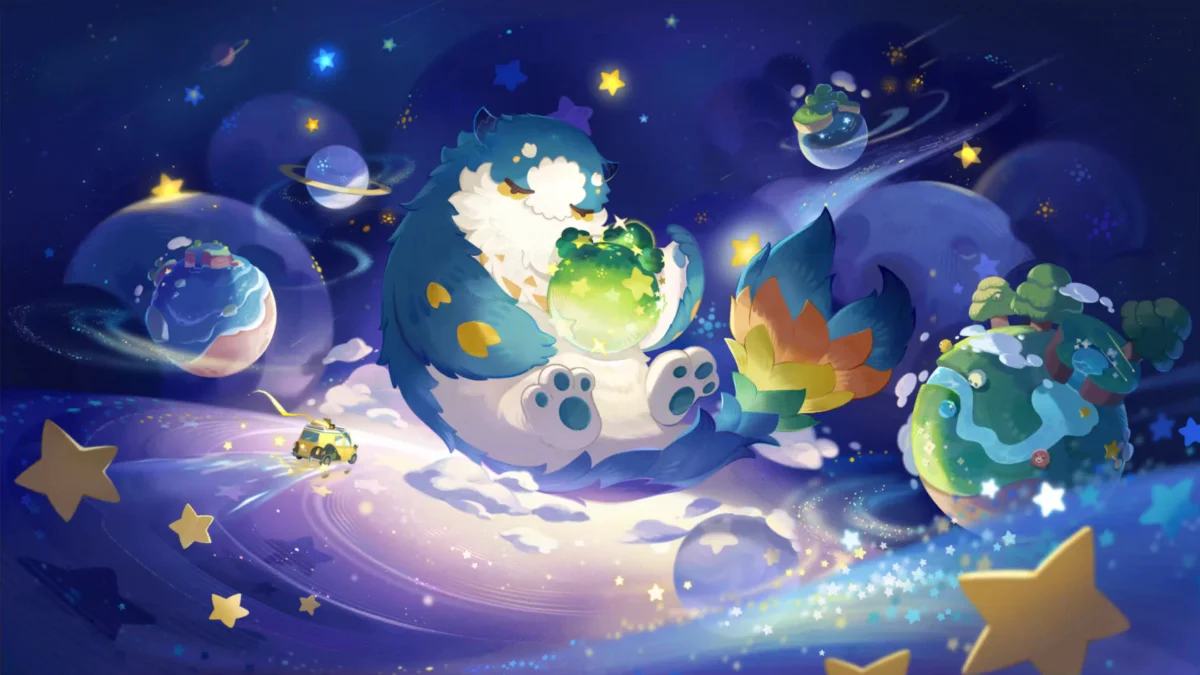
HoYoverse, the prominent global interactive entertainment developer known widely for blockbusters such as Genshin Impact and Honkai: Star Rail, has officially commenced the second closed beta test for its upcoming title, Petit Planet. First leaked to the gaming community several years ago, Petit Planet represents HoYoverse’s deliberate expansion into the lucrative, highly competitive desert-island and cozy social simulation genre. While the game provides a polished sci-fantasy aesthetic that sets it apart visually from traditional earthly settings, early hands-on analyses indicate that the title relies heavily on established genre conventions pioneered by multi-million-unit franchises like Nintendo’s Animal Crossing, leaving industry observers to question its capacity for long-term innovation.
Chronology and Development Background
The conceptual origins of Petit Planet date back to early internal leaks from HoYoverse, which hinted at the developer diversifying its portfolio beyond its core competency of action role-playing games (ARPGs) and gacha-driven titles. Following the unprecedented global success of Genshin Impact—which launched in September 2020 and drew frequent, early comparisons to Nintendo’s The Legend of Zelda: Breath of the Wild—HoYoverse has proven adept at taking proven gameplay loops and refining them with high-end production values and continuous live-service support.

Petit Planet follows this strategic blueprint, though it targets a distinctly more relaxed and younger demographic. Following initial closed alpha tests and early regional technical evaluations, the launch of the Stardrift Test on April 21 marked a significant milestone, allowing a broader cohort of players to experience the game’s core mechanics, gathering loops, and social infrastructure. Despite the ongoing testing phases, HoYoverse has yet to commit to a definitive global commercial release window, maintaining a cautious timeline reminiscent of its past pre-launch campaigns.
Gameplay Mechanics and Genre Convergence
From a mechanical standpoint, Petit Planet operates within the well-established triad of life, farming, and social simulation frameworks. Players are tasked with managing a miniature planetary settlement in outer space, interacting with anthropomorphic animal neighbors, gathering local flora and fauna, and building up community resources.
The minute-to-minute gameplay loop features familiar activities:

- Shaking fruit-bearing trees to harvest resources
- Catching fish and insects to donate to local museum-style exhibition areas
- Organizing settlements and cultivating crops alongside specialized non-player characters (NPCs)
- Engaging in localized community events and call-and-response minigames
However, industry analysts and reviewers note a distinct lack of gameplay novelty. The current market is heavily saturated with titles attempting to capture the cultural phenomenon achieved by Animal Crossing: New Horizons during the COVID-19 pandemic in 2020. Competitors such as XD’s Heartopia—which launched globally in January to strong initial engagement—and other forthcoming lifestyle titles have similarly adapted these familiar social-sim mechanics. Consequently, Petit Planet enters a crowded ecosystem where differentiation relies almost entirely on its unique sci-fantasy visual presentation rather than mechanical evolution.
Integration of Generative Artificial Intelligence
A notable element of Petit Planet’s development cycle is HoYoverse’s explicit integration of generative artificial intelligence (GenAI) technologies. Unlike many major publishers that attempt to obscure or minimize their use of AI tools due to ongoing industry controversy surrounding labor practices, environmental impact, and artistic integrity, HoYoverse has opted for transparency within the beta build, flagging content generated or assisted by AI systems.
Technical assessments of the AI implementation indicate that the system relies heavily on small language models (SLMs) trained on proprietary HoYoverse in-house datasets. Despite this advanced technological backing, initial user reactions to the real-time conversational capabilities of NPCs have been mixed. Reviewers have drawn comparisons to historical interactive projects like the 2005 indie title Façade, suggesting that the dialogue generation yields naturalistic results comparable to technology developed two decades prior.

The decision to lean into generative AI tools for NPC interactions has sparked broader debate within the gaming community regarding product quality, environmental sustainability, and the long-term implications for creative labor within large-scale development studios.
Monetization Models and Demographic Shifts
One of the most significant analytical talking points emerging from the Stardrift Test is the apparent absence of traditional gacha mechanics within the current build of Petit Planet. HoYoverse has built its financial empire on randomized monetization models, utilizing character and weapon banners across titles like Genshin Impact, Honkai: Star Rail, and Zenless Zone Zero.
The omission of these systems in the beta has fueled speculation regarding the game’s final commercial structure. Industry experts suggest that HoYoverse may pivot toward a more family-friendly monetization model, such as traditional seasonal battle passes or cosmetic-only microtransactions. This potential shift aligns with the game’s overt targeting of a younger, family-oriented audience—a demographic departure for a studio historically accustomed to marketing live-service titles to adolescent and adult consumers.

While a less aggressive monetization model may alleviate parental concerns regarding youth-oriented spending habits—drawing favorable safety comparisons to platforms like Roblox or Fortnite—the entry of a major live-service specialist into the children’s entertainment sector naturally invites heightened scrutiny from consumer advocacy groups.
Broader Market Impact and Industry Implications
The rollout of Petit Planet serves a dual purpose within HoYoverse’s corporate strategy. Alongside titles like Tears of Themis, Petit Planet proves that the studio possesses the technical versatility to successfully branch out into non-combat genres, delivering polished, aesthetically cohesive products outside its traditional comfort zone.
Nevertheless, the title faces an uphill battle in retaining player engagement over extended periods. In a market where consumers are already managing multiple virtual settlements across established franchises, offering a competent, by-the-numbers social simulation may not suffice to secure long-term retention.

As the Stardrift Test concludes and development proceeds toward an eventual commercial release, HoYoverse must decide whether Petit Planet will remain a conventional homage to the genre’s golden standards or introduce substantive innovations that justify its presence in an already overcrowded digital landscape.