







As Apple prepares for its highly anticipated "Welcome Home" special event scheduled for October 13, 2026, new technical details have emerged regarding the company’s ambitious expansion into the smart home hardware market. A series of code discoveries has revealed that the upcoming line of "second-party" accessories, developed in collaboration with electronics giant LG, will feature a proprietary interface enhancement known as Proximity Control. This feature, designed to bridge the gap between physical hardware and the iPhone’s software ecosystem, represents a significant shift in Apple’s strategy toward deep hardware-software integration for the home.
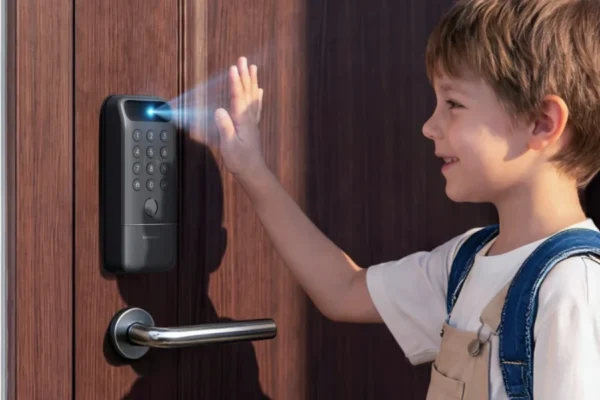
The feature, which leverages the iPhone’s UWB (Ultra-Wideband) and NFC capabilities, allows users to receive contextual alerts via the Dynamic Island simply by bringing their device near a compatible accessory. This development follows recent reports confirming that Apple and LG are co-developing a suite of smart home products, including thermostats, deadbolt locks, and various security camera configurations, marking a departure from Apple’s historical reliance on third-party manufacturers who utilize the standard HomeKit or Matter protocols without direct branding collaboration.
The Mechanics of Proximity Control
Technical analysis of recent iOS code updates, first brought to light by researchers Aaron Perris and corroborated by social media analyst @itspdfu, suggests that Proximity Control functions through a dual-layered communication protocol. When a user approaches an LG-branded accessory, the device broadcasts a Bluetooth Low Energy (BLE) signal that is immediately detected by the user’s iPhone. Simultaneously, the hardware utilizes an integrated NFC tag that stores an "apple-deviceid" within the Matter payload.
This handshake allows the iPhone to identify the specific device and trigger an interactive notification in the Dynamic Island. For instance, a user approaching an LG-branded smart thermostat will see a prompt to "Open Controls," allowing for immediate temperature adjustments without the need to navigate through the Home app’s room-by-room hierarchy. Similarly, for security cameras and smart doorbells, the Dynamic Island will offer a direct link to a live camera feed, providing a seamless transition from physical presence to digital monitoring.
Industry experts note that while the Matter standard—which Apple helped pioneer—aims to standardize smart home interoperability, this new Proximity Control feature appears to be an "Apple-exclusive" layer that sits on top of the Matter foundation. By embedding specific identification keys into the NFC tags of these second-party devices, Apple is effectively creating a premium experience that remains inaccessible to generic third-party manufacturers, potentially setting a new standard for what constitutes a "native" smart home accessory.
Chronology of the Apple-LG Partnership
The genesis of this collaboration can be traced back to mid-2026, as Apple sought to regain momentum in the highly competitive smart home market. The following timeline outlines the evolution of the current initiative:
- June 2026: Initial industry rumors surface regarding Apple exploring a deeper partnership model to revitalize its Home app ecosystem.
- September 2026: Internal leaks begin to circulate regarding a "second-party" hardware strategy, distinct from the company’s existing HomePod product line.
- October 6, 2026: Bloomberg publishes a comprehensive report detailing the scope of the collaboration, confirming that LG is the primary manufacturing and engineering partner for a new range of smart home sensors and security hardware.
- October 8, 2026: Apple officially announces the "Welcome Home" event, fueling speculation that the LG-branded products will be the centerpiece of the keynote.
- October 9, 2026: Technical disclosures on social media platforms reveal the Proximity Control feature, providing the first concrete look at how these devices will interact with iOS 27.
Strategic Implications for the Smart Home Market
The decision to partner with LG for physical hardware is widely viewed as a strategic pivot. Historically, Apple has focused on the "Home" platform—the software interface that controls devices—while leaving the manufacturing of locks, cameras, and sensors to companies like Ecobee, Lutron, and Aqara. By co-developing these products, Apple gains granular control over both the hardware’s internal sensors and the software’s user interface.

This vertical integration offers several advantages. First, it addresses the fragmentation that has plagued the smart home sector. By ensuring that these new devices are "tuned" for the iPhone, Apple can guarantee low-latency performance and consistent UX design. Second, it creates a moat around the Apple ecosystem. While a standard smart lock might work with HomeKit, only the LG-Apple co-developed lock will offer the friction-less "Proximity Control" interface, potentially incentivizing users to transition away from existing third-party alternatives.
However, this move also invites scrutiny regarding market fairness. As Apple moves to favor its own co-branded hardware, third-party manufacturers may feel the pressure of an uneven playing field. Whether regulators or competitors will challenge the exclusivity of features like Proximity Control remains an open question, especially given the ongoing focus on platform neutrality in the tech sector.
Technical Context and User Experience
Beyond the convenience of the Dynamic Island, the integration includes a streamlined onboarding process. According to the discovered code, the initial pairing process is handled entirely through the proximity handshake, significantly reducing the "setup friction" that often prevents casual users from adopting smart home technology. By simply tapping an iPhone against the device, the iOS system initiates the pairing sequence, writes the necessary security credentials to the device, and configures it within the Home app in a single workflow.
Privacy remains a cornerstone of this implementation. Apple has signaled that users will retain the ability to disable Proximity Control within the Home app settings, ensuring that the feature remains an optional convenience rather than an invasive requirement. Furthermore, the use of local, on-device communication protocols for the handshake—rather than relying solely on cloud-based processing—aligns with Apple’s long-standing marketing position on user privacy.

Broader Impact on the "Welcome Home" Event
The upcoming "Welcome Home" event is expected to be a watershed moment for Apple’s home strategy. While the company has long been rumored to be working on a dedicated home command center or a wall-mounted display, the inclusion of LG-branded accessories suggests a more holistic approach. Apple appears to be moving toward a "total home" solution where the software (Home app), the hub (HomePod/Apple TV), and the peripherals (LG-made sensors) form a closed-loop system.
Analysts suggest that if the rollout is successful, Apple may expand this partnership model to other categories. If the Proximity Control feature proves popular, it could become a mandatory specification for any "Works with Apple" certification, effectively forcing third-party manufacturers to adopt Apple’s proprietary communication protocols if they wish to remain competitive.
Conclusion and Future Outlook
While the industry waits for official confirmation at next week’s event, the technical evidence suggests that Apple is not merely releasing hardware, but rather redefining the interface of the modern home. By blending the physical ease of NFC interaction with the digital intelligence of the Dynamic Island, Apple is attempting to solve the "complexity problem" that has hindered mass-market adoption of smart home technology.
For consumers, the shift implies a future where the home is not just a collection of connected gadgets, but a responsive, intuitive environment. For the broader industry, the collaboration with LG serves as a clear warning: Apple is no longer content to simply provide the software platform. By taking ownership of the hardware experience, the company is signaling that it intends to capture a larger share of the smart home value chain, potentially reshaping the competitive landscape for years to come. Whether these products will be available for immediate purchase or remain in a "coming soon" status remains to be seen, but the intent behind the initiative is unmistakably clear.