










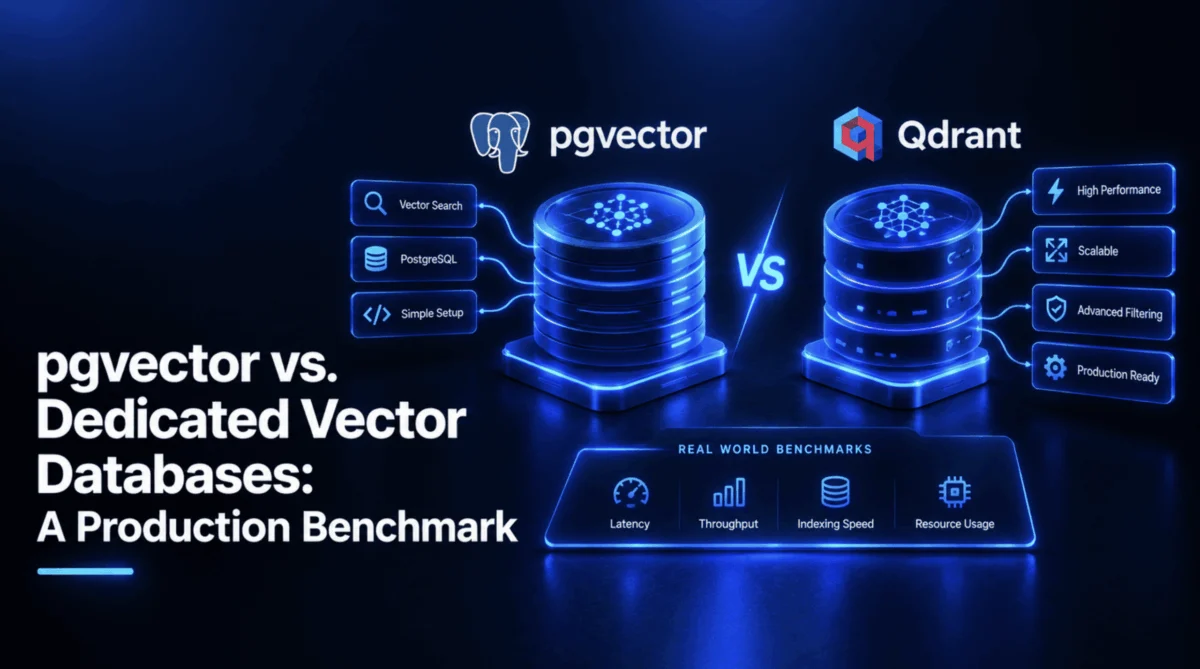
The debate surrounding database architecture for artificial intelligence workloads has intensified as enterprises transition from proof-of-concept generative AI applications to heavy, production-scale deployments. At the center of this technical discussion is a common engineering dilemma: whether to extend an existing relational database management system using extensions like pgvector or to implement a purpose-built, dedicated vector database such as Pinecone, Qdrant, Weaviate, Milvus, or ChromaDB. This architectural decision carries profound implications for infrastructure cost, operational complexity, system throughput, and query latency. For years, technical stakeholders have been forced to navigate this landscape armed with strong opinions and vendor claims rather than empirical data. To address this deficiency, modern empirical benchmarks have begun to map out the exact performance boundaries of each approach, offering software architects a data-driven framework for decision-making.
The architectural philosophies governing these two paradigms represent fundamentally distinct approaches to data management. pgvector operates as an open-source extension for PostgreSQL, transforming the traditional relational database into a hybrid store capable of native vector storage and similarity searches. By integrating vector data directly into existing relational tables, engineering teams can execute combined SQL queries that filter traditional attributes and perform nearest-neighbor searches within a single atomic operation. This eliminates the need to maintain, synchronize, and secure a separate secondary service. Conversely, dedicated vector databases are engineered from the ground up as independent services with specialized storage engines, optimized exclusively for high-dimensional vector math, complex metadata filtering, and distributed scalability. While dedicated solutions require additional operational overhead—including separate backup routines, monitoring pipelines, and synchronization mechanisms—they eliminate the resource contention that can occur when heavy vector computations share memory and CPU cycles with a general-purpose relational workload.
A historical examination of the vector database market reveals a rapid evolution driven almost entirely by the explosive growth of large language models and Retrieval-Augmented Generation (RAG) systems. In the early stages of the generative AI boom, developers frequently adopted lightweight, embedded libraries or standalone vector stores simply to achieve functional prototypes. As these applications matured, enterprises confronted significant scaling walls, prompting a wave of vendor marketing campaigns urging immediate migration to dedicated cloud infrastructure. Simultaneously, improvements to PostgreSQL extensions—particularly the implementation of Hierarchical Navigable Small World (HNSW) graph indexing in pgvector and subsequent innovations like Timescale’s pgvectorscale—dramatically closed the performance gap between relational extensions and specialized engines. This technological convergence created an urgent demand for controlled, reproducible production benchmarks comparing vanilla and extended PostgreSQL setups against industry-standard dedicated vector engines like Qdrant.
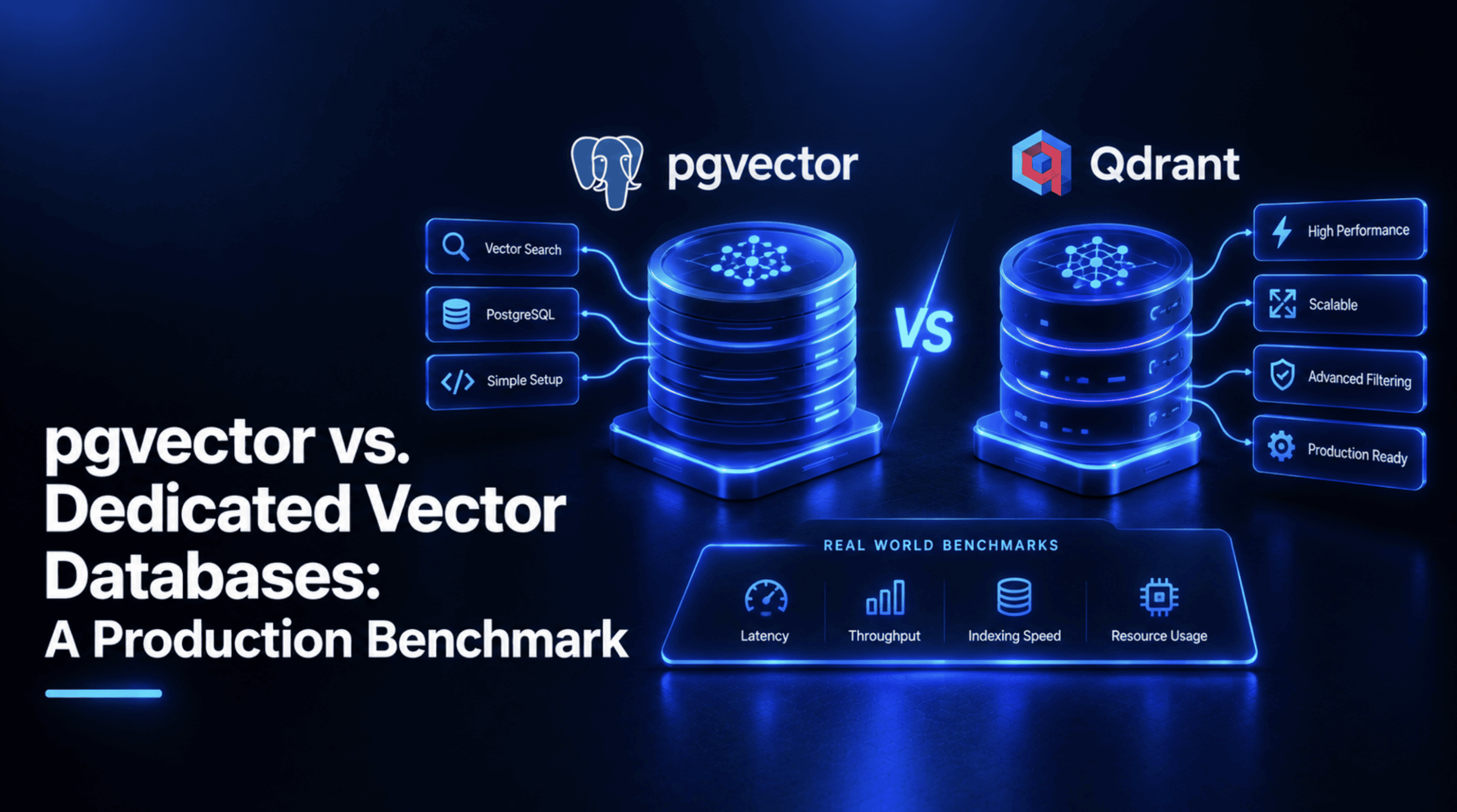
Controlled empirical studies conducted on standardized hardware configurations have recently provided much-needed clarity. In comprehensive evaluations examining workloads of up to 50 million high-dimensional vectors on identical cloud computing instances, performance metrics revealed a nuanced operational trade-off rather than a decisive victory for either architecture. When utilizing advanced configurations such as pgvector combined with pgvectorscale, PostgreSQL demonstrated extraordinary query throughput, outperforming dedicated alternatives by significant margins under high concurrency. Specifically, tests measuring queries per second at high recall thresholds indicated that the optimized relational setup could process substantially more requests per second than its dedicated competitor. However, this throughput advantage was counterbalanced by performance metrics in tail latency. Purpose-built vector databases frequently exhibited superior predictability in high-percentile latency distributions, ensuring that slow queries remained tightly bounded even under heavy concurrent filter loads. Furthermore, dedicated engines often demonstrated faster index build times for massive datasets, reducing the computational friction associated with initial data ingestion.
Engineering teams evaluating these database architectures must align their technical requirements with the empirical realities of their workloads. For applications operating below five to ten million vectors, pgvector offers a highly pragmatic, cost-effective solution. It preserves transactional integrity through ACID compliance, allowing developers to update relational records and their corresponding vector embeddings within a single transaction. This capability is invaluable for applications requiring strict consistency, such as financial transaction auditing or dynamic user profile management. Furthermore, organizations with established PostgreSQL operational expertise can deploy vector search capabilities without provisioning new infrastructure or retraining engineering personnel on unfamiliar database management systems.
Conversely, dedicated vector databases demonstrate superior value propositions when scaling into the hundreds of millions or billions of vectors, or when operational environments demand strict microsecond-level tail-latency guarantees under intense concurrent loads. Distributed architectures built on specialized engines are explicitly designed to scale horizontally across multi-node clusters, accommodating massive vector spaces that would strain a monolithic relational instance. Additionally, specialized features—such as GPU-accelerated index construction in Milvus, built-in hybrid keyword and vector search in Weaviate, or zero-maintenance fully managed cloud deployments in Pinecone—cater to specific organizational requirements that extend beyond the capabilities of a standard relational database extension.
Ultimately, the choice between pgvector and a dedicated vector database cannot be resolved through broad generalizations or vendor guarantees. Database administrators, software architects, and engineering leadership must carefully analyze their specific operational constraints, including expected data volume growth, query concurrency, consistency requirements, and existing infrastructure investments. By relying on rigorous performance benchmarks and understanding the underlying trade-offs of throughput, tail latency, and operational overhead, organizations can select an architecture that robustly supports their long-term artificial intelligence initiatives.