






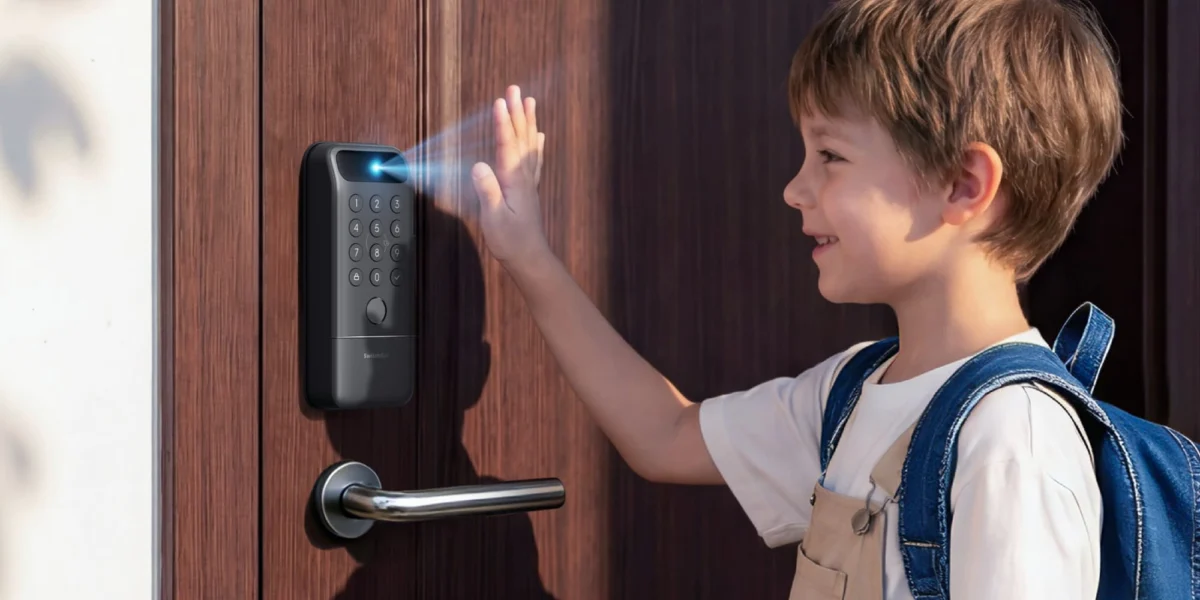
SwitchBot has officially entered the next generation of home security with the market release of its Lock Vision and Lock Vision Pro, two sophisticated smart lock systems designed to modernize home entry through advanced biometrics and seamless smart home interoperability. These devices represent a significant shift in SwitchBot’s product strategy, moving away from bridge-dependent setups toward a more integrated, Matter-native ecosystem. By leveraging Matter over Wi-Fi, the company aims to reduce the barrier to entry for users within the Apple Home, Google Home, and Amazon Alexa ecosystems, effectively eliminating the requirement for proprietary hubs that have historically complicated smart home installations.
Advanced Biometric Security Architecture
The defining characteristic of the new Lock Vision series is the integration of high-fidelity 3D facial recognition. This technology is increasingly becoming the industry standard for high-end residential security, moving beyond simple 2D camera analysis. The SwitchBot system operates by projecting over 20,000 infrared points onto a user’s face, generating a detailed depth map that is resistant to spoofing attempts via high-resolution photographs or video recordings.
According to technical specifications provided by the manufacturer, the system is engineered to perform authentication in under one second. The efficacy of this recognition algorithm is reportedly high, maintaining functionality across various environmental conditions and user appearances, including individuals wearing glasses, hats, or those utilizing heavy makeup. From a data privacy perspective, SwitchBot has opted for an edge-computing approach: all biometric data is stored locally on the device’s hardware and encrypted using the AES-128 standard. This localized storage architecture ensures that sensitive facial geometry data never leaves the user’s home, addressing growing consumer concerns regarding cloud-based biometric storage and potential data breaches.
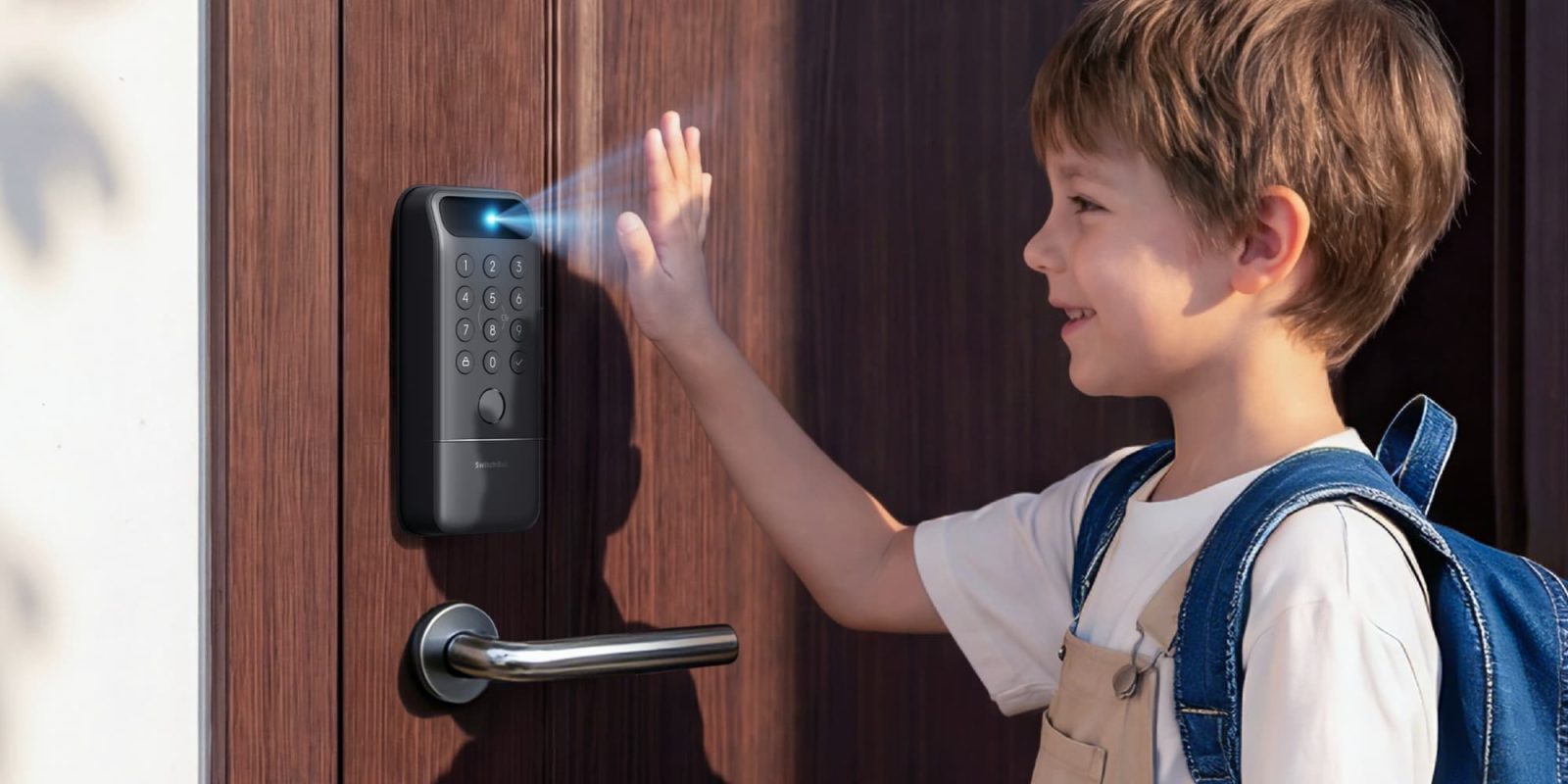
The Lock Vision Pro further extends these capabilities by introducing a hybrid biometric suite. In addition to the facial recognition capabilities found in the standard model, the Pro version incorporates a semiconductor fingerprint scanner and a contactless palm vein scanner. The inclusion of palm vein scanning is particularly notable; by utilizing near-infrared light to map the unique vascular patterns beneath the skin, the device offers a hygienic, non-contact method of entry that is widely considered more difficult to replicate than standard fingerprint imagery.
Engineering for Power Resilience and Efficiency
A critical challenge in the smart lock industry is maintaining longevity while powering high-drain features like cameras and active biometric scanners. SwitchBot has addressed this with a redundant, dual-battery power management system. The primary power source is a 10,000mAh rechargeable lithium-ion battery, which the company states provides up to 12 months of operation under standard daily usage scenarios.
To mitigate the risk of a complete system lockout, the lock is equipped with a secondary, emergency CR123A battery. This fail-safe is designed to engage automatically if the primary power source is depleted, offering approximately 500 emergency cycles. In the unlikely event that both internal batteries reach a zero-charge state, the hardware includes an external USB-C emergency power port, allowing users to provide temporary power via a portable power bank to trigger the unlock mechanism.
Further optimizing this battery efficiency is the integration of mmWave radar technology. Unlike passive infrared (PIR) sensors, which detect changes in heat, mmWave radar tracks micro-movements and spatial presence with high precision. This allows the Lock Vision to remain in a low-power "sleep" state until a person is in the immediate vicinity of the door, preventing the biometric scanners from constantly polling and draining the battery during periods of inactivity.
The Role of Matter and Ecosystem Interoperability
The decision to adopt Matter over Wi-Fi for both models marks a turning point for SwitchBot’s integration within the Apple Home framework. Previously, SwitchBot users were often required to purchase a dedicated SwitchBot Hub to translate proprietary Bluetooth protocols into HomeKit-compatible signals. By utilizing the Matter standard, the Lock Vision series connects directly to a Thread border router or a standard Wi-Fi network that is then bridged by an Apple TV or HomePod.
This change is part of a broader industry trend accelerated by the Connectivity Standards Alliance (CSA). The shift toward Matter is intended to create a unified language for smart home devices, reducing the reliance on "walled garden" ecosystems. For the end-user, this means that the Lock Vision can be managed directly through the Apple Home app, providing native controls for locking, unlocking, and status monitoring without the latency or complexity associated with third-party bridges.
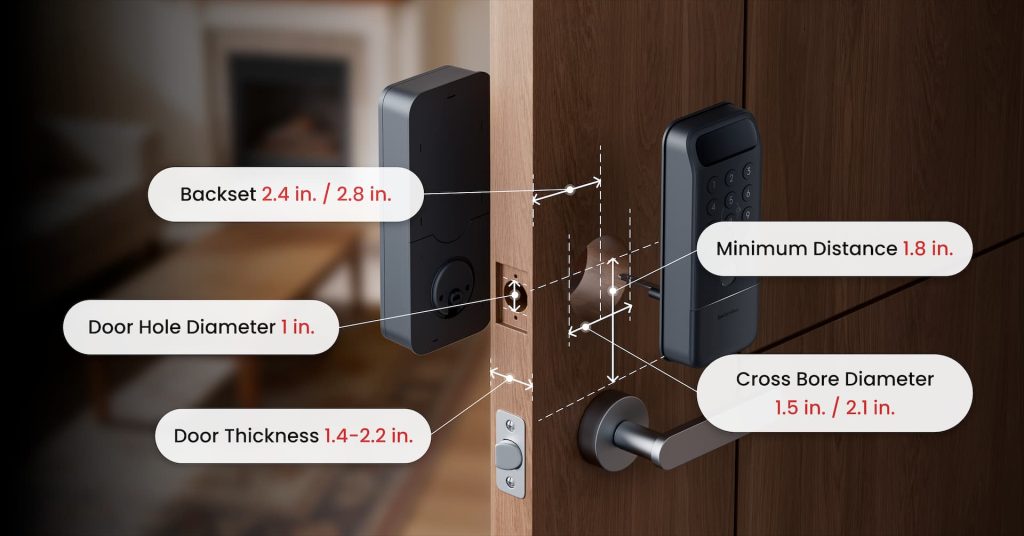
While the lock supports a variety of entry methods—including physical keys, NFC-based cards, passcode entry, and geo-fenced auto-unlocking—the absence of Apple Home Key support remains a notable omission for power users of the Apple ecosystem. Apple Home Key, which allows users to tap their iPhone or Apple Watch against a lock to gain entry via NFC, requires specific hardware and certification from Apple. While its absence does not hinder the core functionality of the Lock Vision, it represents a missed opportunity for the seamless integration that many high-end smart home users have come to expect.
Industry Context and Market Positioning
The launch of the Lock Vision series occurs during a period of rapid growth for the smart lock market. Analysts estimate that the global smart lock market is expected to reach a valuation of several billion dollars by 2030, driven largely by the proliferation of residential security systems and the increasing consumer preference for "keyless" convenience.
SwitchBot’s pricing strategy positions the Lock Vision at $169.99 and the Pro model at $229.99. This pricing tier places the company in direct competition with established players such as Yale, August, and Schlage, as well as newer entrants focusing on advanced biometrics. The decision to bifurcate the product line allows SwitchBot to capture both the budget-conscious consumer who wants the convenience of facial recognition, and the security-focused buyer who requires the multi-factor authentication provided by the Pro’s palm vein and fingerprint scanning.
Implications for Home Security Standards
The move toward integrated, multi-biometric smart locks signals a maturing industry. Early iterations of smart locks were often criticized for being cumbersome, reliant on fragile software, or lacking in physical security. The modern generation of locks, as exemplified by the Lock Vision Pro, emphasizes hardware durability alongside complex software encryption.
However, the transition to high-tech, camera-based locks also invites scrutiny regarding physical security vulnerabilities. Industry experts have long debated the trade-off between convenience and security in smart locks. By incorporating 3D infrared depth mapping, SwitchBot is actively attempting to address the "spoofing" vulnerabilities that plagued early camera-based smart locks. Nonetheless, consumers are reminded that smart locks, regardless of their technological sophistication, are components of a larger security perimeter. The use of robust deadbolt hardware and secure door frames remains as essential as the digital authentication protocols guarding the cylinder.

Chronology of Development
The development cycle for these products reflects SwitchBot’s transition from a company focused on "retrofitting" existing manual hardware to a manufacturer of purpose-built, high-security smart home appliances.
- Late 2024: Industry rumors surfaced regarding SwitchBot’s move toward high-end biometric entry systems.
- Q1 2026: Beta testing of the Matter-over-Wi-Fi implementation, ensuring compatibility with the latest versions of iOS and Android.
- May 2026: Official announcement of the Lock Vision and Lock Vision Pro, with immediate retail availability.
As the market continues to evolve, the success of the Lock Vision series will likely depend on the long-term reliability of its firmware updates and the company’s ability to maintain its commitment to privacy-focused local data storage. With the release today, the company has set a clear benchmark for what is expected in a mid-to-high-tier smart lock, combining the convenience of biometric recognition with the accessibility of the Matter standard. Consumers interested in these devices can now find both models on major retail platforms, with the manufacturer noting that early-adopter incentives are available to encourage the migration to this new hardware generation.