










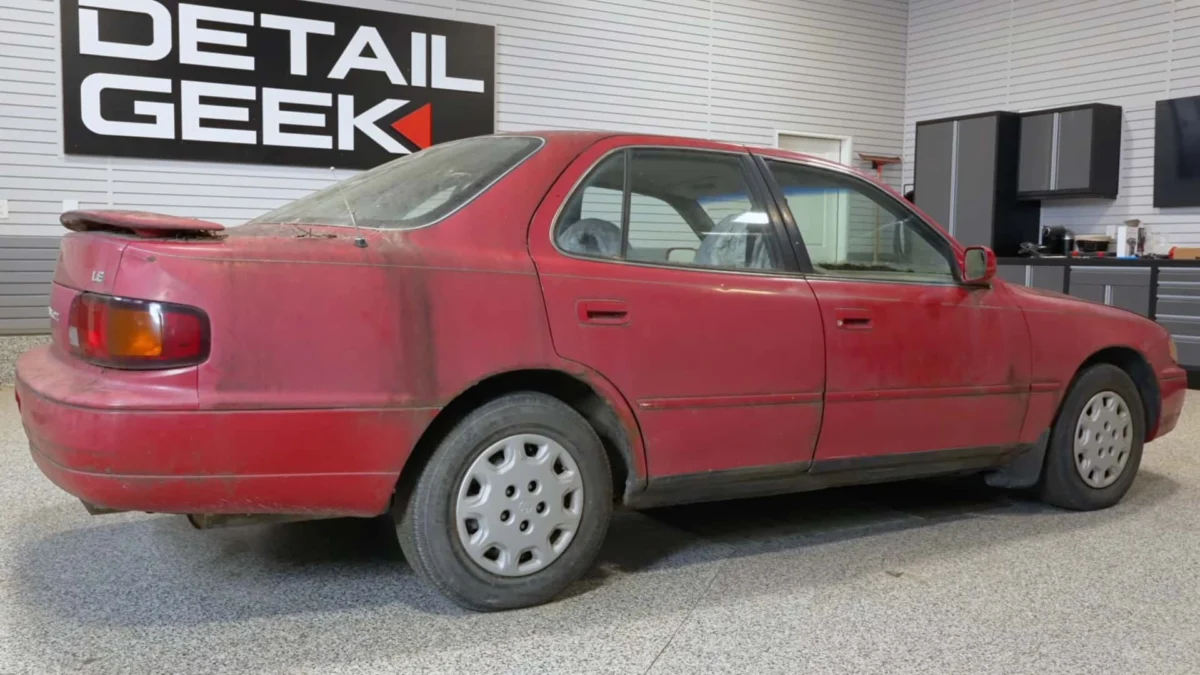
The allure of automotive restoration has found a massive audience in the digital age, with professional detailing channels capturing the public imagination by turning neglected, decaying vehicles into pristine examples of their former selves. A recent upload from the popular YouTube channel, The Detail Geek, serves as a masterclass in this niche industry. The subject of the restoration is a 1995 Toyota Camry, a vehicle that had clearly spent a significant portion of its three-decade lifespan exposed to the elements, effectively serving as a repository for biological growth, environmental debris, and years of accumulated neglect.
The Condition of the Vehicle
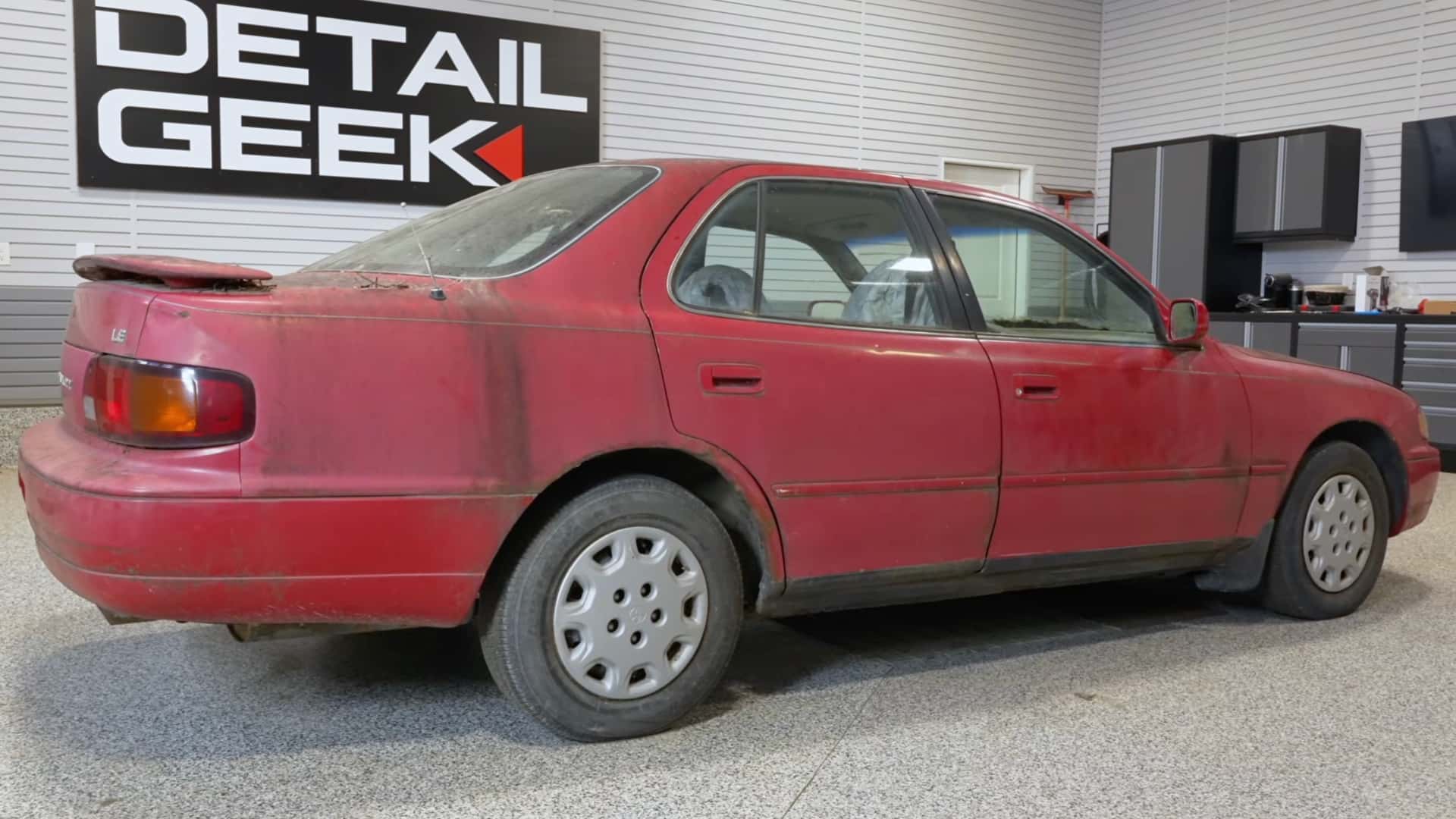
Upon initial inspection, the 1995 Camry appeared to be a candidate for the scrapyard rather than the showroom. The exterior was blanketed in a thick layer of organic grime, likely the result of being parked under a canopy of trees for several years. The paint was heavily oxidized and obscured by layers of dust, fallen leaves, and potentially sap, which can cause permanent damage to a vehicle’s clear coat if left untreated for extended periods.
However, the interior presented a far more significant challenge. The cabin was riddled with severe contamination, including high volumes of pet hair, deep-seated mold, layers of household trash, and organic debris that had likely entered through degraded window seals. In the world of professional detailing, this level of contamination is often classified as a "biological hazard" restoration, requiring specialized equipment and industrial-grade sanitization agents to ensure the vehicle is safe for human occupancy once again.
Chronology of the Restoration Process
The restoration process follows a rigorous, systematic methodology that is standard practice among high-end detailers. The Detail Geek’s approach to this specific project can be categorized into four distinct phases:
- Phase One: External Decontamination. The process began with an aggressive high-pressure rinse to dislodge the top layer of debris. This was followed by a chemical pre-soak designed to break down heavy organic matter. The exterior was then subjected to a multi-stage wash, including a mechanical decontamination phase to remove embedded iron particles and road grime.
- Phase Two: Interior Stripping. To gain access to the deep-seated contaminants, the interior was completely dismantled. This involved the removal of all seat cushions, floor mats, and loose trim pieces. By clearing the cabin, the detailer could address the floor carpet and upholstery directly, which had become a breeding ground for mold.
- Phase Three: Deep Extraction and Sanitation. Utilizing hot water extraction and specialized enzyme-based cleaning solutions, the detailer addressed the carpets and seats. This step is critical; it involves forcing cleaning solution into the fibers and then vacuuming the moisture—along with the dirt and bacteria—back out. The mold remediation required targeted applications of antimicrobial solutions to neutralize spores.
- Phase Four: Final Refinement. Once the heavy cleaning was complete, the vehicle underwent a comprehensive detailing of all hard surfaces, dashboard components, and door jambs. The process concluded with leather or vinyl conditioning to restore elasticity to aged materials that had been dried out by years of exposure.
Supporting Data: The Longevity of the Toyota Camry
The choice of a 1995 Toyota Camry for this project is not accidental; the XV10 generation of the Camry (1992–1996) is widely regarded by automotive historians and mechanics as one of the most durable automobiles ever mass-produced. According to data from the National Highway Traffic Safety Administration (NHTSA) and various independent automotive longevity studies, these models frequently exceed 300,000 miles with only routine maintenance.
The "over-engineering" philosophy employed by Toyota during the early 1990s—often referred to as the "bubble era" of Japanese manufacturing—meant that these vehicles were built with high-quality plastics, robust chassis components, and powertrain reliability that remains competitive even by modern standards. This inherent durability is what makes the restoration of such a vehicle economically viable. Despite the cosmetic devastation, the mechanical foundation of the car remained sound, demonstrating that while the aesthetic may degrade, the engineering integrity often persists.
Expert Perspectives and Industry Implications
While the video is presented as entertainment, it highlights a growing segment of the automotive aftermarket: professional detailing as a form of vehicle preservation. Industry experts suggest that the demand for high-level detailing services has spiked as new vehicle prices continue to climb. As of 2024, the average transaction price for a new vehicle in the United States remains near record highs, leading many consumers to invest in the restoration of older, reliable platforms rather than financing new depreciating assets.
Professional detailers note that a vehicle in the state of the 1995 Camry requires specialized knowledge of chemistry and material science. Attempting to clean such a vehicle without understanding the pH balance of cleaners or the proper use of ozone generators can lead to irreparable damage to antique interior components. The success of this restoration serves as a case study in the value of "elbow grease"—a term used to describe the labor-intensive, manual effort required to reverse decades of entropy.
Broader Impact: The Culture of Restoration
The popularity of "satisfying" cleaning videos, such as those produced by The Detail Geek, points to a broader cultural shift toward sustainability and waste reduction. By saving a car that most would have deemed a total loss, the project effectively diverts a significant amount of material from landfills.
Furthermore, this restoration highlights the emotional connection owners often maintain with their vehicles. Even a mundane 1995 Camry can be a vessel for personal history. Seeing such a vehicle transformed from a neglected outdoor fixture back into a clean, functional machine provides a sense of closure and renewal for the owner, while simultaneously educating the public on the importance of vehicle maintenance.
Conclusion: A Testament to Persistence
The result of the restoration is undeniably impressive. While the car shows the inevitable patina of its 30-year existence, the transformation from a hazardous, neglected shell to a clean, usable vehicle is a testament to the effectiveness of professional-grade detailing techniques. It is a reminder that with the right approach, even the most neglected machines can be granted a second life.
As the automotive industry pivots toward electric vehicles and increasingly complex electronic systems, the relative simplicity of 1990s-era vehicles like this Camry makes them increasingly attractive to enthusiasts and collectors. The Detail Geek’s work on this project not only offers an aesthetically pleasing transformation but also reinforces the importance of preserving the mechanical heritage of reliable, long-lasting transportation. For viewers, the video serves as both an educational guide on detailing and a compelling piece of evidence that, given enough time and effort, the effects of neglect are not always permanent.